
Fragment Barbakanu — História e Análise
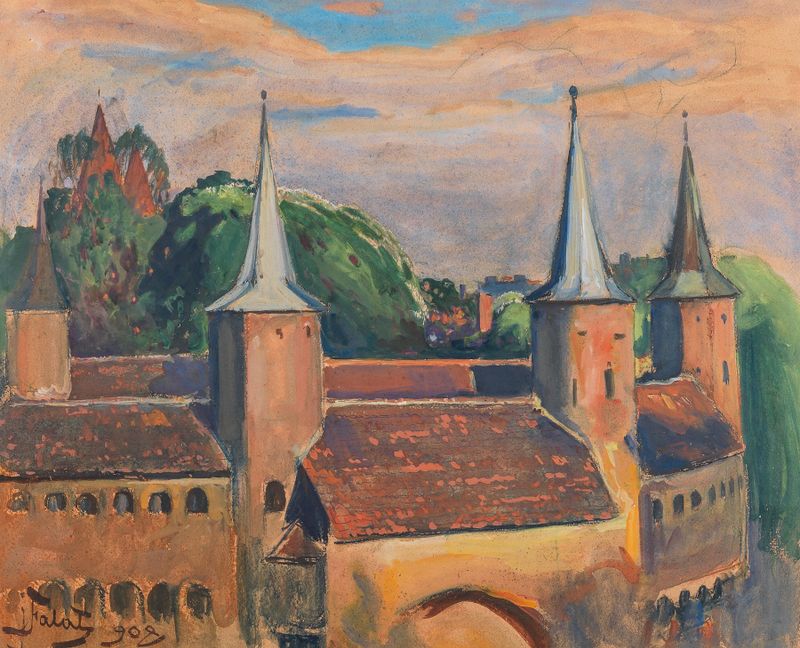
Can paint confess what words never could? In Fragment Barbakanu, Julian Falat offers a vivid revelation, inviting us to explore the unspoken emotions hidden within his brushstrokes. Focus first on the central figure, a woman poised with a gentle grace, her serene expression embodying both strength and vulnerability. The rich, earthy palette envelops her, grounding the scene while the subtle interplay of light accentuates her features. Notice how the delicate brushwork in the background contrasts with the bold strokes that define her silhouette — a masterful technique that reveals the artist’s intent to juxtapose the figurative and the abstract, creating a dialogue that transcends mere representation. Delve deeper into the details: the intricate patterns on her clothing whisper of cultural richness, while the fragmented elements surrounding her hint at a world in disarray.
Each piece seems to echo a story untold, suggesting that the woman stands at the threshold of revelation, on the brink of an emotional awakening. These layers of meaning intertwine, forming a tapestry of tension where tradition meets the abruptness of modernity, making the viewer question the very nature of identity. Falat painted this work in 1909, during a time when artistic movements were in flux across Europe. He was in Poland, immersed in the vibrant discussions of nationalism and cultural identity that defined his era.
This period of transition informed his artistic language, as he sought to capture the essence of his homeland while grappling with the modern world's complexities.
Mais obras de Julian Falat
Ver tudo →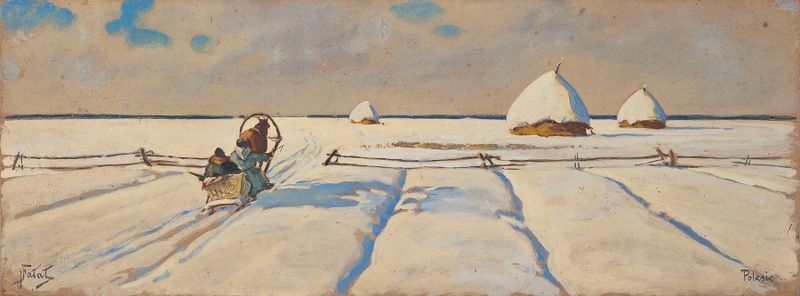
Sleigh in a snowy field – Polesia
Julian Falat
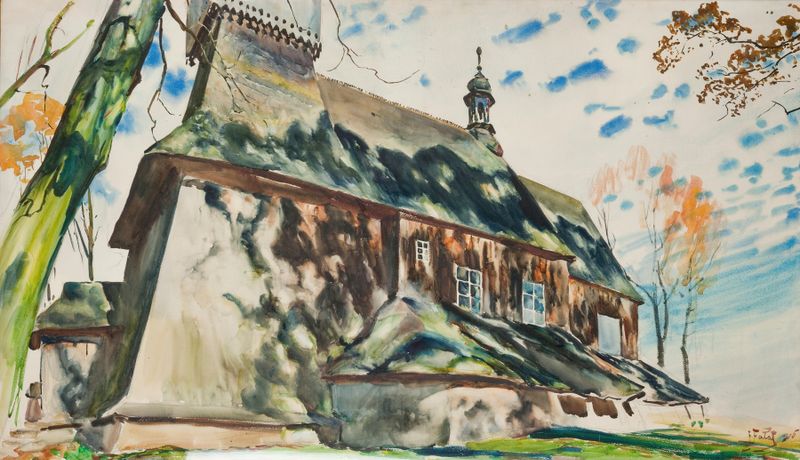
Church in Osiek
Julian Falat
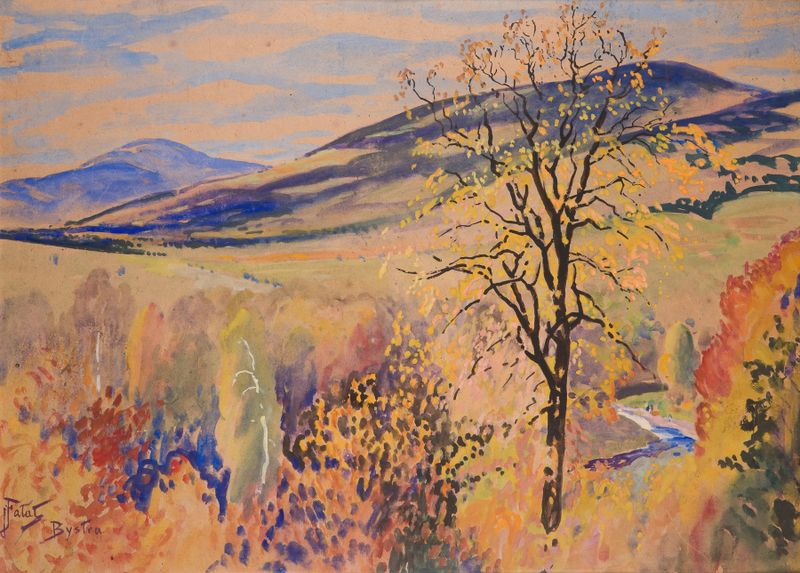
Pejzaż jesienny z Bystrej
Julian Falat
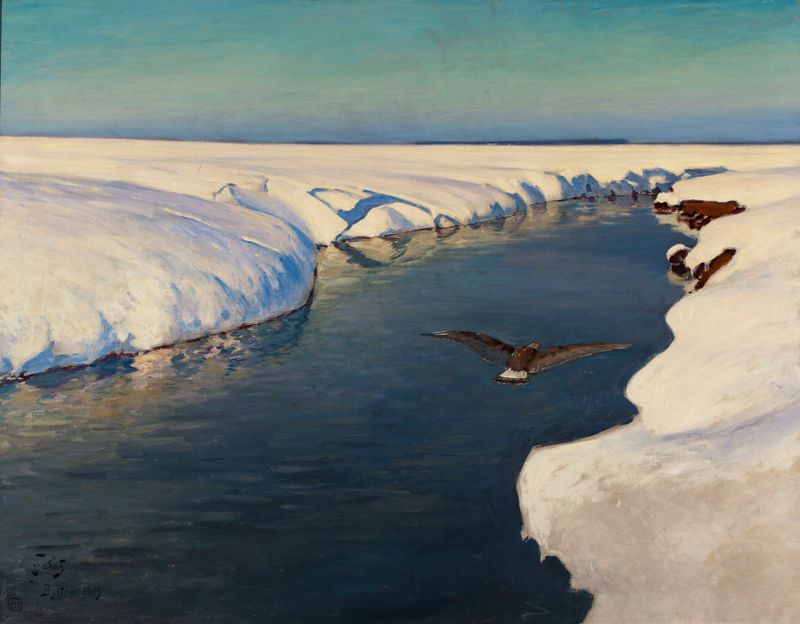
Winter landscape with a river and a bird
Julian Falat
The Kraków Barbican
Julian Falat
Świteź
Julian Falat
Winter landscape from Żywiec
Julian Falat
Świteź
Julian Falat
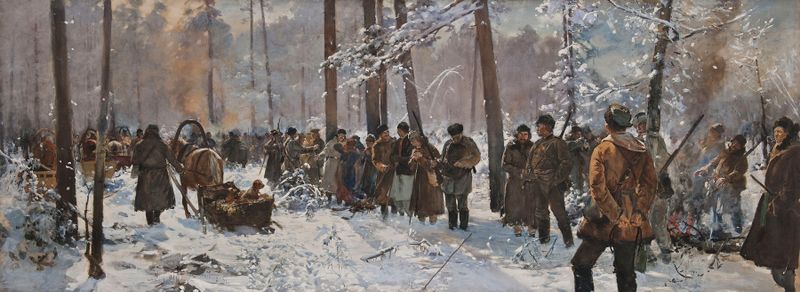
Battue at a hunt in Nieśwież
Julian Falat
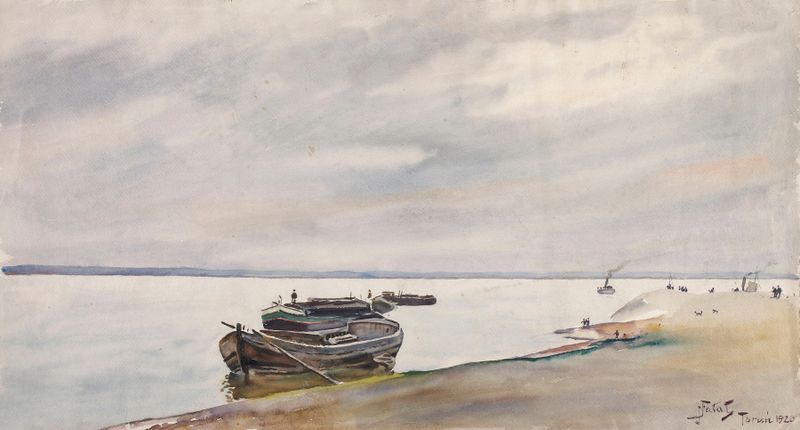
Boats and steamship on the Vistula near Toruń
Julian Falat
Mais arte de Retrato
Ver tudo →
Las meninas
Diego Velázquez

Self-portrait with a Bandaged Ear and Pipe
Unidentified artist

Girl with a Pearl Earring
Johannes Vermeer

The Sampling Officials of the Amsterdam Drapers’ Guild, Known as ‘The Syndics’
Rembrandt van Rijn

The Hundred Guilder Print: the man seen on the back in the lower left corner
Rembrandt van Rijn

Portrait of Dr Gachet
Vincent van Gogh