A Guitar, Glasses and a Bottle — History & Analysis

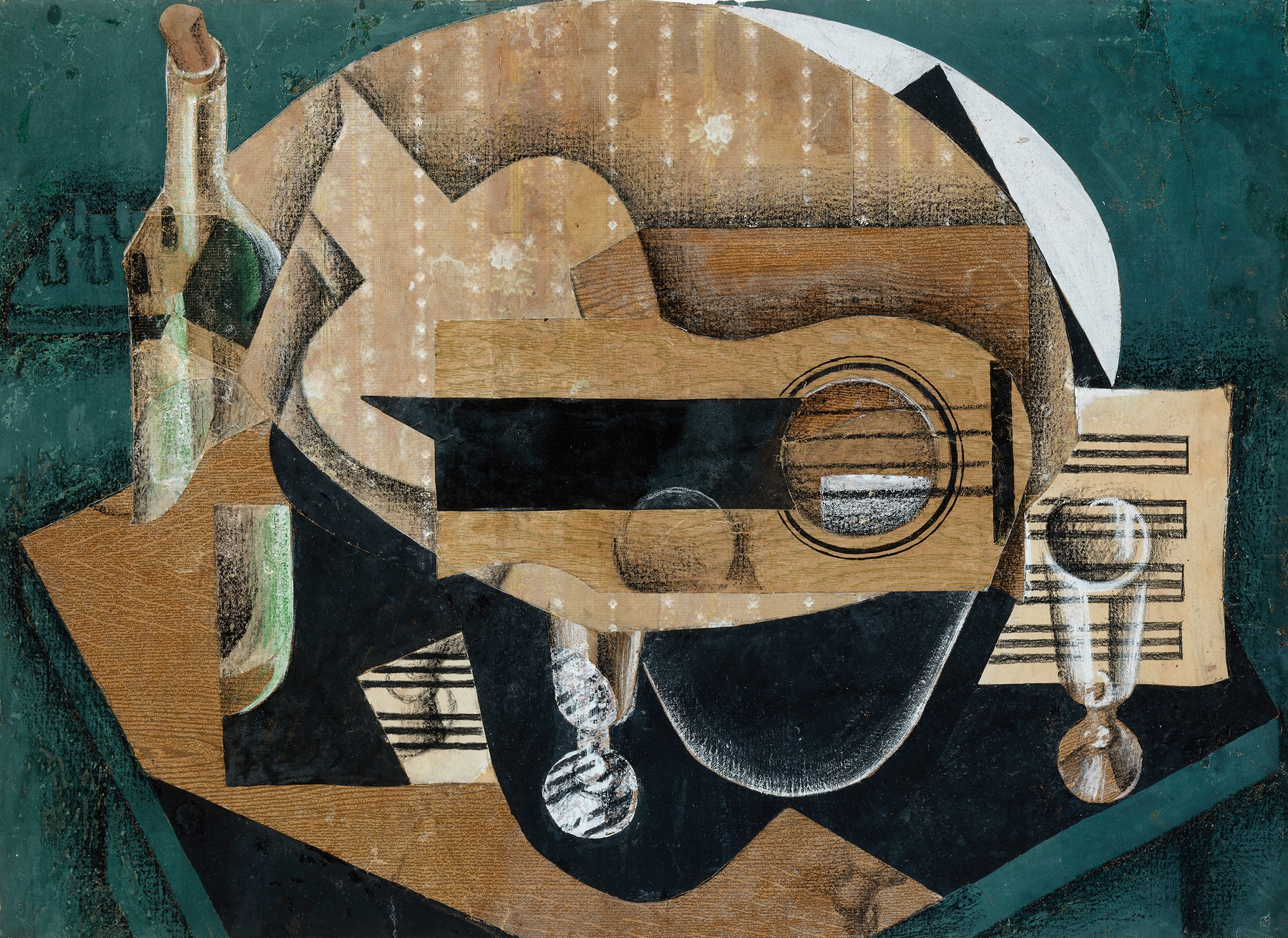
“Between color and silence, truth hides.” In a world often painted in stark contrasts, hope emerges quietly, like the gentle strum of a guitar. Look to the center of the canvas, where the guitar rests, its curves inviting yet slightly abstract, suggesting a sense of intimacy. Notice how the warm ochres and browns envelop the instrument, contrasting with the sharp angles of the glasses and the bottle that flank it. The fragmented forms and overlapping planes create a rhythm that draws your eye deeper into the composition, inviting contemplation.
In this still life, the juxtaposition of the familiar and the disjointed speaks volumes. The guitar, a symbol of artistic expression, lies in harmony with the glasses and bottle, yet the cubist style adds an air of uncertainty. The shards of color and form mirror the complexities of human experience: the hope for clarity amid confusion, the yearning for connection in a fragmented world. Each object holds its own story, interwoven within the tableau, echoing the broader narrative of life’s potential and imperfections.
Juan Gris painted this work in 1913, during a period of experimentation within the Cubist movement. Living in Paris, he was deeply influenced by both the chaos of modern life and the artistic revolutions surrounding him. This time marked a shift from traditional representation to abstraction, positioning the artist at the forefront of this transformative moment in art history.