Le Pierrot au Rideau — History & Analysis

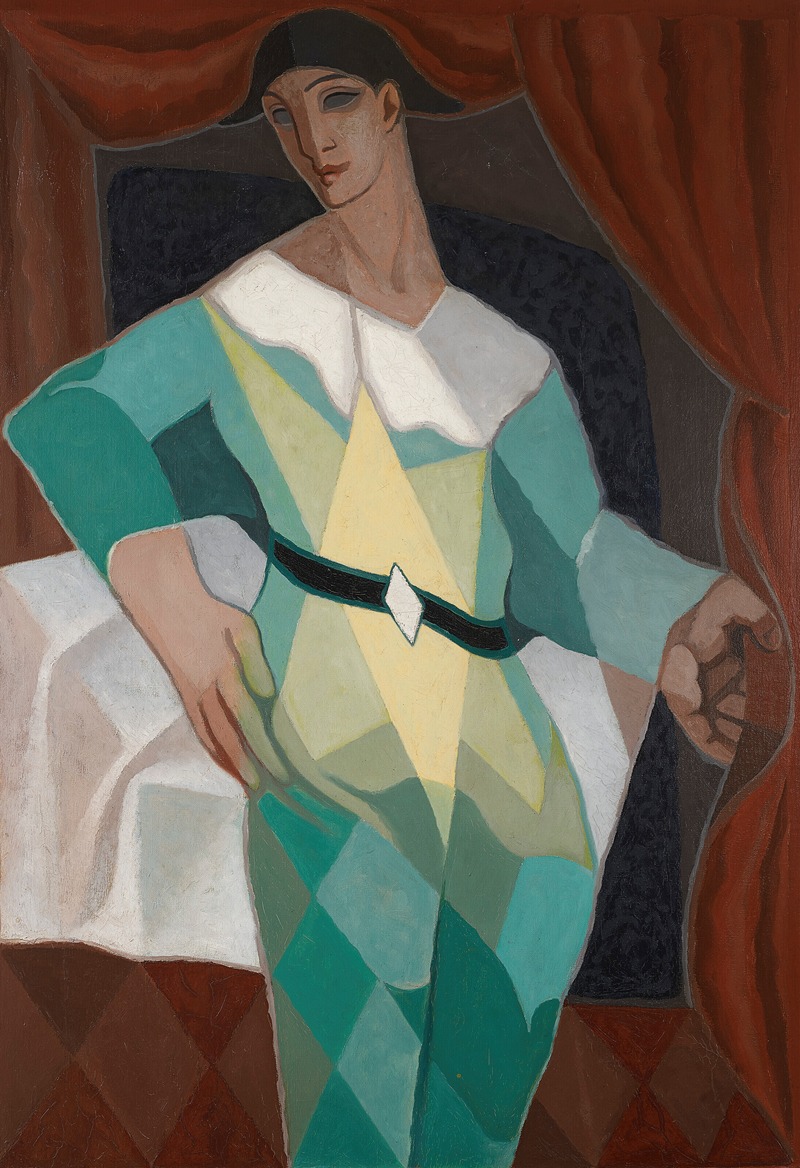
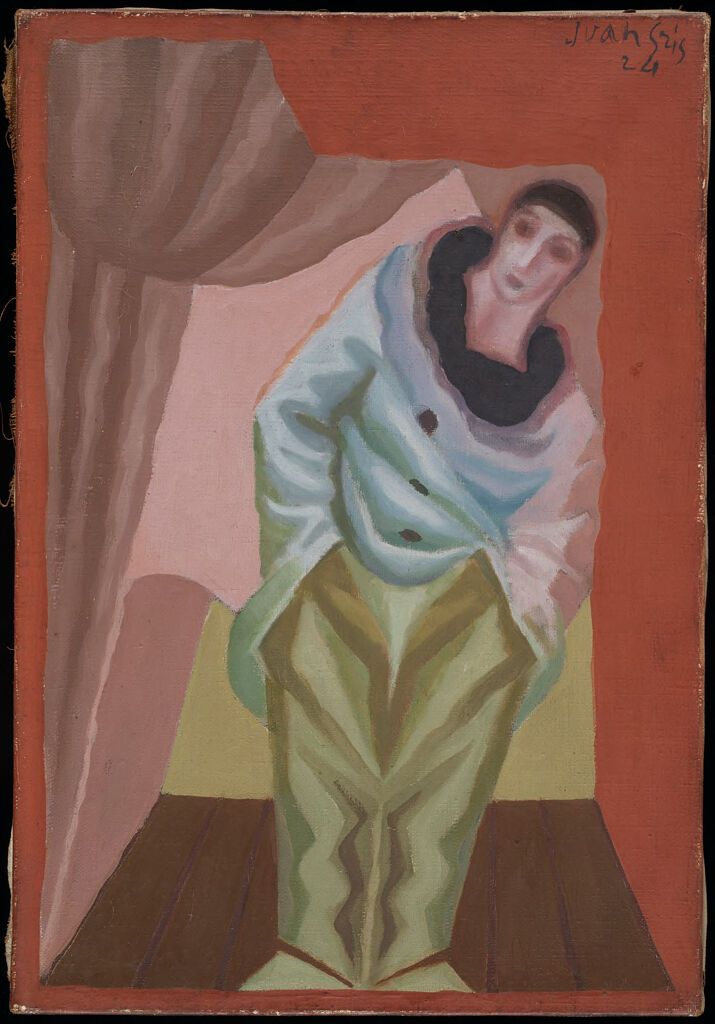
Did the painter know this moment would outlive them? In *Le Pierrot au Rideau*, fragility becomes a timeless whisper, echoing through the layers of color and form. Focus on the central figure, the Pierrot, whose melancholic expression draws the viewer in like a moth to a flickering flame. Notice how the delicate contours of his face contrast with the vibrant hues of the curtain behind him, creating a visual tension that resonates with his emotional state. The interplay of light and shadow accentuates his solitary figure, while the geometric shapes around him suggest a world both familiar and distant, inviting us to ponder the complexity of his existence. The juxtaposition of bold and muted colors speaks to the conflict within the Pierrot, a character traditionally associated with both joy and sorrow. Look closely at the fabric of the curtain; its folds appear to cradle the figure, evoking a sense of protection that teeters on the edge of suffocation. This duality mirrors the artist's own struggles with identity and belonging in a rapidly changing artistic landscape, where the boundaries of traditional representation were constantly being tested. Created around 1924, *Le Pierrot au Rideau* reflects Juan Gris's exploration of cubism while grappling with the emotional resonance of his subjects. During this period, Gris was immersed in the Parisian avant-garde scene, where new ideas flourished amidst the remnants of World War I. This painting captures not only a moment of introspection but also embodies the transformative spirit of an era seeking solace in art.