Violin and Glass — History & Analysis

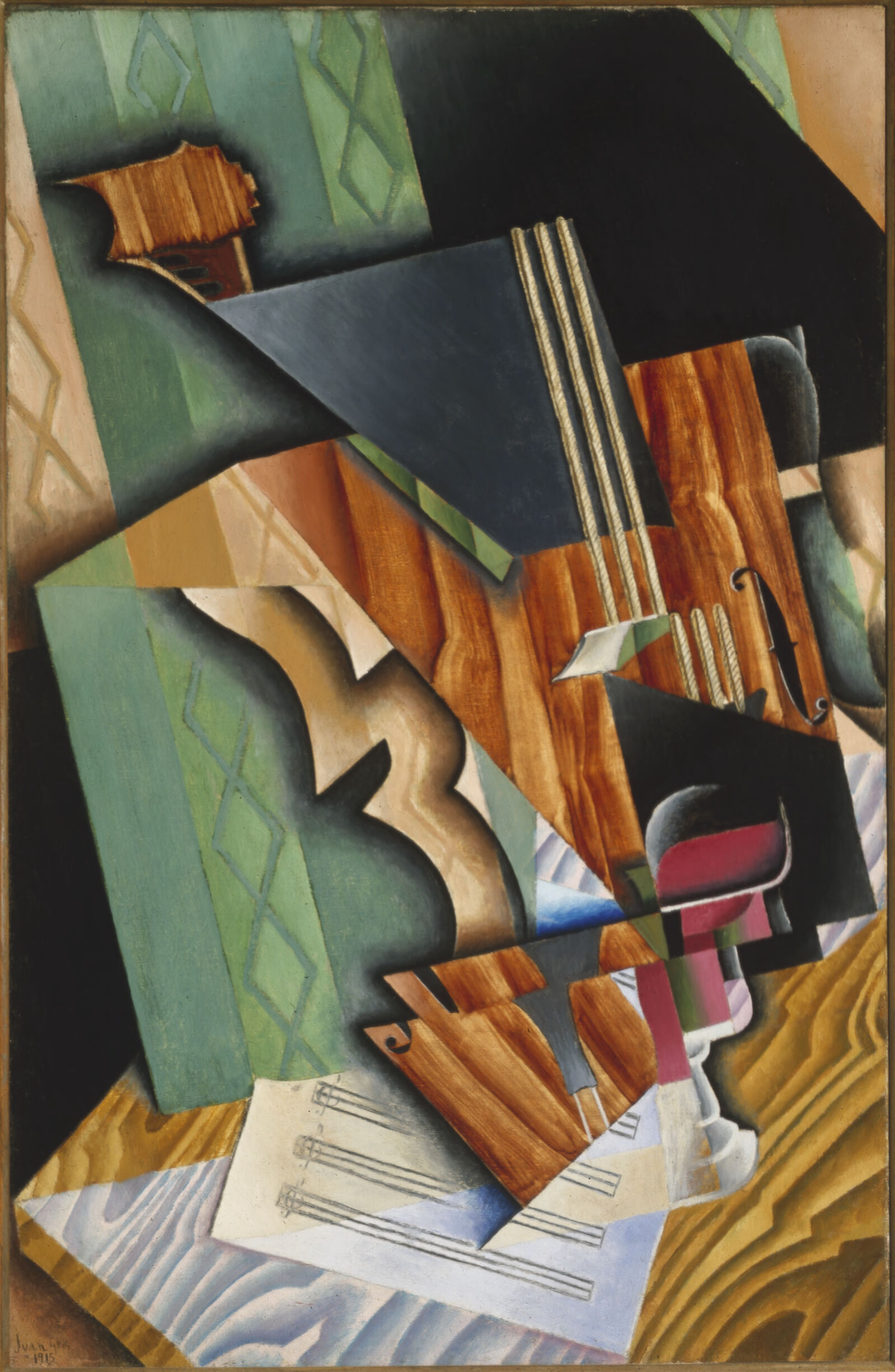
Art reveals the soul when the world turns away. In the quiet solitude of a sunlit room, objects come together, transforming the mundane into a celebration of beauty. Here, the confluence of shapes and colors invites a deeper contemplation of existence. Look to the center, where the violin rests gracefully atop a fragmented surface. Observe how the warm browns and soft yellows contrast with the cool blues and greens that encircle it.
The interplay of light and shadow not only articulates the contours of the instruments but also creates a harmonious rhythm, guiding the eye across the canvas. The carefully chosen geometric forms evoke a sense of stability, while the fragmented background suggests an underlying chaos, reflective of the artist’s Cubist leanings. Beneath the surface, a delicate tension unfolds. The juxtaposition of solid and transparent—the violin versus the glass—reveals a dialogue about perception and reality. The glass reflects not only light but also emotions, hinting at fragility amidst the strength of the wooden instrument.
These contrasts resonate with the viewer, prompting an exploration of the dichotomy between beauty and transience, creation and disintegration. In 1915, while living in Paris, the artist painted this work during a time marked by the upheaval of World War I. The Cubist movement, which he was a key figure in, was evolving, pushing boundaries and exploring new dimensions. This piece emerged from a personal and artistic quest for clarity amidst the tumultuous backdrop of his time, encapsulating a moment where beauty, even in chaos, finds a place to reside.