Arlequin — History & Analysis

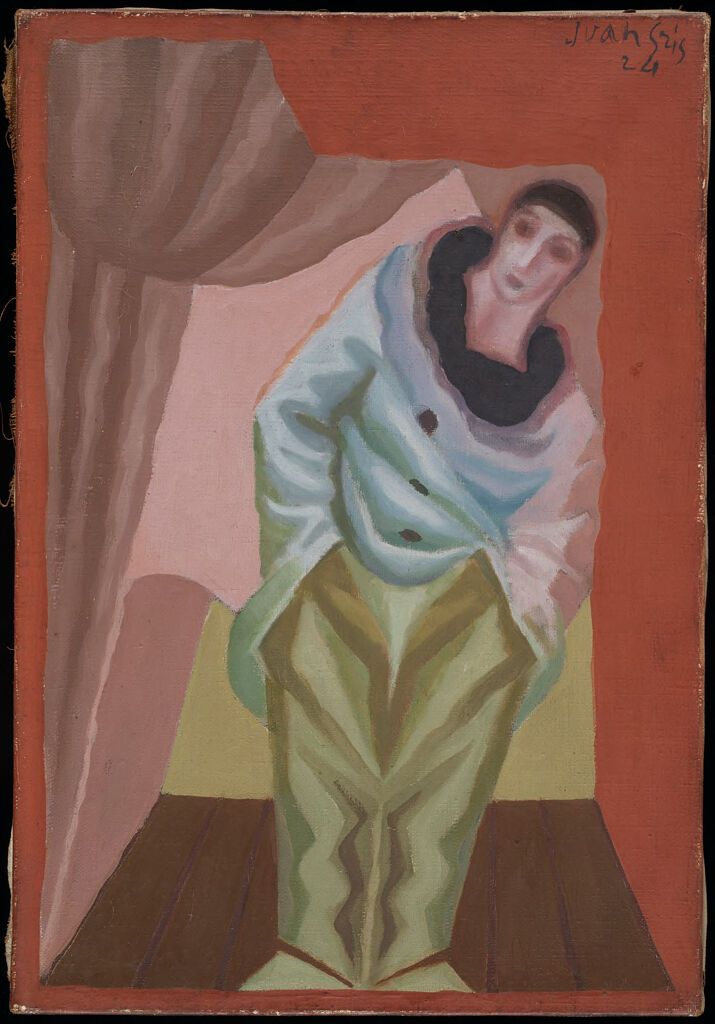
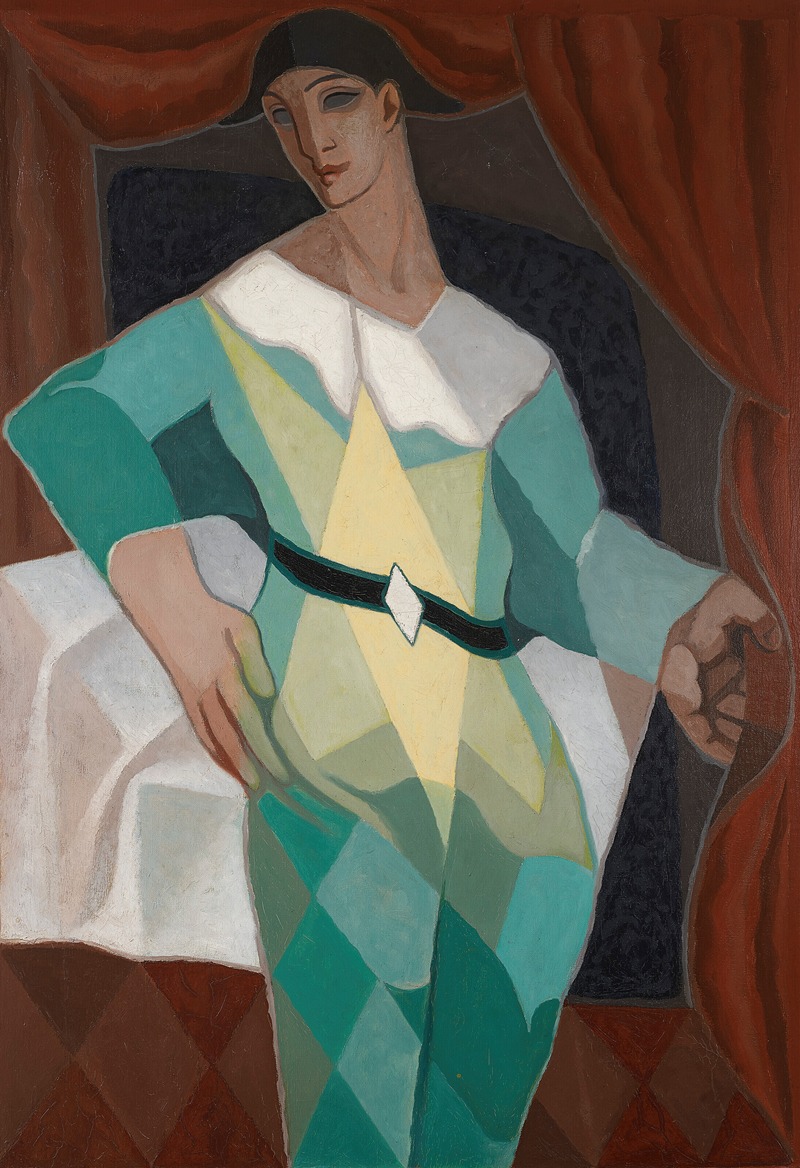
Take a moment with Juan Gris’s Harlequin (often dated around 1917), and notice how different this world feels from the softness of Vermeer. Here, everything is constructed—carefully built through sharp lines, geometric shapes, and interlocking planes. The figure of the harlequin, a traditional character of theater and disguise, is not shown as a natural body, but as a composition of fragments, as if reality itself has been reorganized. Look closely at the colors: muted browns, blues, and warm tones arranged with precision.
Unlike the more chaotic side of Cubism, Gris brings clarity and balance—each element feels deliberate, almost architectural. The harlequin’s costume, typically playful and patterned, becomes a structured rhythm of shapes, guiding your eye across the canvas. You’re not just seeing a figure; you’re seeing an idea of a figure, broken down and reassembled. What makes this painting so compelling is its control.
Gris transforms a lively, theatrical character into something intellectual and harmonious. It’s no longer about illusion or storytelling, but about how we perceive form, space, and reality. Standing before it, you’re invited to shift your way of seeing—to accept that a person can exist not only as an image, but as a carefully constructed visual language.