A Norwegian Seaport — History & Analysis
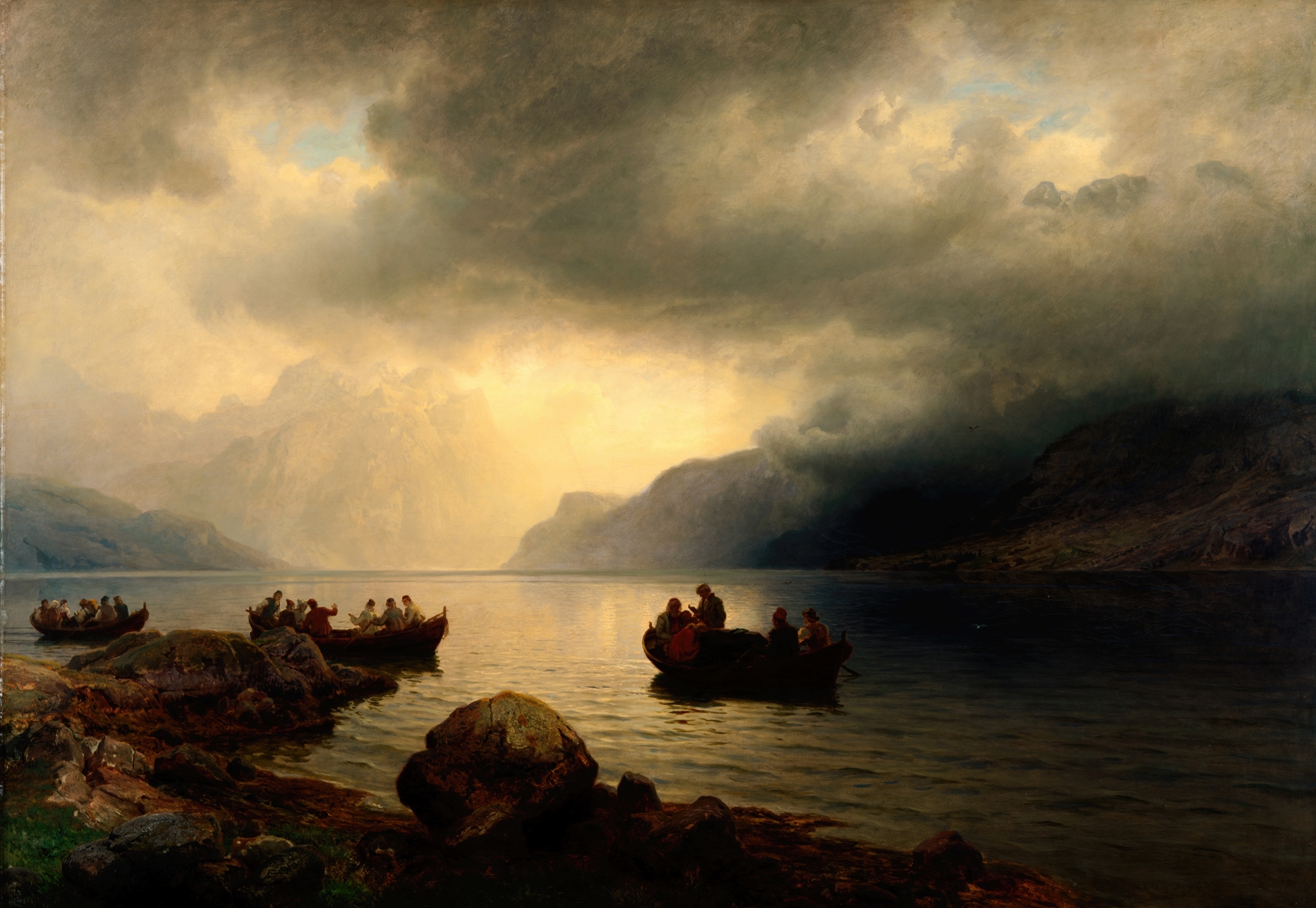
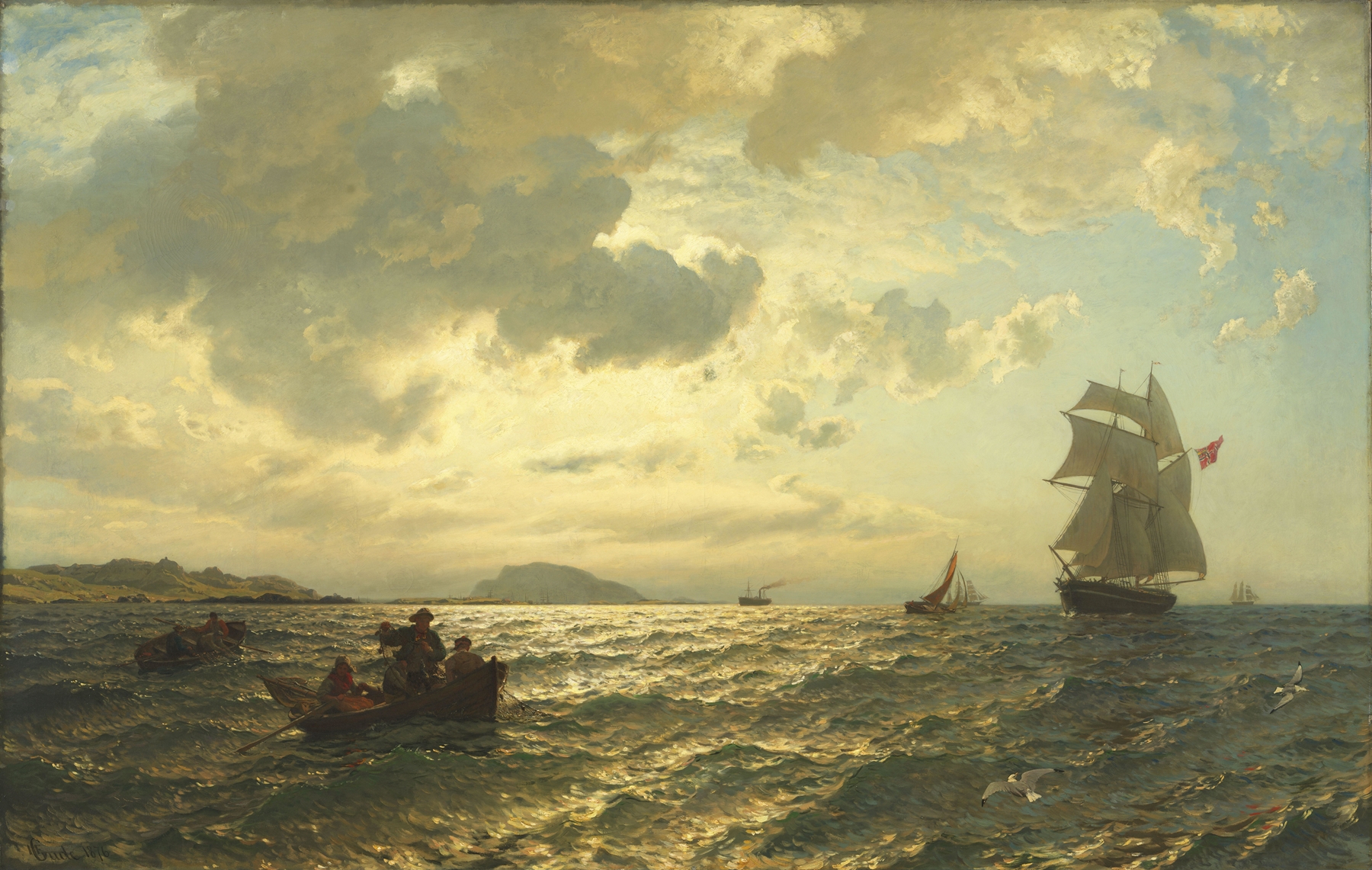
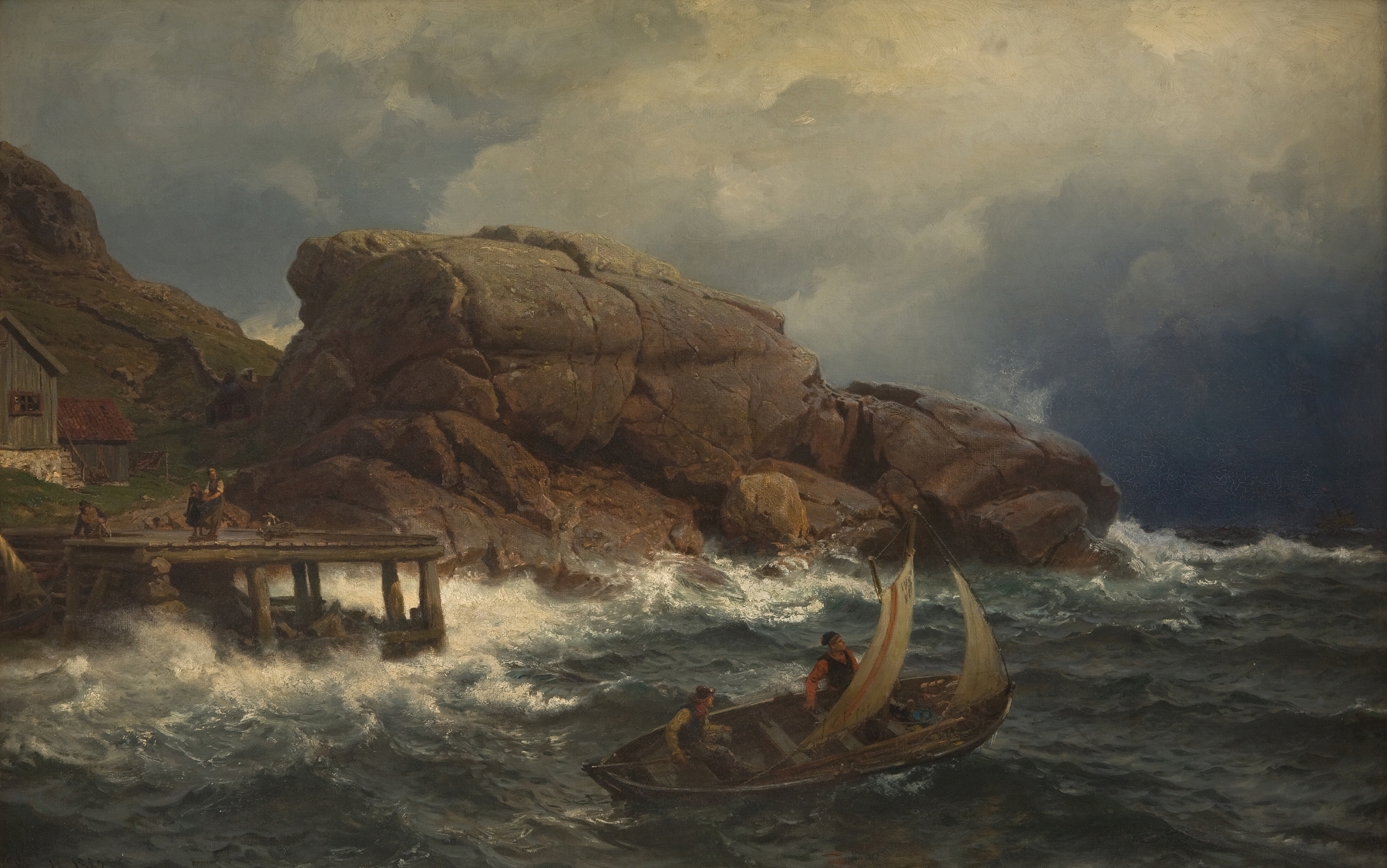
“Under the brush, chaos becomes grace.” In Hans Gude's A Norwegian Seaport, a breathtaking transformation unfolds, one that compels us to explore the relationship between humanity and nature. This artwork invites viewers to ponder the delicate balance of existence, where the tumult of life meets serene beauty. Focus on the vibrant colors that dance together at the center, where boats bob gently in the harbor, their forms laid out against the expansive waters. Notice how the brushstrokes create a sense of movement, drawing your eye to the rippling reflections of the sky.
Gude’s adept use of light, particularly the warm hues that spill across the scene, captures the essence of a sunlit afternoon, inviting a sense of calm that permeates the otherwise bustling maritime life. Amid the stillness, the contrast between the rugged landscape and the soft, human presence reveals deeper narratives. The jagged mountains loom in the background, signifying the raw power of nature, while the boats and figures embody human resilience and aspiration. The harmonious interaction between these elements speaks to the awe-inspiring beauty found in the coexistence of mankind and the natural world, evoking a sense of nostalgia for simpler times.
Created in 1882, Gude painted this coastal scene during a period of significant development in Norway, as it began to embrace modernity while still holding onto its rich maritime traditions. At this time, Gude was establishing his reputation as a leading landscape artist, influenced by his early experiences in the romantic tradition. A Norwegian Seaport stands as a testament to his journey, capturing both the essence of his homeland and the broader shifts in the art world.