A Scene at Dusk in Norway — History & Analysis
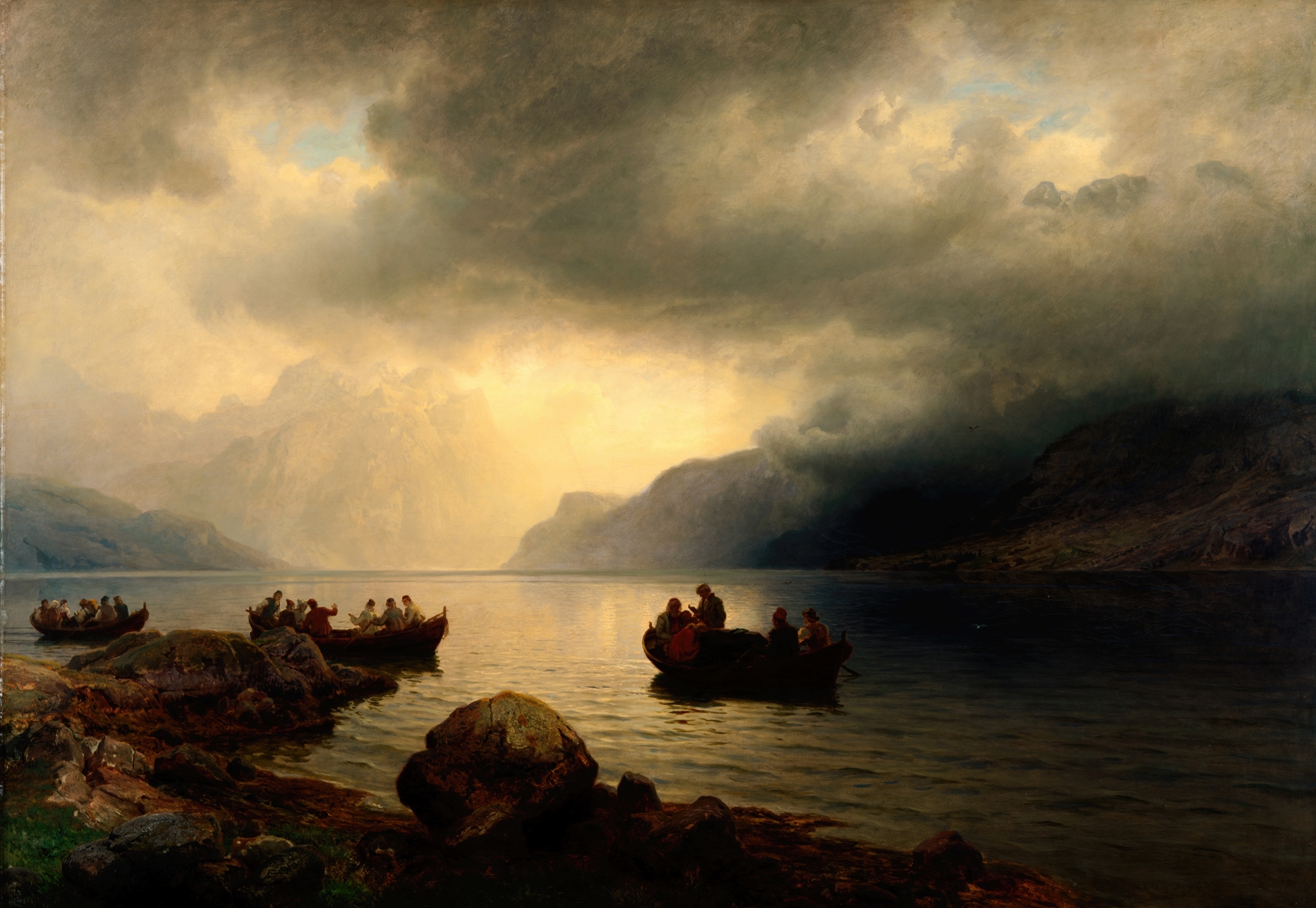
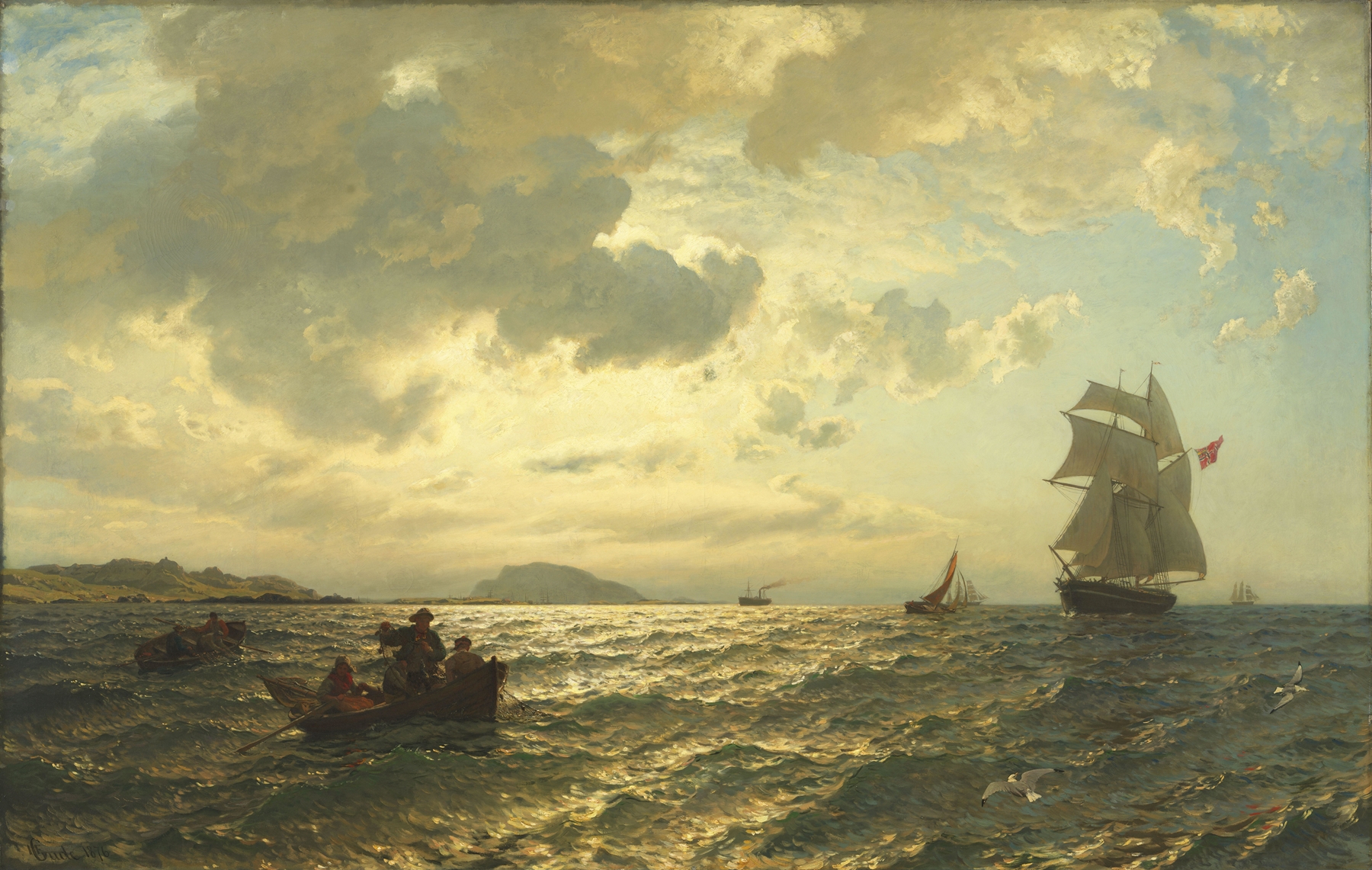
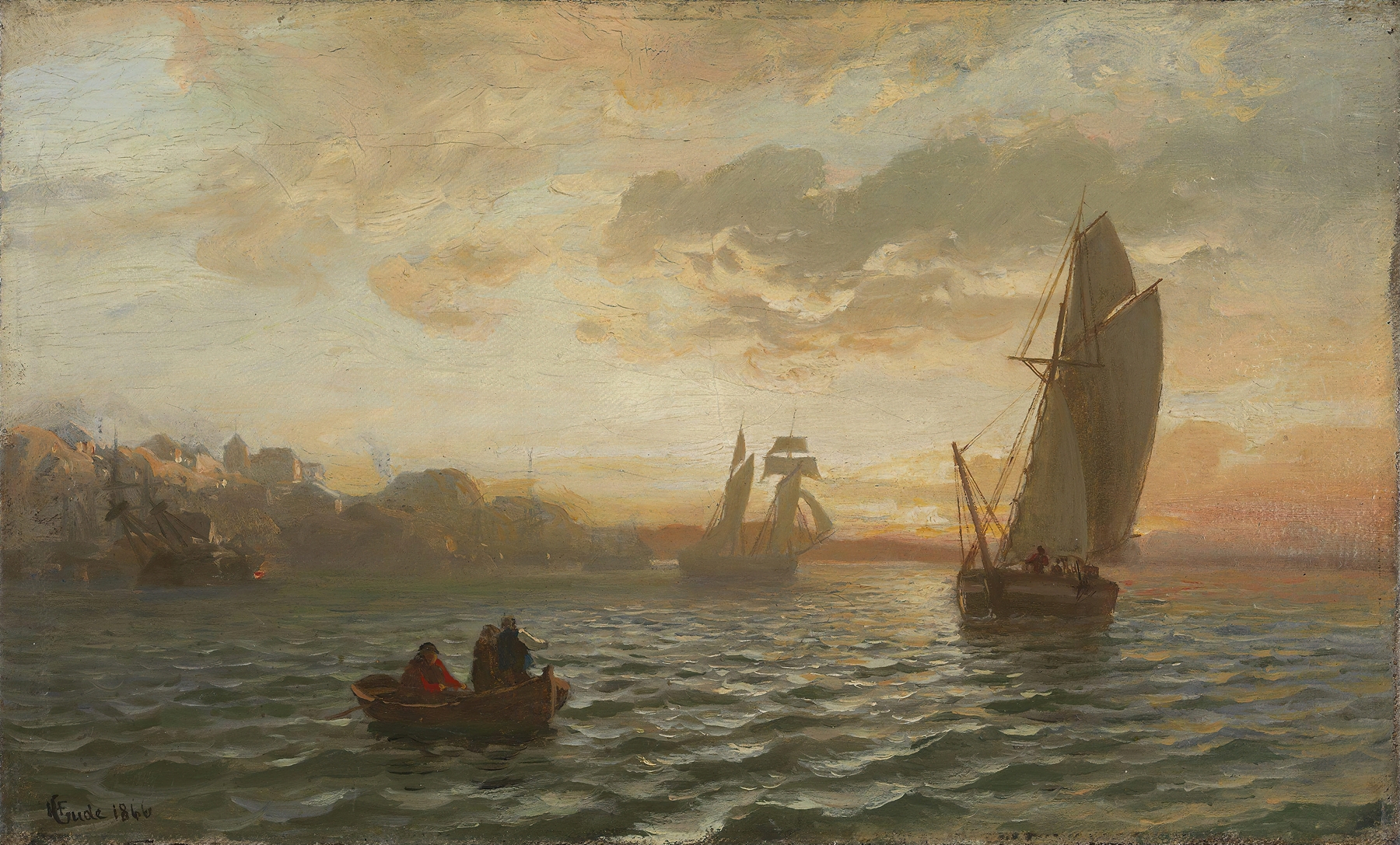
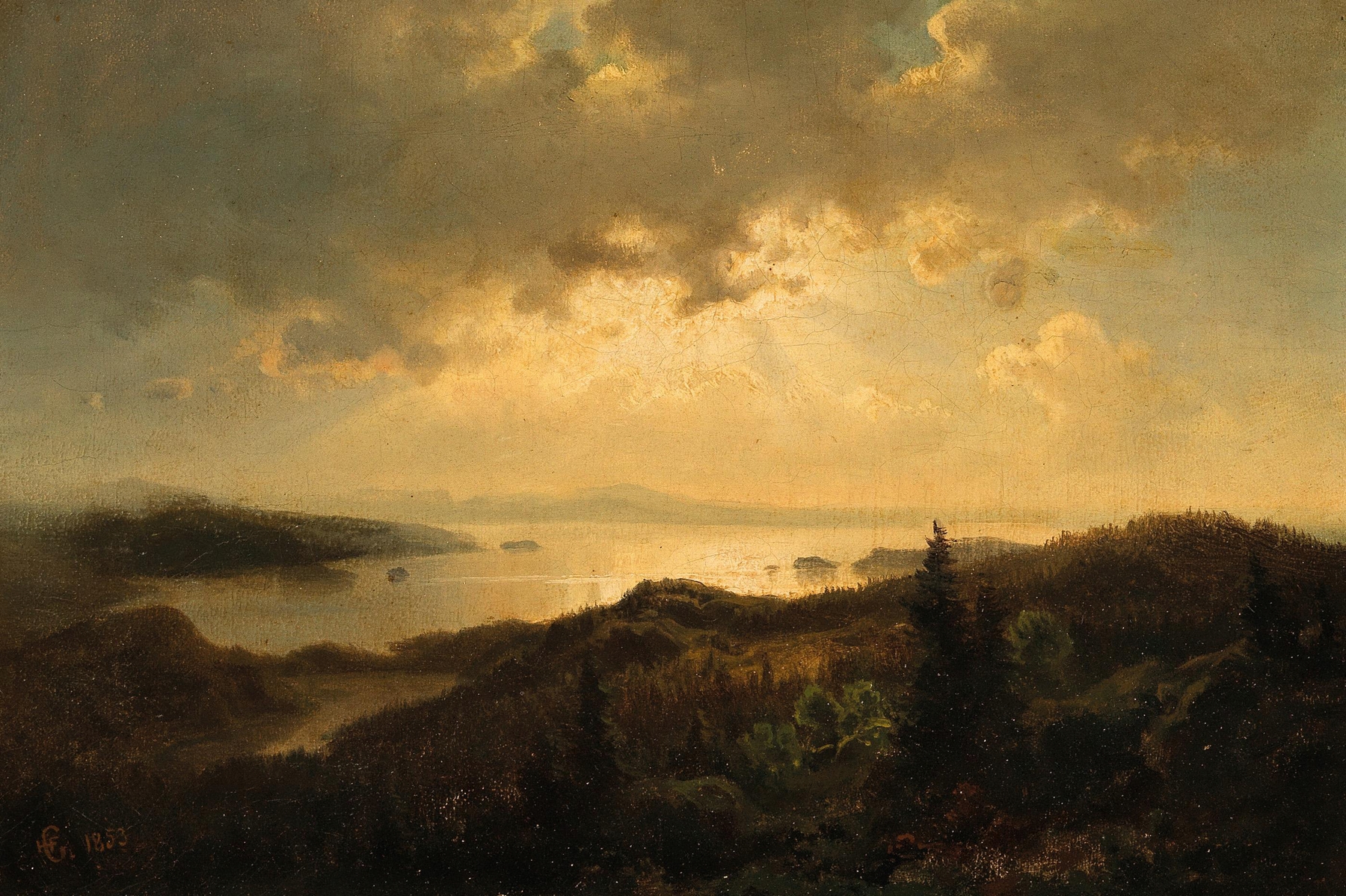
“To paint is to remember what time wants us to forget.” In A Scene at Dusk in Norway, the artist captures the ephemeral beauty of twilight, where nature and memory intertwine in a delicate dance. Start by looking toward the horizon, where a fleeting sunset bathes the landscape in warm golds and deep blues. Notice how the soft brushstrokes blend seamlessly, creating a serene atmosphere that invites the viewer into this tranquil moment. The gentle ripples on the water's surface reflect a perfect symmetry of the sky, while the silhouettes of distant mountains frame the scene, drawing your gaze inward toward the heart of the landscape.
Yet, beneath this idyllic setting lies a tension between light and shadow. The encroaching dusk hints at the inevitable passage of time, suggesting both beauty and loss. The trees, dark and looming, contrast sharply with the glowing sky, reminding us of nature's power and the fleeting nature of these twilight moments. This interplay mirrors the complexity of human emotion, evoking feelings of nostalgia and awe.
In 1853, Hans Gude was immersed in the Romantic movement, which sought to glorify the natural world. Living in Norway, he was inspired by the breathtaking landscapes that surrounded him. At this time, many artists were exploring the effects of light and atmosphere, reflecting a broader shift in the art world toward capturing the sublime. Gude’s work stands as a testament to this movement, celebrating the majestic beauty of his homeland.