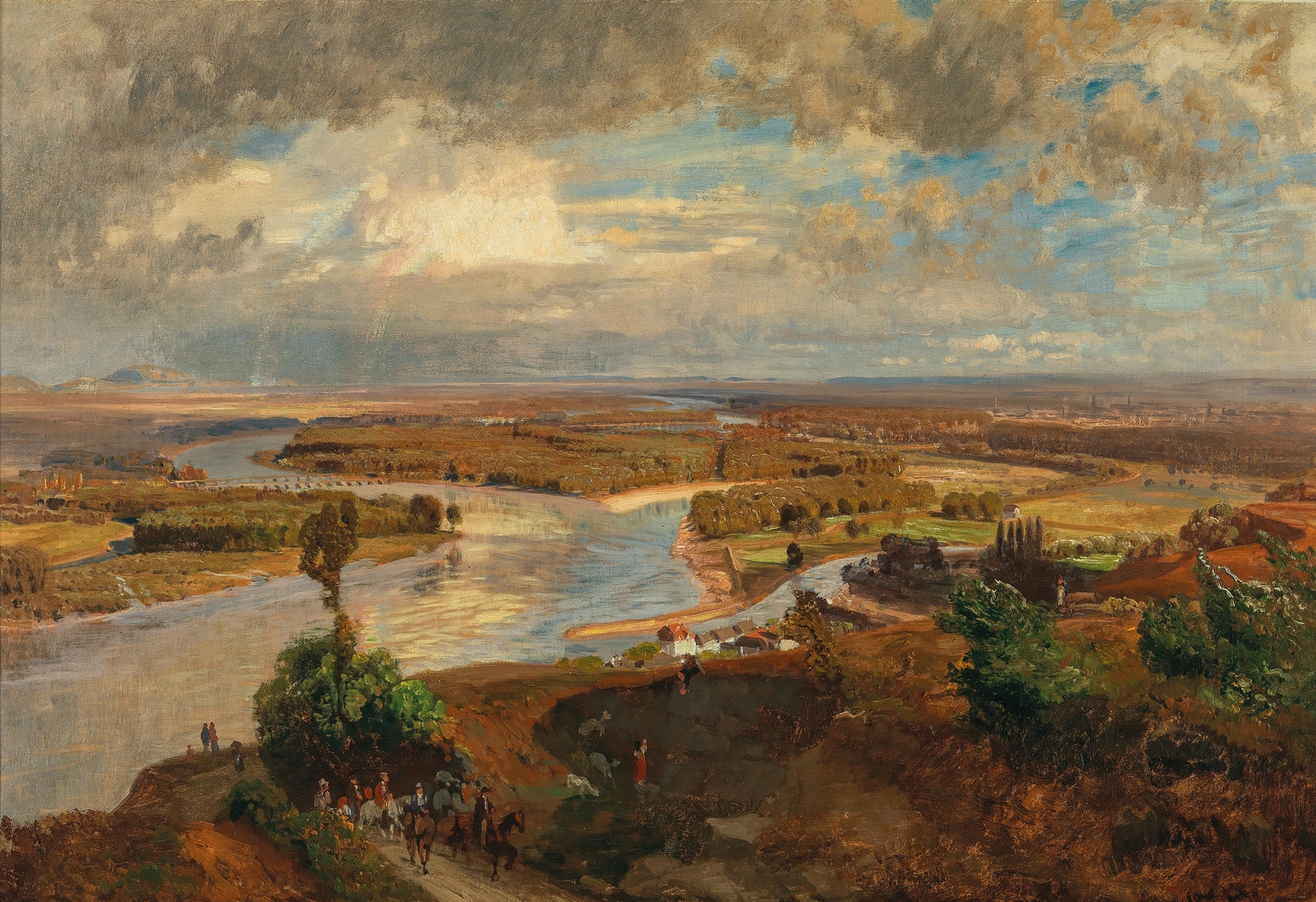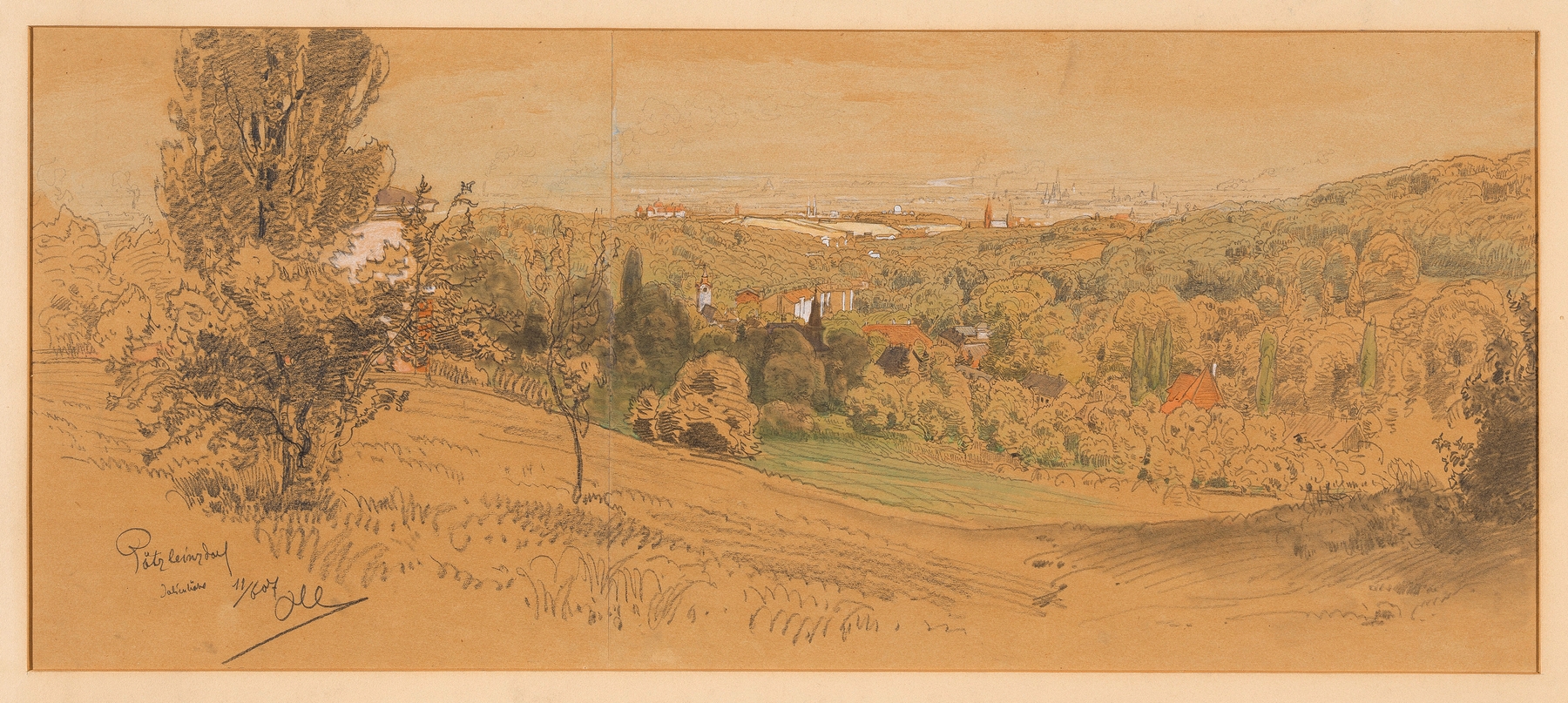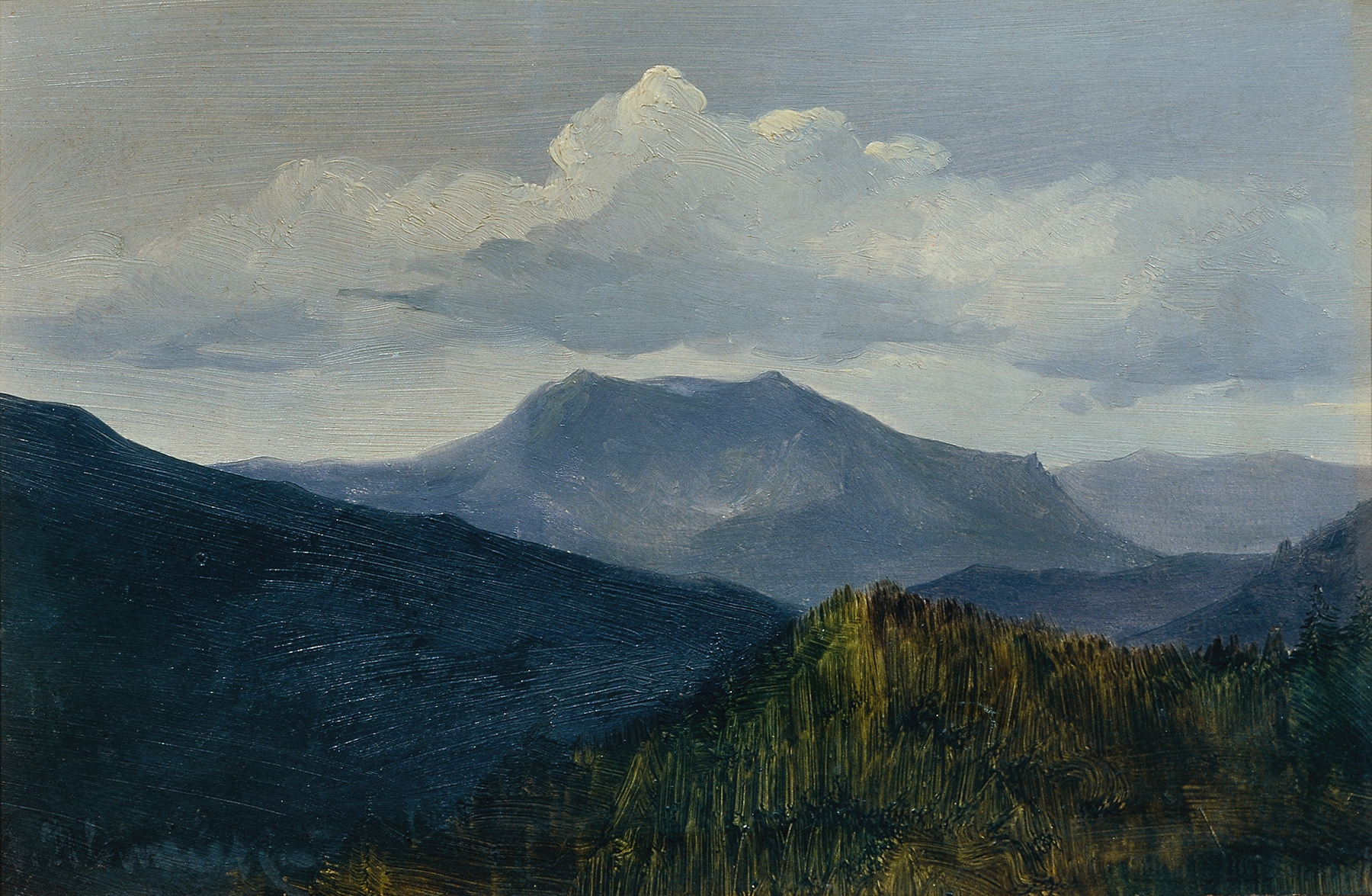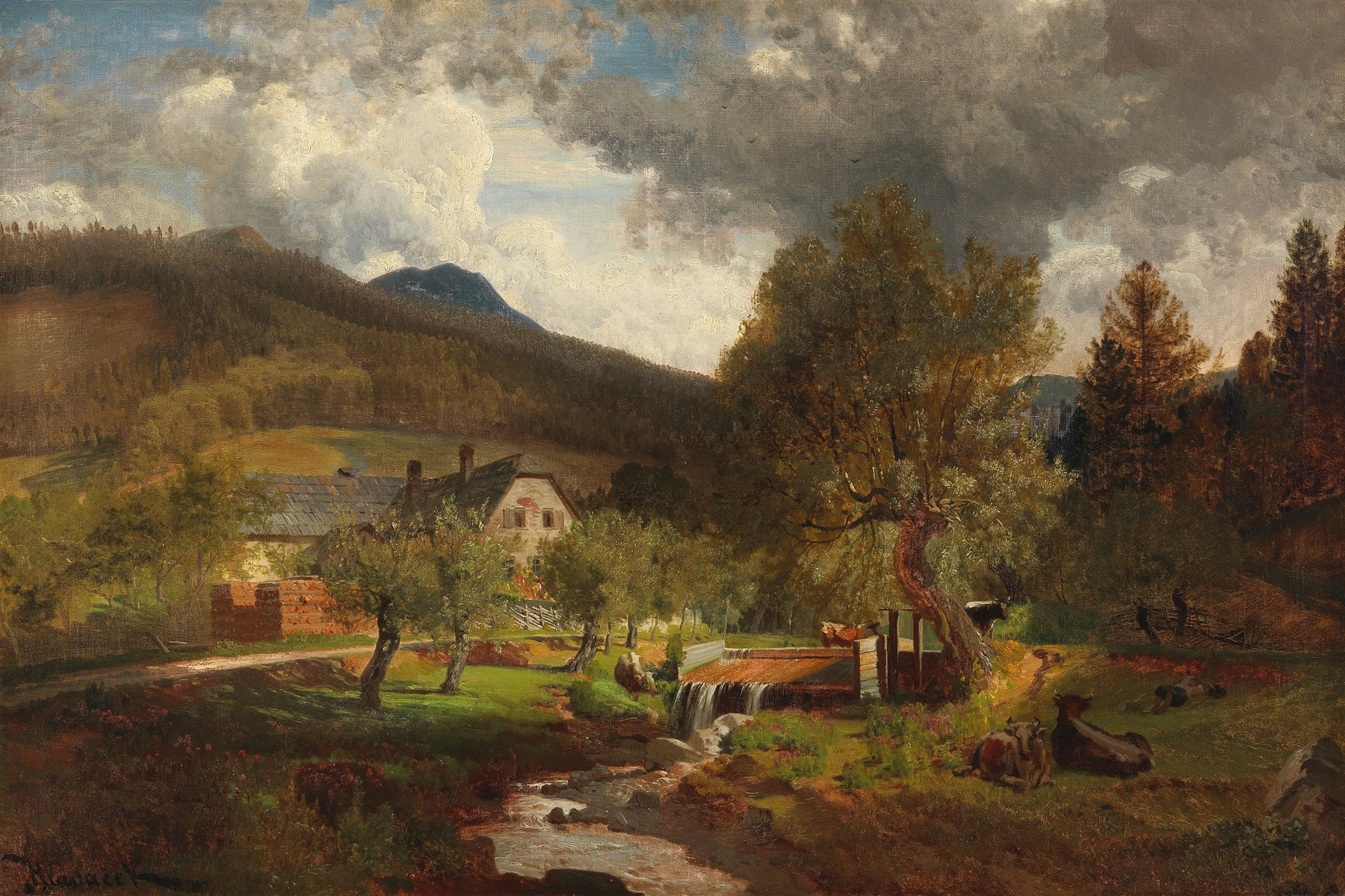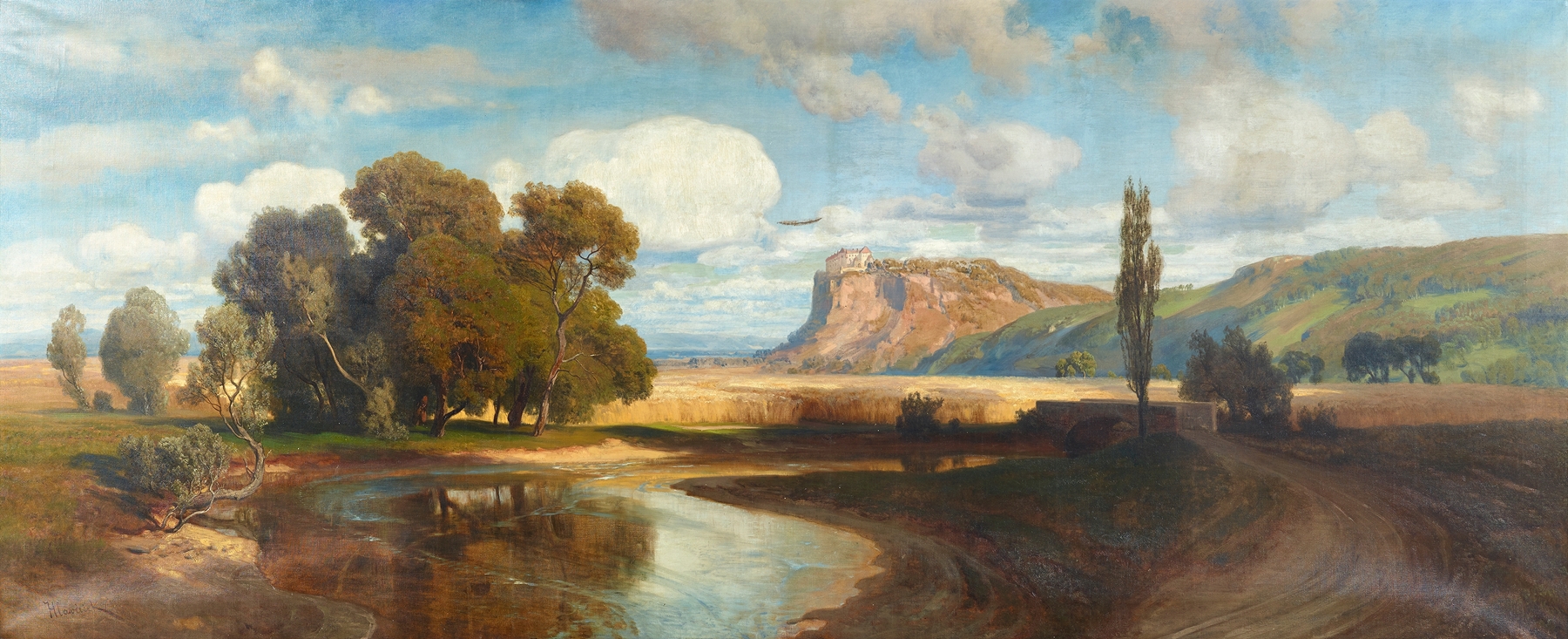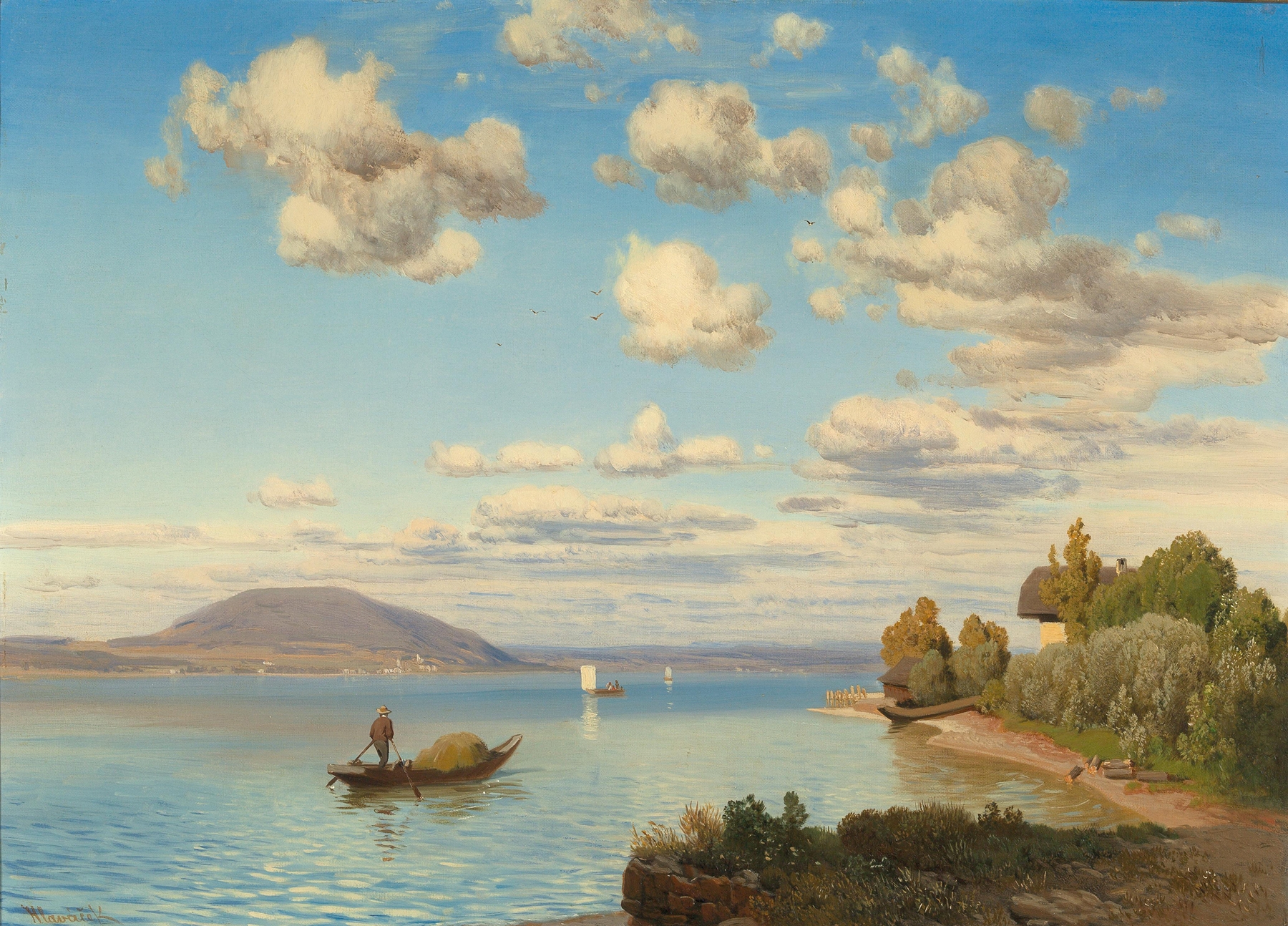
Can paint confess what words never could? In the stillness of *A Scene on Lake Attersee*, the canvas captures an unsettling tranquility, where beauty veils an undercurrent of violence. Look to the left at the dense, dark forest meeting the water’s edge, where shadows loom ominously beneath the emerald foliage. The shimmering surface of the lake reflects the sky, a brilliant blue interrupted only by wisps of clouds, yet the tumult hidden beneath—ripples that suggest a disturbance—draws the eye inward. Brushstrokes create a juxtaposition between the serenity of nature and the tension lurking just below, the colors shifting from peaceful greens to foreboding grays, hinting at an unseen threat. Amidst the idyllic landscape, a deeper narrative unfolds—the contrast between light and dark symbolizes the duality of existence. The placid laurel green water, a mirror for the threatening clouds above, hints at the violence of uncharted depths, suggesting that even the most tranquil moments can betray a darker reality. The artist's choice to embrace this tension invites viewers to confront their own perceptions, leaving them questioning what lurks behind the veil of calm. Created during a period when Anton Hlavacek was establishing his place in the art world, *A Scene on Lake Attersee* reflects a time of exploration and introspection. The late 19th century in Austria was marked by a burgeoning interest in landscape painting, blending realism with emotional depth. Hlavacek, influenced by the changing artistic movements, crafted this work in an environment rich with both beauty and tumult—a perfect backdrop for his reflections on the complexities of nature and human emotion.