A Two-Decker on Fire at Night off a Fort — History & Analysis
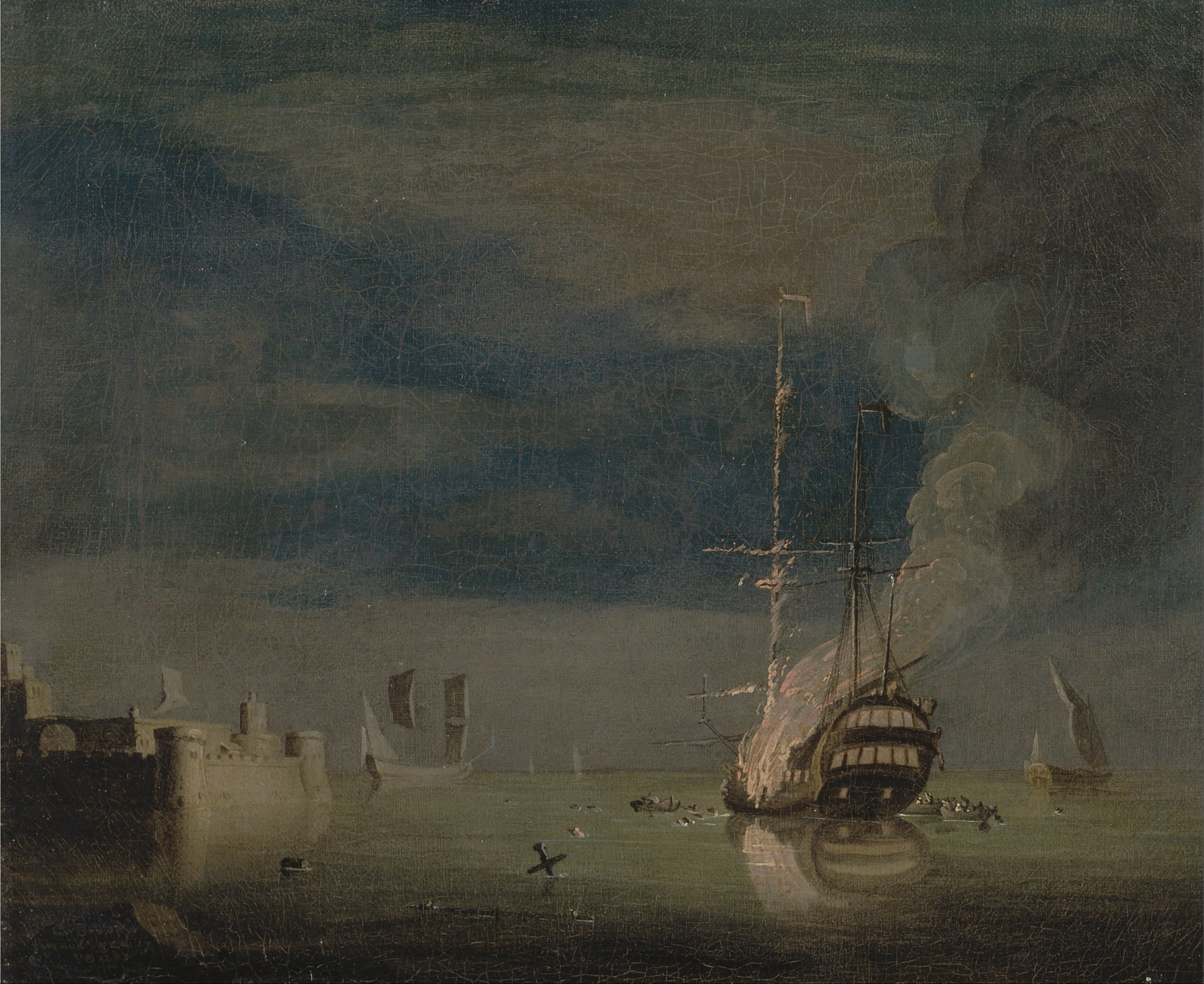
“Every silence here is a confession.” In the tension of destruction, tranquility emerges as flames consume the vessel, illuminating the night. The scene encapsulates a moment of stark contrast, where chaos and serenity coexist in a world poised between calamity and reflection. Look to the left of the canvas, where the fiery glow of the inferno captures the lower hull of the ship, casting flickering light onto the dark waters. Notice the full moon in the sky above, balancing the tumult below with a cool, ethereal aura.
Each brushstroke conveys movement, from the billowing smoke rising like spirits freed from their confines to the stillness of the onlookers on the shore, who seem to hold their breath, suspended in the weight of the unfolding horror. The juxtaposition of light and dark serves as a metaphor for the duality of human experience—joy intertwined with sorrow, beauty emerging from destruction. The calmness of the moonlit sky contrasts sharply with the raging flames, a reminder of the fragile peace that exists even amidst chaos. The figures watching from the fort may harbor a sense of helplessness, yet their stillness suggests an acceptance of fate, a reflection of the serene surrender to the inevitable.
In 1740, Charles Brooking was in the midst of developing his distinctive marine style, focusing on naval events and landscapes. Living in England, a time when maritime conflicts were shaping national identity, the artist captured both the immediacy of danger and the serene beauty of the nocturnal setting. This work reflects not just a moment of disaster, but the profound interplay of human emotion and nature’s sublime forces.