Abendstimmung an der griechischen Küste — History & Analysis
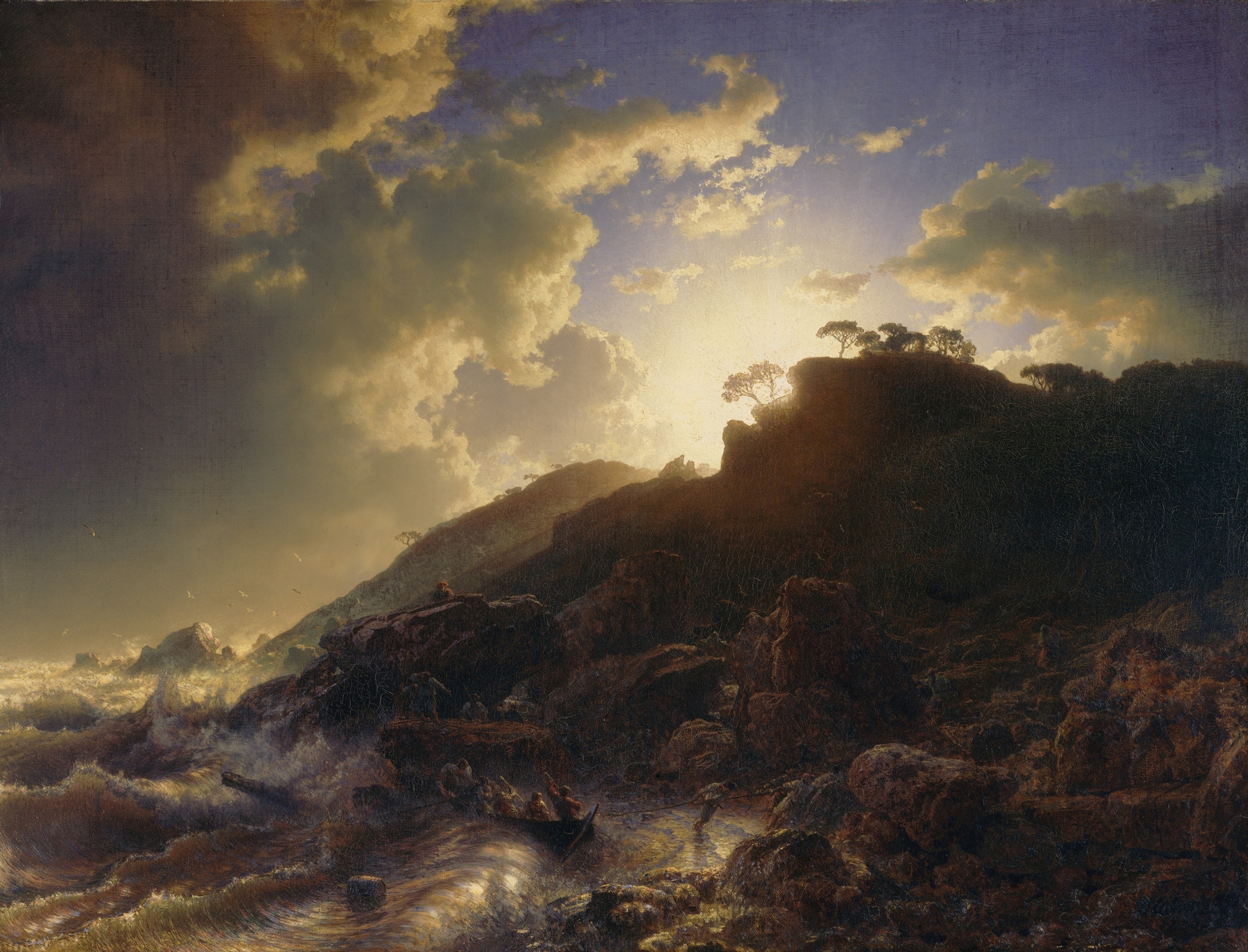
Can beauty exist without sorrow? Achenbach’s Abendstimmung an der griechischen Küste invites us to ponder this question as the sun dips below the horizon, casting a golden glow over the calm waters. The painting encapsulates a moment that feels both enchanting and haunting, where the fleeting beauty of dusk dances alongside an undercurrent of melancholy — a quiet reminder of what is lost. Look to the left at the horizon line, where the sun, a fiery orb, sinks into the depths of the sea. The rich oranges and purples blend seamlessly, a masterclass in color that evokes both warmth and a sense of impending darkness.
Notice how the gentle waves reflect this radiant palette, shimmering with soft light. As your gaze sweeps across the canvas, take in the rugged coastline dotted with olive trees, each brushstroke conveying the textures of nature, creating a sense of intimacy with the landscape. Yet, within this serene scene lies a complex tension. The juxtaposition of the tranquil sea and the looming dark cliffs suggests a deeper emotional landscape — one of unspoken betrayal and longing. The untouched beauty of the Greek coast serves as a backdrop for feelings too profound to be neatly expressed; it is in this contrast that the viewer senses a sorrow that colors the beauty.
The tranquility of the evening leads us to question what shadows lie beneath the surface of this idyllic vista. In 1868, Achenbach painted this scene during a period of personal and artistic exploration while residing in Düsseldorf. The world was witnessing the dawn of Romanticism, where nature was celebrated yet often tinged with nostalgia and loss. Amidst rapid industrialization, artists like him sought solace in landscapes that captured the sublime, encapsulating both the beauty and the fragility of existence.