Auf stürmischer See — History & Analysis
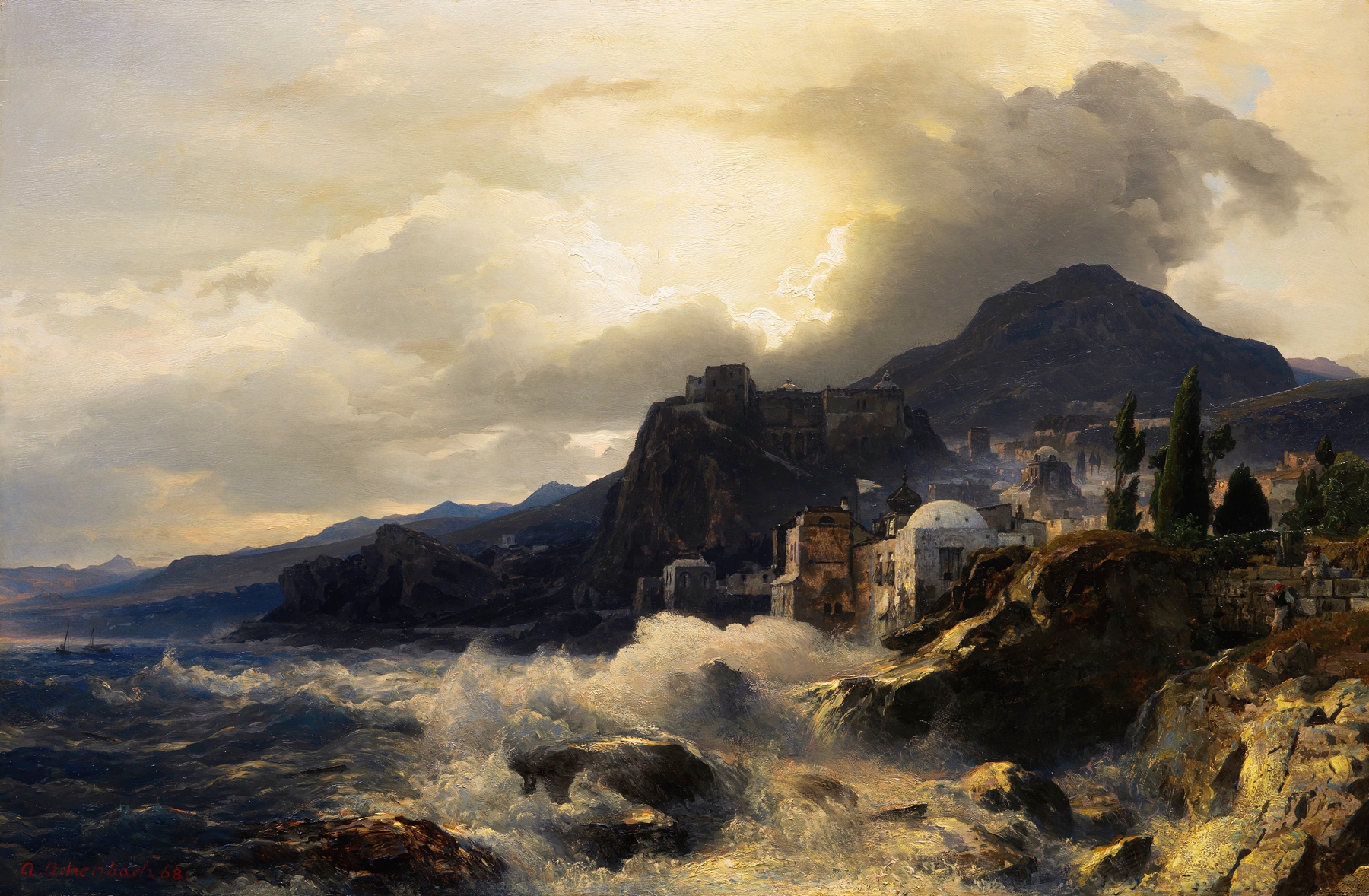
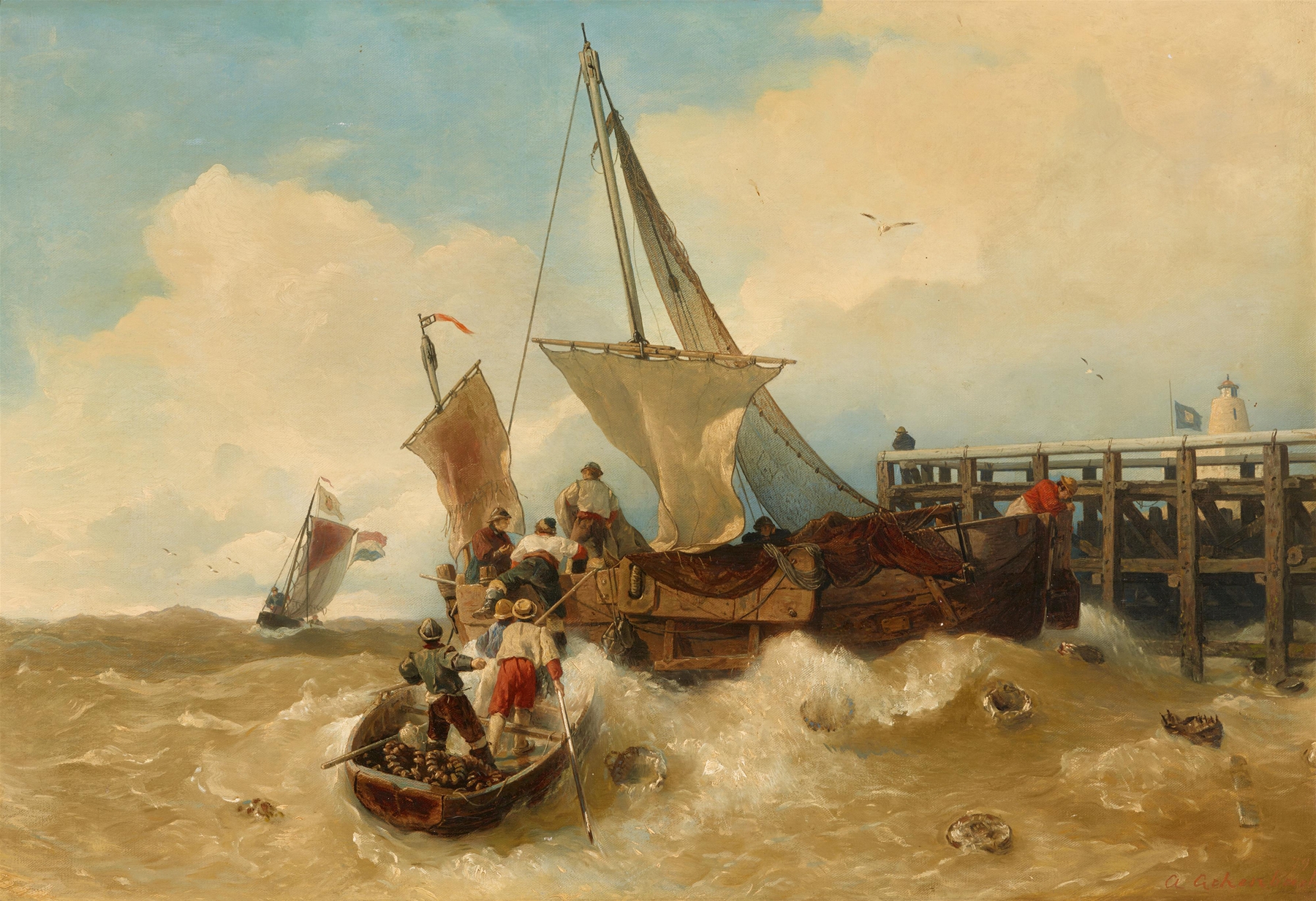
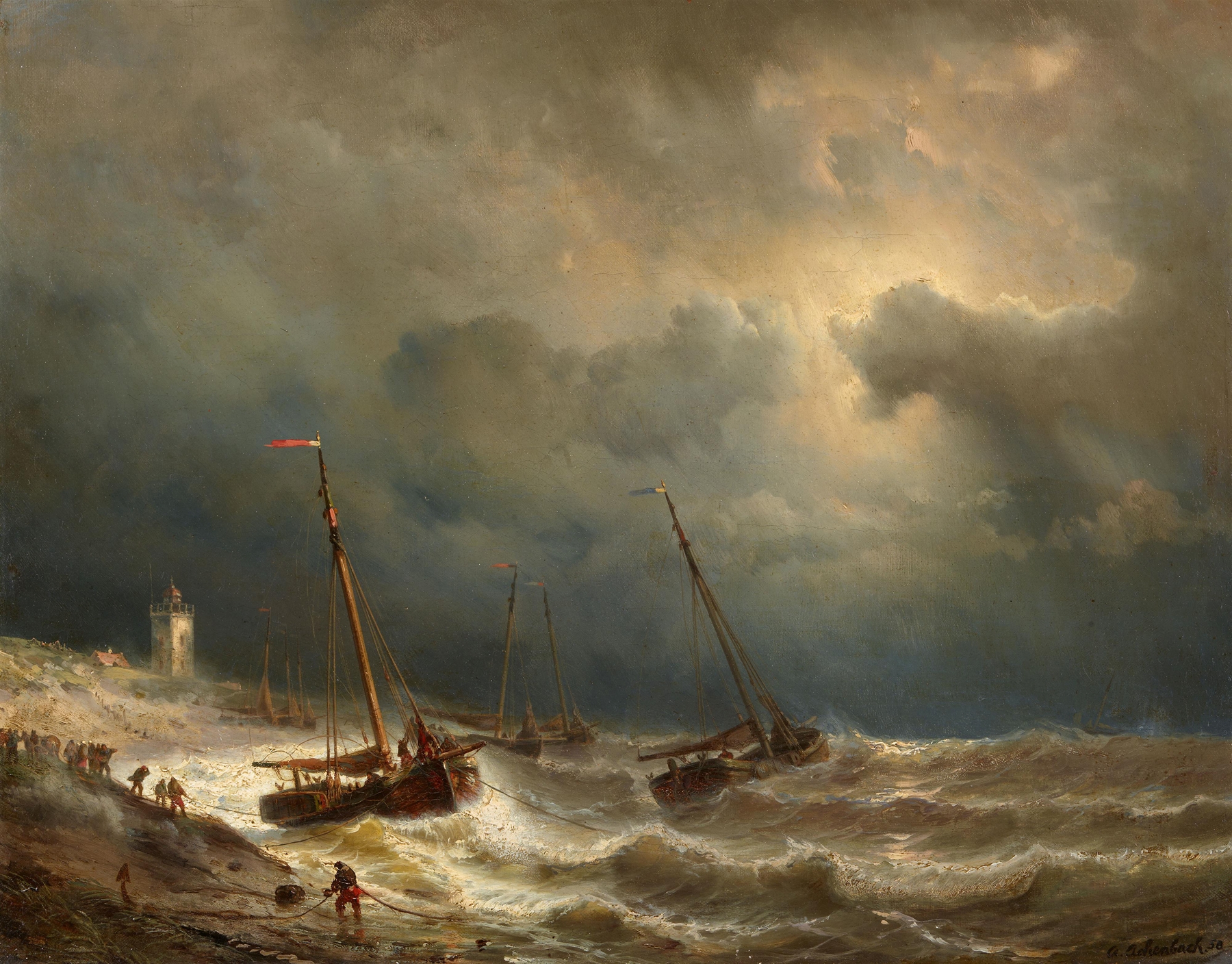
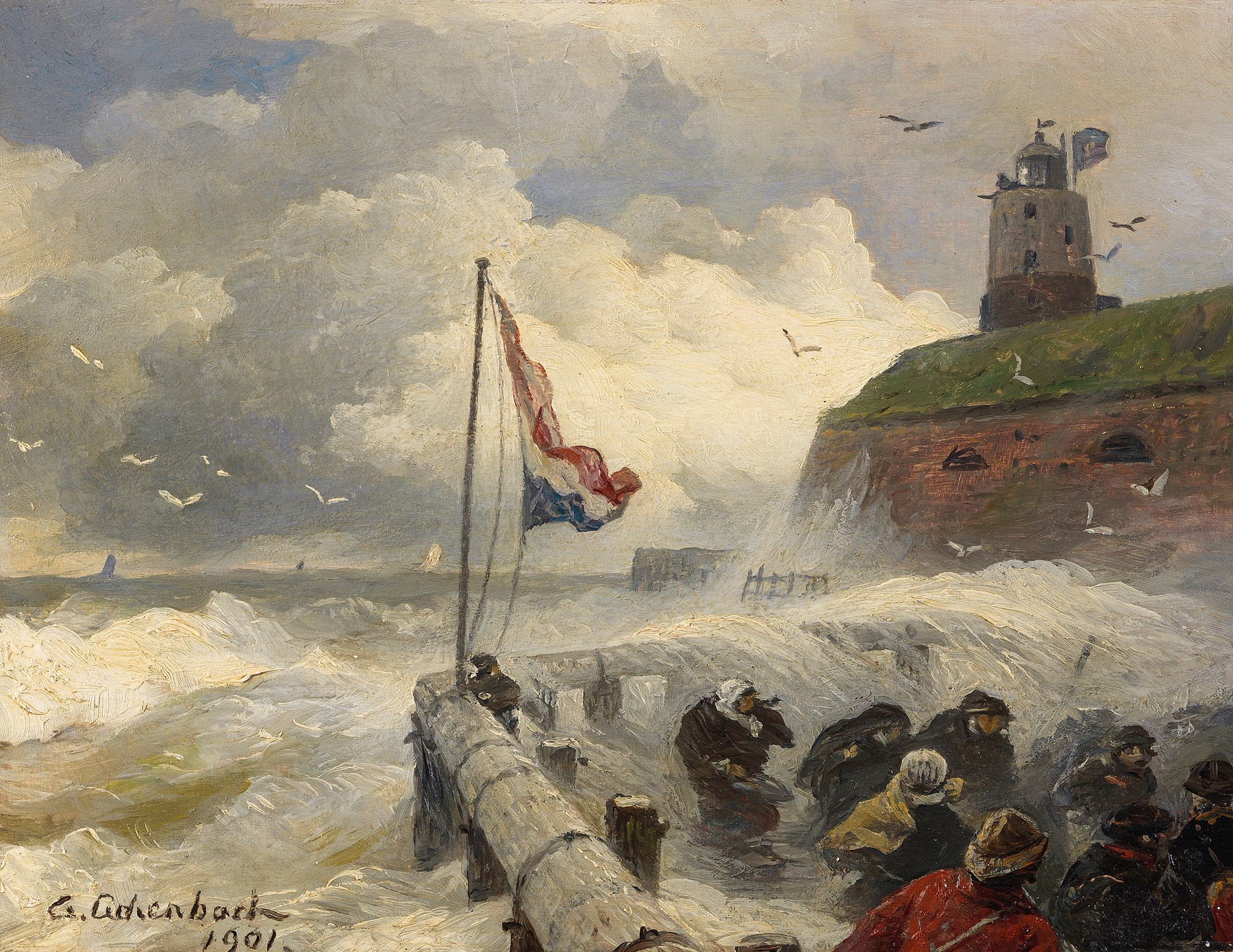
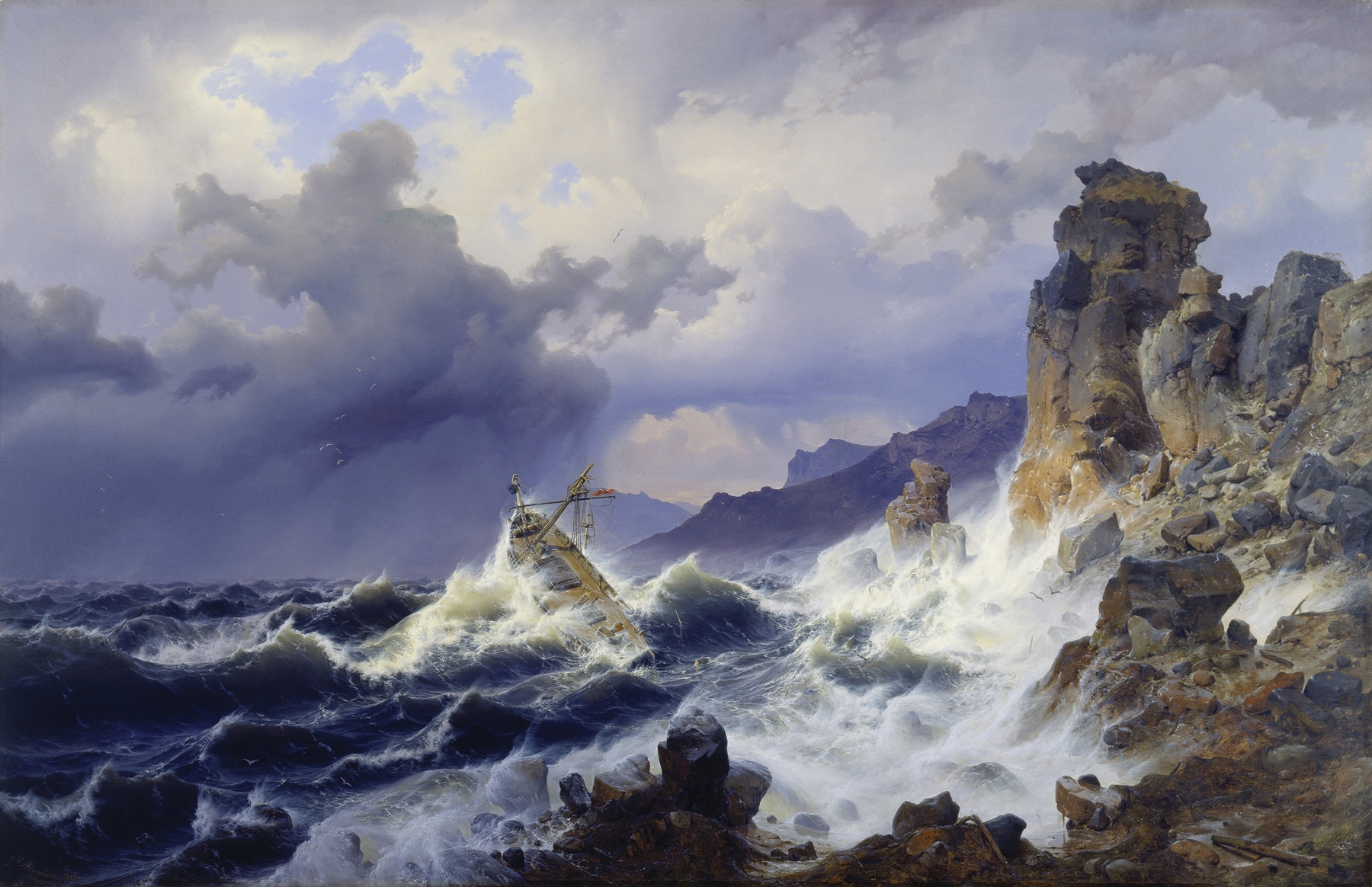
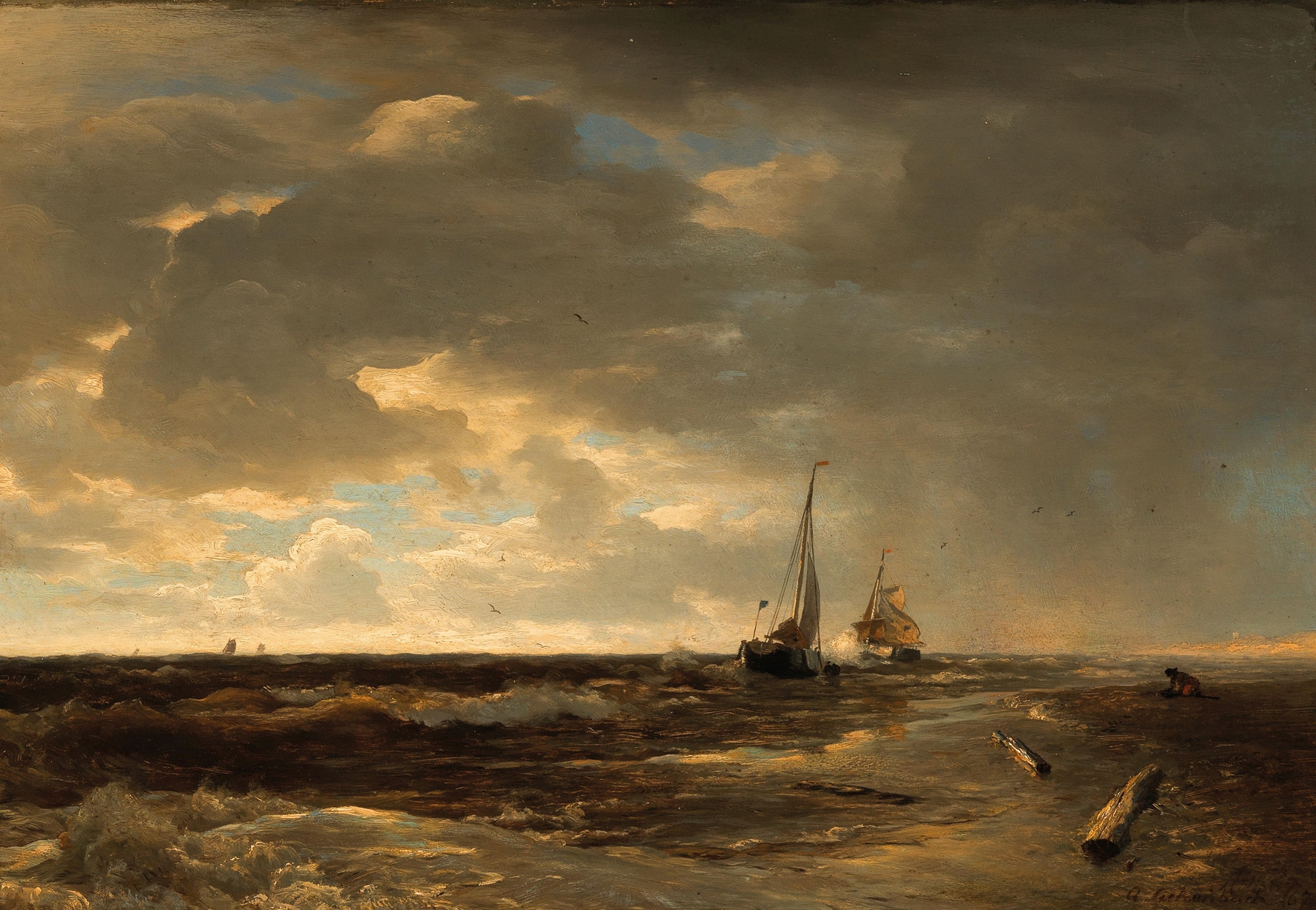
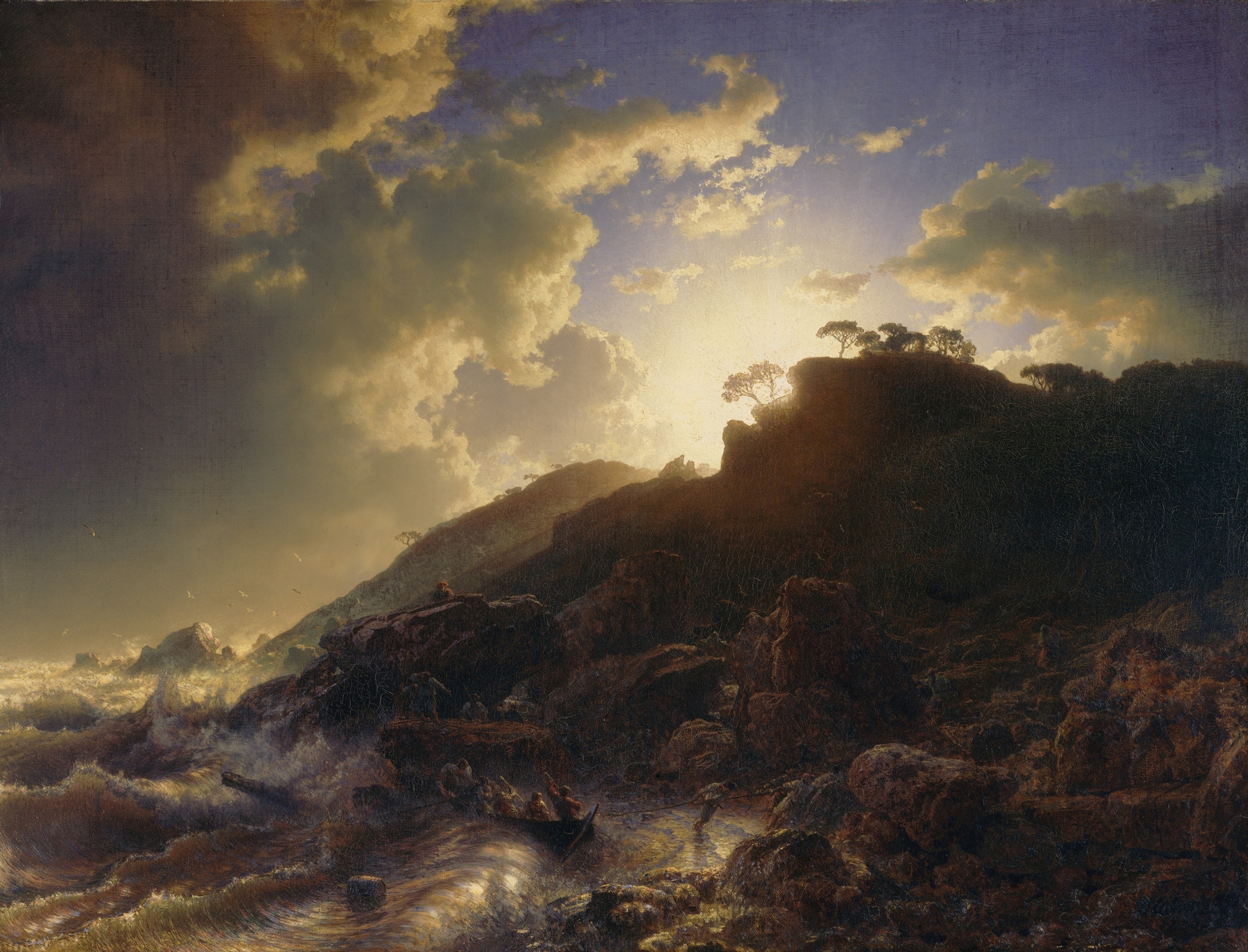
What secret hides in the quiet of the canvas? In Auf stürmischer See, the tension between nature's chaos and human fragility unfolds, inviting us to confront the delicate balance of existence. Focus on the turbulent waves that dominate the forefront, each brushstroke capturing the wild energy of the sea. Notice how the churning water reflects a blend of deep blues and grays, while whites froth violently at the surface, suggesting both danger and beauty. The looming clouds above, dark and ominous, shape the horizon, casting shadows that hint at an impending storm.
As your eyes travel to the small figures struggling in their boat, the contrast between their vulnerability and the vastness of nature becomes painfully evident. Within this turmoil lies a profound commentary on illusion. The juxtaposition of man-made vessels against the raging sea evokes the fragility of human ambition in the face of elemental forces. Additionally, the artist's meticulous attention to detail creates a sense of immediacy; the viewer feels the tension of the moment, as if caught in a narrative that promises both peril and salvation.
Each wave whispers secrets of the past, a reminder of the thin veil separating humanity from the overwhelming power of nature. Andreas Achenbach painted Auf stürmischer See in 1894, a time when he was already an established figure in the Düsseldorf School of painting. His work reflected the Romanticism of the era, focusing on nature's sublime qualities and humanity's relationship with the environment. During this period, Europe was grappling with industrialization, prompting a renewed interest in the natural world, and Achenbach captured this tension with both grace and urgency.