Sunset after a Storm on the Coast of Sicily — History & Analysis
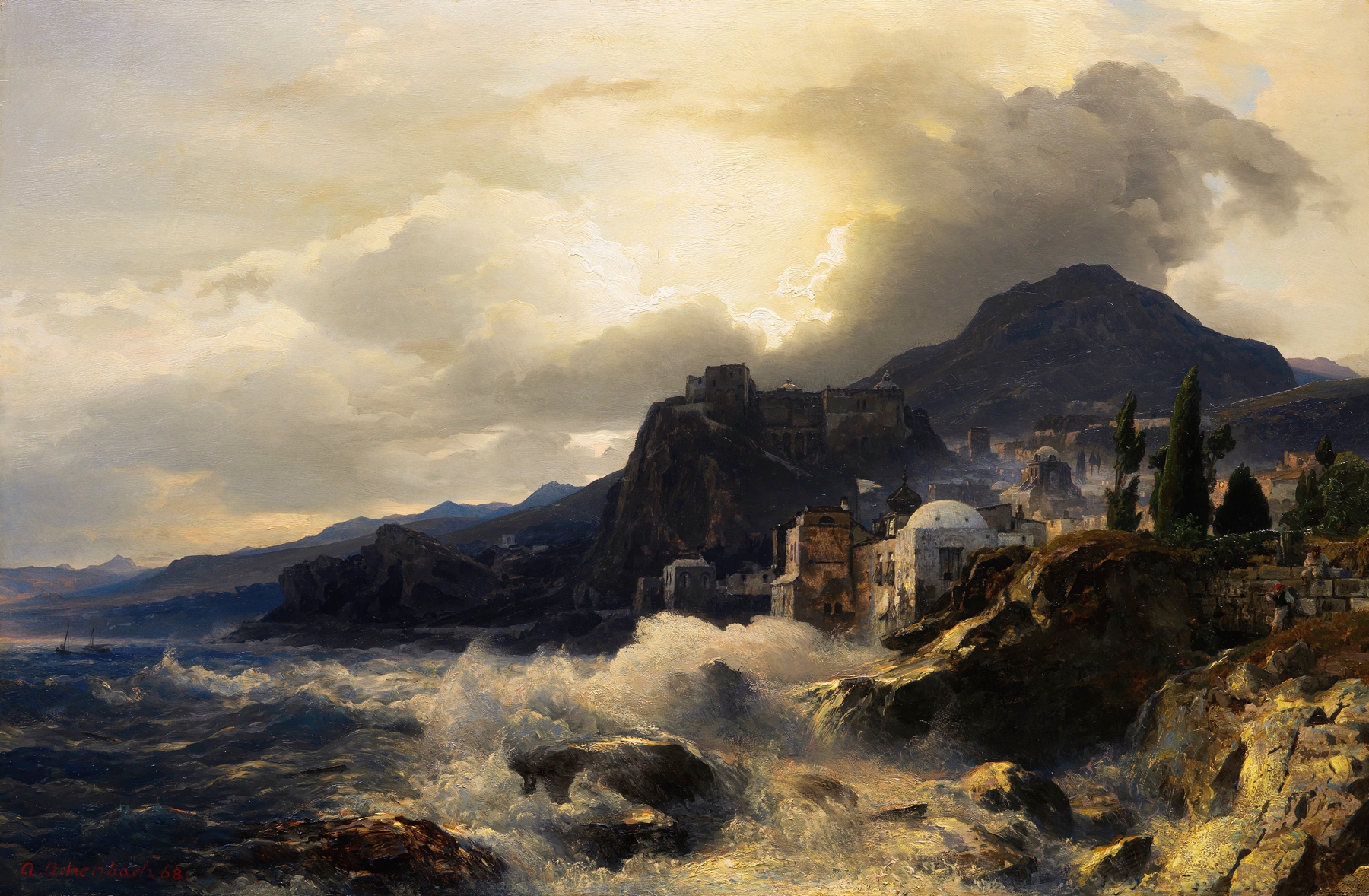
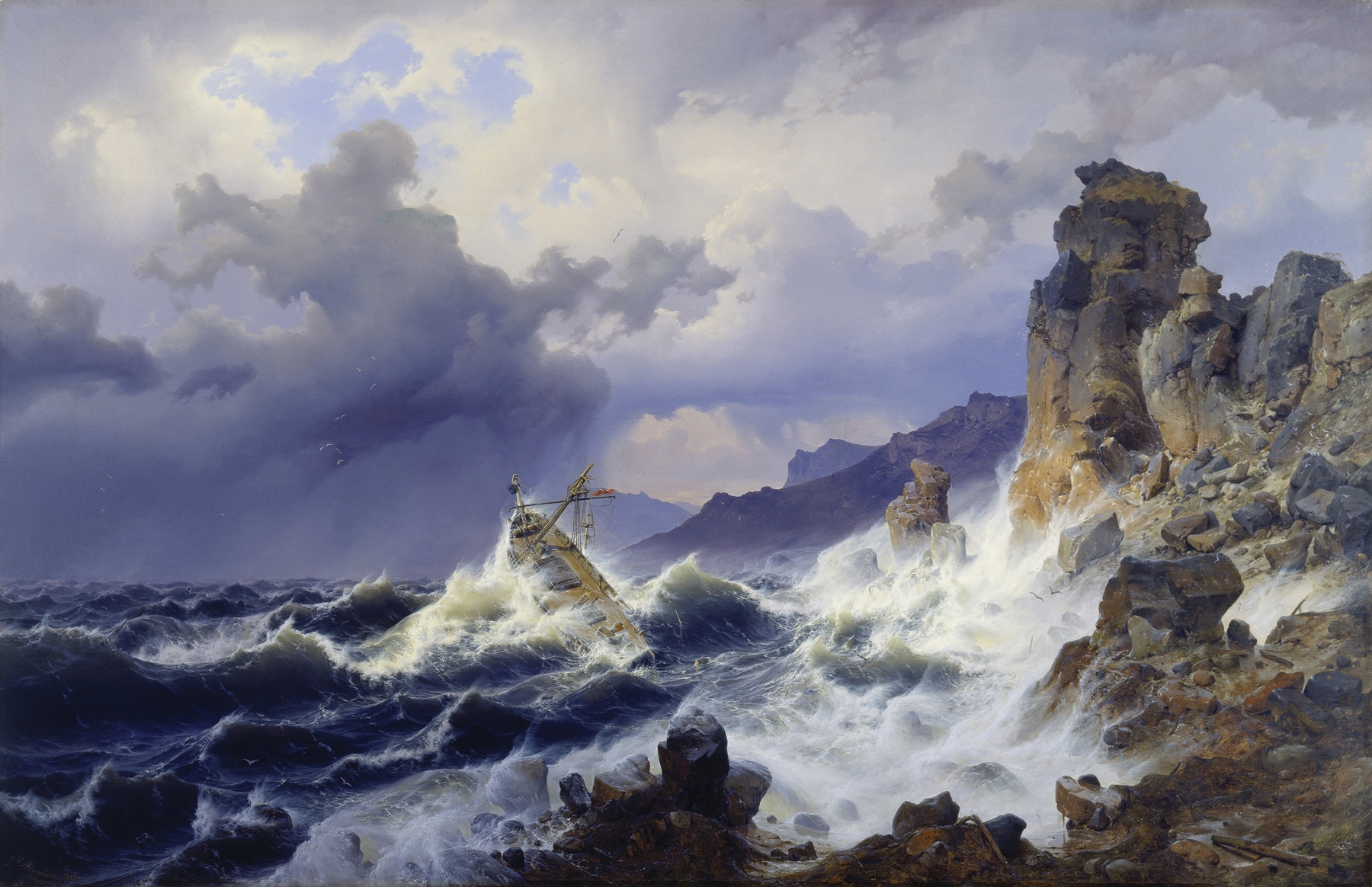
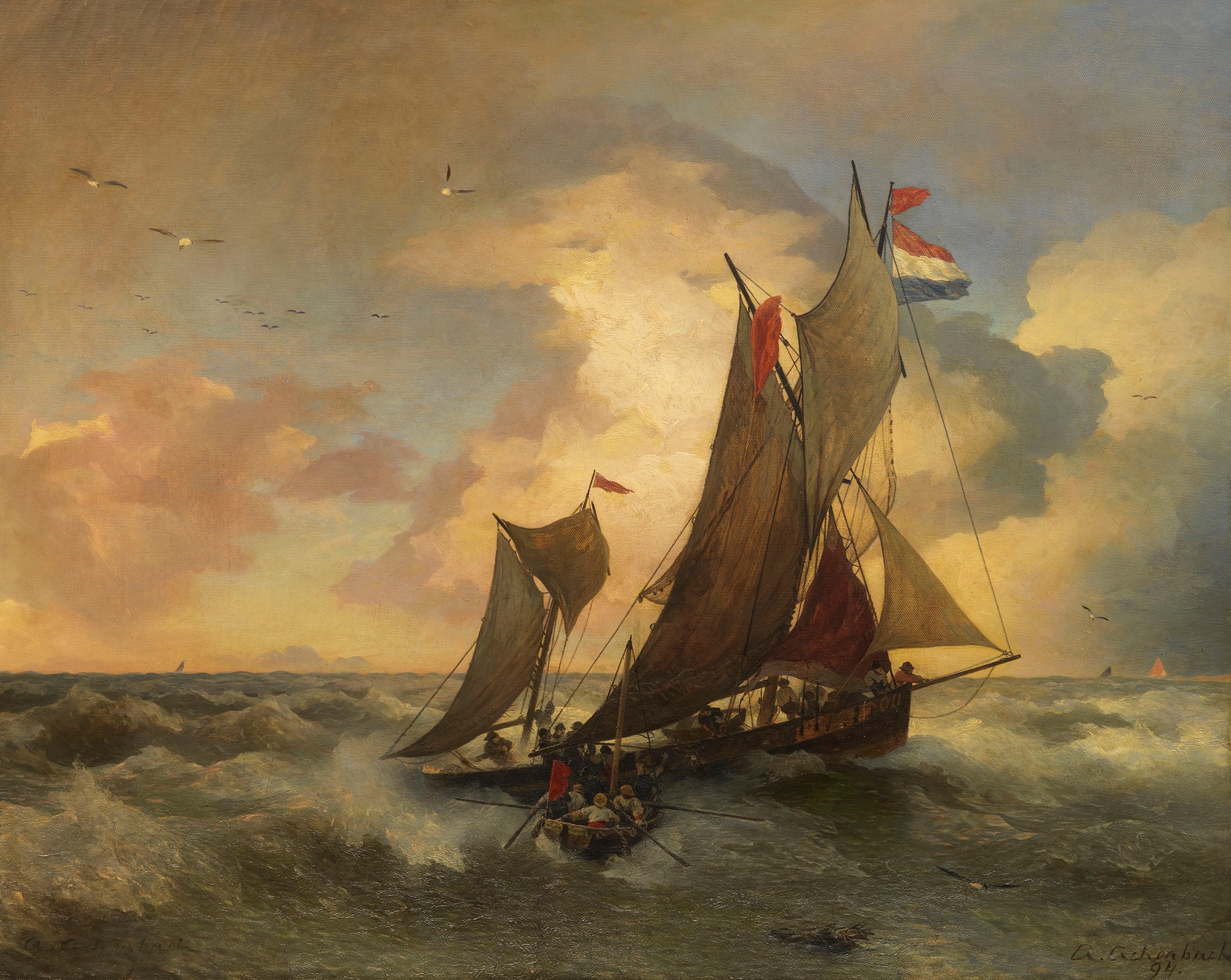
“To paint is to remember what time wants us to forget.” In Sunset after a Storm on the Coast of Sicily, the fleeting moment captured in oil reminds us of the delicate balance between beauty and impermanence—an illusion we yearn to hold onto. Look to the horizon, where the tumultuous storm clouds have begun to part, revealing a breathtaking golden light that spills across the water. The contrasting colors—deep blues of the retreating storm meeting the warm oranges and pinks of the sunset—draw the eye and evoke a sense of calm after chaos. Notice how the texture of the waves, painted with swift brushstrokes, conveys both movement and stillness, creating a vivid interplay of nature's fury and serenity.
The painting encapsulates duality: the tempestuous storm's aftermath symbolizes renewal, while the tranquil sea reflects a fragile peace. The solitude of the coastline, almost deserted, speaks to a moment of introspection. Each detail, from the dramatic clouds to the shimmering surface of the water, invites viewers to explore their own emotional landscapes, evoking feelings of nostalgia and longing for moments once lived. Andreas Achenbach created this piece in 1853 during his time in Germany, shortly after he gained recognition as a leading landscape painter.
The Romantic movement, which emphasized emotion and nature, heavily influenced his work. His paintings often exhibited a profound sensitivity to light and atmosphere, which resonated with a European audience grappling with rapid industrial changes. This particular work stands as a testament to Achenbach’s mastery in conveying the intimate relationship between humanity and the sublime forces of nature.