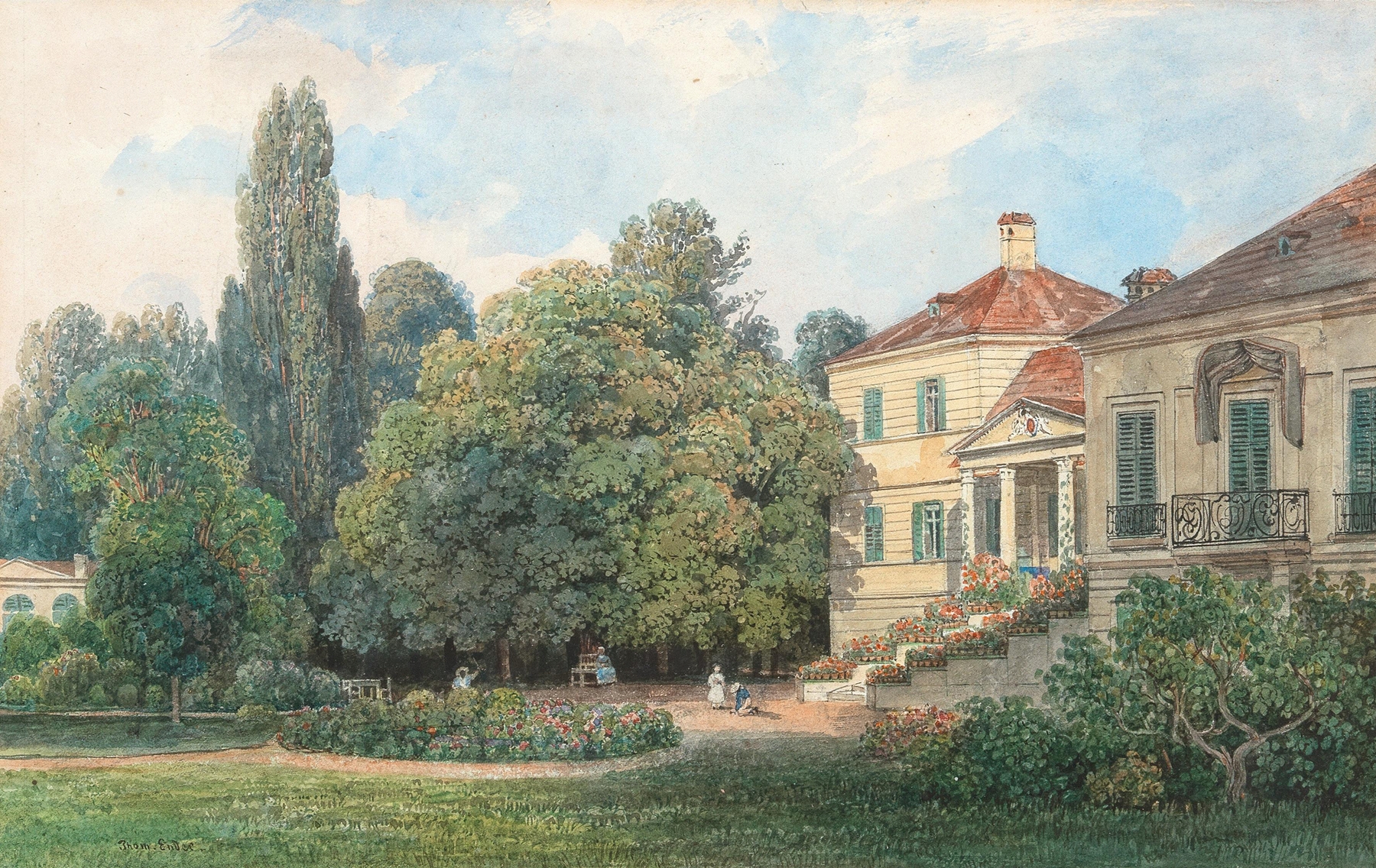
Andächtige bei einer Heilquelle (Landschaft mit Brunnen) — History & Analysis
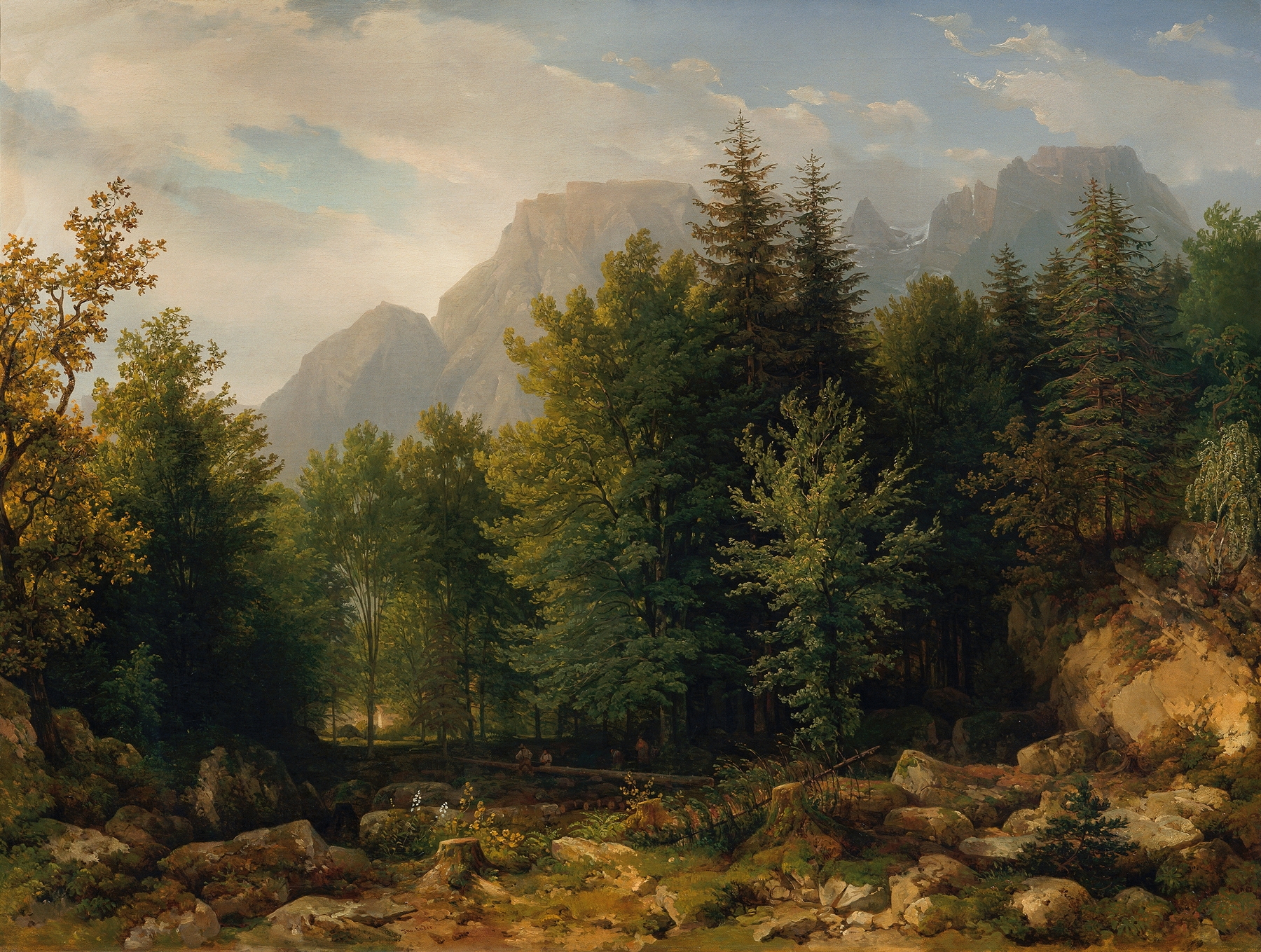
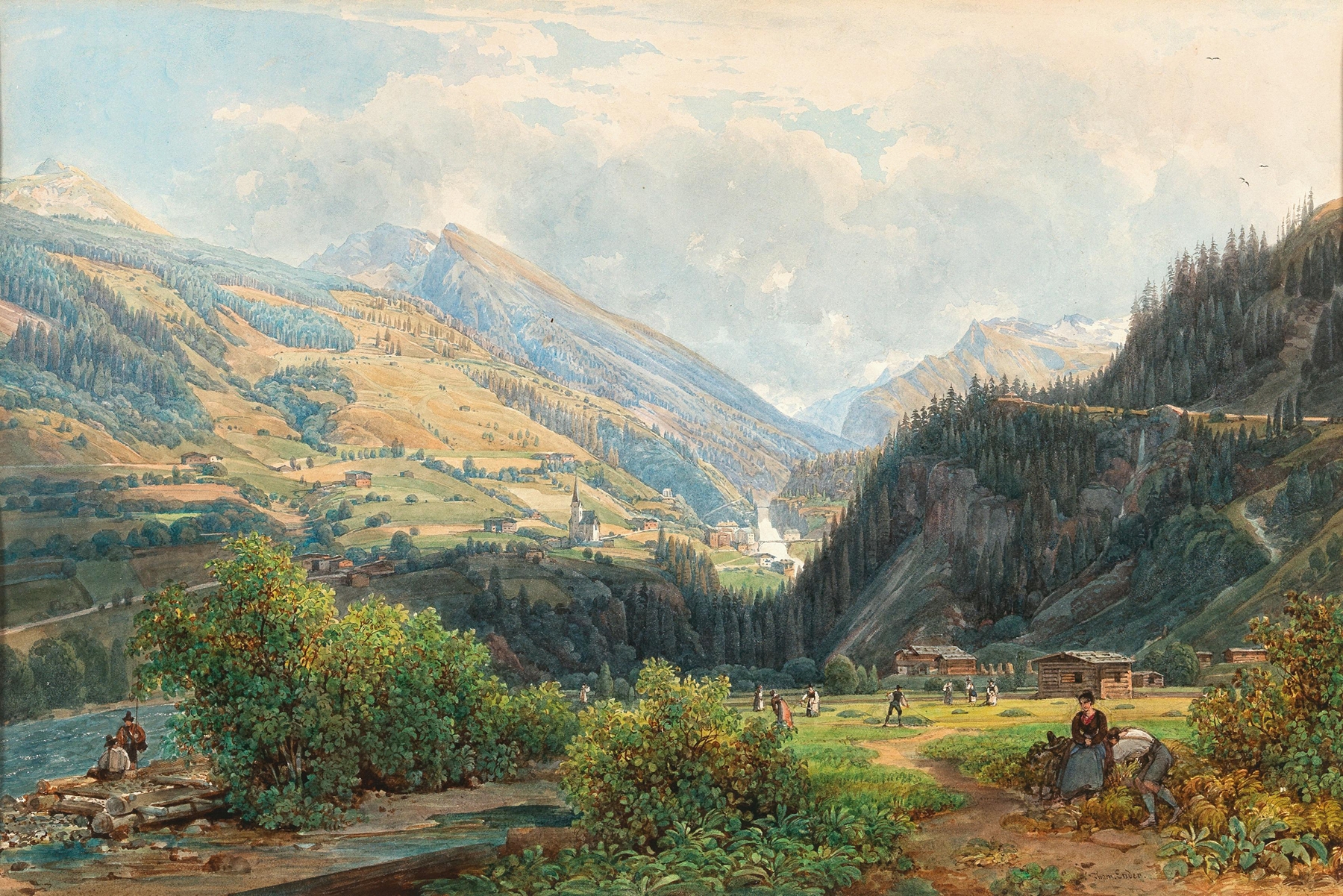
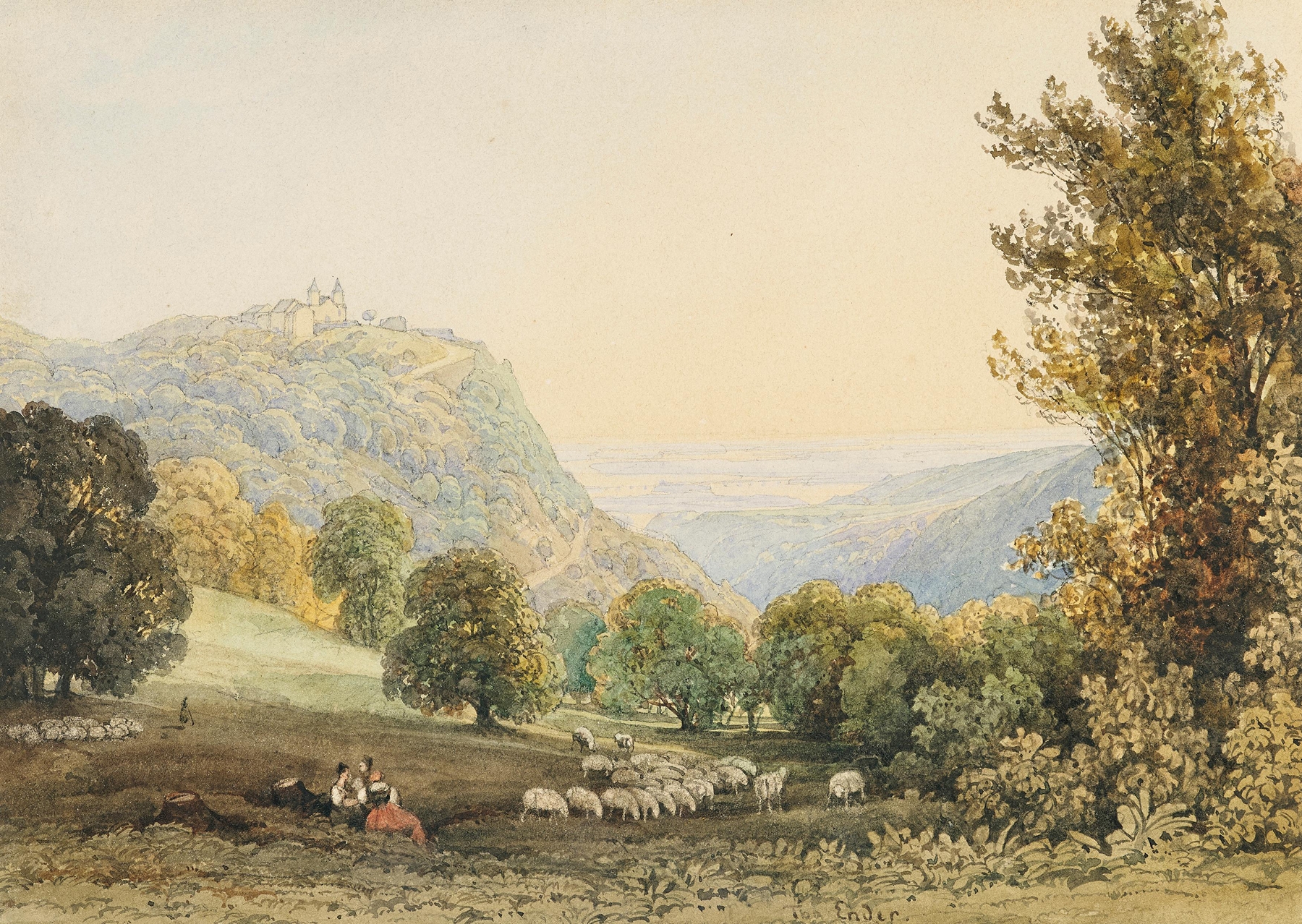
Who listens when art speaks of silence? In Andächtige bei einer Heilquelle, the stillness envelops the viewer, inviting contemplation on the delicate interplay between nature, humanity, and destiny. Look to the left, where a small group of figures huddles near the healing spring. Their postures, a blend of reverence and hope, draw the eye into the tranquil landscape surrounding them.
Notice how the warm hues of the setting sun illuminate the soft contours of the hills, enriching the lush greens and browns with an ethereal glow. The composition masterfully balances light and shadow, guiding your gaze through the serene scene while evoking a sense of calm. At first glance, the painting may appear solely a depiction of a moment in nature, yet a deeper inspection reveals the poignancy of the figures’ connection to the earth and their search for healing. The contrasting shadows signify the burdens they carry, while the gentle flow of water symbolizes both physical nourishment and spiritual cleansing.
The presence of the spring hints at the idea of destiny—suggesting that hope and restoration are not merely sought after but, rather, inherent in the cycles of life. Thomas Ender painted this work in 1850, amidst a burgeoning interest in Romanticism that sought to convey deep emotional truths through nature. Living in Vienna, Ender was influenced by the cultural climate of the time, which celebrated the beauty of the natural world as well as the human experience within it. His ability to capture the essence of these themes in Andächtige bei einer Heilquelle reflects not just his skill as an artist, but also the wider artistic movement that emphasized introspection and connection to the sublime.