Der Großglockner mit der Pasterze — History & Analysis
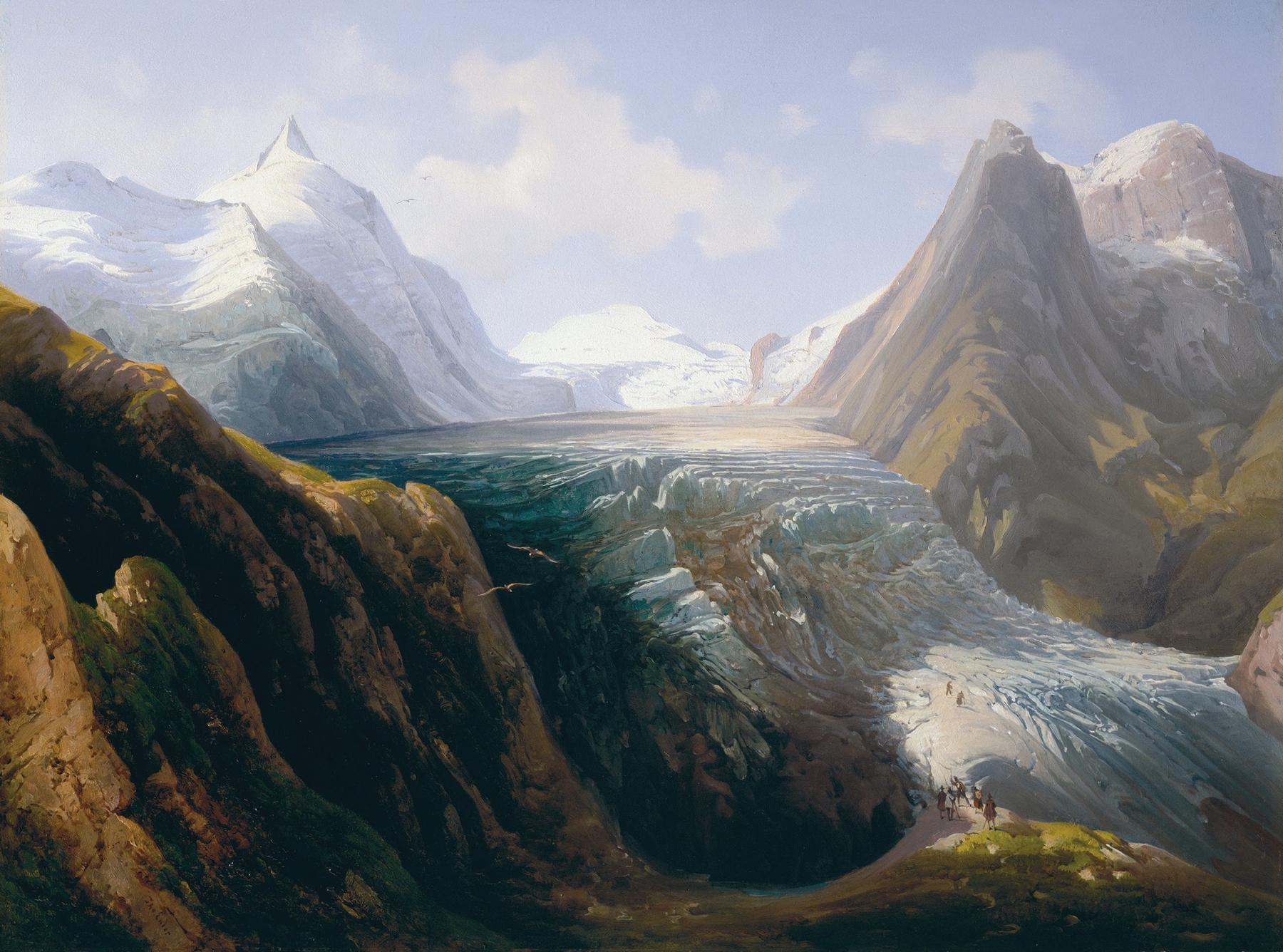
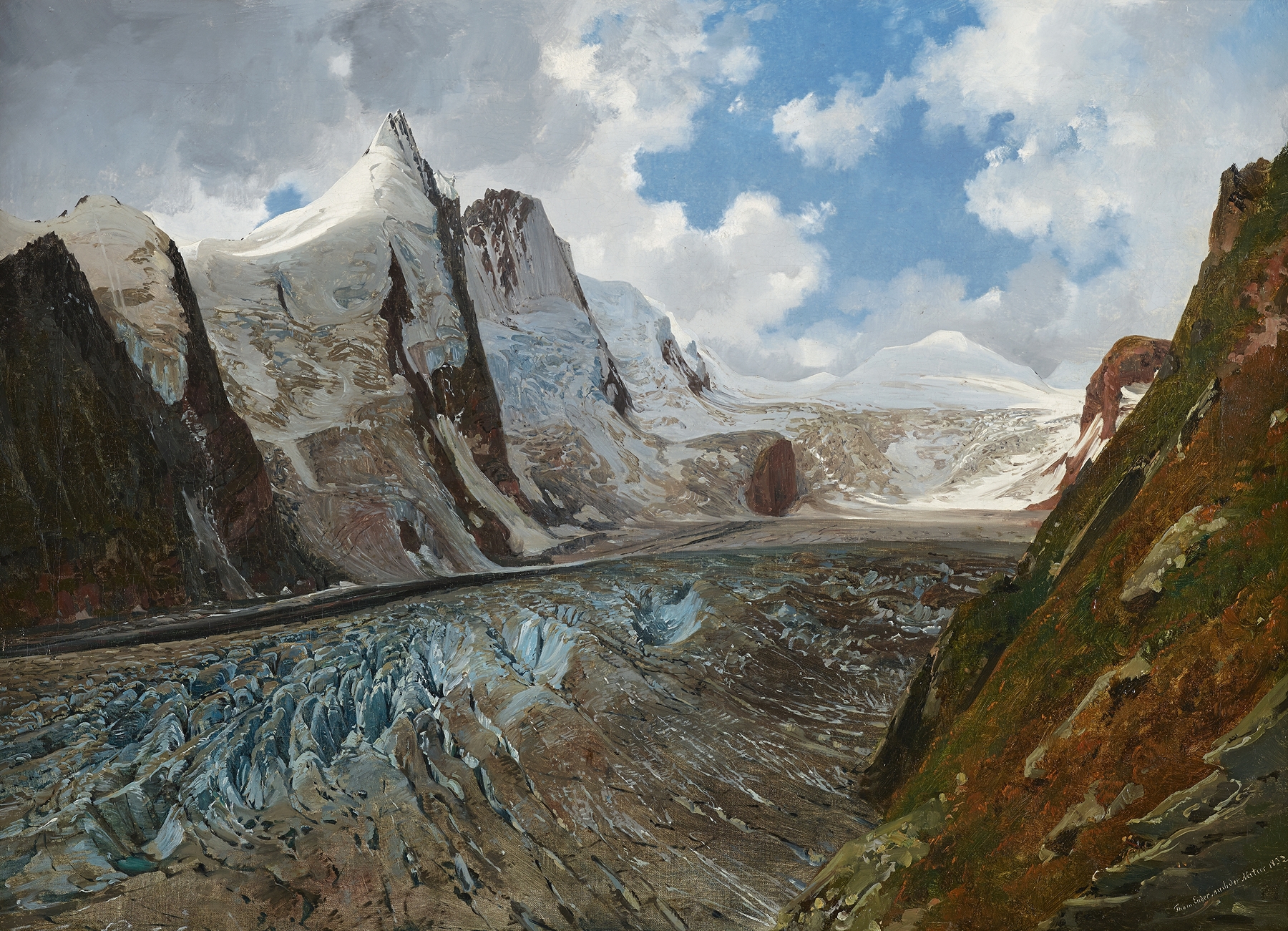
“Between color and silence, truth hides.” In the vast expanse of nature, the deepest sorrows often remain unspoken, captured quietly in the folds of a majestic landscape. Look closely at the center of the painting, where the imposing Großglockner rises, its icy crown piercing the sky. The purity of the white snow contrasts sharply with the muted greens and browns of the valley below, while soft clouds weave through the jagged peaks. This play of light and shadow creates a sense of depth, inviting you to explore the raw beauty and solitude of the scene.
Subtle brushstrokes depict the delicate texture of the glacier, simultaneously evoking awe and a poignant sense of isolation. Beyond the aesthetic, this artwork reveals layers of emotional tension. The towering mountain becomes a metaphor for grief, both formidable and serene, embodying a sense of loss that resonates deeply within the viewer. The quiet stillness of the landscape suggests a moment frozen in time, where nature's grandeur battles with human vulnerability.
The contrast between the vibrant colors of the valley and the stark, cold mountain reflects the duality of joy and sorrow, a reminder of life's complexities. In 1832, Thomas Ender painted this piece during a period of transition in the art world, as Romanticism began to flourish. Working in Vienna, he was influenced by the emerging appreciation for the sublime in nature. Ender's travels through the Austrian Alps not only deepened his connection to the landscapes he depicted but also mirrored the tumultuous emotions of his time, infusing his work with a profound sense of contemplation and introspection.