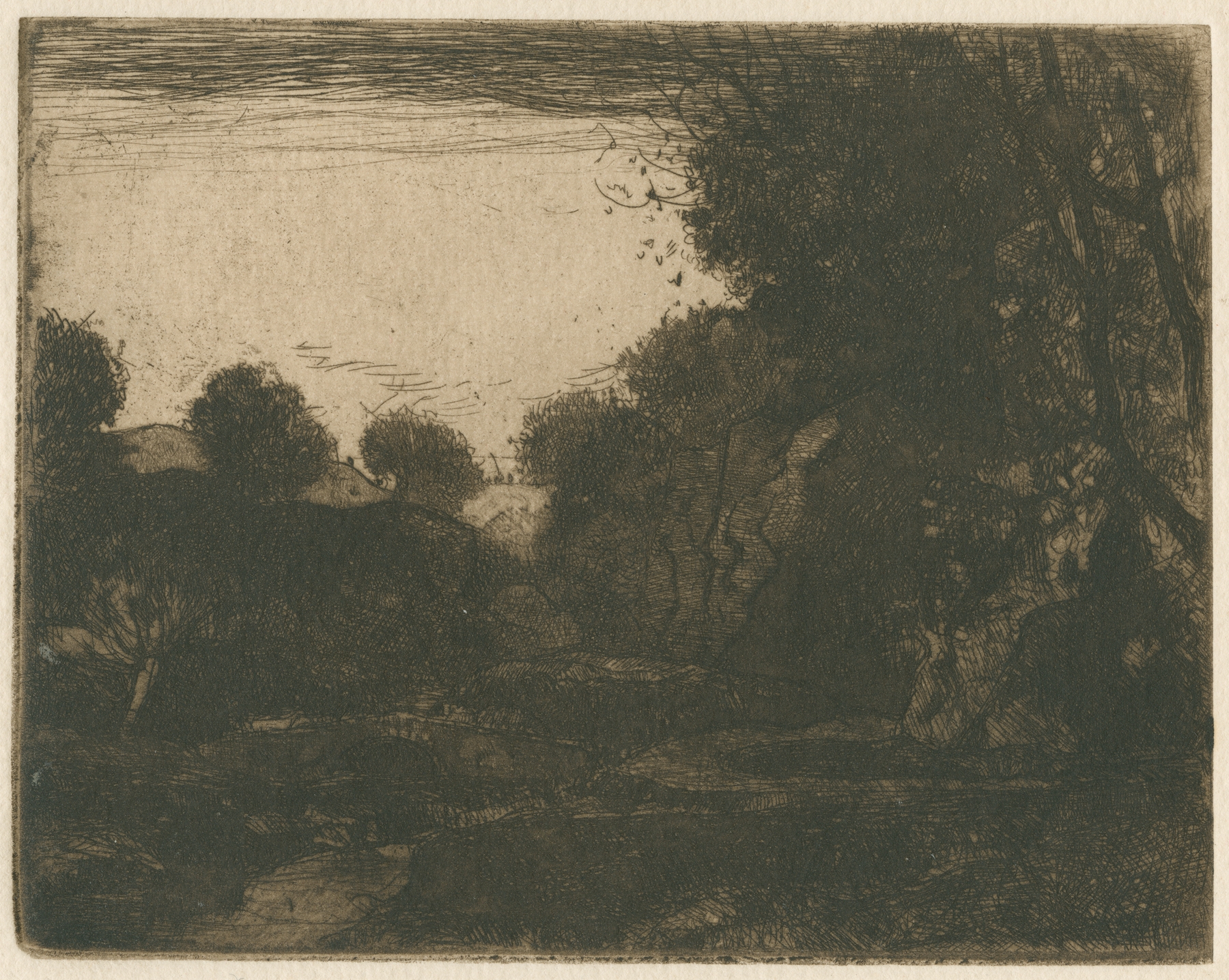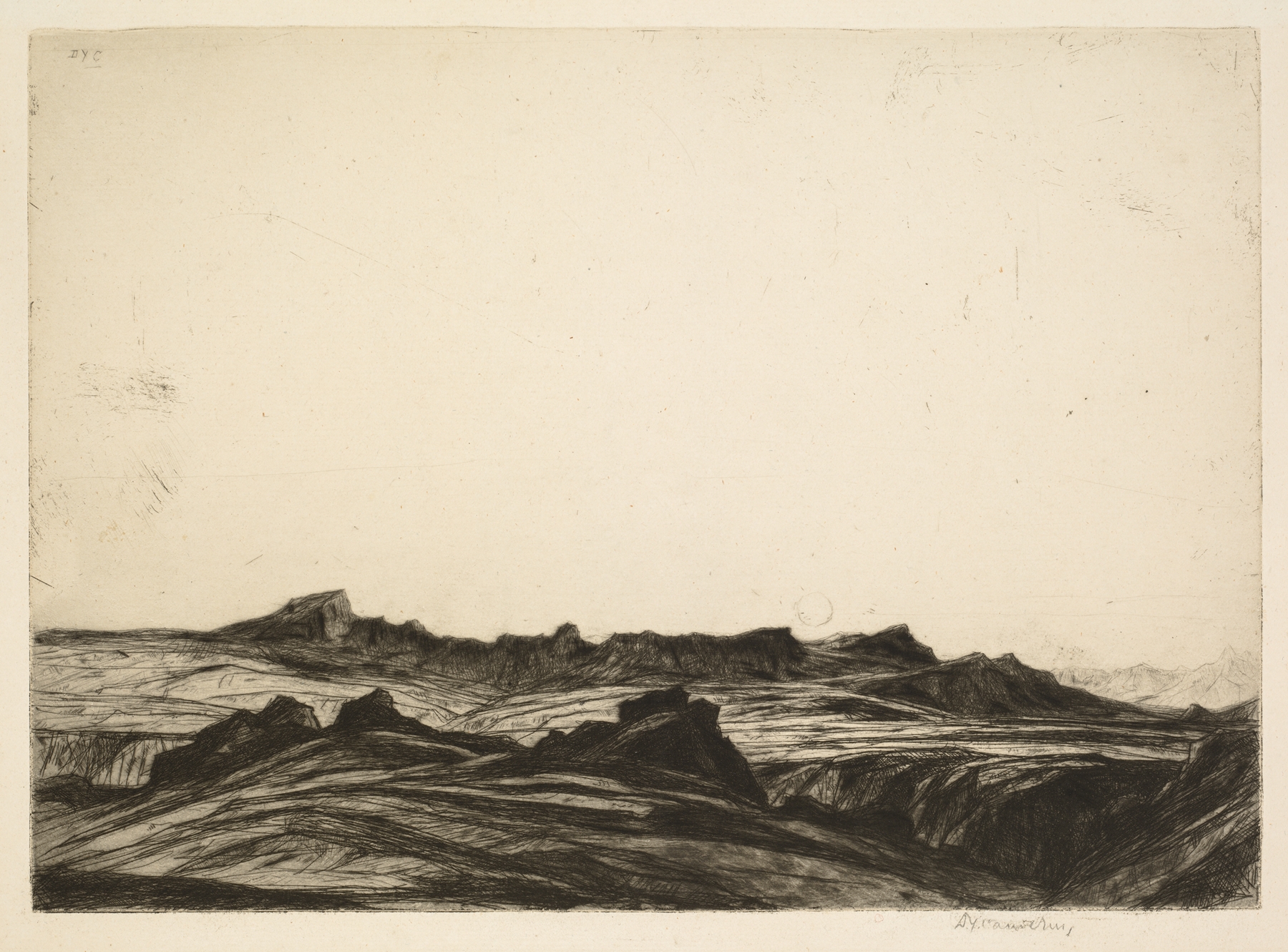
What secret hides in the quiet of the canvas? The stillness of *Arran Peaks* invites us to ponder the revelations found in nature's serene embrace. Look to the left, where the jagged outline of the Arran mountains rises against a soft, muted sky. Notice how the interplay of light and shadow dances across the peaks, breathing life into the otherwise tranquil landscape. The artist's brushwork reveals a delicate balance between the bold strokes that capture the rugged terrain and the gentle washes that convey the atmospheric depth, creating a mesmerizing contrast that draws the eye deeper into the scene. Yet, beyond its breathtaking beauty lies a hidden tension. The starkness of the mountains speaks to the isolation inherent in nature, while the delicate hues of the sky whisper of change—perhaps a storm brewing or a fleeting moment of calm before chaos. The viewer may sense a dialogue between permanence and impermanence, a reminder that beauty exists in both stability and flux. Each brushstroke carries the weight of contemplation, encouraging reflection on the fragile relationship between humanity and the natural world. Painted in 1912, *Arran Peaks* marked a significant period in David Young Cameron’s career. At this time, he was immersed in the Scottish landscape tradition, exploring the nuances of light and form. The world of art was evolving, influenced by movements such as Impressionism, and Cameron’s dedication to capturing the essence of his surroundings positioned him as a crucial figure in the landscape genre. This work stands as a testament to his dedication, merging technical skill with philosophical introspection.