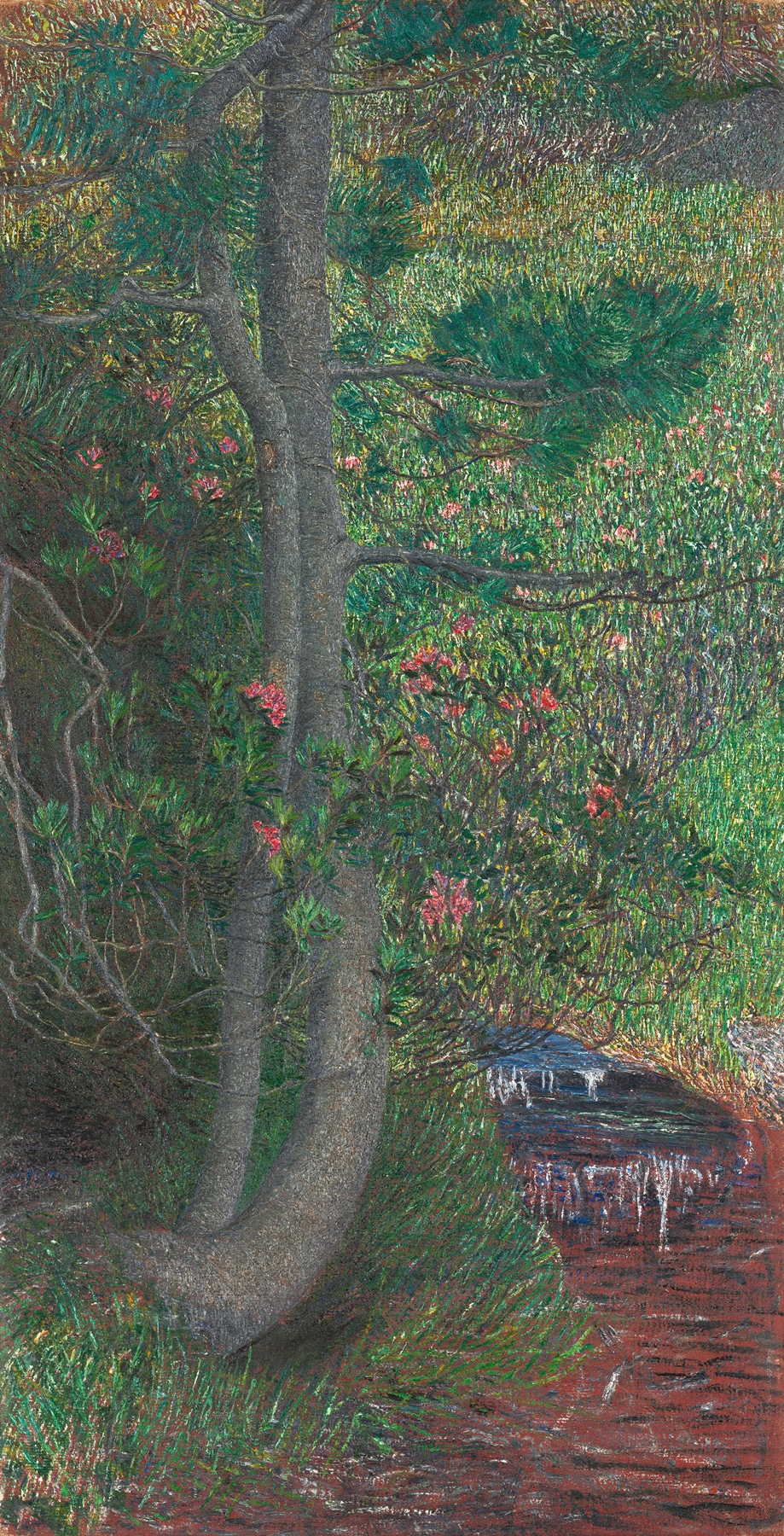
At the Watering Place (Cows in the Yoke) — History & Analysis
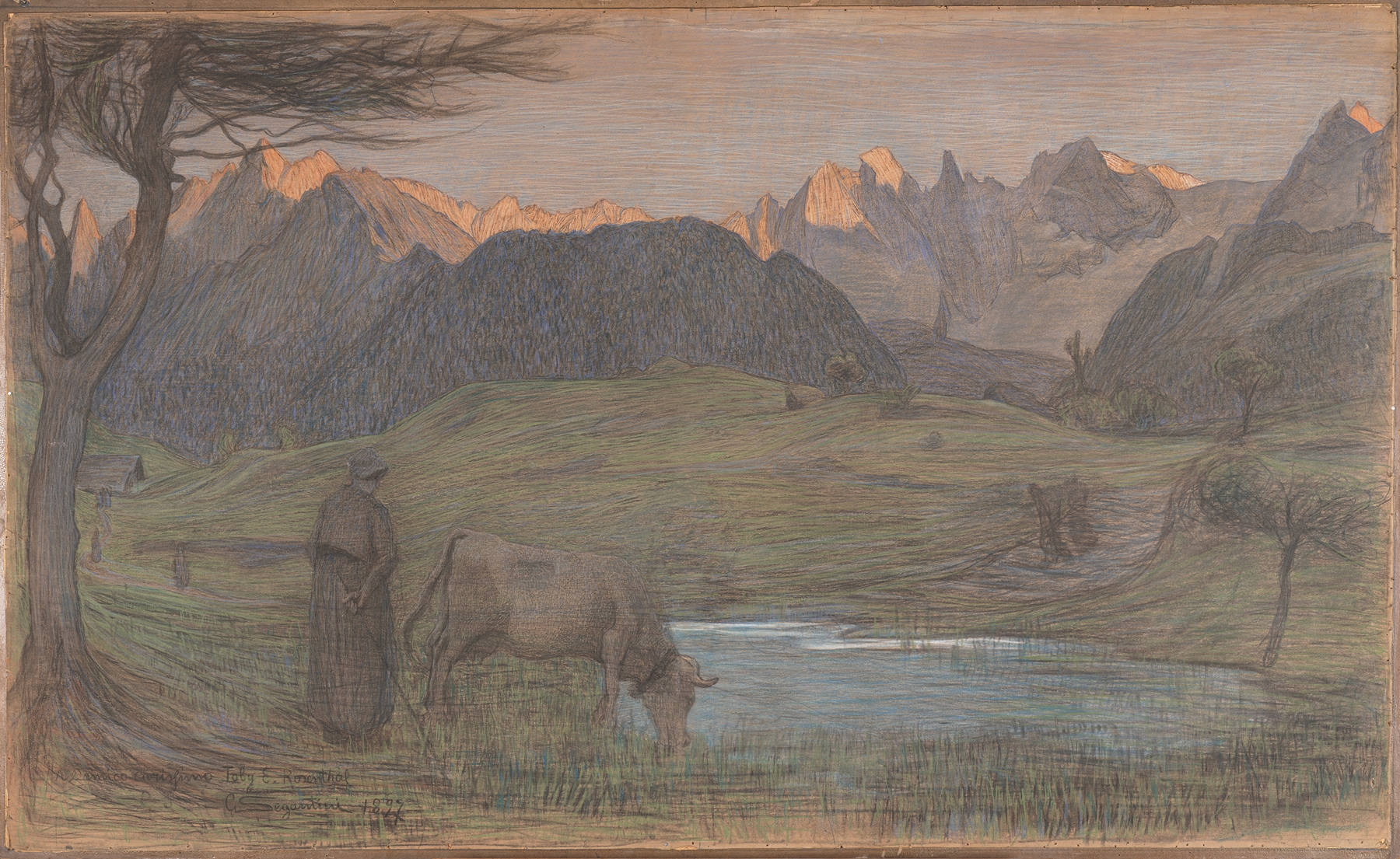
Can beauty exist without sorrow? In At the Watering Place (Cows in the Yoke), a delicate balance of serenity and tension unfolds, revealing the intertwined fates of nature and labor. Look to the center of the canvas, where the gentle curvature of a yoke holds two cows in harmonious submission. The warm earth tones of their coats contrast against the soft blues and greens of the surrounding landscape, suggesting a moment of pause amid toil.
Notice how Segantini's brushstrokes breathe life into the scene, with ethereal light cascading over the figures, illuminating the contours of their forms and infusing the air with an almost palpable warmth. Delve into the emotional depths drawn from the contrast of the cows' docile demeanor against the backdrop of their demanding environment. The tranquil water reflects not just the light but also the burdens carried by these creatures, hinting at humanity’s complex relationship with nature and destiny. The shift between the serene sky and the weighty earth mirrors life’s duality — beauty coexisting with struggle, a reminder of the sacrifices inherent in existence.
Created in 1888, this piece emerged during a transformative period for Giovanni Segantini, who was deeply influenced by the Symbolist movement. Living in the Swiss Alps, he sought to harmonize his understanding of rural life with philosophical explorations of fate and human experience. This moment in art history reflects an era that grappled with changing perceptions of life and labor, as industrialization began to reshape traditional landscapes and ways of living.