Spring in the Alps — History & Analysis
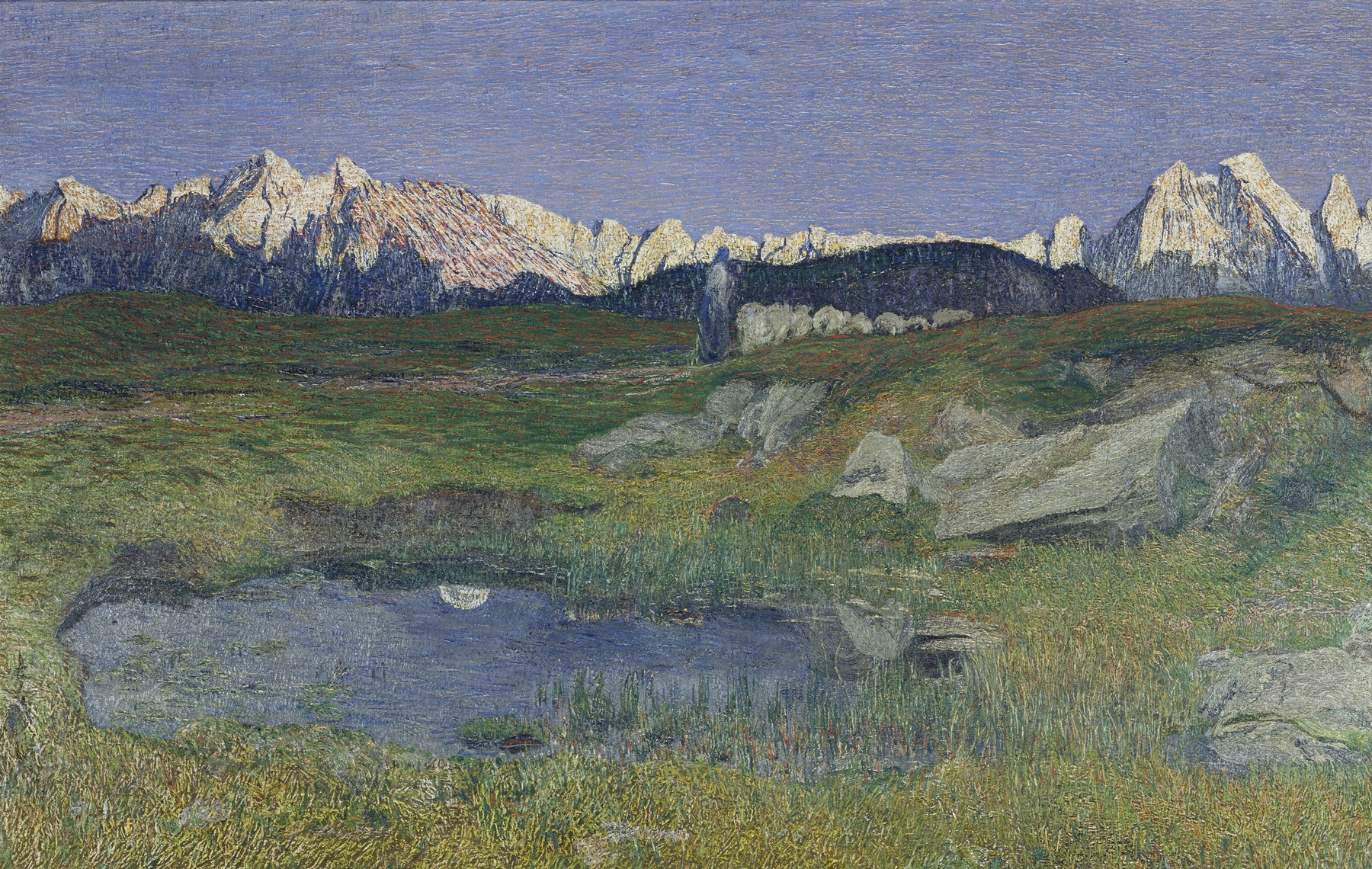
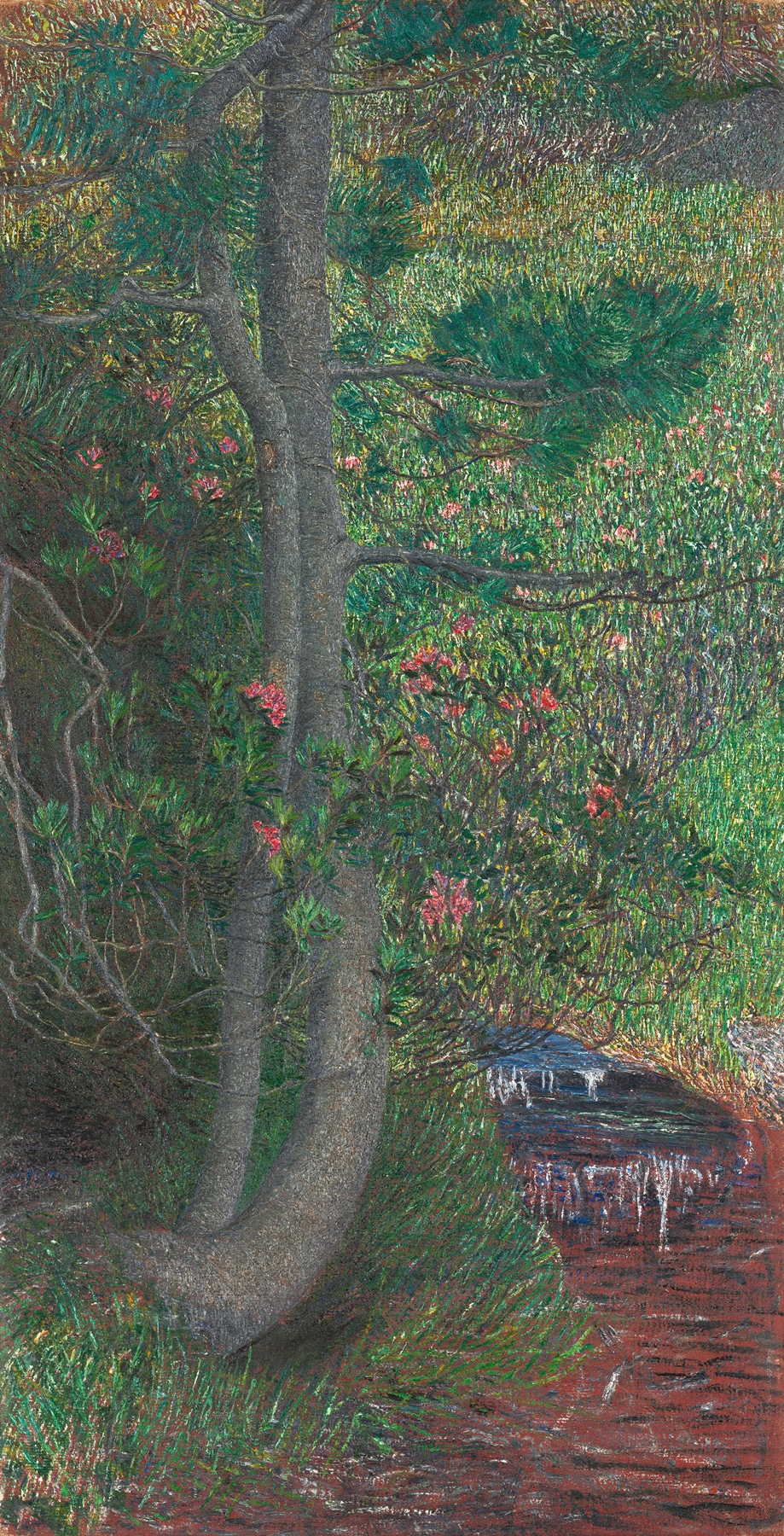
What if beauty was never meant to be finished? In Giovanni Segantini's Spring in the Alps, the viewer is invited to contemplate the delicate balance between nature's grace and the fragility of life itself. Look to the vibrant hues of green and blue that dominate the canvas, drawing your eye towards the majestic peaks that rise like sentinels in the background. Notice how the light filters through the clouds, casting a gentle glow on the wildflowers that bloom in the foreground.
The meticulous brushwork breathes life into every blade of grass, creating a dynamic interplay between texture and color that evokes a sense of immediacy and hope. Yet, beneath the surface of this idyllic scene lies an undercurrent of anxiety. The vivid display of spring hints at a fleeting beauty, a moment that can easily slip away into the embrace of winter's chill. The juxtaposition of life and transience creates an emotional tension, urging reflections on mortality and the fear of loss.
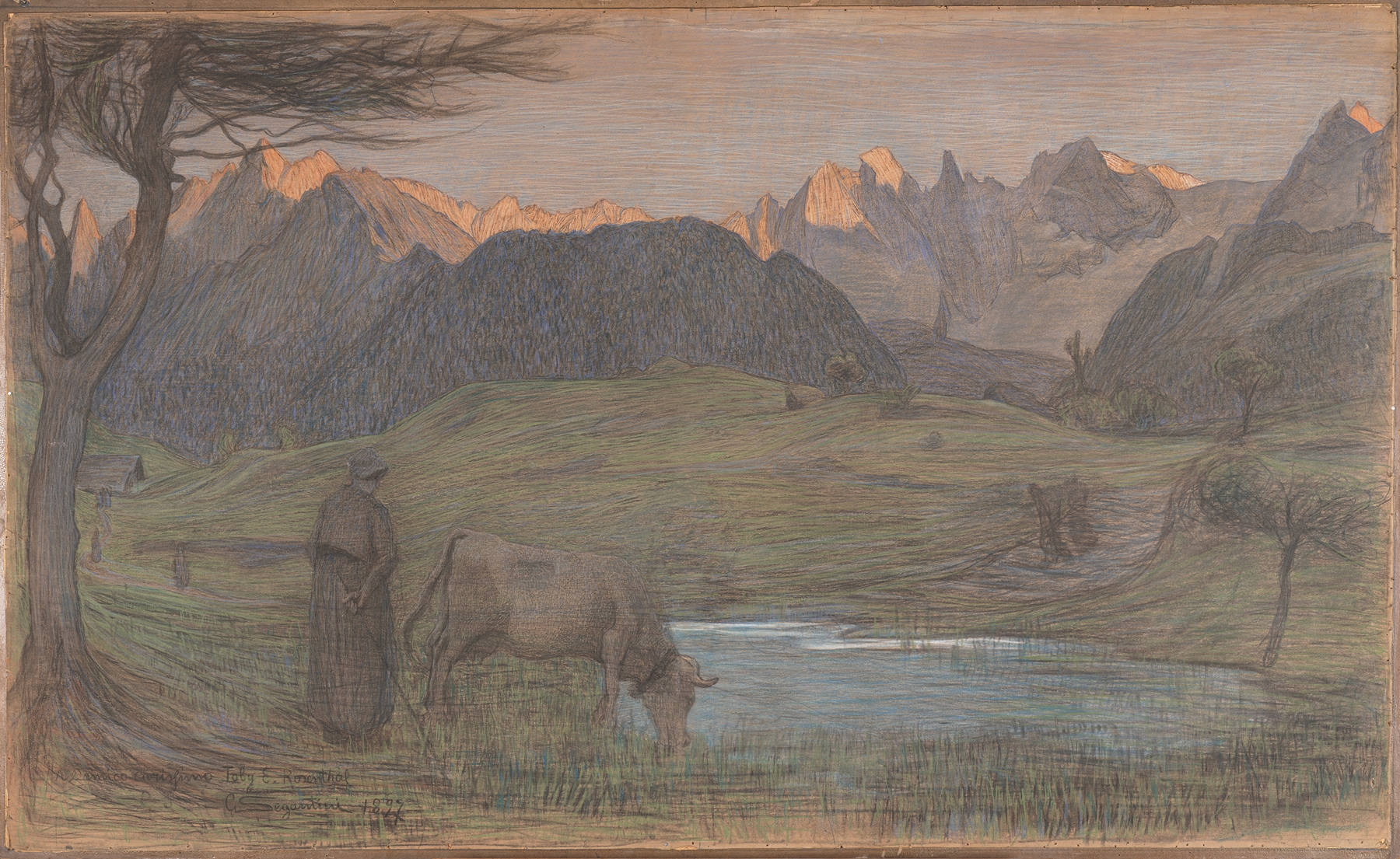
Each element seems to beckon the viewer to cherish the present, while simultaneously acknowledging the inevitable passage of time. In 1897, when this piece was painted, Segantini was deeply influenced by Symbolism and the themes of nature’s cycles. Living in the Alps, he immersed himself in the surrounding landscapes, striving to capture their essence in a way that transcended mere representation. This was a time of great personal struggle for the artist, as he grappled with health issues and the demands of a changing art world, seeking solace and expression in the breathtaking beauty of his alpine home.