Autumn – Evening – Maturity (from the seasons, times of day, and ages of man cycle of 1803) — History & Analysis
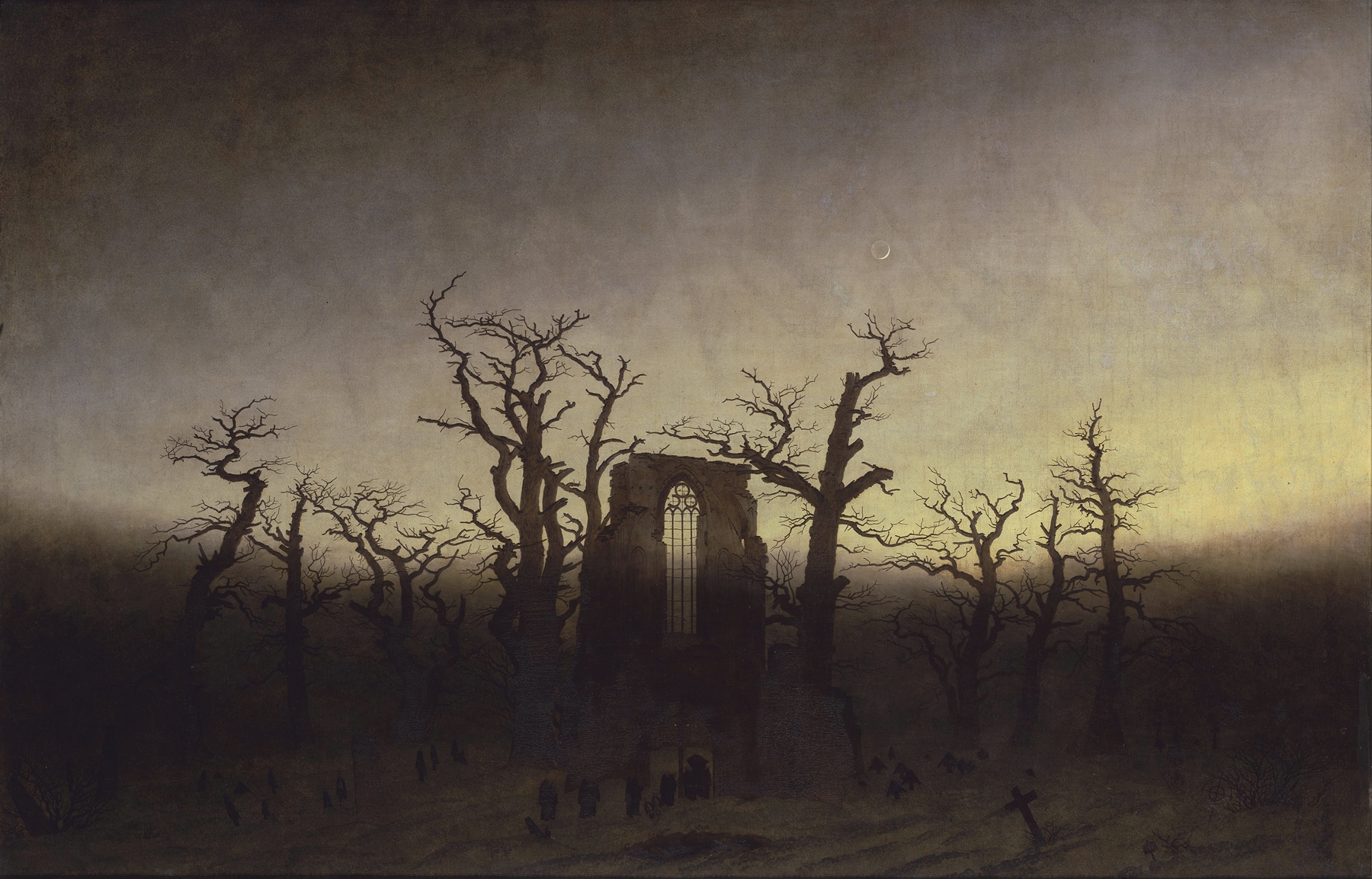
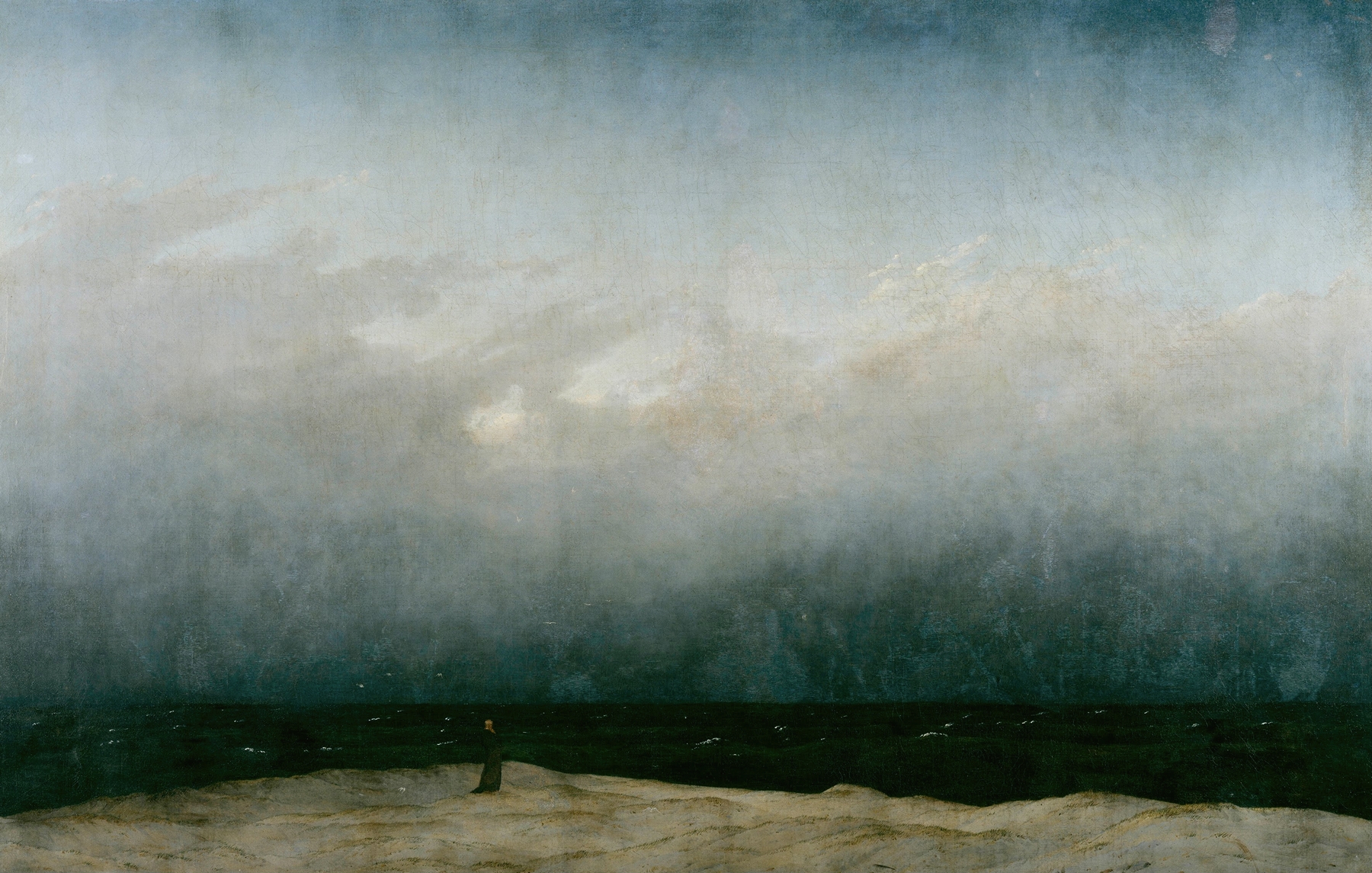
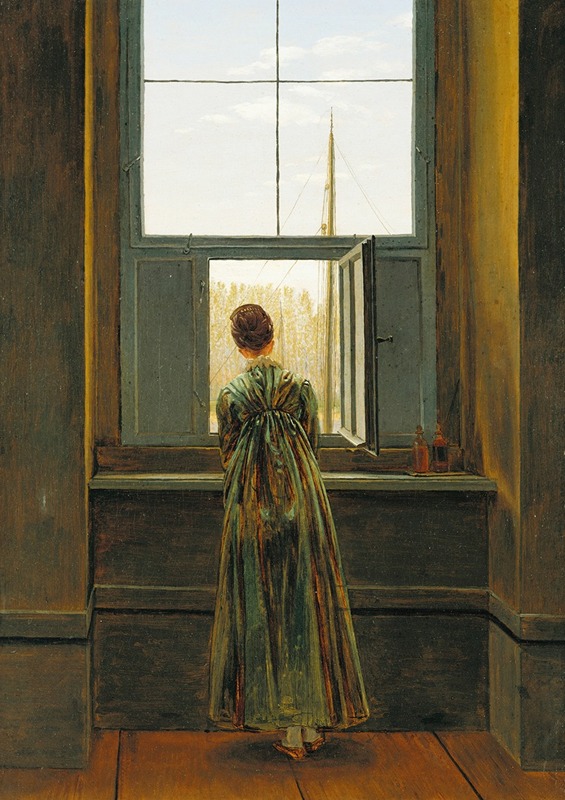
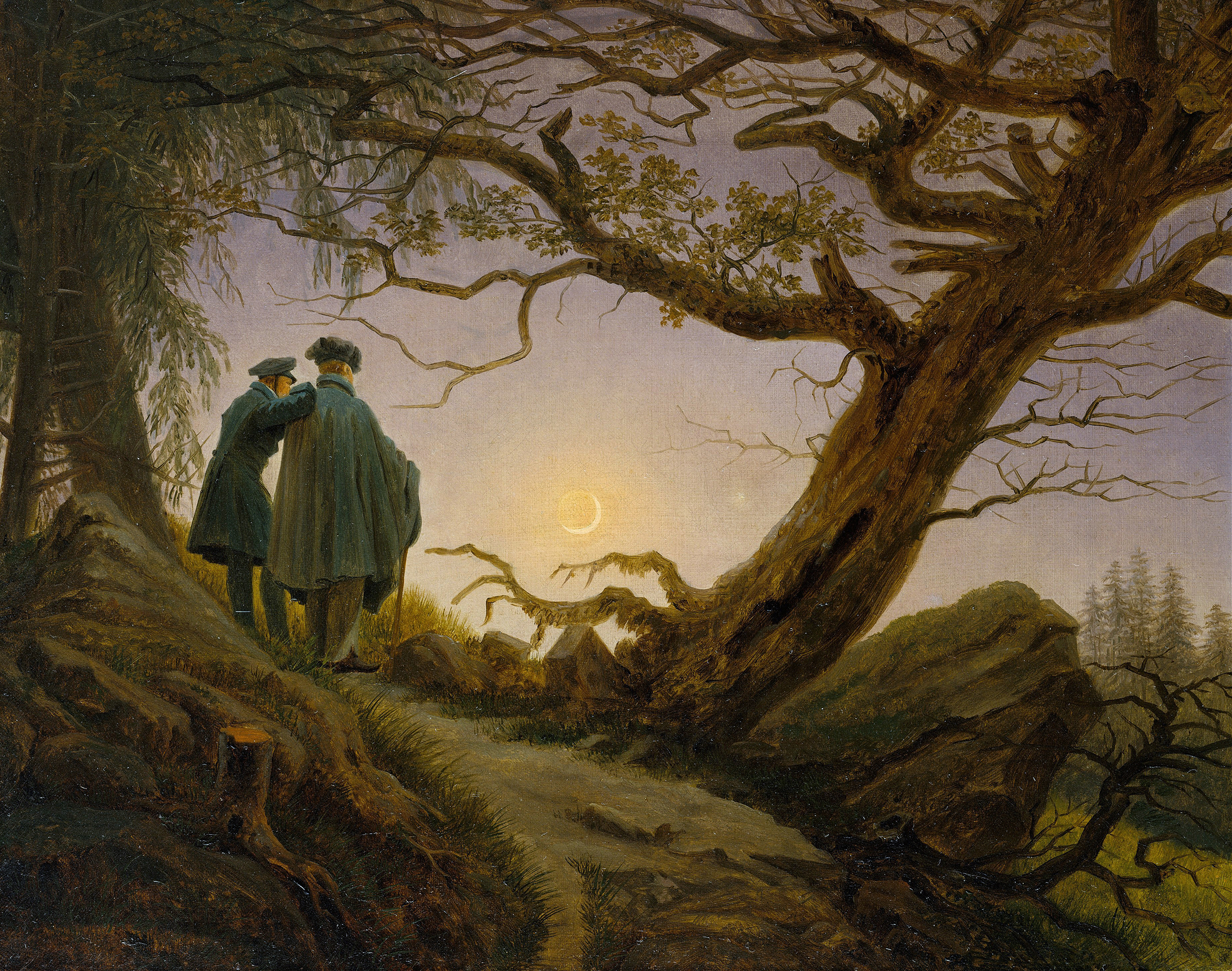
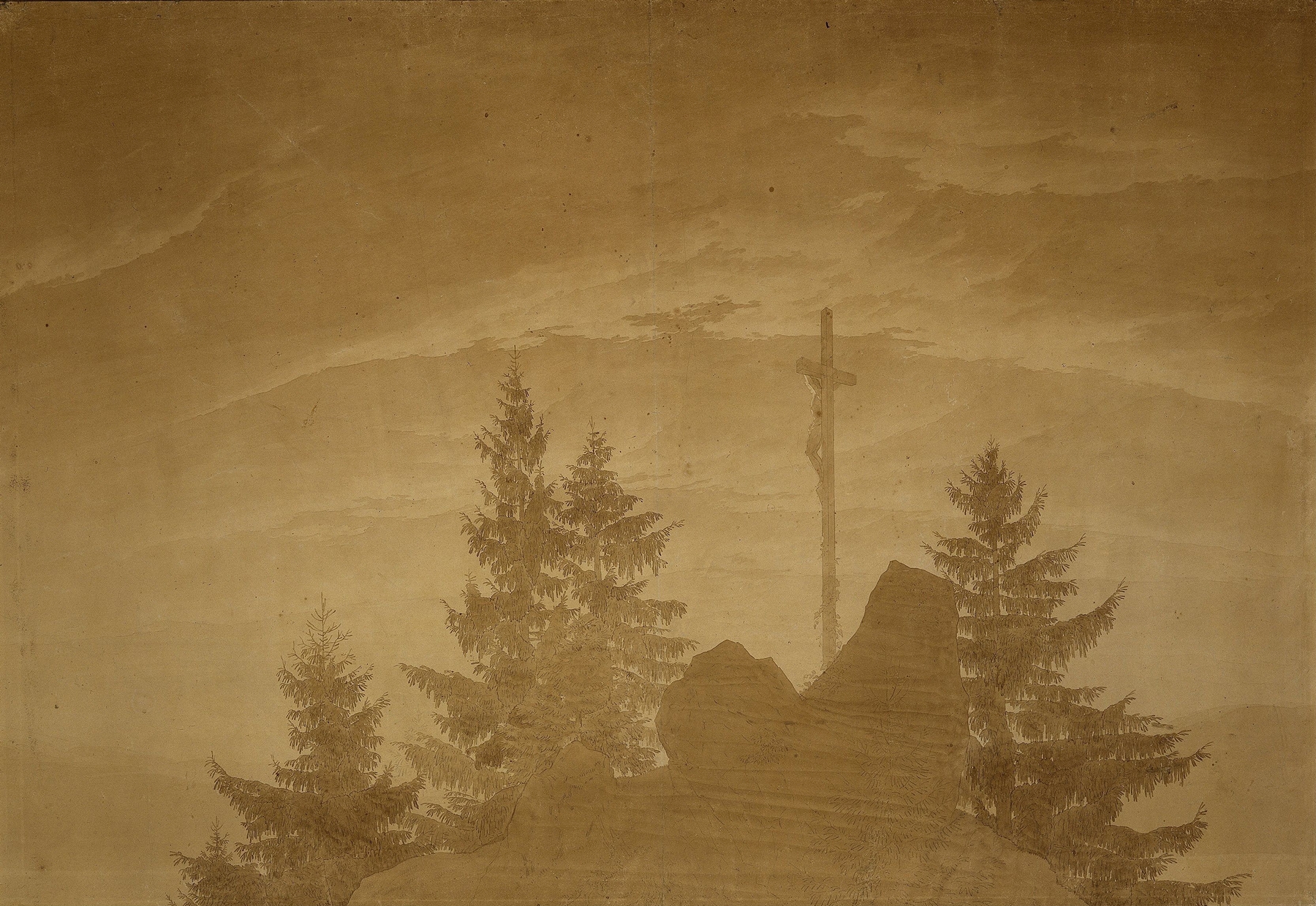
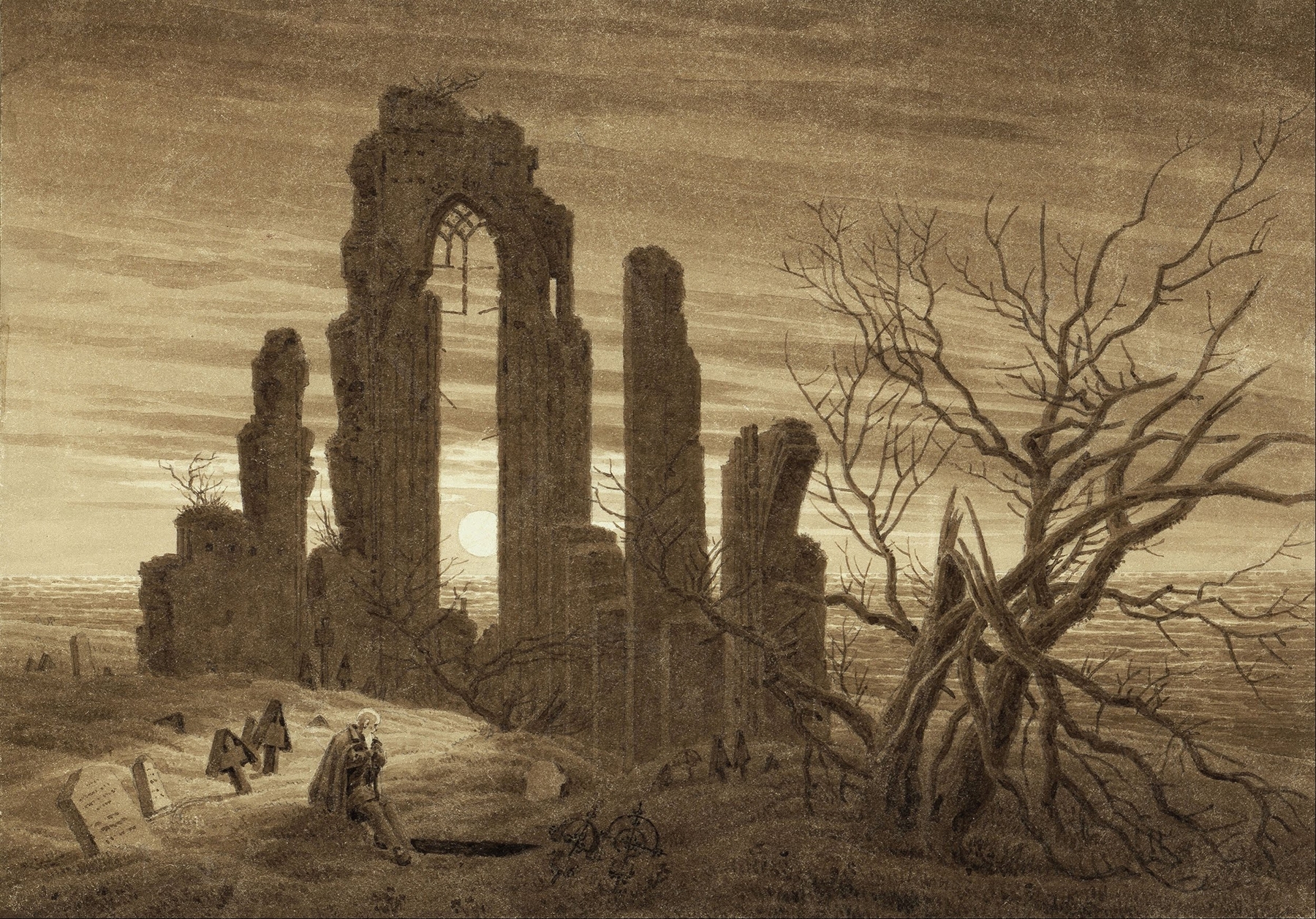
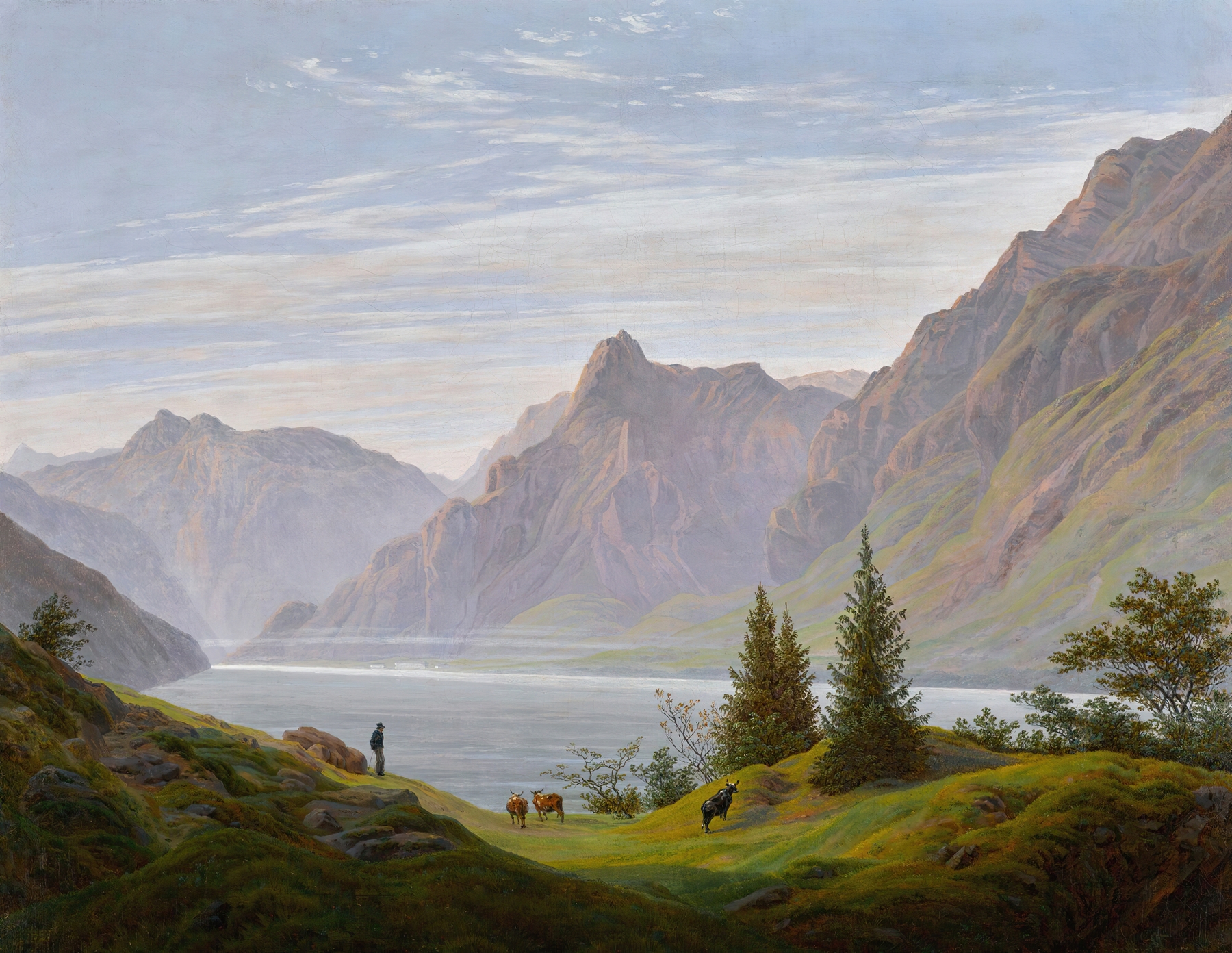
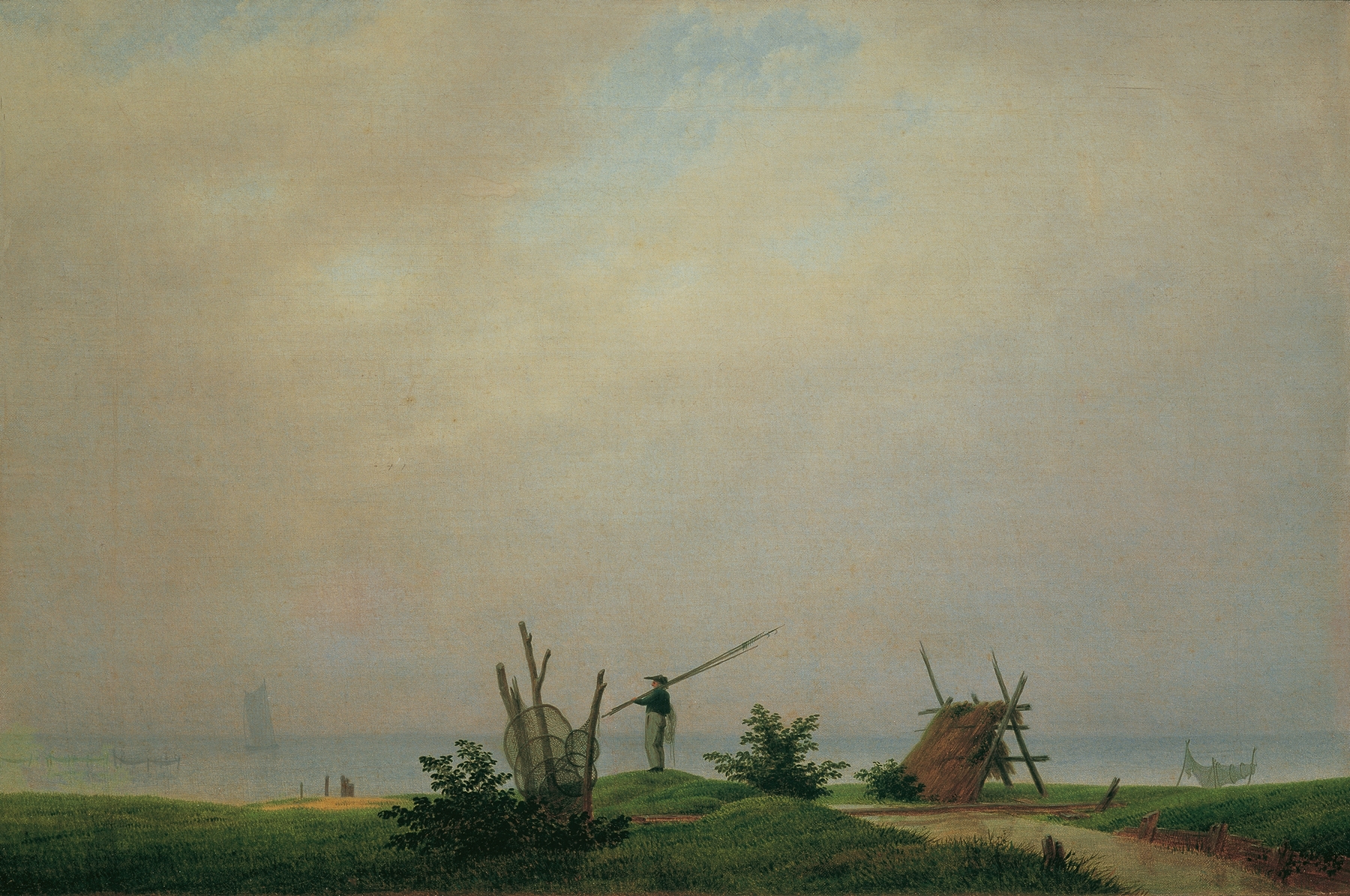
Can beauty exist without sorrow? In Autumn – Evening – Maturity, the answer resonates through the palette of fading light and muted earth tones, reflecting the quiet complexity of existence. Focus on the horizon where the sun, a mere whisper above the landscape, casts a golden hue that softens the encroaching shadows of twilight. The trees stand in solemn dignity, their branches heavy with leaves tinged in autumnal hues, offering a contrast between the vibrancy of life and the inevitability of decay.
Notice how the mist curls around the ground, blurring the line between earth and sky, inviting you into a world where time seems suspended, yet fleeting. Within this serene tableau lies an undercurrent of longing and reflection. The transition from day to night mirrors the passage of life, evoking a sense of nostalgia for warmth and light that will soon vanish. The solitary figure, though small against the vastness, speaks to the universal experience of grappling with change and the bittersweet nature of maturity.
Each brushstroke captures not just the physical landscape but also the emotional terrain of the human soul. During the early 19th century, Friedrich, deeply influenced by Romanticism, sought to encapsulate the sublime in nature. Painted in 1803, this work emerged amid his personal struggles and the broader cultural turmoil of the time, as Europe grappled with the impacts of the Enlightenment and the shifts toward modernity. His contemplative approach to scenery was revolutionary, inviting viewers to explore their own emotional landscapes through the lens of the natural world.