Blick auf die Burg Alt-Eberstein — History & Analysis
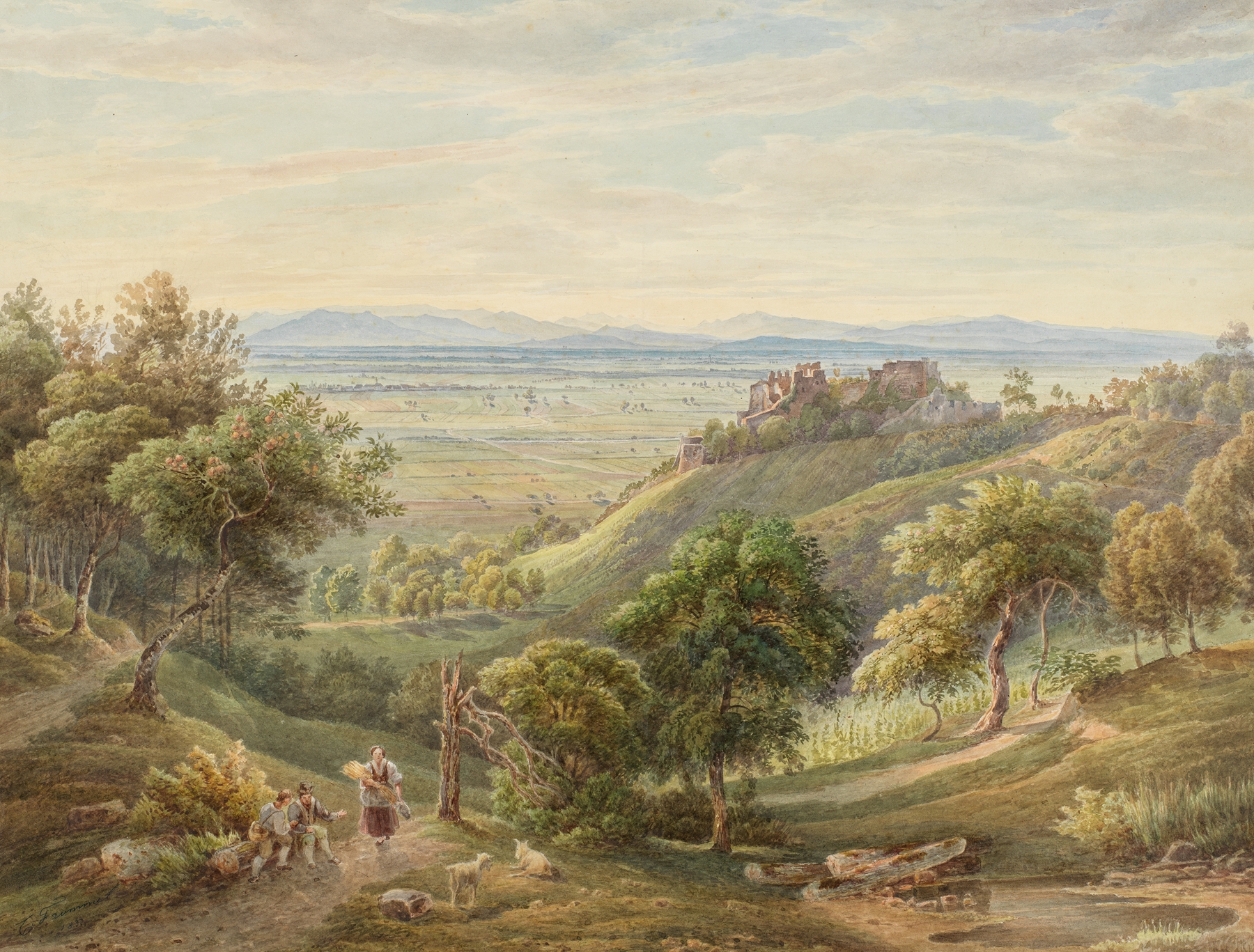
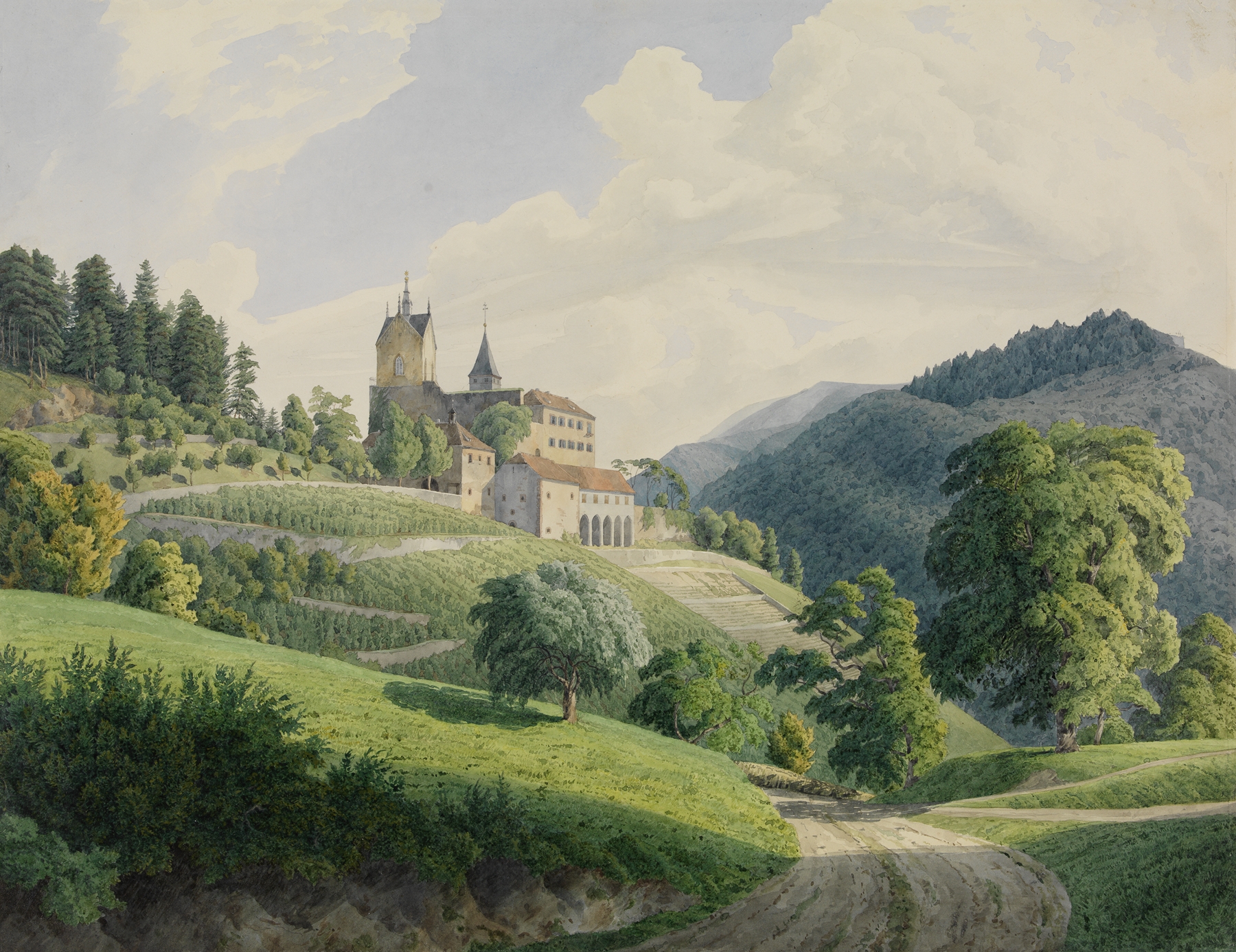
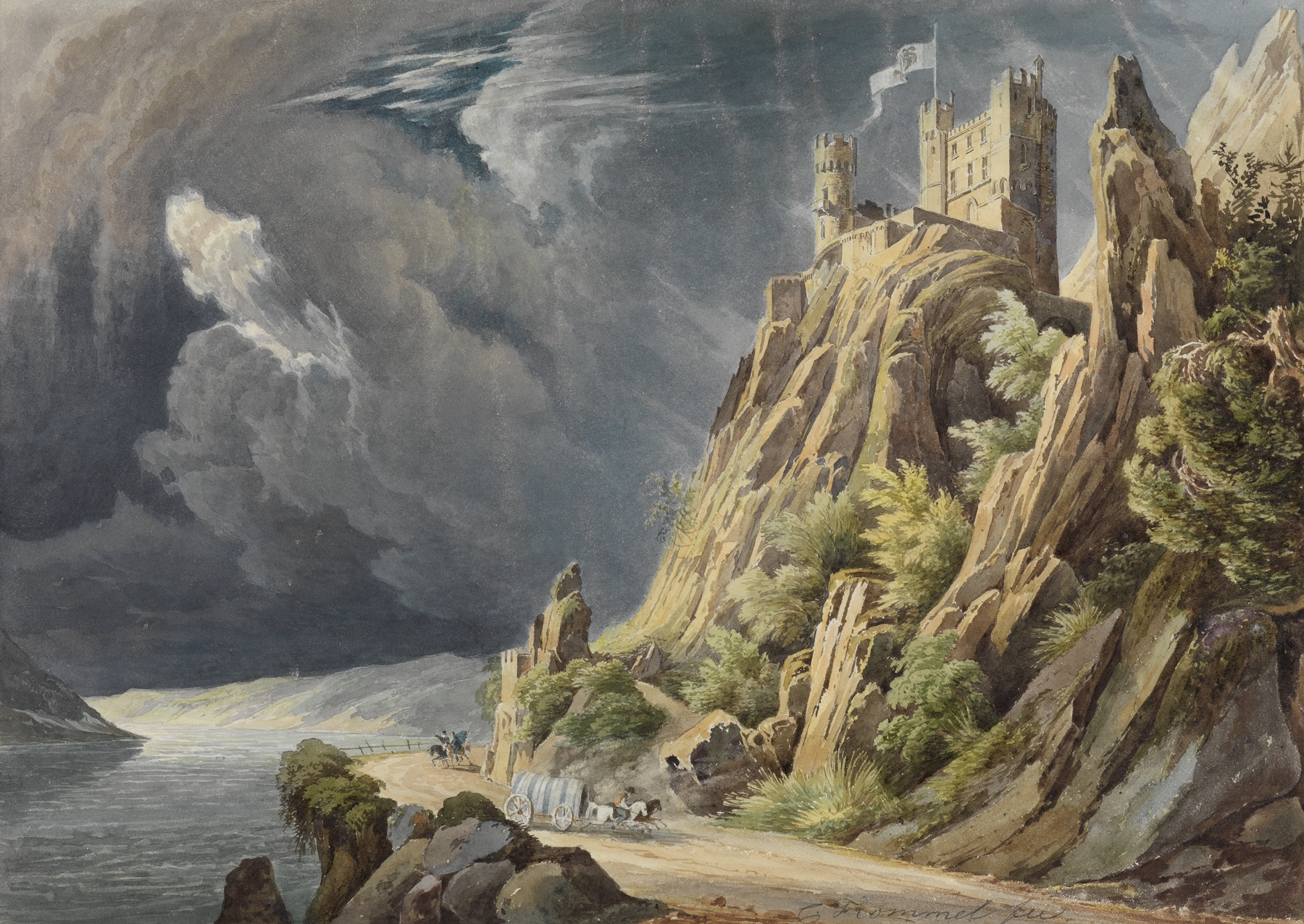
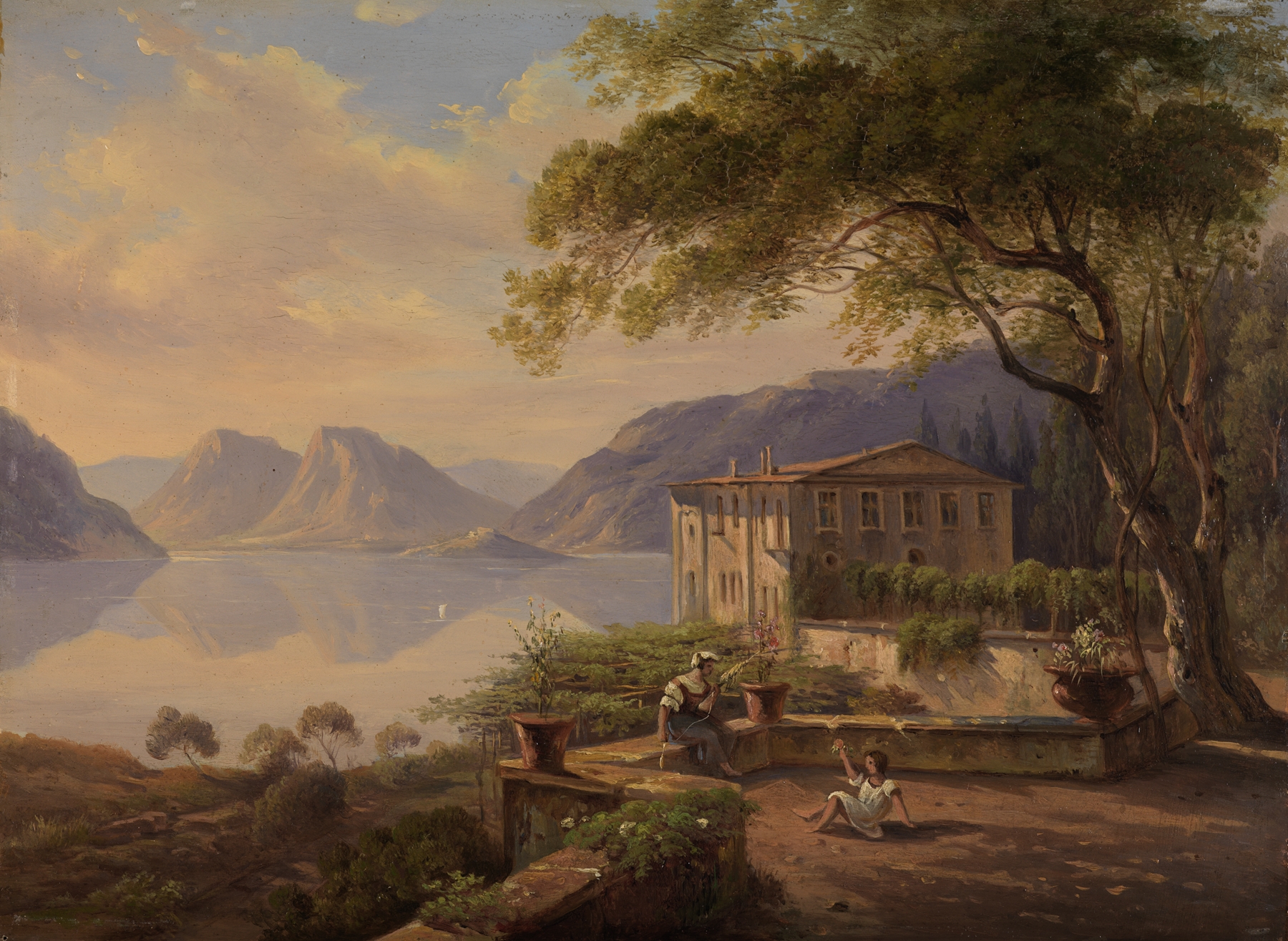
“Sometimes beauty is just pain, disguised in gold.” This thought lingers in the air as one gazes upon the tranquil landscape captured in the early 19th century, where time intertwines with history and beauty is laced with echoes of legacy. Look to the left at the grand castle perched atop the hill, its formidable towers standing sentinel against the soft blue sky. The artist's delicate brushwork renders the scene with a serene precision, while subtle golden hues dance upon the castle’s stones, suggesting both majesty and decay. Notice how the lush greenery unfolds gracefully in the foreground, a vibrant contrast to the cold stone, inviting viewers to traverse the path toward the fortress.
The gentle ripples of the river below, reflecting the surrounding landscape, create an exquisite balance, uniting earth and sky in a moment suspended in time. Hidden within this pastoral setting is a narrative of conflict and permanence. The castle, a symbol of strength, serves as a reminder of the impermanence of power, its silent walls witnessing the ebb and flow of human endeavors. The interplay between light and shadow suggests not only the passage of time but also the weight of historical legacy, as nature reclaims what was once fervently held.
Each detail speaks of a tension between beauty and decay, hinting at the stories of those who once inhabited the castle now rendered mere whispers in the wind. Carl Ludwig Frommel painted this landscape in 1832, during a period when Romanticism was flourishing in Europe, emphasizing deep emotional resonance in art. Living in the German region, Frommel was influenced by the picturesque scenery and the rich history of the area, which allowed him to explore themes of nostalgia and the sublime. In this painting, he encapsulates both the allure and the haunting reminders of the past, creating a work that resonates with viewers even today.