Blick auf Linz — History & Analysis
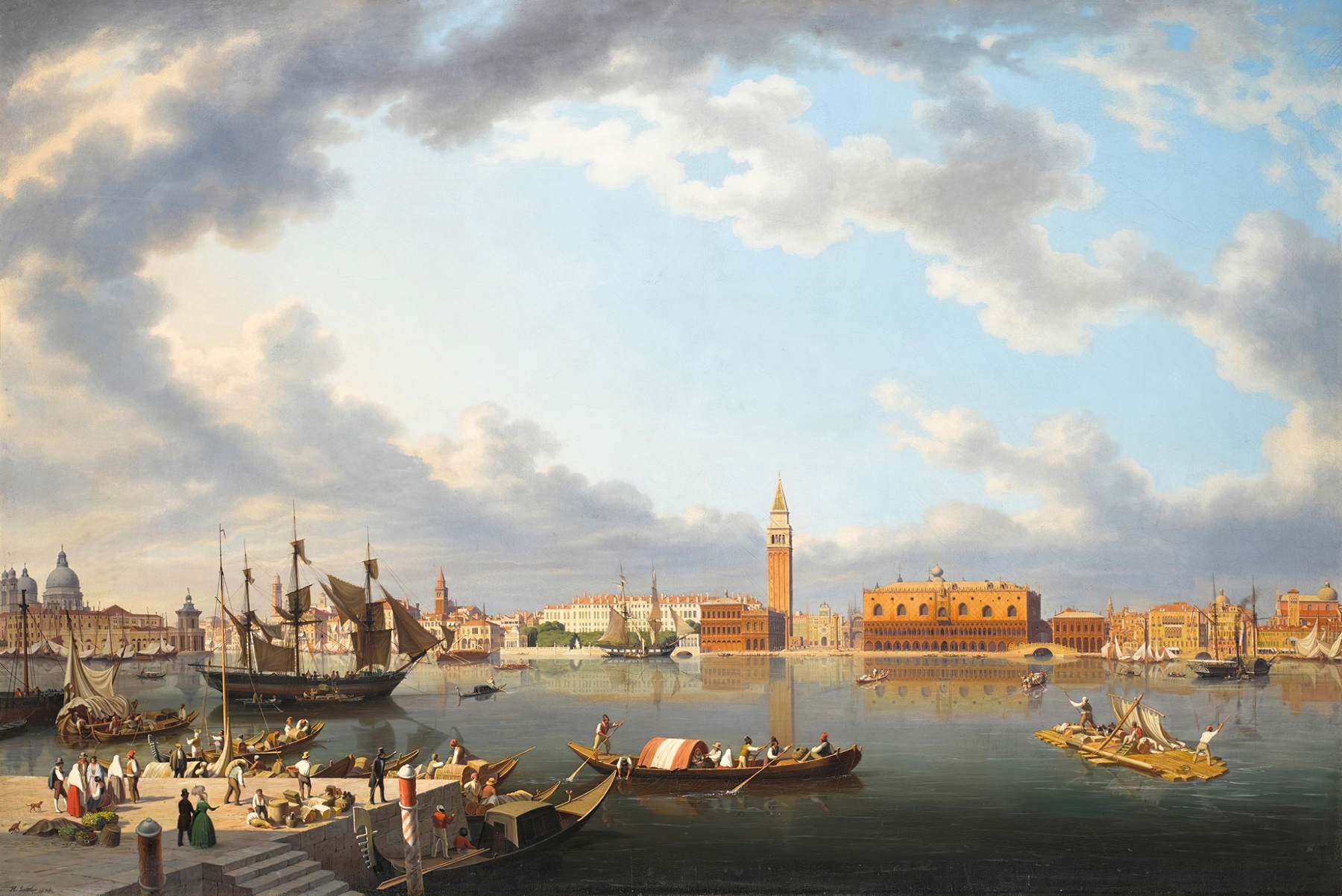
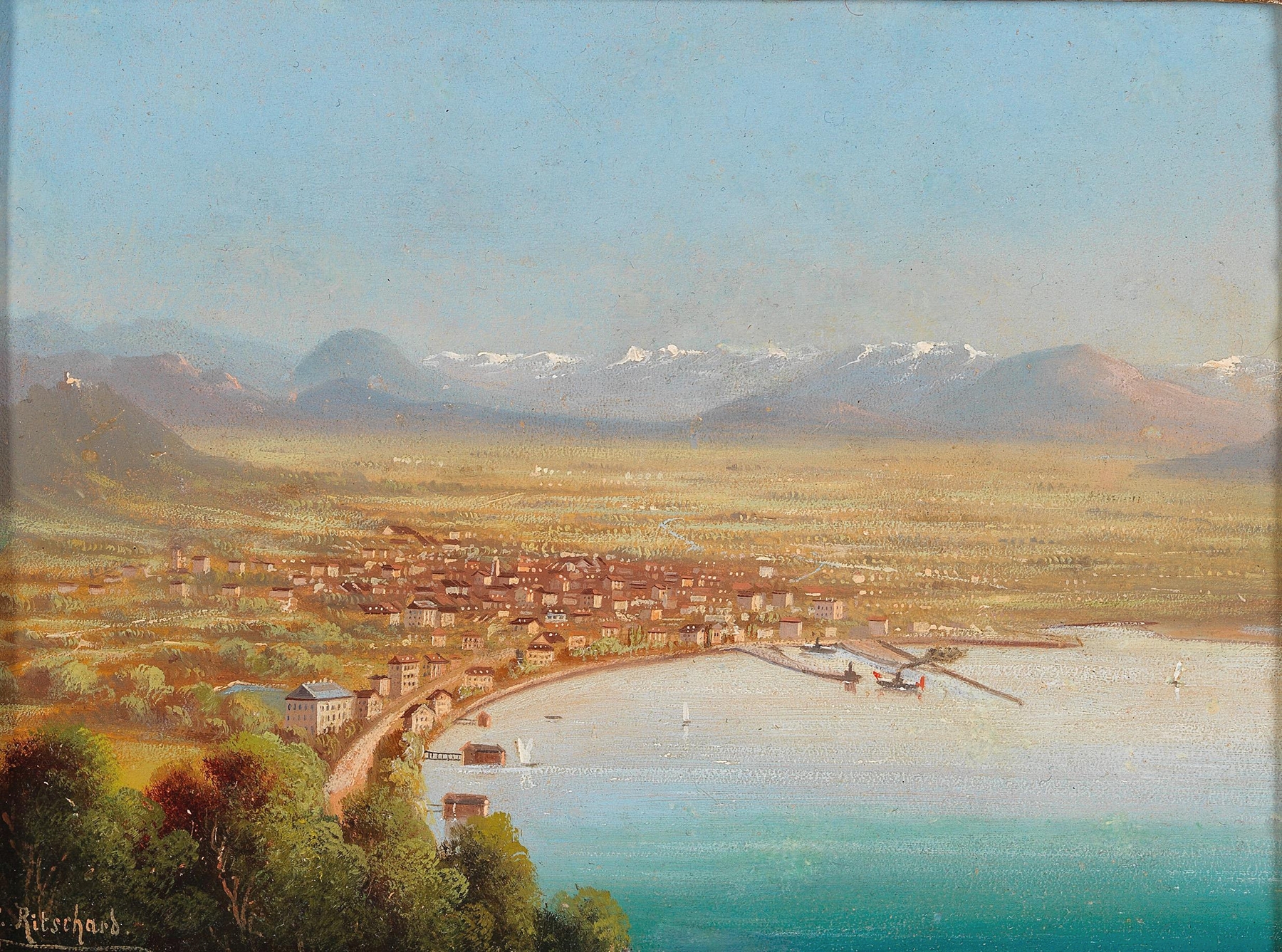
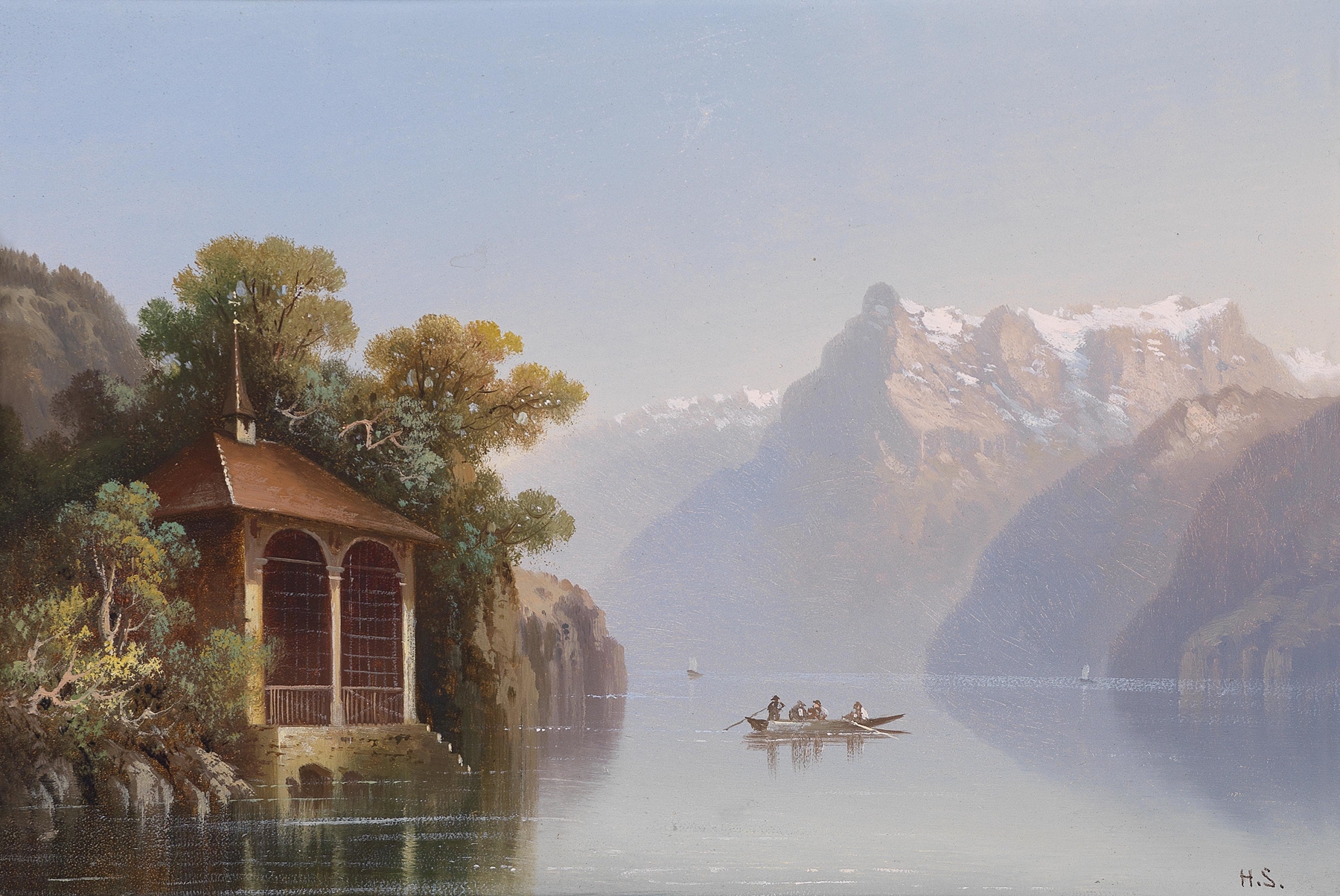
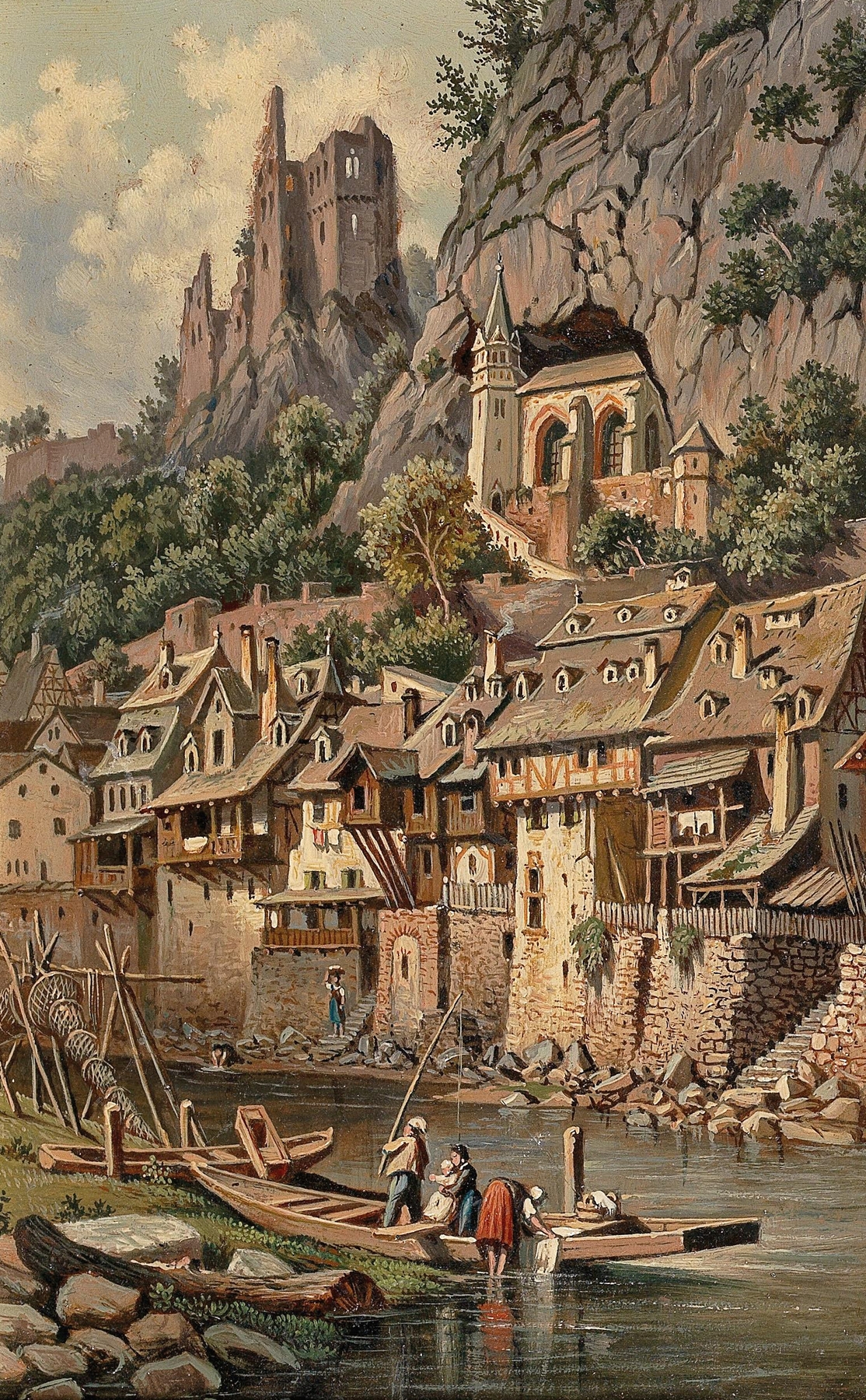
“Every silence here is a confession.” In the stillness of Blick auf Linz, one senses the weight of loss, a poignant reminder of what remains unspoken amidst the beauty of the landscape. Look to the left at the rolling hills that cradle the city, their lush greens deepening into shadow as they near the horizon. The delicate interplay of light and shadow highlights the gentle curves of the land, inviting your gaze towards the shimmering Danube. Notice how the soft hues of twilight dance across the sky, a blend of gold and lavender that seems to whisper of longing and nostalgia, creating an ethereal backdrop to the town below.
The artwork presents a subtle tension between the vibrancy of nature and the quiet melancholy of the cityscape. The spires and rooftops of Linz stand resolute yet forsaken, as if holding secrets of those who once inhabited them. There’s a testament to human aspiration in the architecture, juxtaposed with the overwhelming vastness of the landscape, suggesting both connection and isolation.
Each brushstroke illustrates a narrative of grief—what is left behind, and what endures. During the time Blick auf Linz was created, Hubert Sattler was exploring the intersection of realism and emotional depth, likely influenced by the shifting dynamics of the 19th century art world. While the exact date of this work remains unknown, Sattler's commitment to capturing atmospheric nuances reflected his own experiences and the broader European context, marked by political change and the search for identity.