Burning of the New York Crystal Palace; on Tuesday Oct. 5th 1858 — History & Analysis
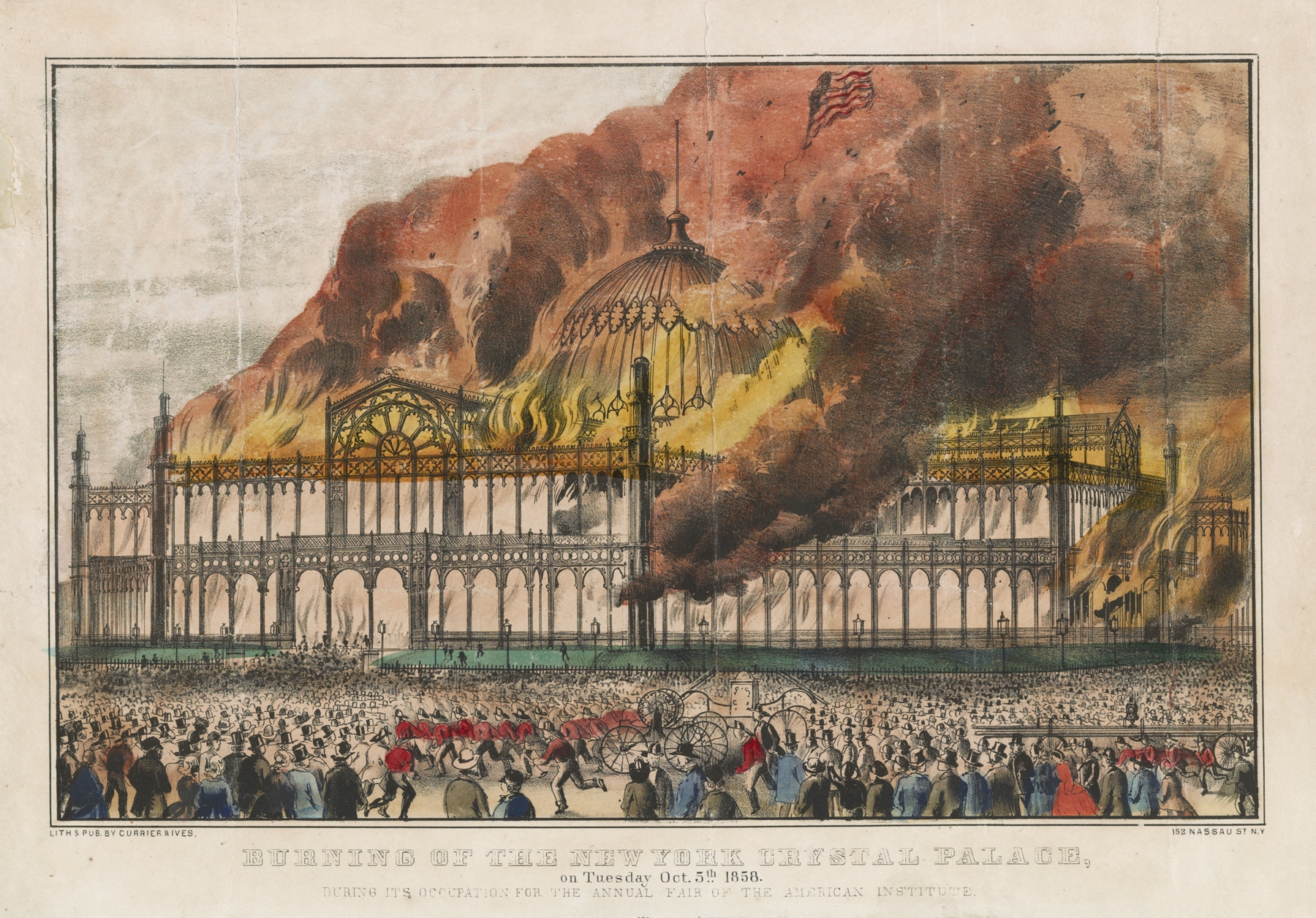
“Every silence here is a confession.” Fear breathes through the still air, thick with the weight of disaster. In the shadow of the towering inferno, an ominous spectacle unfolds, where flames lick at the heavens, devouring an emblem of progress and ambition. The chaos and desperation seem palpable, as onlookers are frozen in a moment of collective dread, their expressions marked by disbelief and loss. Look closely at the foreground where the flames erupt, showcasing a vibrant palette of oranges and reds that clash violently against the darkening sky. The contrast between the brilliant fire and the smoldering ruins encircles the scene with a sense of impending doom.
Notice how the figures stand at varying distances, some fleeing in panic while others gaze helplessly, their silhouettes etched against the backdrop of destruction. The meticulous detail of the architecture—once a testament to human ingenuity—now transforms into a mere skeleton as smoke engulfs its grandeur. Within this chaotic tableau lies a deeper commentary on the fragility of human achievement. The Crystal Palace, once a symbol of optimism and innovation, now becomes a haunting reminder of how quickly progress can turn into ruin.
The juxtaposition of the joyous past and the nightmarish present evokes a profound sense of loss, while the expressions of the crowd hint at a collective fear of change and uncertainty—the collapse of dreams into ash. In 1858, the artists produced this work in the midst of an explosive cultural landscape, where the Industrial Revolution was reshaping society. Currier & Ives, renowned for their lithographic prints, sought to document significant events with immediacy and clarity. The burning of the Crystal Palace, a moment shrouded in disaster, became emblematic of both the era's triumphs and its lurking vulnerabilities.