Caravan Passing The Colossi Of Memnon, Thebes — History & Analysis
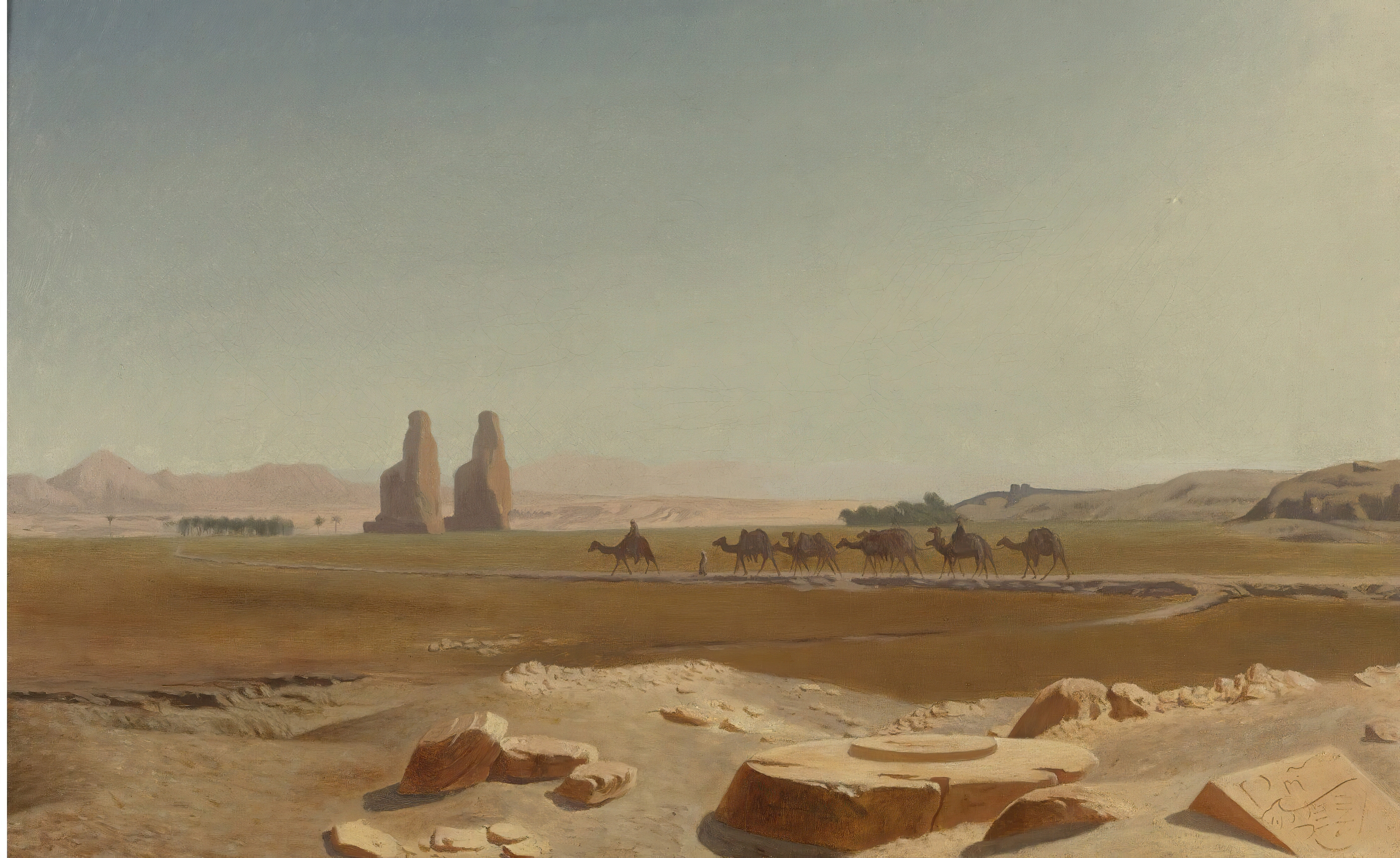
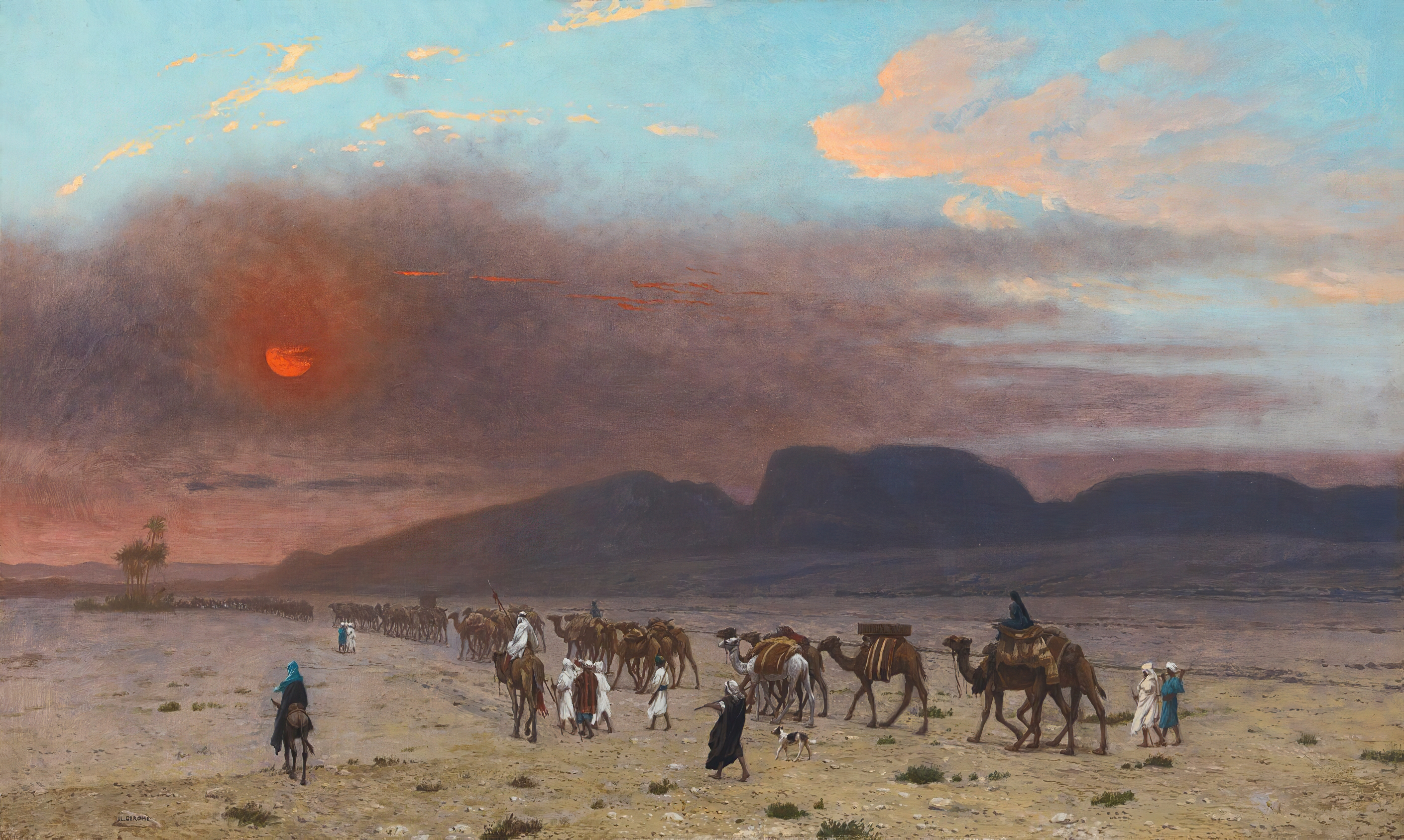
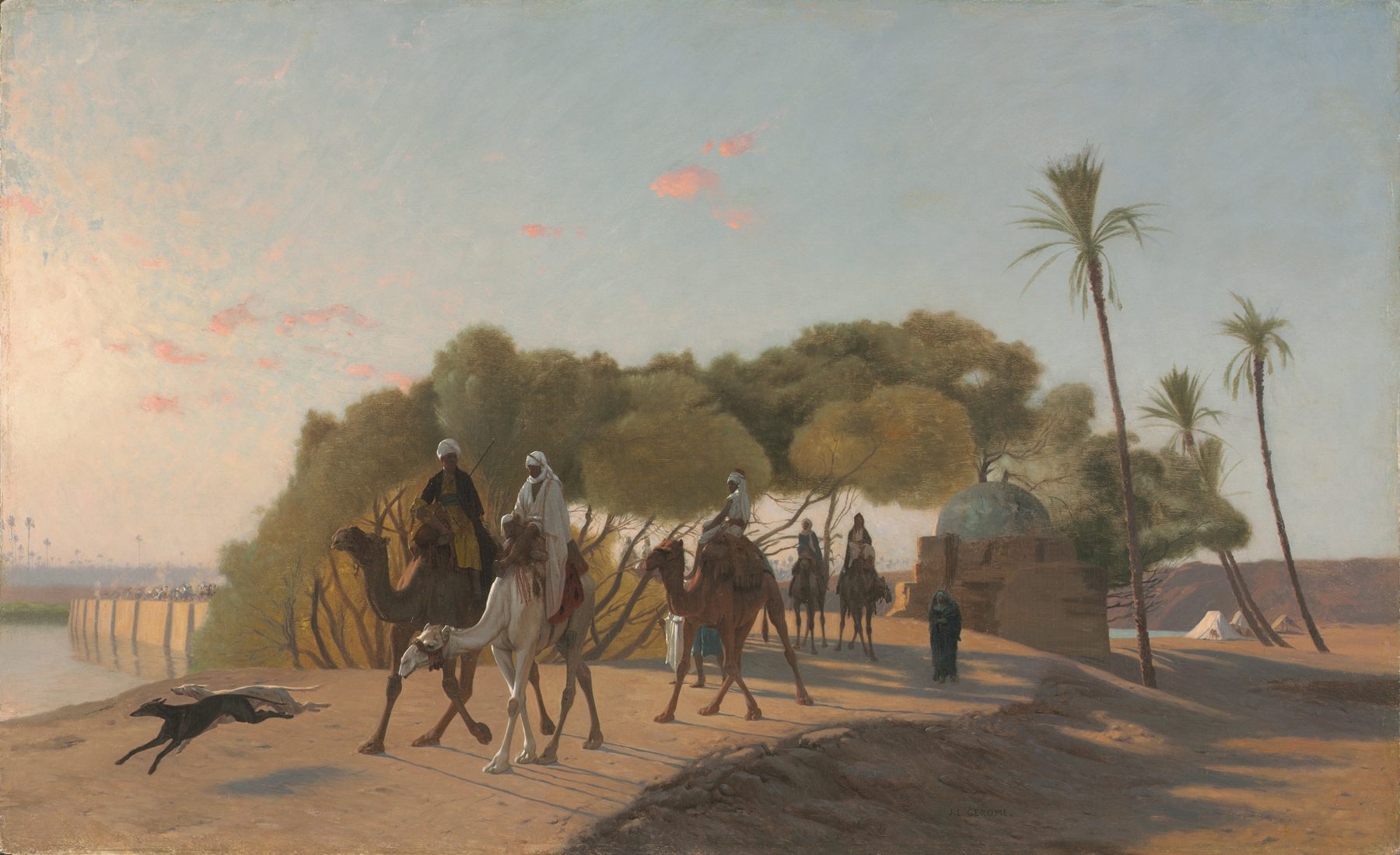
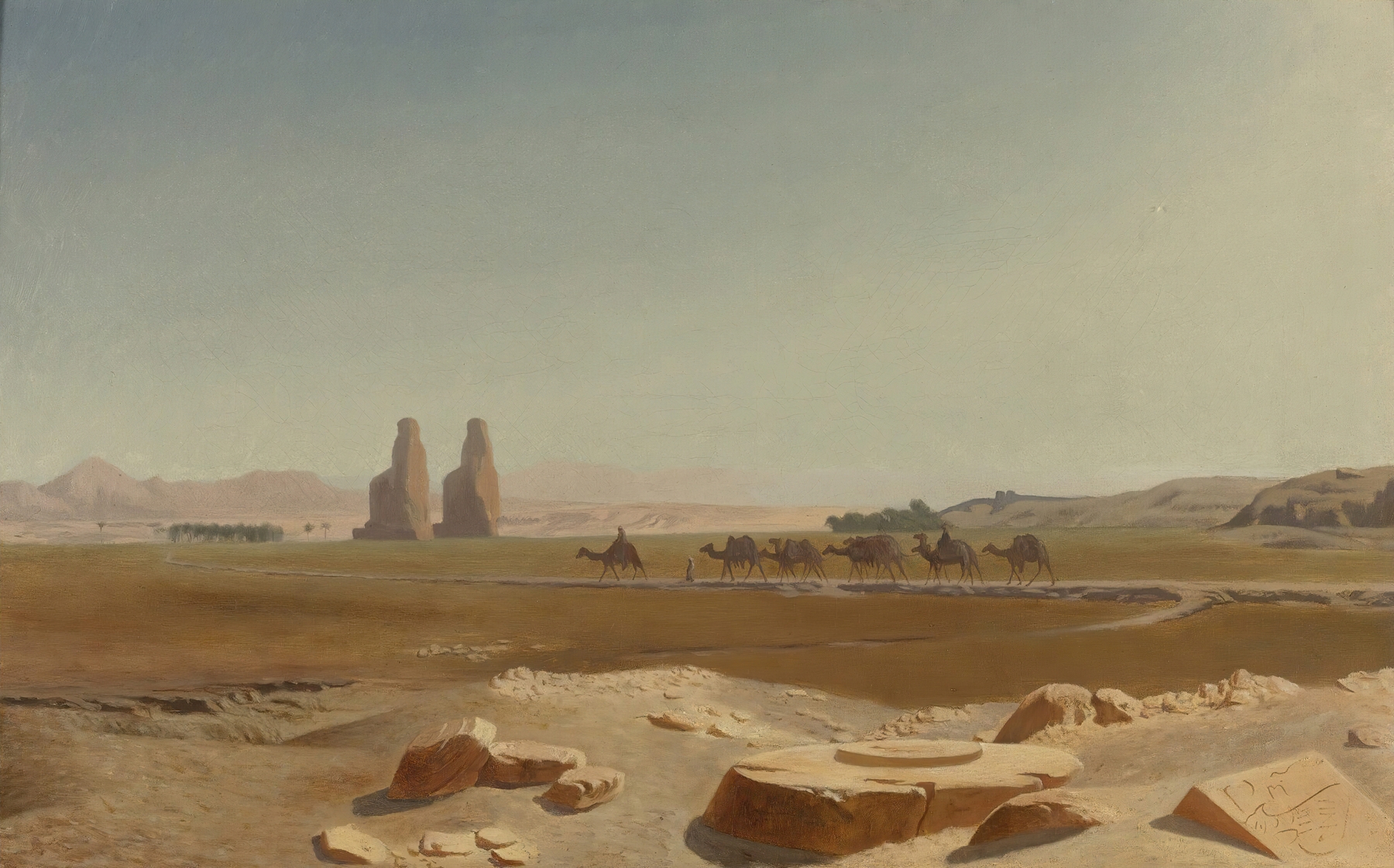
Could a single brushstroke hold eternity? In *Caravan Passing The Colossi Of Memnon, Thebes*, the weight of time echoes through the shimmering sands and monumental figures, inviting us to ponder the layers of history that envelop this scene. Look to the left at the colossal statues, standing resolute against an expansive sky washed in soft oranges and deep blues. Notice how the light caresses their weathered surfaces, highlighting their grandeur while casting long shadows into the foreground. The caravan, a fleeting presence of life, contrasts sharply with the permanence of the Colossi, illustrating the tension between the immortal and the ephemeral. The careful detailing of the figures, from the draped garments to the expressions of the travelers, draws the viewer into a moment that feels both alive and hauntingly distant. Beneath the surface, layers of melancholy seep into the painting. The contrasting scales of the caravan and the statues emphasize human transience against monumental permanence. Each traveler carries their own stories, hopes, and burdens, yet they are dwarfed by the silent giants that have witnessed the passage of time for millennia. This juxtaposition serves as a meditation on the fleeting nature of life, where individual journeys are set against an unchanging backdrop of history. During the late 19th century, while Gérôme created this work, he was deeply engaged with themes of antiquity and the exotic, reflecting the fascination with the Orient that permeated Western art. His meticulous attention to detail and historical accuracy resonated with audiences, and as he painted, Europe was experiencing a cultural shift, blending the old with the new. This piece stands as a testament to his mastery and a reminder of the endurance of both art and history.