Caza — History & Analysis
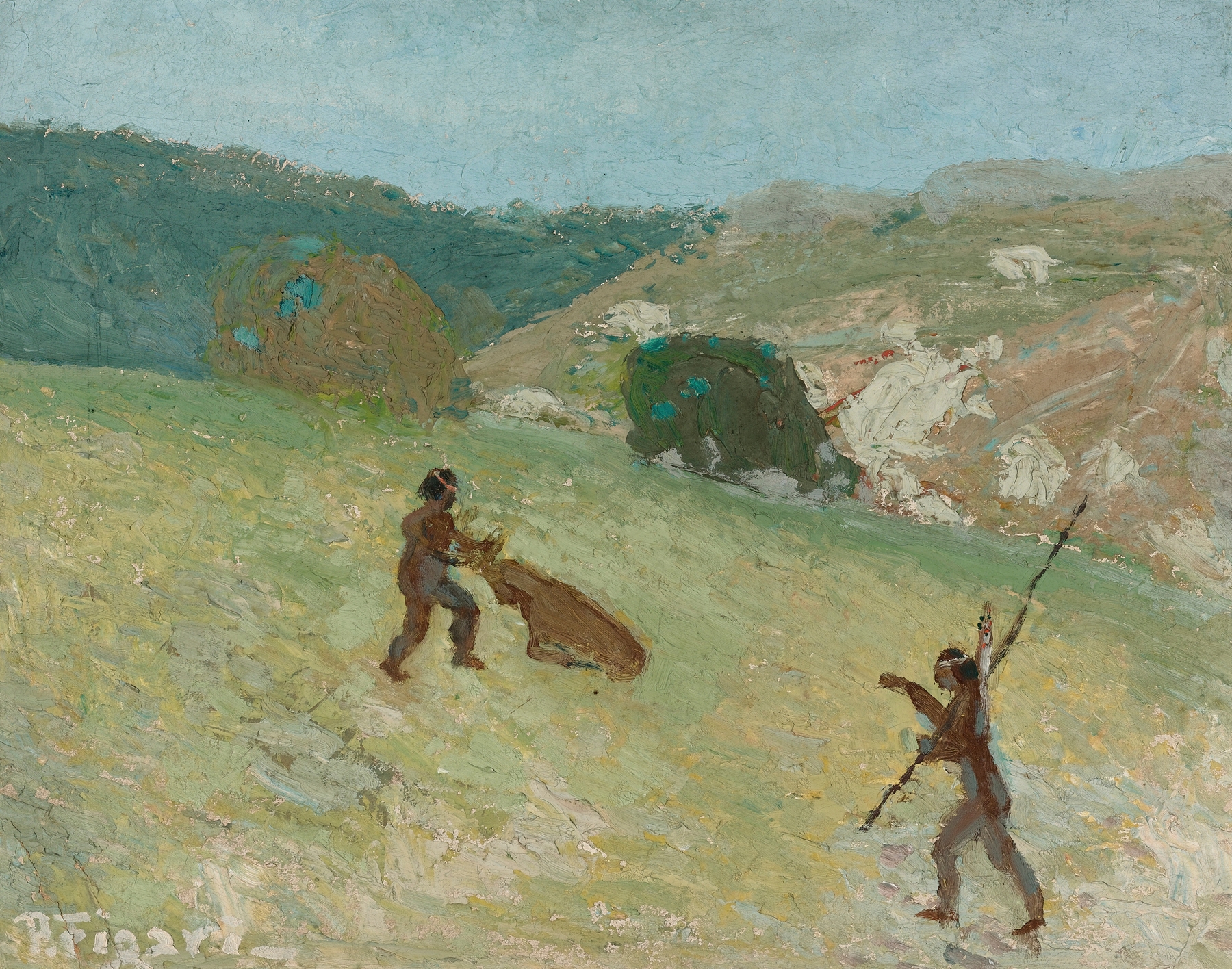
“The canvas doesn’t lie — it simply waits.” In the stillness of this artwork, desire hangs like the scent of ripening fruit, ripe for the picking yet tantalizingly out of reach. The yearning encapsulated in Caza reveals the complexities of pursuit, echoing the human condition in a world constantly striving, never fully achieving. Look to the central figure, poised with a bow, their gaze directed towards an unseen target. Notice the vibrant earth tones that envelop the scene, blending seamlessly into the figures that evoke a lively yet subdued energy.
The interplay of light and shadow falls across the textured landscape, creating a harmonious balance that draws the viewer’s eye toward the action while simultaneously embodying a sense of anticipation. Delve deeper into the composition, where the silhouettes of fellow hunters stand faintly against the horizon, their own desires reflected in the taut strings of their bows. The slight tension in the figures’ postures speaks to an unspoken camaraderie, underscoring the contrast between individual ambition and collective pursuit. The subtle brushwork hints at the emotional weight of their longing, encapsulating a moment suspended between aspiration and reality.
During an era when Figari was exploring themes of cultural identity, he created Caza in Uruguay, where local customs and folklore became his muse. This period marked a significant evolution in his style, as he sought to fuse traditional elements with modern expression. Emerging amid a rich tapestry of societal transformation, Figari's work resonated deeply with the nuances of longing that defined both his life and the broader narrative of South American art.