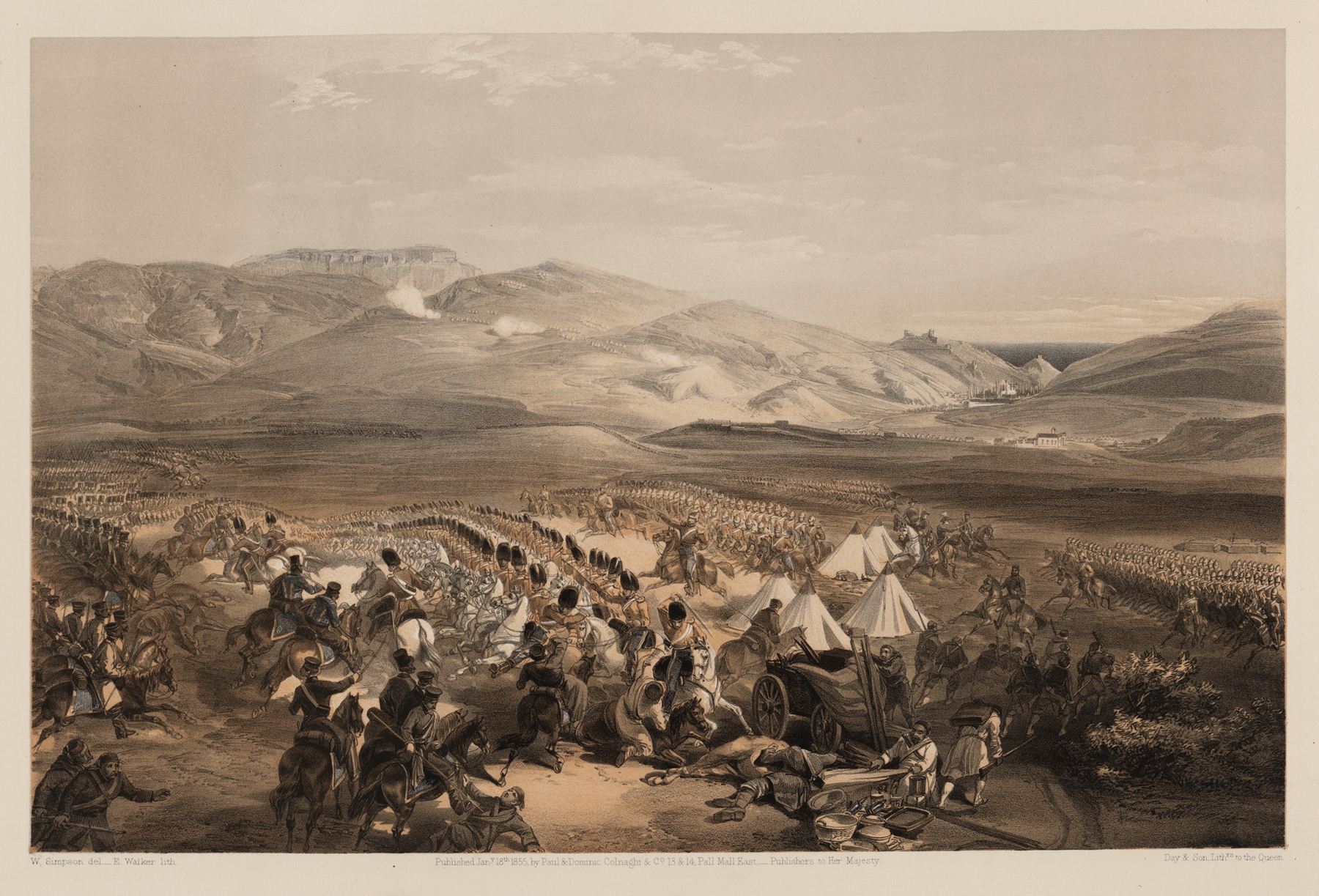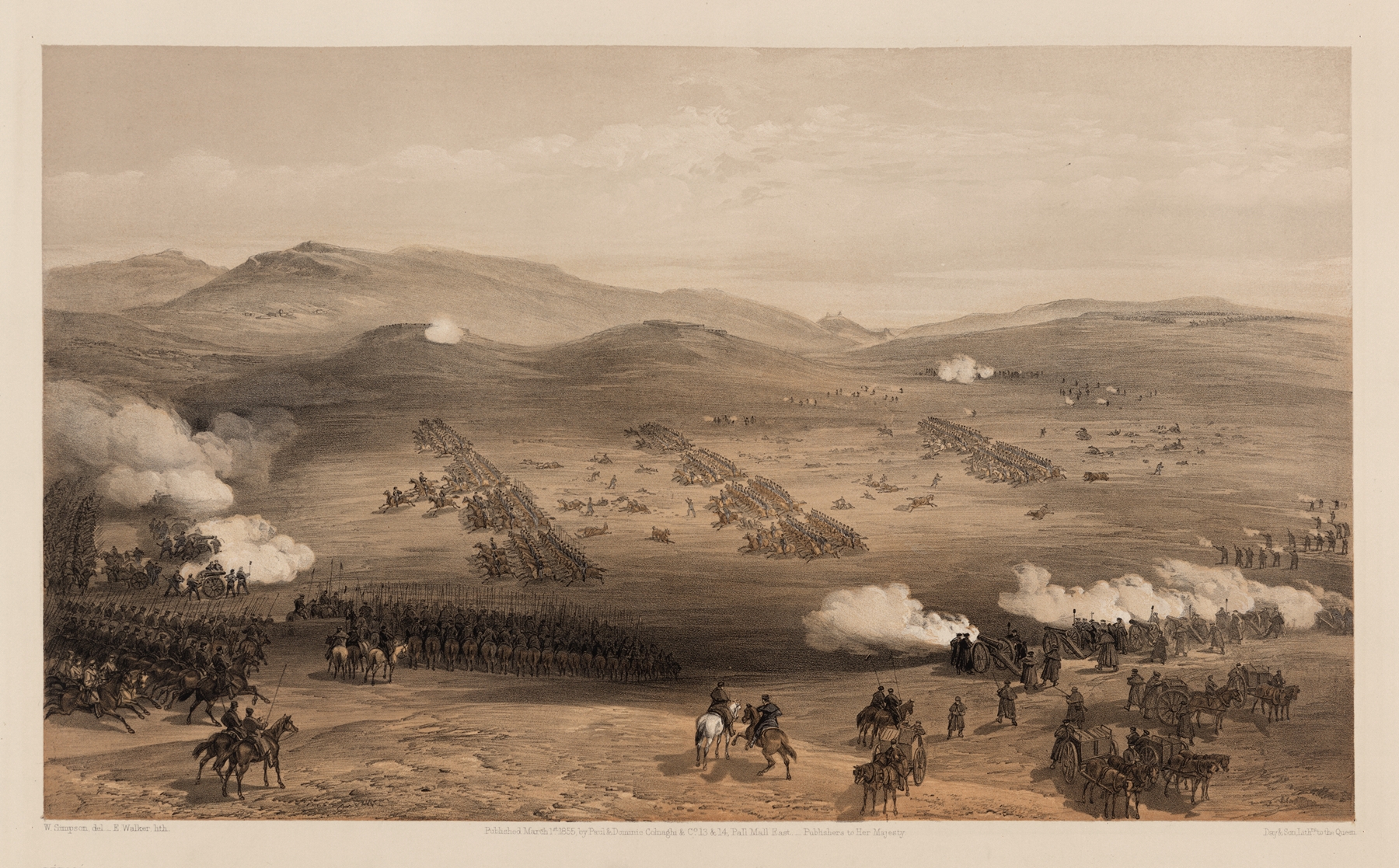
Charge of the light cavalry brigade, 25th Oct. 1854, under Major General the Earl of Cardigan — History & Analysis
Did the painter know this moment would outlive them? In capturing the chaotic fervor of battle, a haunting melancholy permeates the canvas, echoing the sorrow of valor amidst turmoil. Focus on the left side, where the horsemen surge forward, their forms blending into a tempest of motion. The vivid contrasts of crimson, splashed against muted earth tones, create an almost surreal energy, while the billowing smoke swirls like a ghostly shroud. Notice the masterful brushwork that imparts a sense of urgency — each stroke mimics the rhythm of galloping hooves, urging the viewer to feel the electrifying tension of the charge. Behind the bravado lies a stark reality, for the dynamic representation of the cavalry only amplifies the underlying futility of war. The determined yet weary expressions on the soldiers’ faces communicate a shared burden, hinting at the cost of duty and honor. This is not merely a depiction of bravery; it’s a sobering reminder of the fragility of life, as the chaos of battle juxtaposes the nobility of the charge with the inevitable loss that follows. Created in 1855, during a time of great upheaval in Britain due to the Crimean War, *Charge of the Light Cavalry Brigade* emerged from Simpson's eye-witness accounts. He captured this moment at a time when the art world was shifting, with greater emphasis on realism and documentation. The tragic outcome of the charge, now etched into history, reflects both a fervent desire for glory and the profound sorrow that accompanies the human cost of conflict.