
The Governor-General’s and Commander-in-Chief’s Camp at Jalandhar, 1 Febuary 1860 — History & Facts
Can beauty exist without sorrow? In The Governor-General’s and Commander-in-Chief’s Camp at Jalandhar, the interplay of light and shadow invites contemplation on this delicate balance. Look to the center of the canvas where the grand tents, adorned with flags, rise like ephemeral monuments against the backdrop of a dusky sky. The palette dances between warm earth tones and cooler blues, melding to create a mood that is simultaneously vibrant and melancholic. Note how the figures, engaged in daily camp activities, seem small beneath the towering structures, their gestures speaking volumes about both camaraderie and isolation. As you immerse yourself in the details, consider the juxtaposition of the bustling camp life against the stillness of the landscape.
The soft billow of the tents suggests movement, yet the overall composition offers a moment of pause. This tension between action and tranquility serves as a reminder of the fragility of human endeavors amidst nature’s vastness. Each brushstroke captures not only a moment in time but the impermanence that defines both beauty and existence. In 1860, when this piece was painted, William Simpson was in India, documenting British imperial life during the Second Anglo-Sikh War.
His work reflected the complexities of the British presence in India, as well as his own artistic journey, which sought to convey the vibrancy of a culture often misunderstood. This painting is a testament to the synthesis of observation and artistry during a period of political and social upheaval.
More Artworks by William Simpson

Charge of the light cavalry brigade, 25th Oct. 1854, under Major General the Earl of Cardigan
William Simpson
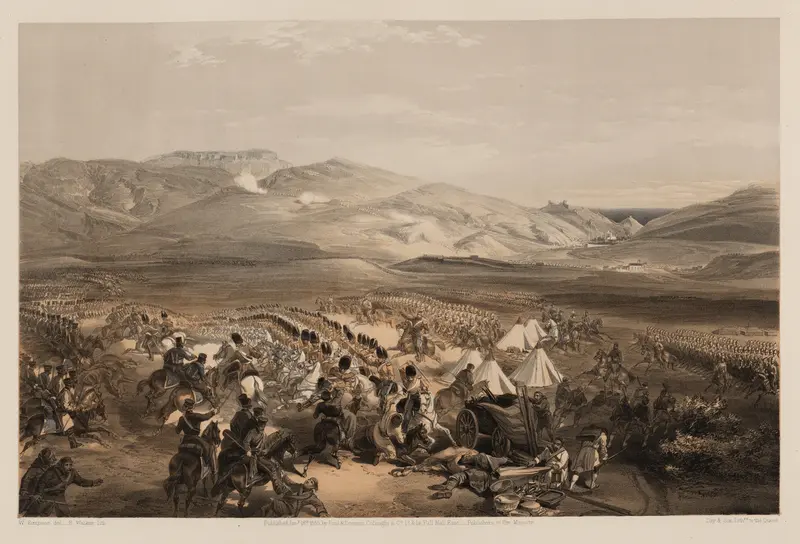
Charge of the heavy cavalry brigade, 25th Octr. 1854
William Simpson
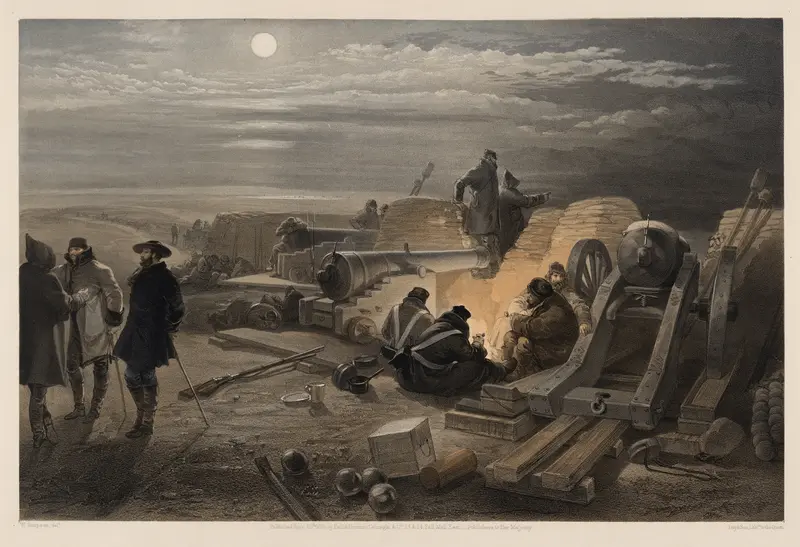
A quiet night in the batteries – a sketch in the Greenhill battery (Major Chapman’s), 29th Jany. 1855
William Simpson
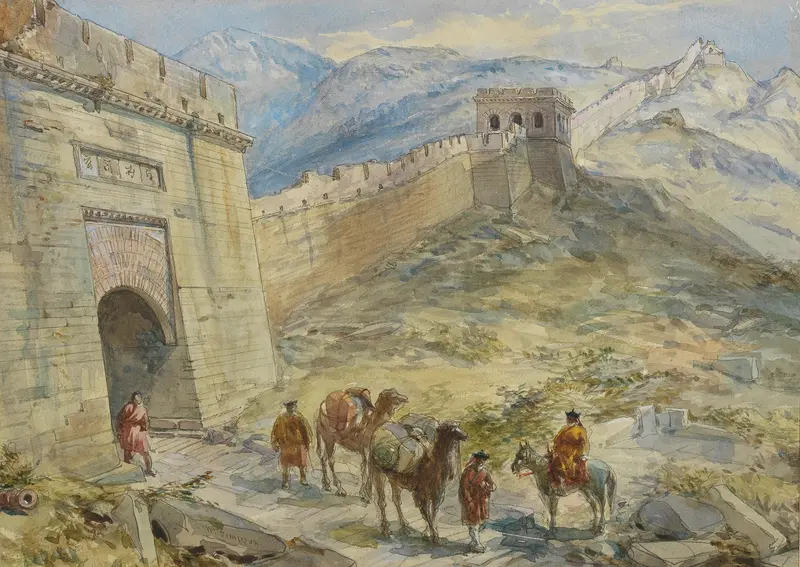
The Great Wall of China
William Simpson

Sebastopol from the rear of the English batteries
William Simpson
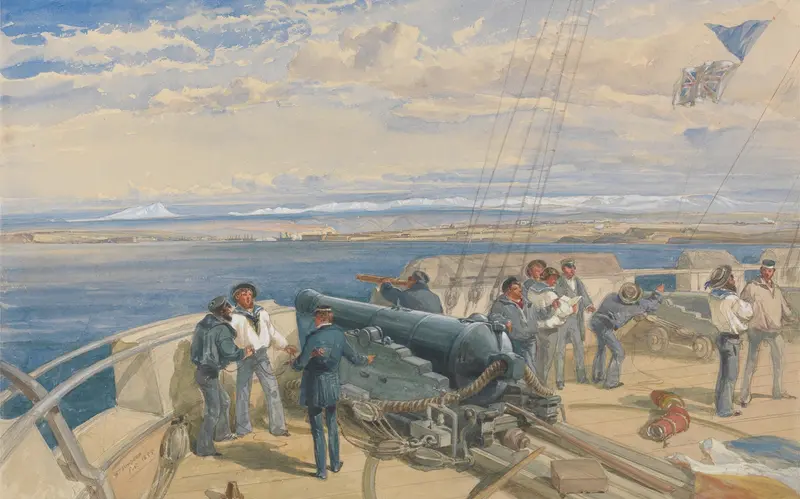
Sebastopol from the Sea, Sketched from the Deck of H. M. S. Sidon, Feb. 1855
William Simpson
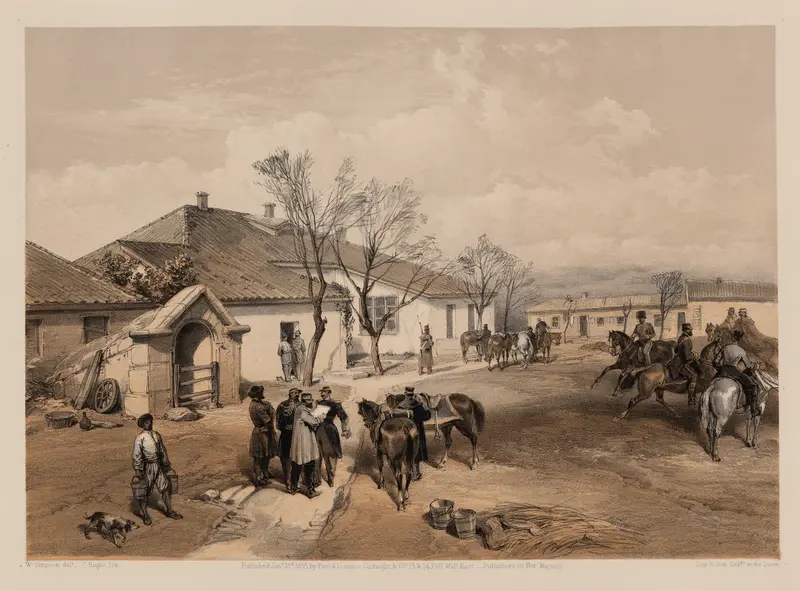
Lord Raglan’s head quarters at Khutor-Karagatch
William Simpson
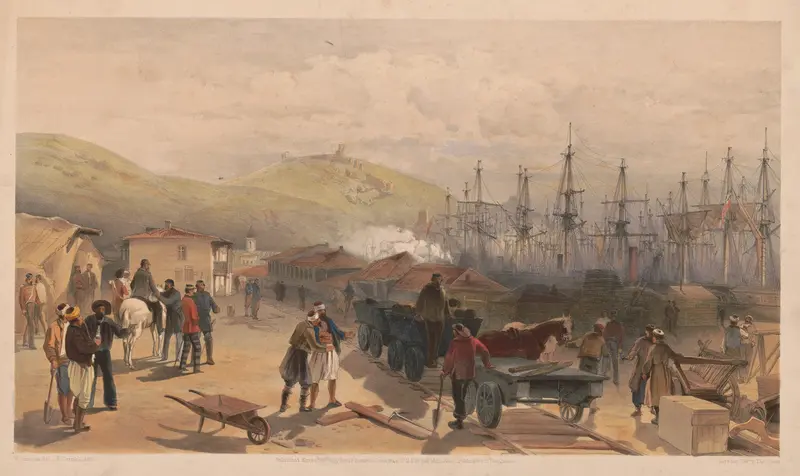
The railway at Balaklava, looking south
William Simpson

Sebastobol from the 26 gun battery on the extreme right of French attack
William Simpson
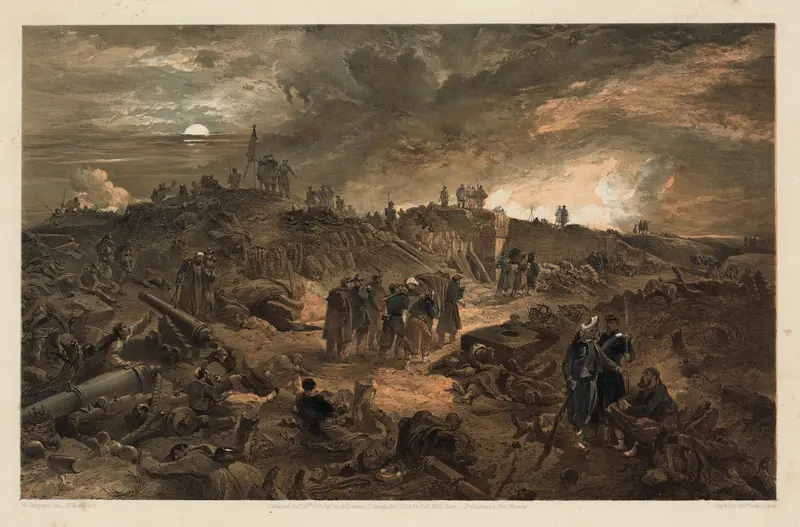
Interior of the Malakoff with the remains of the round tower
William Simpson





