
Charge of the heavy cavalry brigade, 25th Octr. 1854 — History & Facts
Who listens when art speaks of silence? Within the frame of time, the clash of steel and the thunder of hooves resonates through history, evoking a divine connection between valor and sacrifice. Focus your gaze on the center, where the heavy cavalry brigade surges forward, cloaked in a cascade of muted colors. Notice how the artist expertly layers the shades of brown and green, creating a natural landscape that both cradles and contrasts with the intensity of battle. The sweeping sky above, a tumultuous blend of grays, hints at the storm of chaos unfolding below, while the brushwork captures every sinew of the galloping horses, a testament to the raw power of this moment. Delve deeper into the emotional undercurrents: the juxtaposition of the soldiers’ fierce determination against the impending doom that looms.
Each figure, though depicted in action, bears an expression that teeters on the edge of honor and fear. The faint glimmers of sunlight piercing through the clouds become symbols of hope, while the dark shadows creeping across the battlefield hint at the ultimate cost of warfare, revealing a stark tension between glory and despair. In 1855, amidst the Crimean War—a time when England was grappling with the complexities of modern warfare—William Simpson painted this pivotal scene. Living in a world where the realities of conflict were palpable, he aimed to document the heroism of troops while also reflecting on the profound losses at stake.
This artwork emerged from his commitment to capturing not just the event, but the divine intersection of humanity and history, echoing through time.
More Artworks by William Simpson

Charge of the light cavalry brigade, 25th Oct. 1854, under Major General the Earl of Cardigan
William Simpson
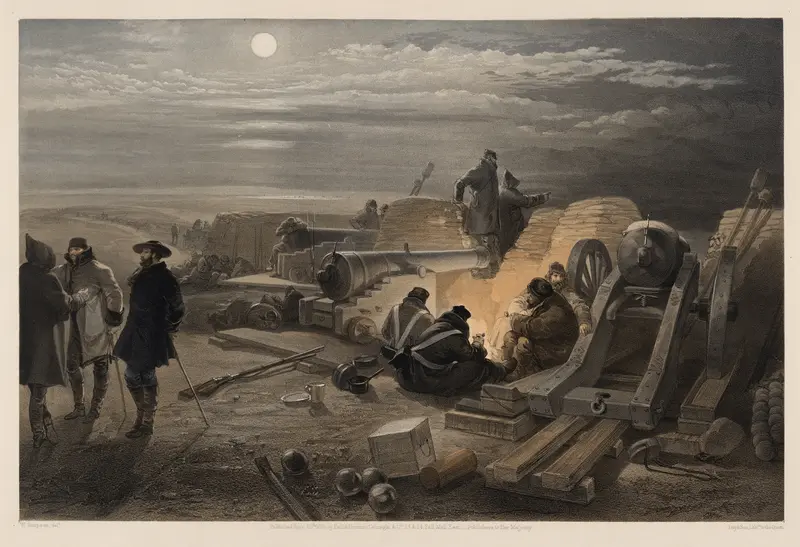
A quiet night in the batteries – a sketch in the Greenhill battery (Major Chapman’s), 29th Jany. 1855
William Simpson
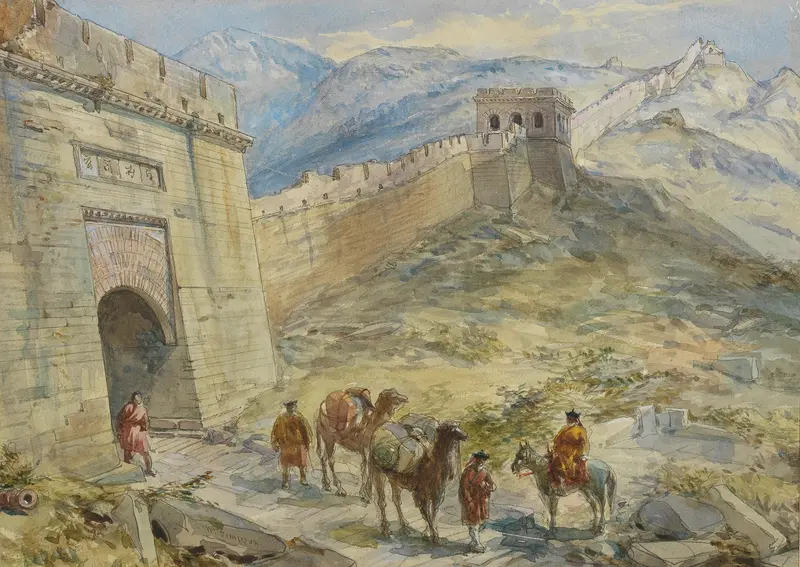
The Great Wall of China
William Simpson

Sebastopol from the rear of the English batteries
William Simpson
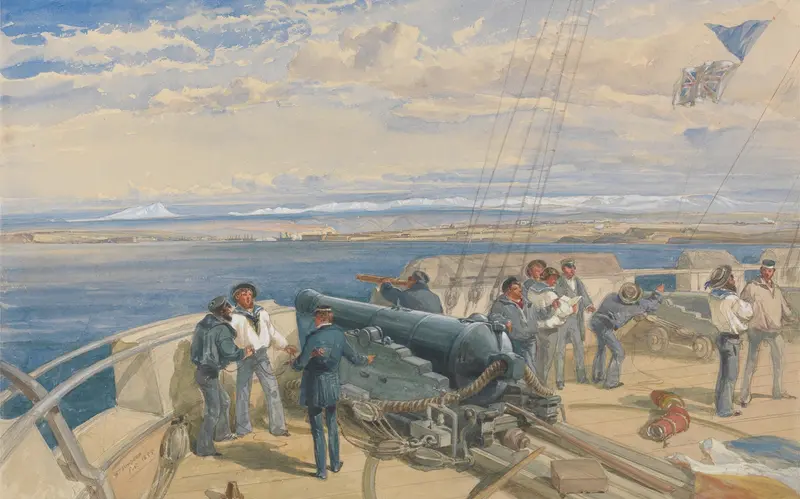
Sebastopol from the Sea, Sketched from the Deck of H. M. S. Sidon, Feb. 1855
William Simpson
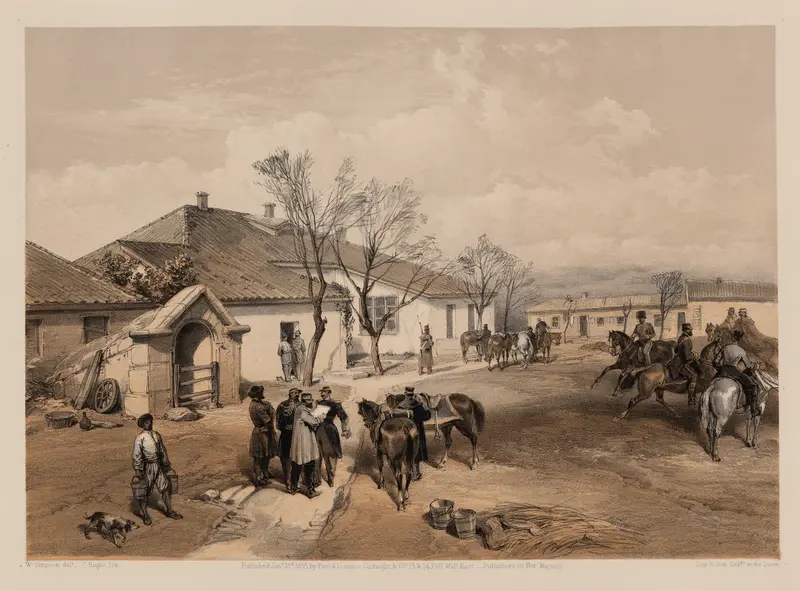
Lord Raglan’s head quarters at Khutor-Karagatch
William Simpson
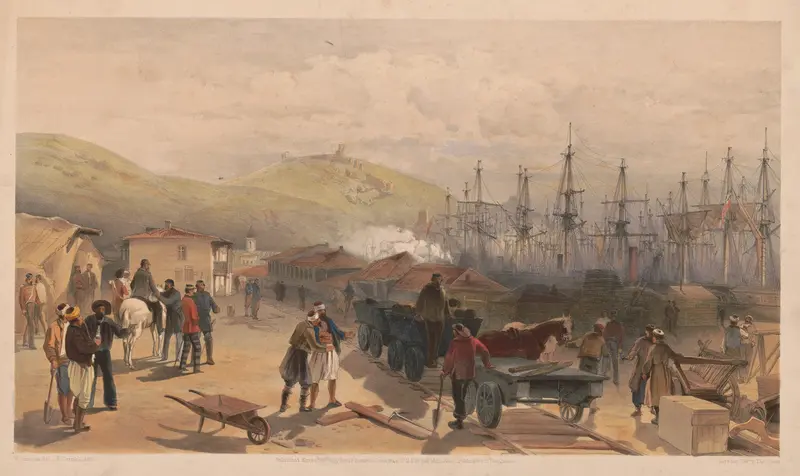
The railway at Balaklava, looking south
William Simpson
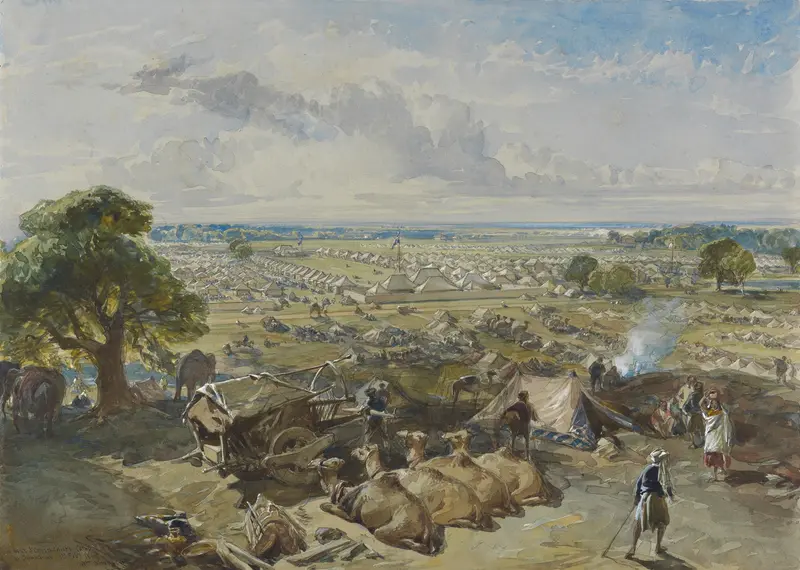
The Governor-General’s and Commander-in-Chief’s Camp at Jalandhar, 1 Febuary 1860
William Simpson

Sebastobol from the 26 gun battery on the extreme right of French attack
William Simpson
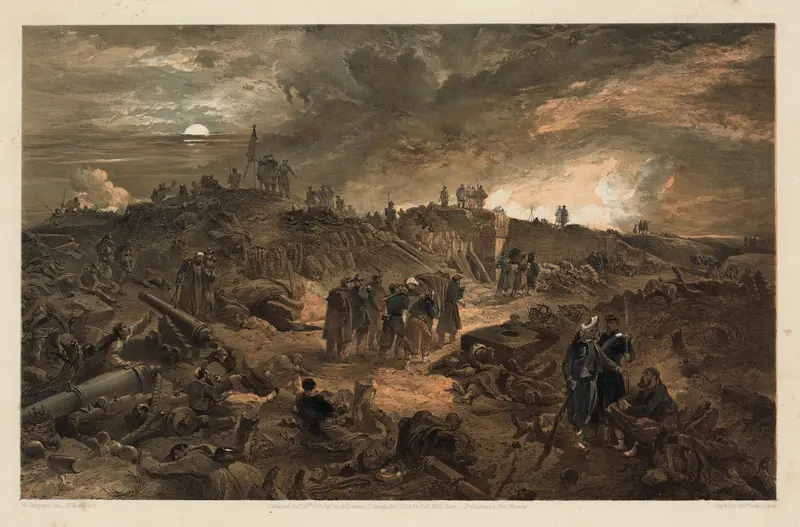
Interior of the Malakoff with the remains of the round tower
William Simpson





