Chiemseefischer — History & Analysis
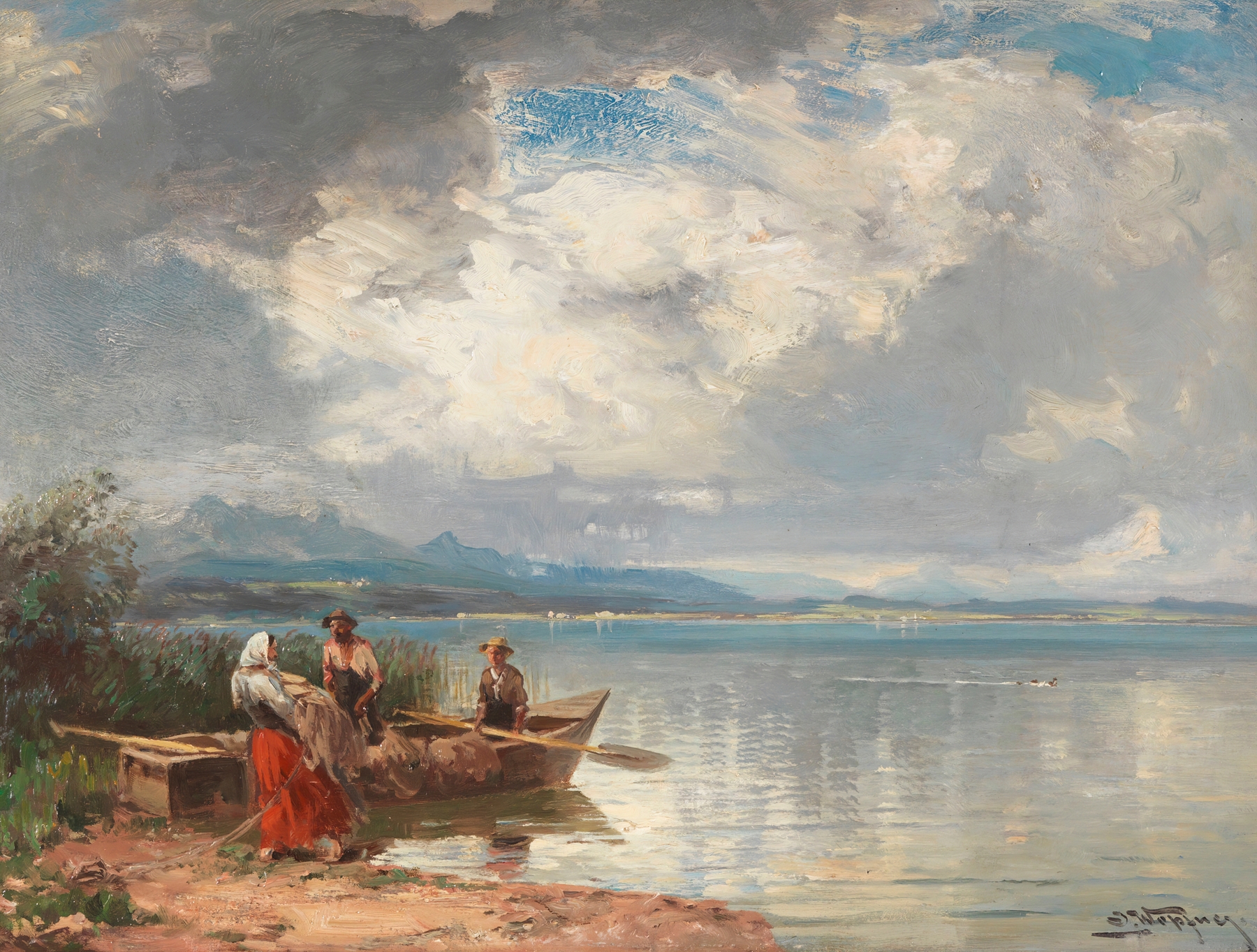
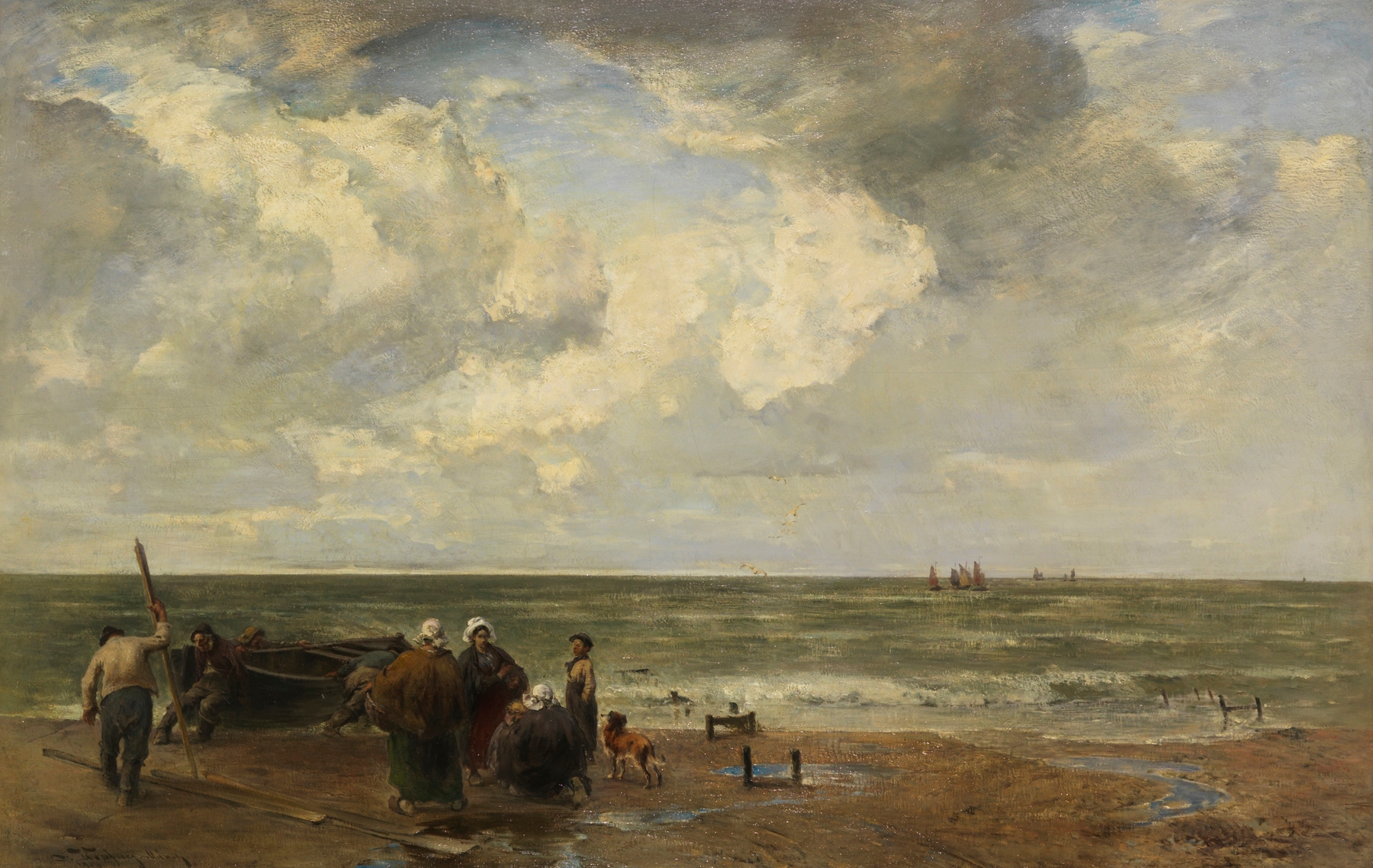
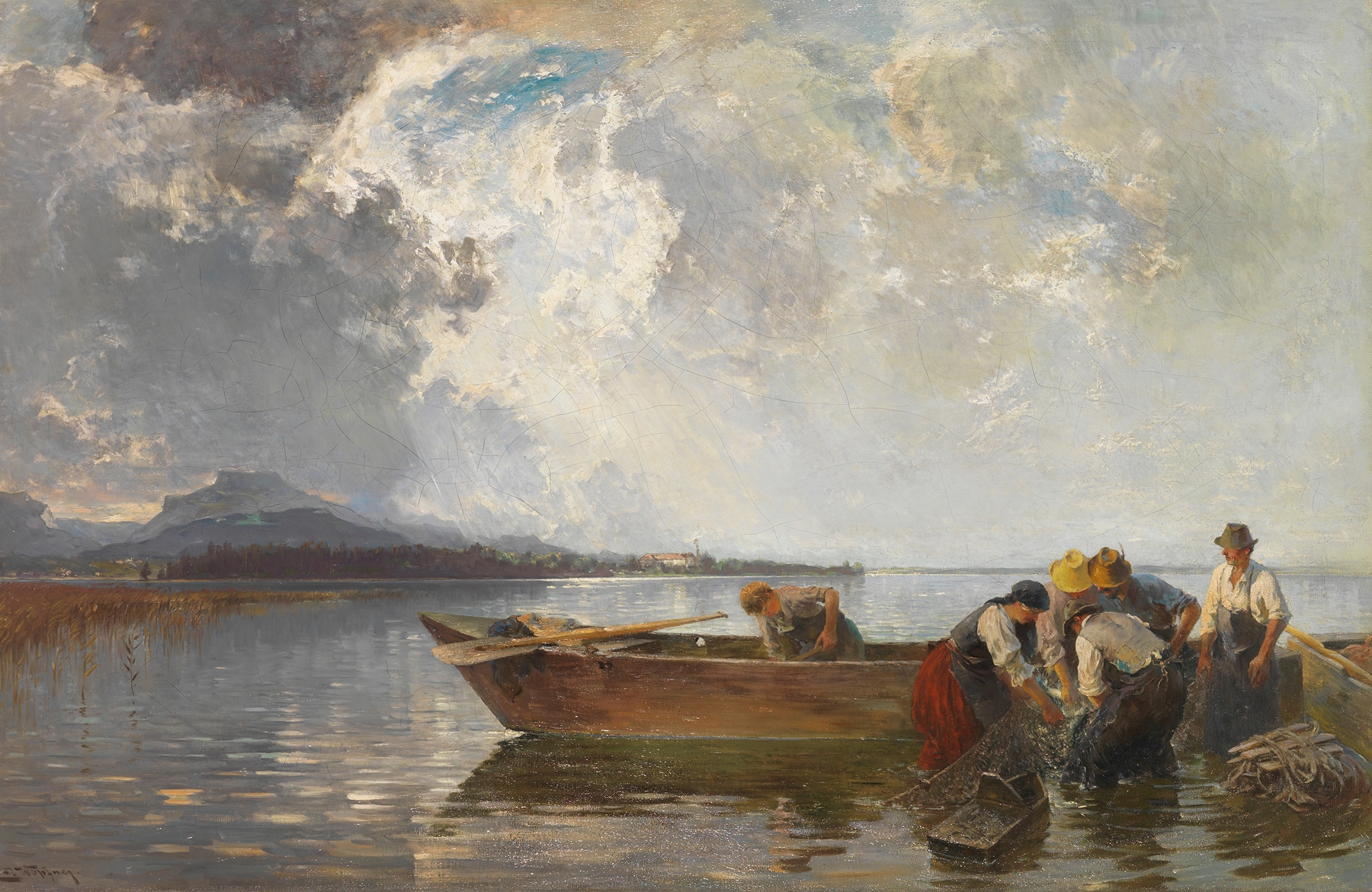
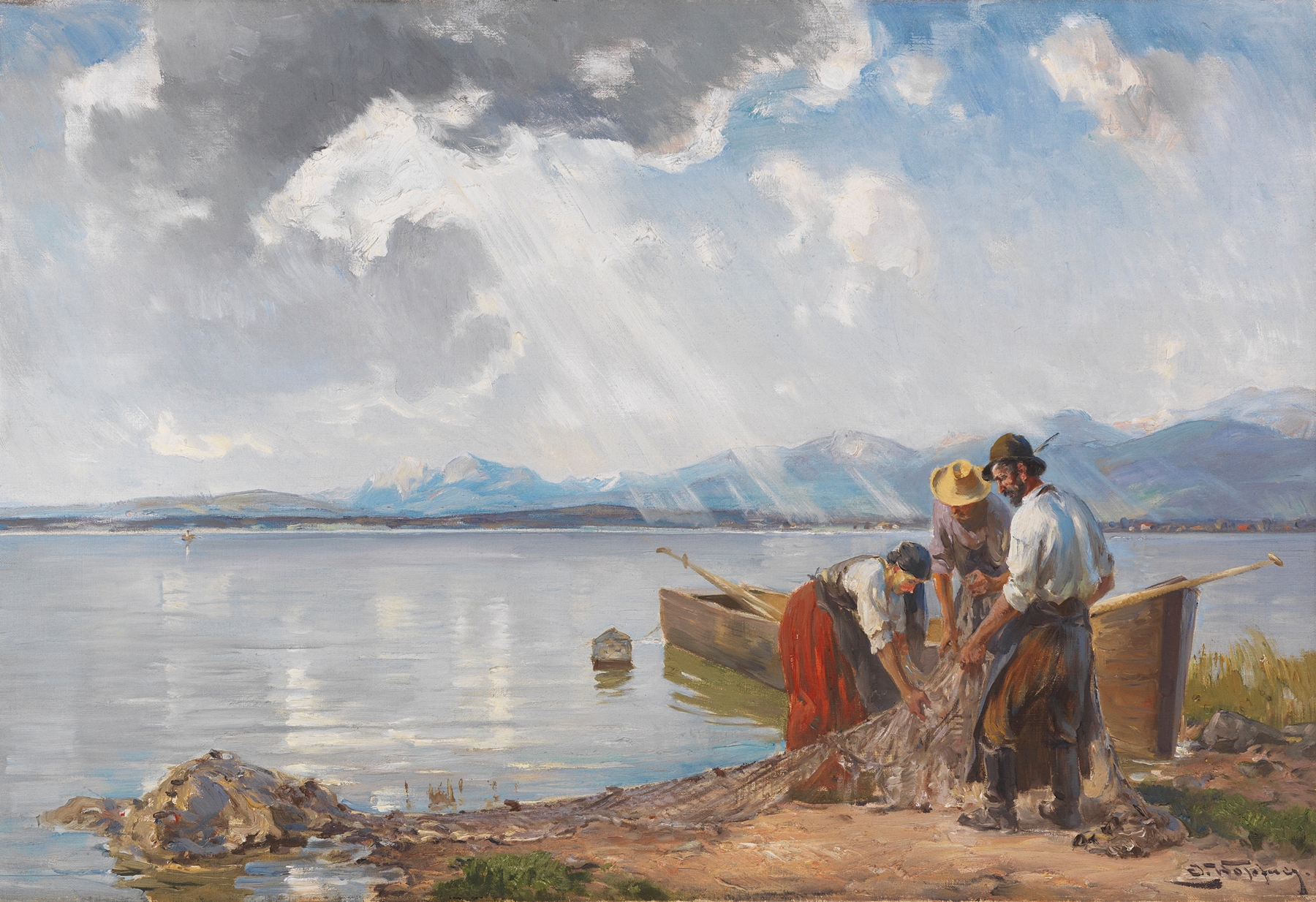
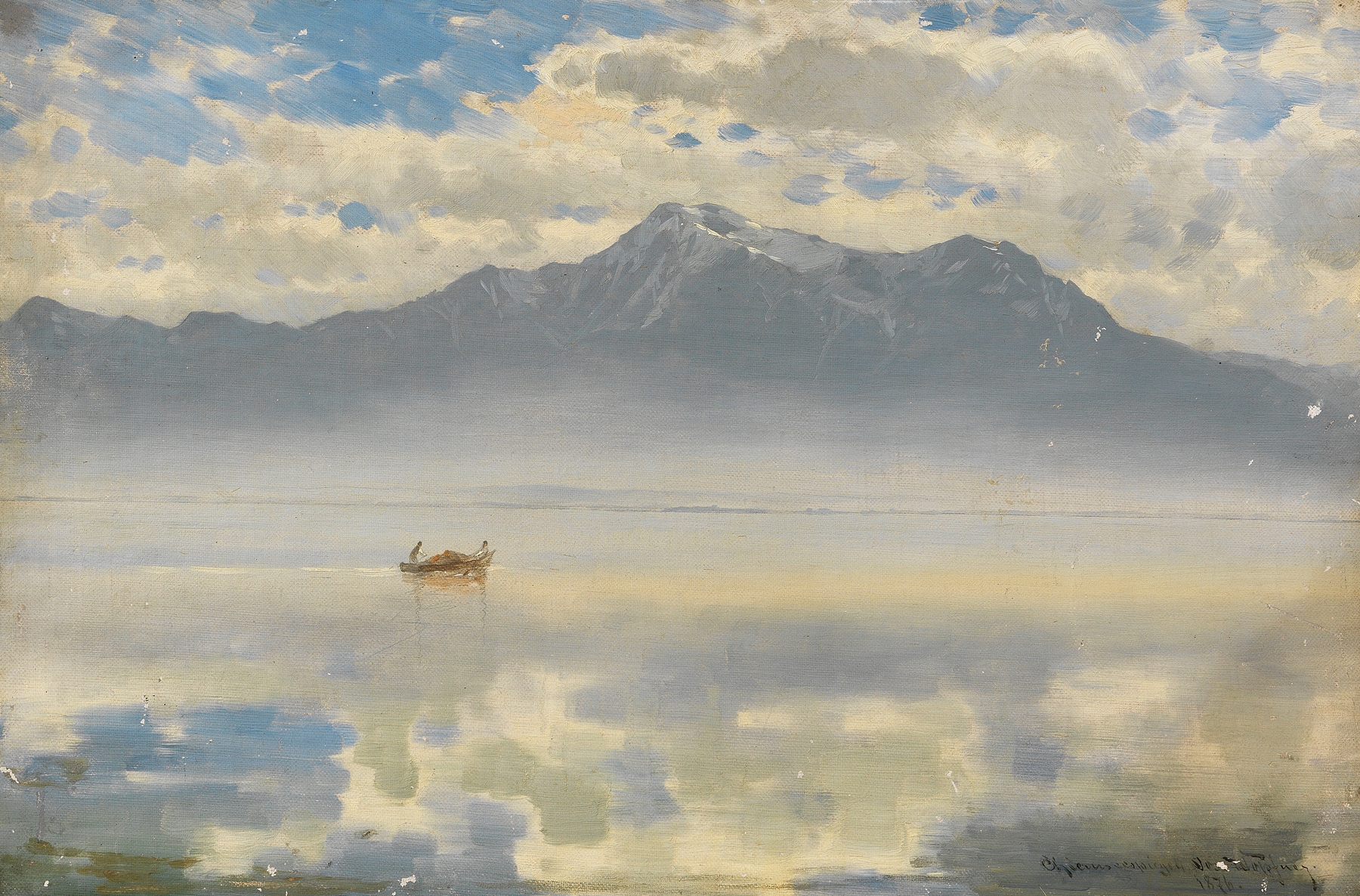
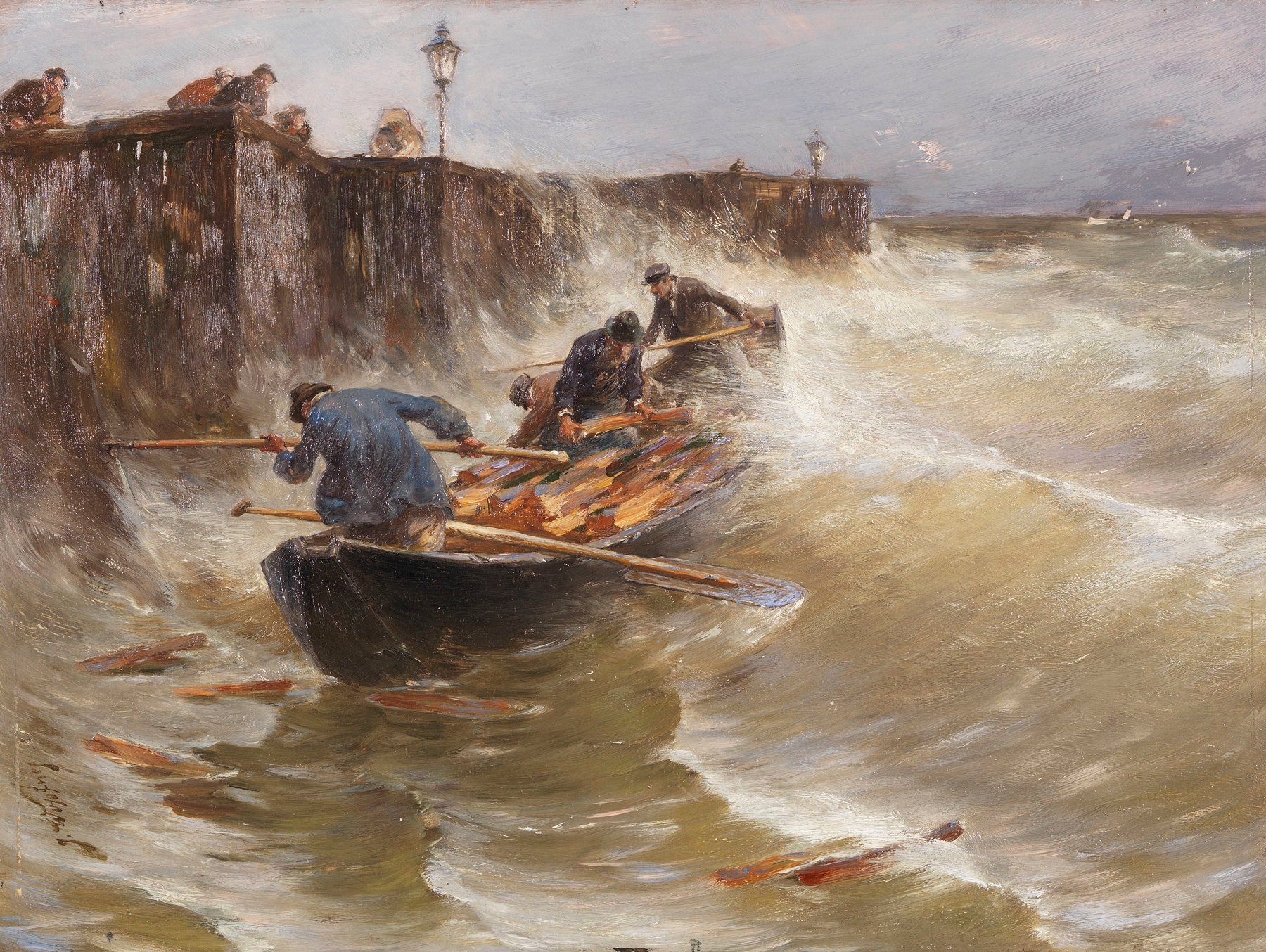
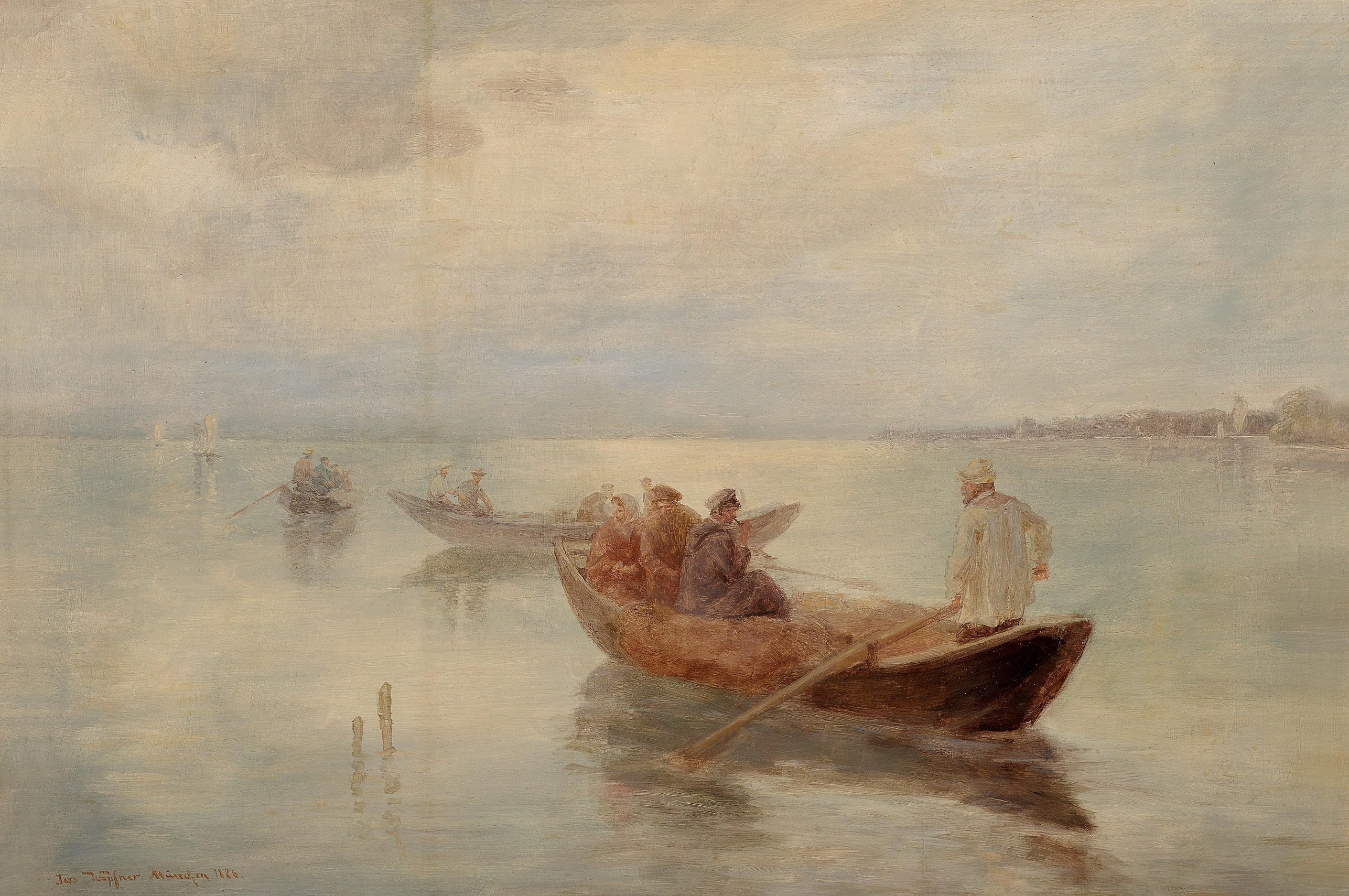
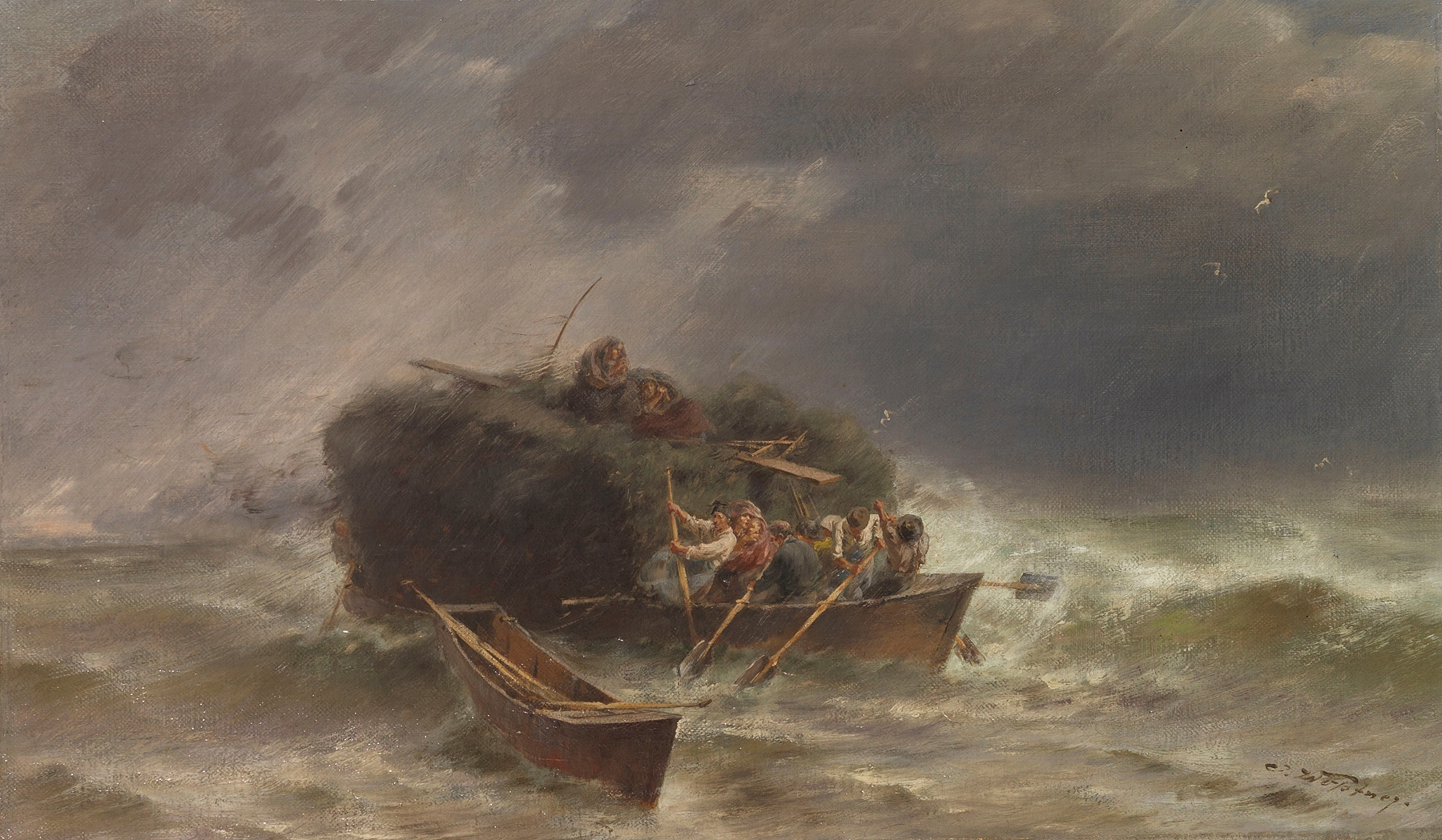
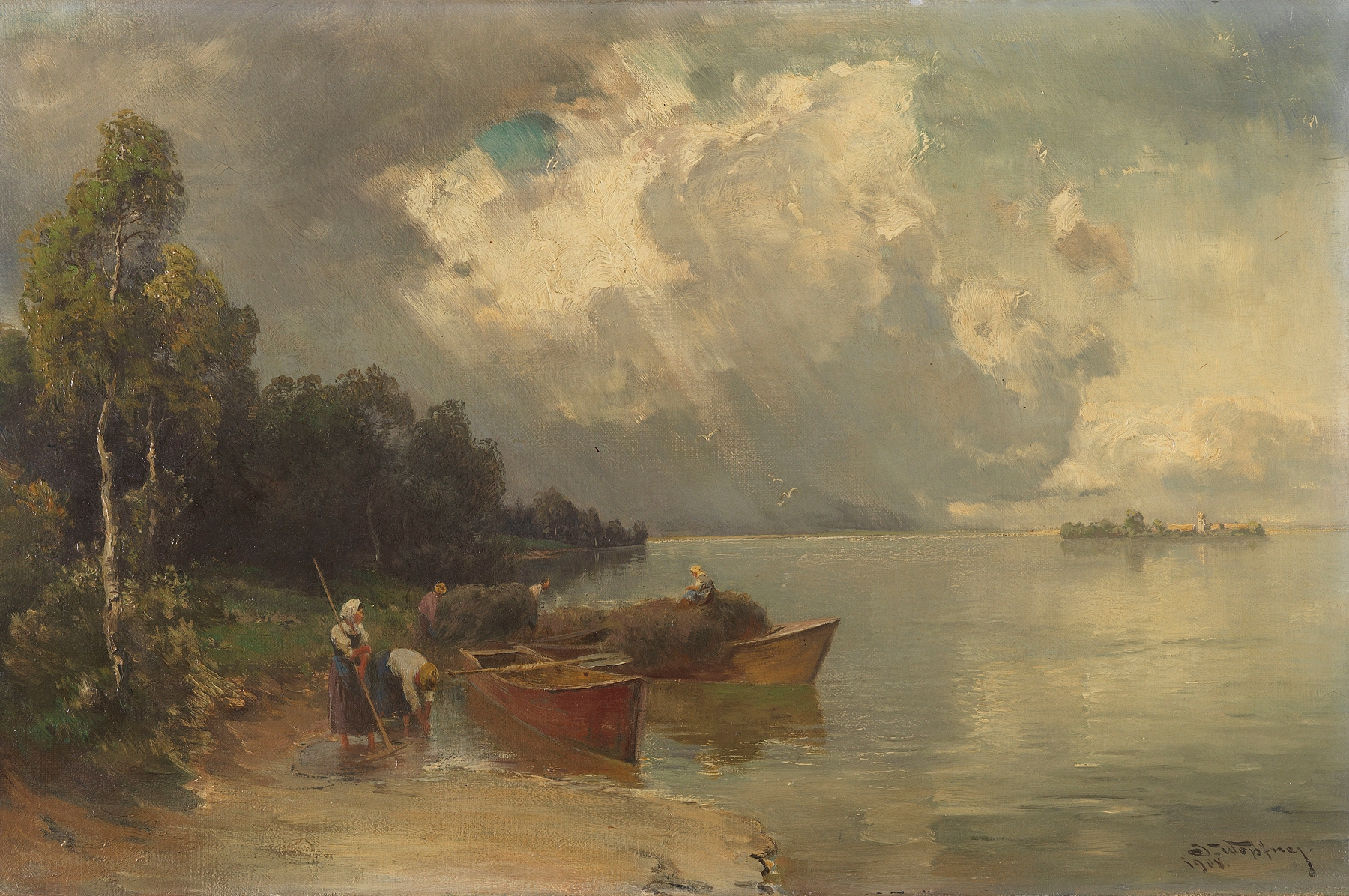
“The canvas doesn’t lie — it simply waits.” In the stillness between dreams and reality, we encounter a world where serenity dances with the passage of time. Here lies a moment suspended, inviting us to explore the stories woven into the threads of its imagery. Start by looking at the left side, where the sun-drenched water reflects soft hues of blue and gold, creating a mesmerizing tapestry of light. The boats, painted with delicate strokes, seem to rest like whispers on the lake’s surface, while the fishermen, with their gentle gestures, evoke a palpable connection to the land and water.
Notice how the muted colors of the distant mountains serve as a poignant backdrop, enhancing the vibrancy of the figures, harmonizing the composition in a perfect balance between man and nature. With each glance, the painting reveals deeper layers of meaning; the fishermen embody a timeless ritual that speaks of perseverance and sustenance against the backdrop of an ever-changing landscape. The quietude of the scene juxtaposes the labor of their hands, suggesting dreams unfolding amidst the toil of daily life. The gentle ripples in the water symbolize both the fleeting nature of time and the depths of the subconscious, as if inviting the viewer to contemplate their own aspirations.
Joseph Wopfner painted Chiemseefischer in 1900 while living in Bavaria, a period marked by artistic experimentation and a burgeoning appreciation for naturalism. During this time, the art world was transitioning from the constraints of academic styles to embrace Impressionism and the emotive qualities of color and light. Wopfner’s work reflects this evolution, capturing the essence of rural life and the dreamlike quality of the serene Bavarian landscape.