Das Haus des Tasso in Sorrent — History & Analysis
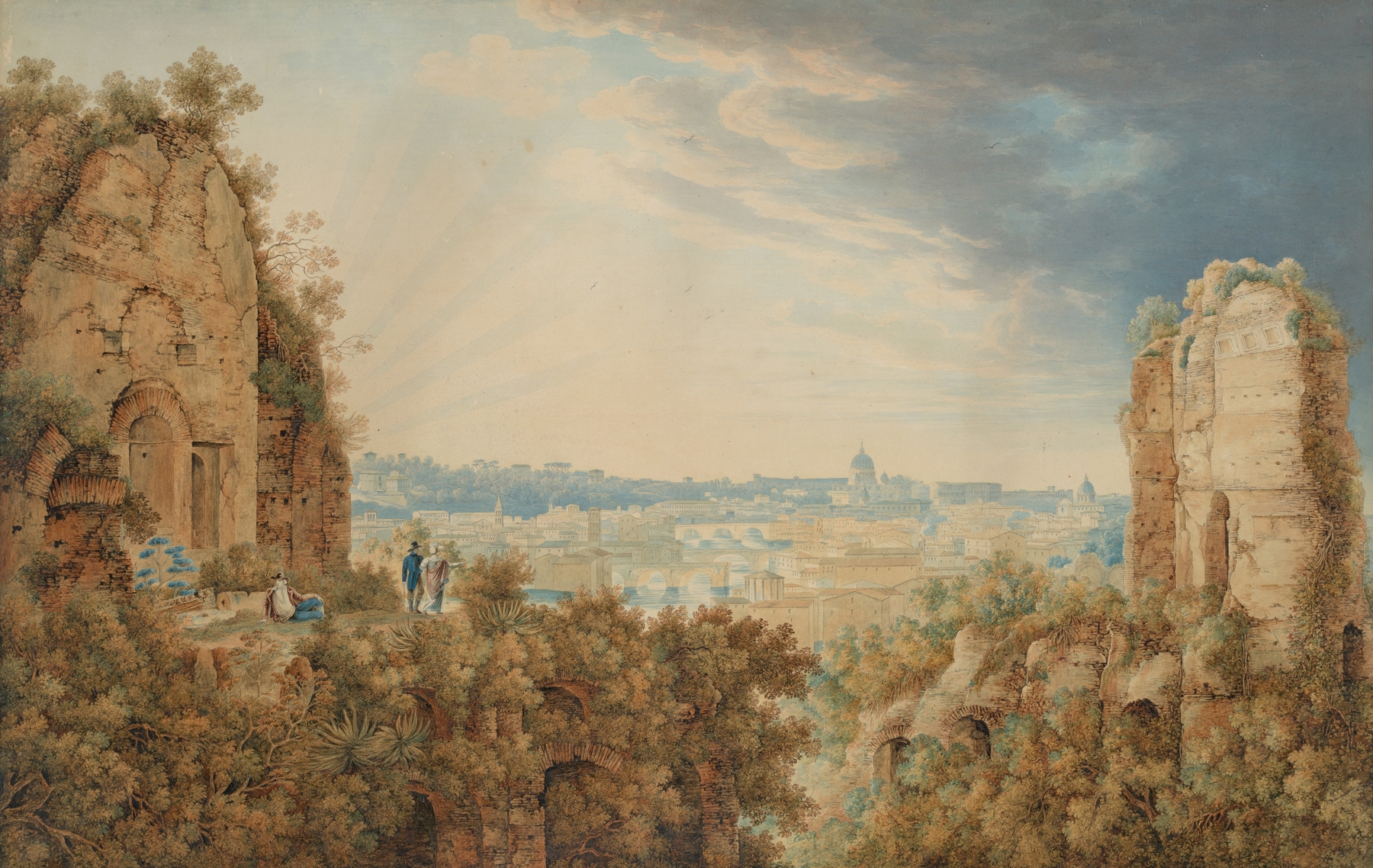
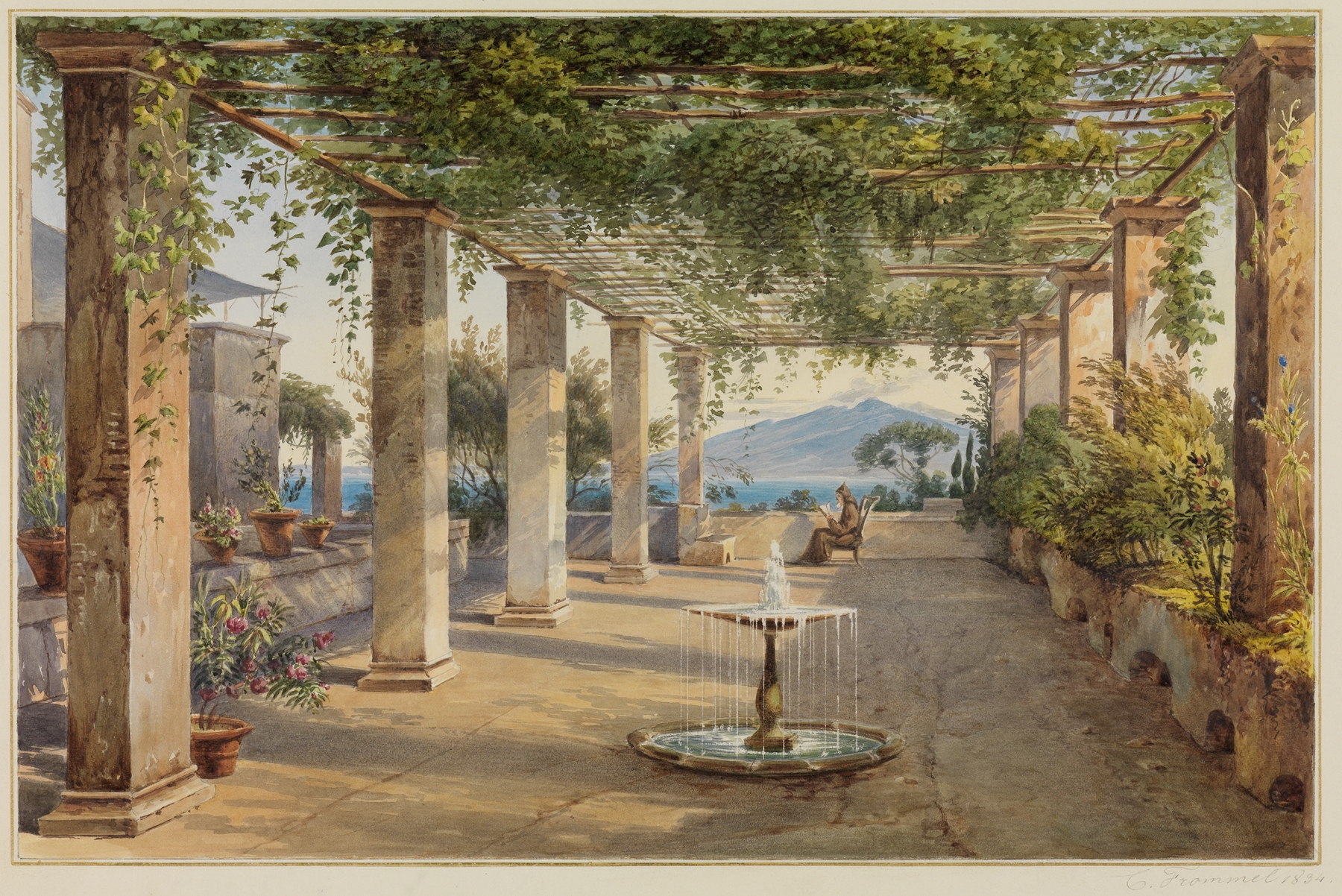
Is this a mirror — or a memory? In Carl Ludwig Frommel's Das Haus des Tasso in Sorrent, the viewer is drawn into a moment where the passage of time lingers, intertwining life and death in a delicate dance. Look to the left at the sun-drenched villa, its warm tones inviting yet solemn against the lush greenery that surrounds it. The brushwork captures the gentle sway of the trees, their shadows creating an interplay between light and dark that evokes a sense of nostalgia.
Notice how the soft blue of the sky overhead contrasts with the earthy hues below, suggesting a boundary between the earthly realm and the ethereal, as if the house itself stands at the threshold of existence. Hidden within the tranquil scene are whispers of mortality. The villa, a remnant of a bygone era, speaks to the inevitability of decay, while the verdant landscape hints at the cycles of life that persist despite human transience. The choice of colors and placement creates a dialogue between permanence and impermanence, inviting reflections on what remains when we are gone and how memories shape the spaces we inhabit.
In 1849, Frommel painted this piece while living in Germany, amidst a growing interest in Romanticism and a return to nature. The mid-19th century was a time of profound transformation in art, as artists sought to express deep emotional truths and a connection to the natural world. This work resonates with that spirit, bridging the gap between historical significance and personal reflection, capturing a moment that feels both timeless and fleeting.