Der Naschmarkt in Wien — History & Analysis
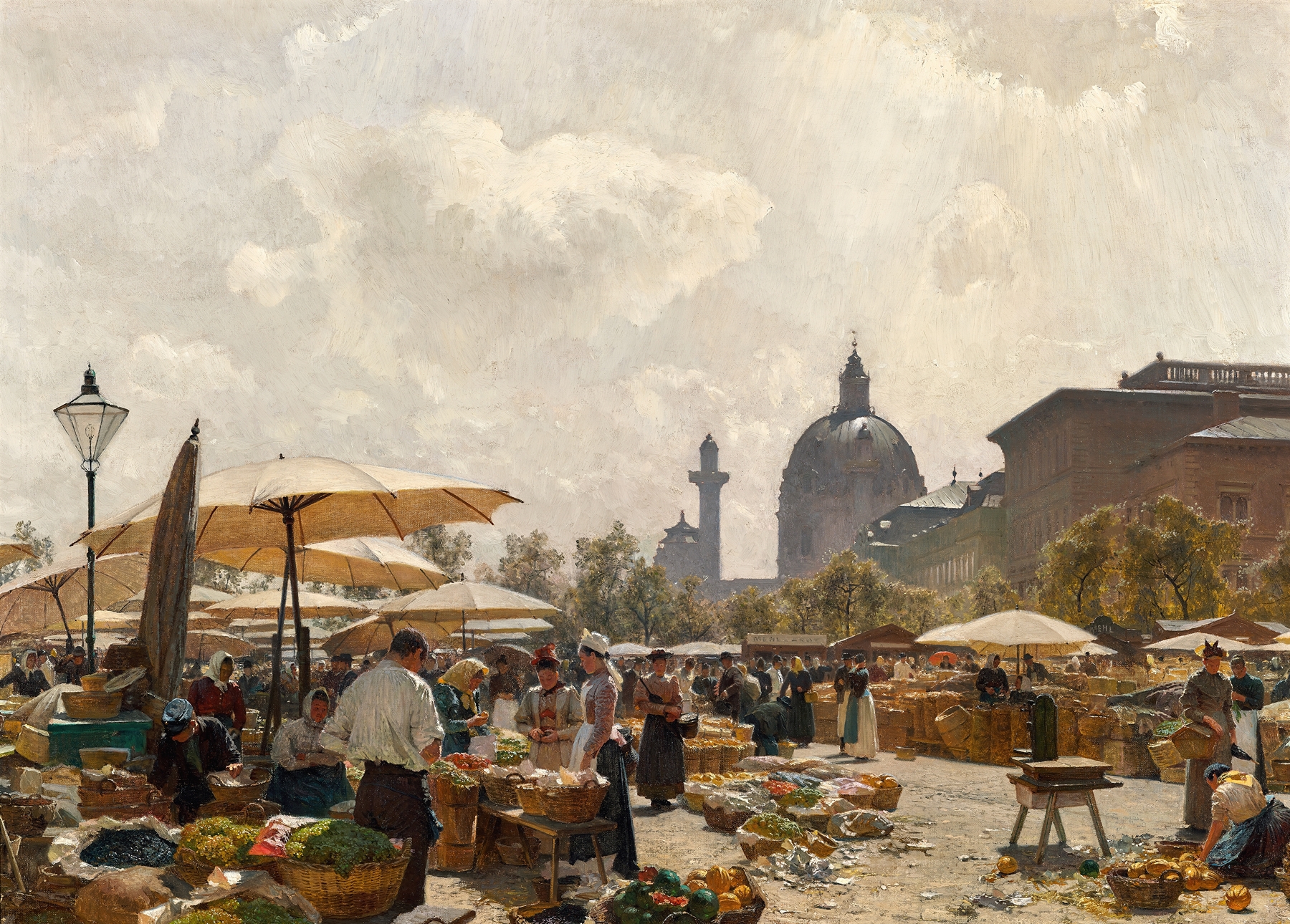
Can paint confess what words never could? Der Naschmarkt in Wien captures fleeting moments of life, where vibrancy and mortality converge in a timeless dance. Look to the center, where the bustling market comes alive with figures adorned in the fashion of the late 19th century. Notice how the warm light bathes the stalls, highlighting the rich colors of produce and the textures of fabrics.
The artist’s use of loose brushwork creates an almost palpable sense of movement, inviting you to step closer and feel the energy that pulses through the scene. The balance between shadow and light evokes both joy and a hint of nostalgia, suggesting the transience inherent in daily life. As you examine the faces of the vendors and shoppers, you’ll find a tapestry of emotions woven into their expressions. The youthful exuberance of a child contrasts sharply with the contemplative gaze of an elder, hinting at the generational cycle of life that plays out in this lively marketplace.
Each figure possesses a story, a moment of connection that resonates with our collective experiences of love, loss, and the inevitable passage of time. In 1894, Carl Moll painted this vibrant scene while living in Vienna, a city thriving in artistic innovation. At this time, the Secessionist movement was gaining momentum, challenging conventions and embracing new forms of expression. Moll, a co-founder of the Vienna Secession, was deeply influenced by these currents, channeling both the energy of his environment and the poignant understanding of mortality into his work.