Wassermühle in Goisern (nach Emil Jakob Schindler) — History & Analysis
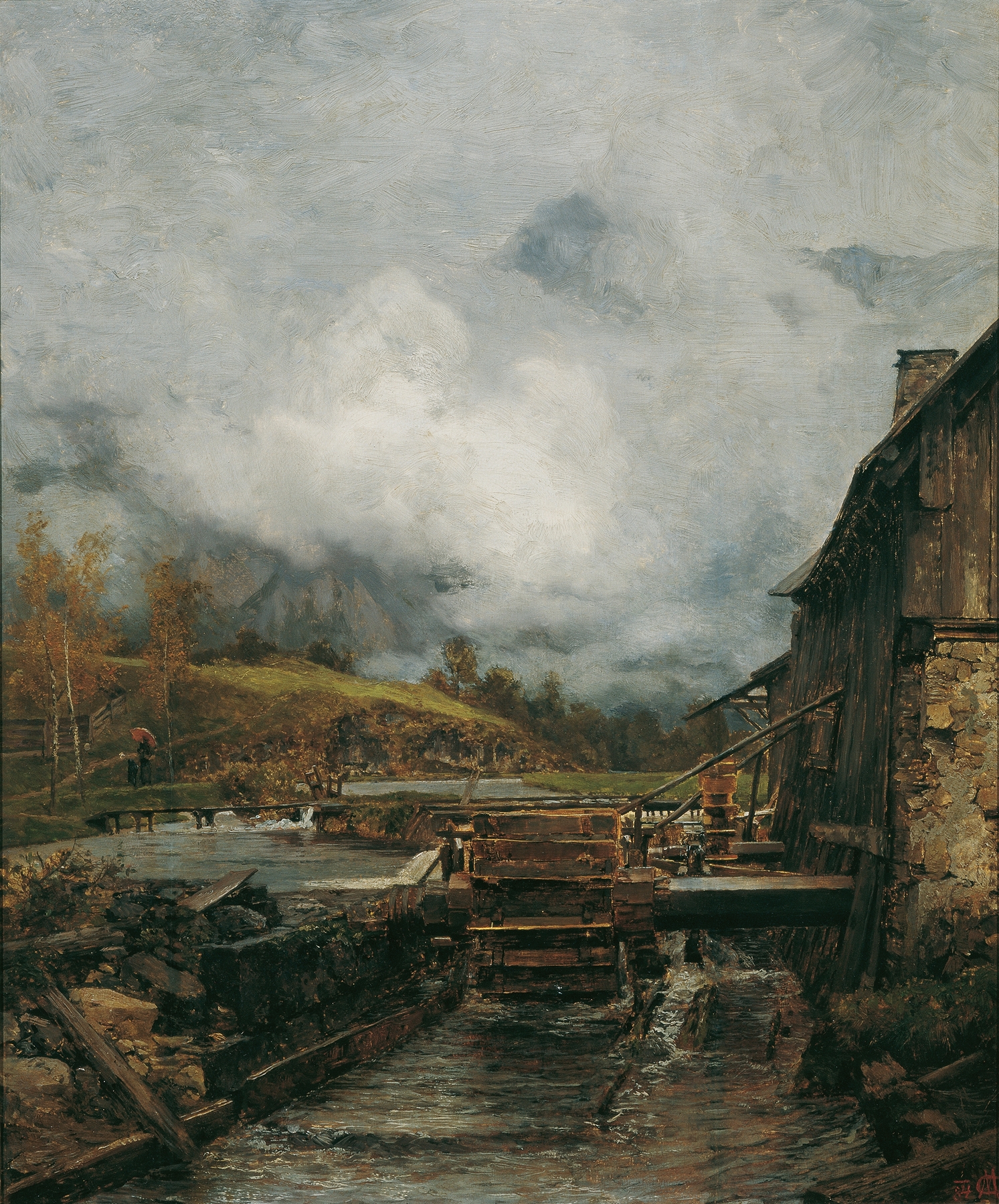
“The canvas doesn’t lie — it simply waits.” Each brushstroke yearns for a story, echoing a profound sense of loss that lingers in the air. Look to the left at the gentle curve of the water's surface, where the sunlight dances, seemingly trapped in liquid reflections. Notice how the mill, regal yet weathered, stands steadfast against the backdrop of an expansive yet muted landscape. The earthy tones of browns and greens meld together, creating a harmonious but melancholic palette that speaks to the passage of time.
The artist's meticulous attention to detail invites you to explore the interplay between light and shadow, drawing you deeper into the scene. In this serene moment, contrasts emerge: the vitality of the flowing water against the stillness of the aging structure. There is an unspoken dialogue between nature and industry, hinting at a world once thriving that now feels on the brink of disappearance. The mill, while a symbol of life and livelihood, carries the weight of memories—each splintered wood and rusted cog a testament to the stories of those who toiled there and whose presence has faded.
Created in 1884, during a time when Carl Moll was immersed in the artistic circles of Vienna, Wassermühle in Goisern reflects a period of transition and nostalgia. The rise of modernism was reshaping the art world, yet Moll’s work remained deeply rooted in the landscapes of the Austro-Hungarian countryside. This painting serves not only as a tribute to a specific location but also as a poignant reminder of the inevitable ebbs and flows of existence.