Heiligenstadt im Schnee — History & Analysis
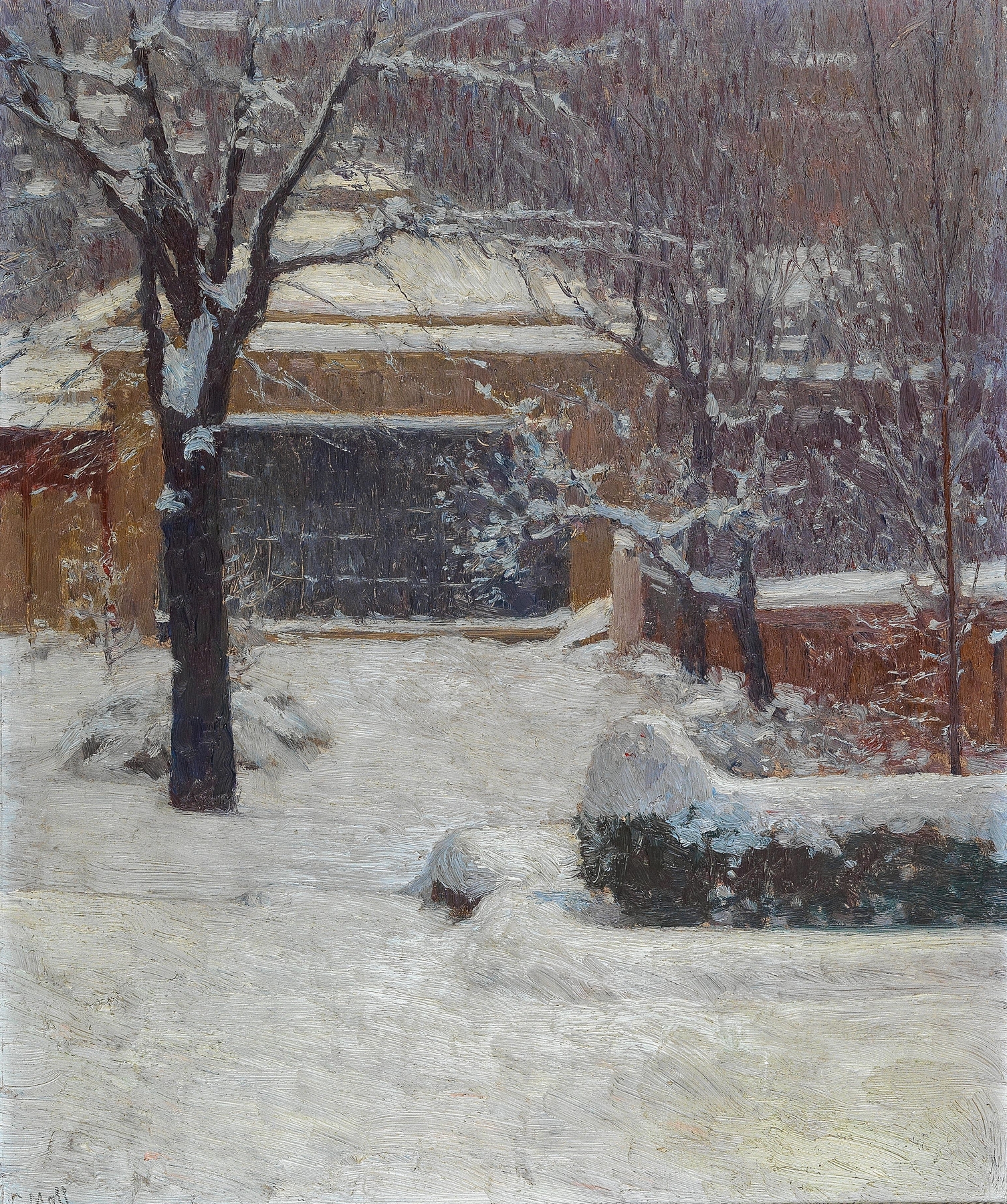
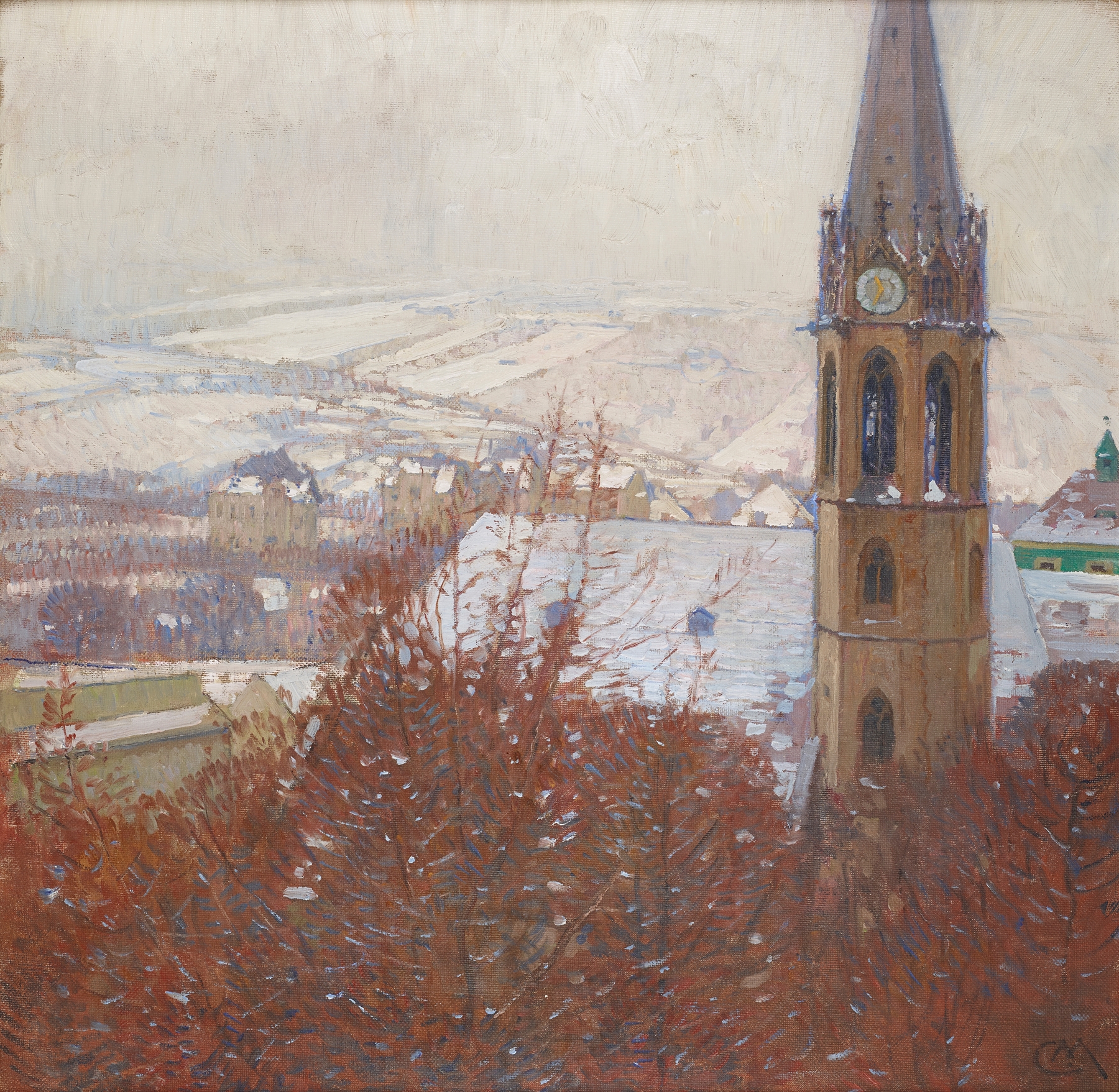
“Under the brush, chaos becomes grace.” In Heiligenstadt im Schnee, a tranquil awakening unfolds as winter's embrace softens the world, inviting contemplation and renewal. Look to the foreground where delicate snowflakes carpet the ground, their pristine white hues mingling with the muted browns and earthy tones of the village rooftops. Notice how the gentle light washes over the landscape, illuminating the scene with a soft glow, giving life to each stroke of the brush. The composition draws your eye along the winding path, leading your gaze toward the horizon where a pale, wintry sky meets the silent expanse of a distant forest, evoking a sense of serene stillness.
Upon further inspection, one can discern subtle contrasts within the painting: the warmth of the village juxtaposed against the cold, surrounding nature. This dichotomy speaks of the coexistence of comfort and isolation, a reflection of human experience amidst the harshness of winter. Small details, like the barely visible figures trudging through the snow, add an element of narrative that stirs the viewer's imagination, suggesting that life persists even in seemingly desolate landscapes.
Created between 1904 and 1905, the artist captured this moment in Heiligenstadt, a small village near Vienna, during a time when the world of art was shifting toward modernism. Carl Moll, a leading figure within the Vienna Secession movement, sought to break traditional conventions and explore new perspectives in his work. At this juncture, he was deeply influenced by his surroundings, as well as his desire to depict not just a scene, but the very essence of emotional landscapes.