Der Triberger Wasserfall — History & Analysis
“The canvas doesn’t lie — it simply waits.” In the stillness of a moment, faith becomes palpable, revealing the deeper currents of our existence. Look to the center of the painting, where the cascading waters of the waterfall crash against the rocks below, commanding your attention. Notice the intricate play of light dancing upon the water's surface, creating a brilliant contrast against the darker hues of the surrounding forest. The meticulous brushwork captures the essence of nature’s raw beauty, while the greenery enveloping the scene draws the viewer into a tranquil yet dynamic atmosphere.
Hidden within the vibrancy of this natural setting lies a profound exploration of faith in the unyielding force of nature. The steady flow of the waterfall symbolizes resilience, a reminder that life persists despite obstacles. The juxtaposition of the ferocious water against the stillness of the trees speaks to the balance between chaos and serenity, a dance that invites us to reflect on our own journeys of belief and hope.
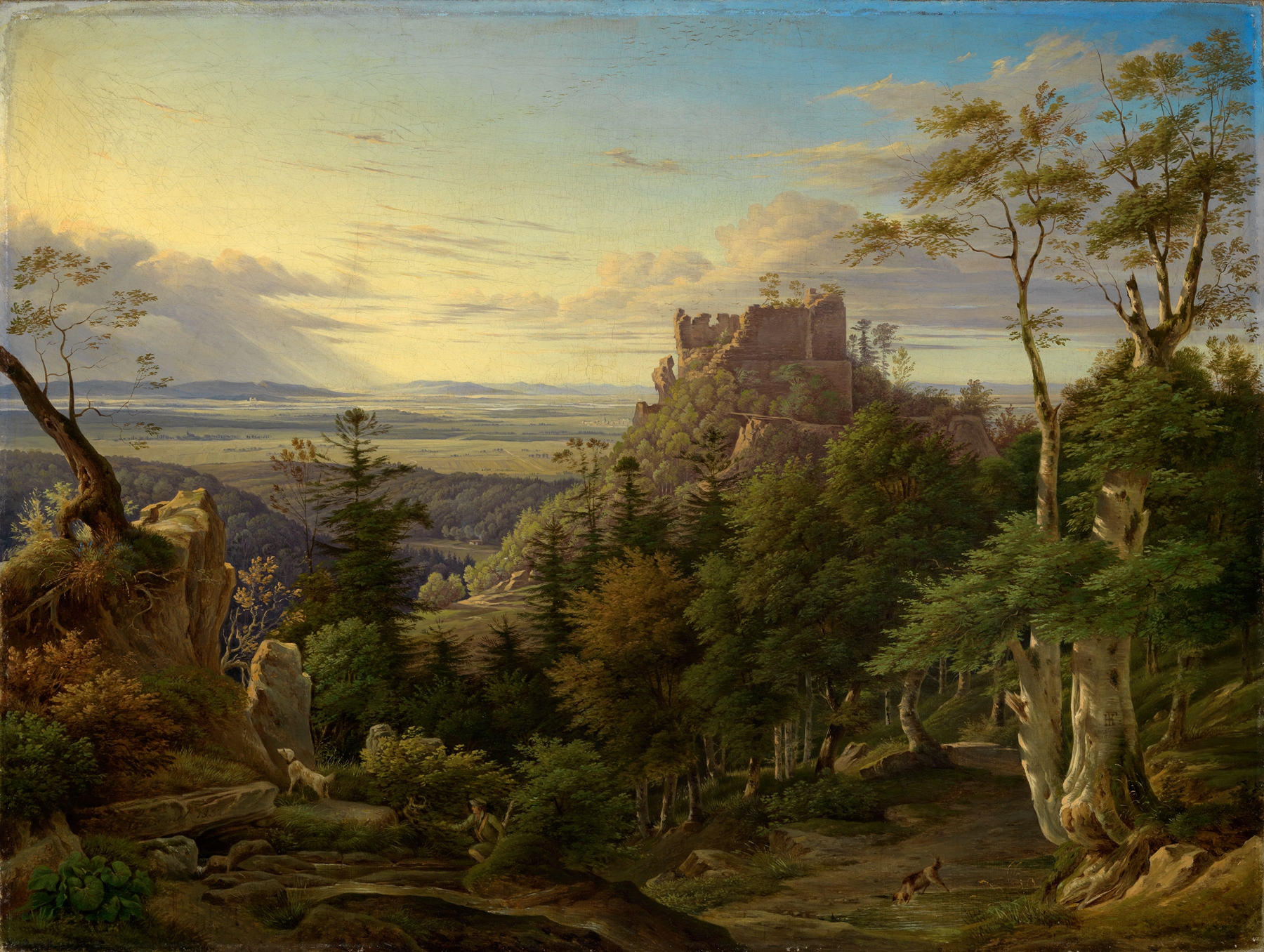
In 1836, Carl Ludwig Frommel painted this piece during a period marked by Romanticism’s embrace of nature. At that time, artists sought to express deeper emotional truths through their work, responding to the tumultuous changes of the world around them. This painting, created amidst a landscape that inspired spiritual connections, reflects not only Frommel's artistic aspirations but also the era's yearning for harmony with the natural world.