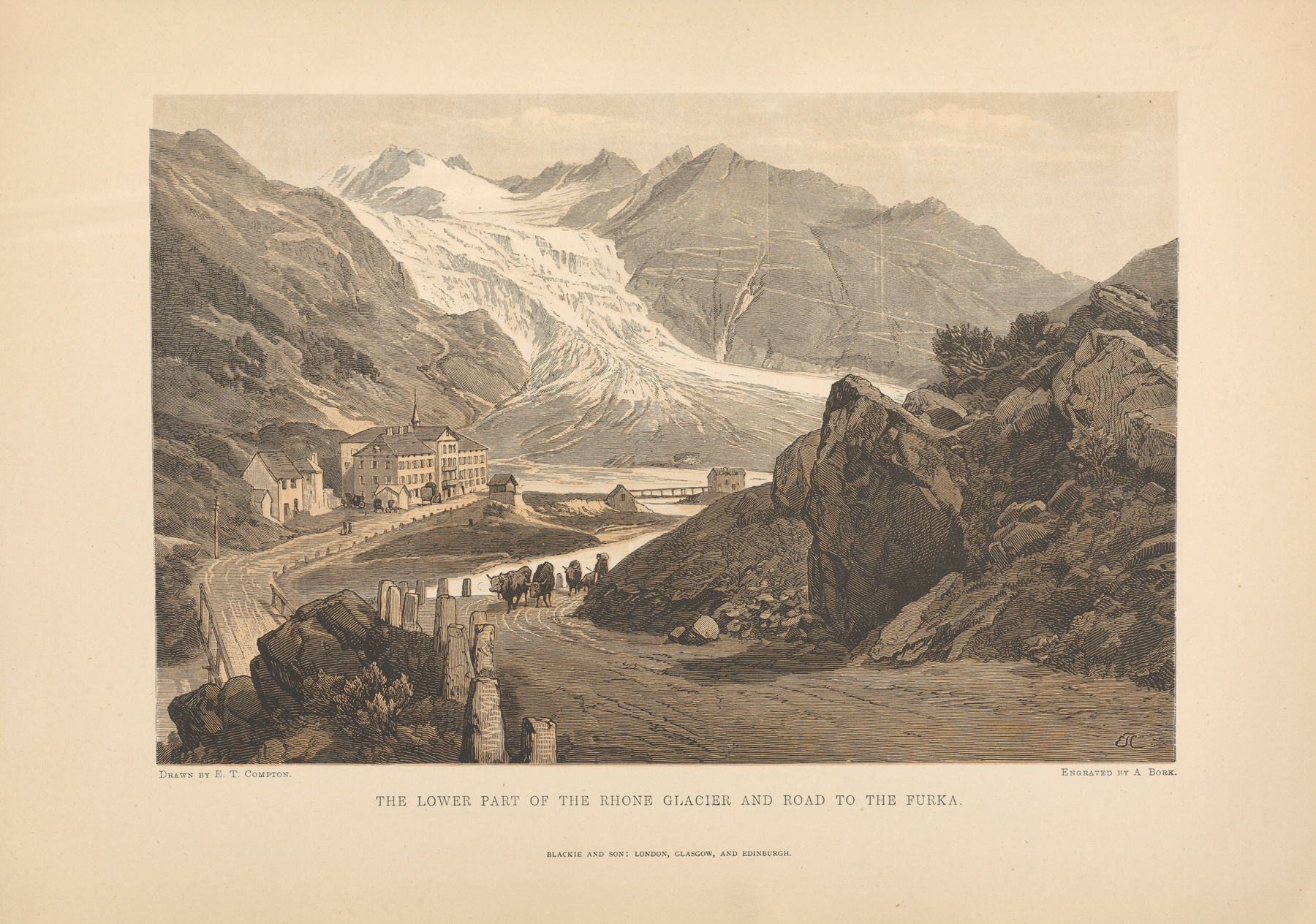
E. T. Compton – Pilgrimage Church of the Madonna del Sasso, near Locarno — History & Analysis
“Every silence here is a confession.” Beneath the gaze of the Madonna, the weight of pilgrimage intertwines with the shadows cast by ancient stone. It’s a place where whispers seem to hang in the air, each flicker of light hinting at secrets held close by the faithful. Focus your attention on the intricate details of the church’s façade, where soft hues of ochre contrast with the deep azure of the surrounding sky. Notice how the sunlight bathes the building, illuminating its curves while stretching shadows into the grassy foreground.
The interplay of light and dark draws the eye, creating a compelling rhythm that beckons viewers to journey deeper into the scene, capturing both the solidity of the architecture and the ethereal quality of its spiritual presence. Hidden meanings emerge within this serene composition. The stark contrast between shadow and light speaks to the duality of faith—a reminder of doubt lurking behind belief. Each figure, whether a solitary pilgrim or an unseen presence, carries their own burdens, suggesting a collective experience of longing and devotion.
The tranquil setting acts as a mirror, reflecting the inner turmoil of those who seek solace within its walls. In 1881, Theodor Gsell Fels created this work during a time of burgeoning interest in spirituality and romanticism within the art world. Painted in Locarno, Switzerland, the artist was inspired by the historical significance of the church as a pilgrimage site. He aimed to capture not merely a structure, but the essence of a journey—both physical and spiritual—symbolizing the deep connections that bind humanity to their faith and to one another.