E. T. Compton – The Morteratsch Glacier, Upper Engadine — History & Analysis
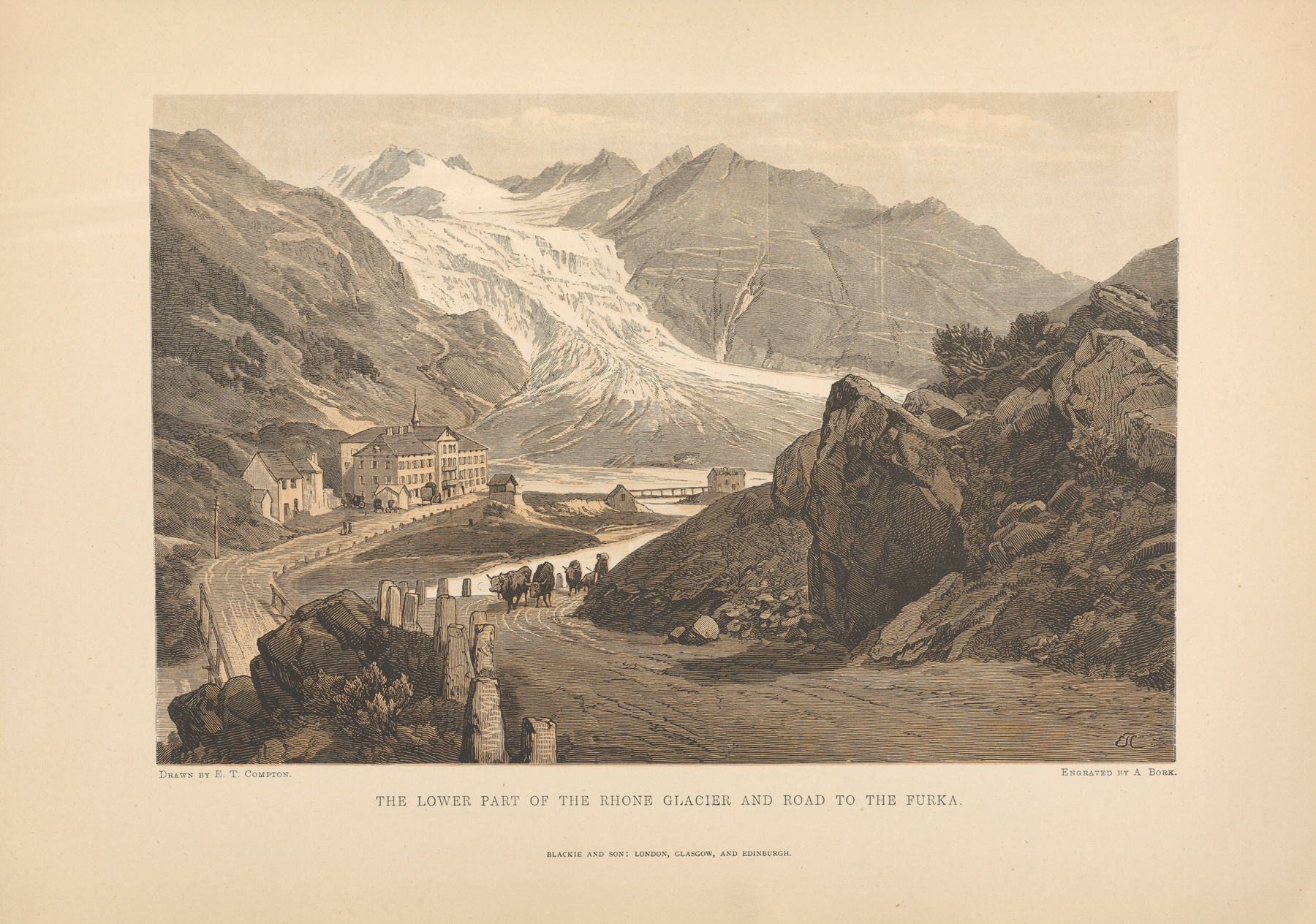
Could beauty survive in a century of chaos? In The Morteratsch Glacier, Upper Engadine, the answer unfurls against an expansive canvas of serene majesty and quiet resilience. Look to the foreground where the icy blue of the glacier contrasts sharply with the lush green slopes that frame its sides. The artist employs a delicate palette of whites, blues, and greens, creating a sense of clarity, as if the scene is bathed in the soft glow of early morning light.
Notice how the undulating forms of the glacier are both commanding and tender, drawing your eye to their intricate textures and the gentle shadows that hint at the passing of time. Beneath the surface of this tranquil landscape, emotional tensions whisper. The glacier, a symbol of grandeur and impermanence, embodies the fragility of beauty in an ever-changing world. The juxtaposition of the vibrant life surrounding it against the stark, icy expanse speaks to the interplay between hope and transience.
Each brushstroke captures not just a moment in nature, but a reminder of the fleetingness of existence, a silent testament to the resilience found in the face of inevitable decay. Theodor Gsell Fels painted this piece in 1881 while living in Switzerland, a time when the artistic community was deeply engaged in exploring the natural world. Amidst the upheaval of industrial progress and shifting artistic movements, he sought solace in landscapes, capturing their splendor and the enduring beauty that persists even as the world around them evolves.