Edge of the Forest, Twilight — History & Analysis
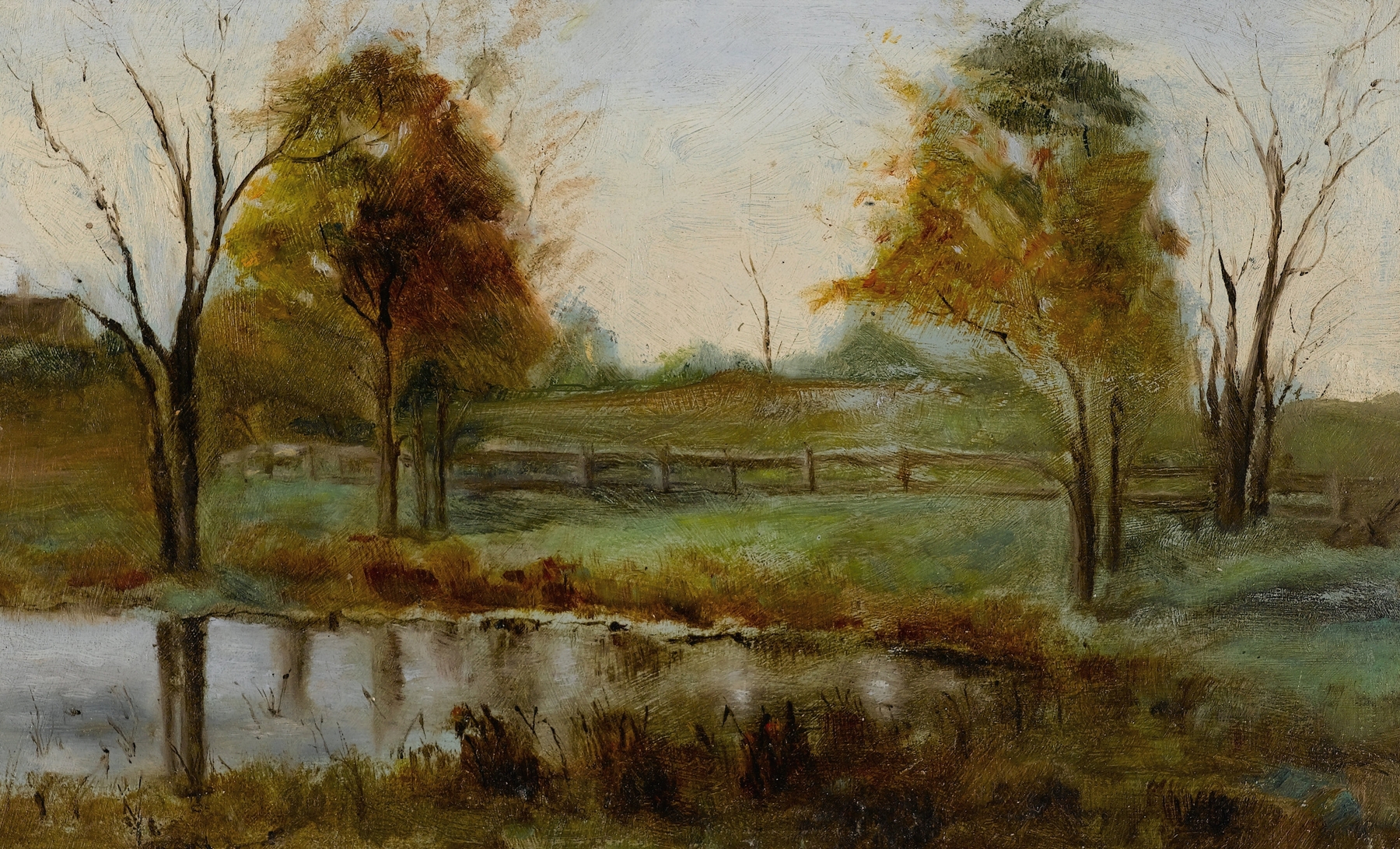
Is this a mirror — or a memory? The delicate interplay between light and shadow invites us to contemplate our own reflections amidst the tranquil beauty of nature. Focus on the soft hues that blend seamlessly across the canvas, where twilight descends in gentle gradients of purple and blue. The trees loom on the edges like silent sentinels, their dark silhouettes contrasting against the luminous sky.
Notice how the light appears to cascade through the foliage, illuminating the path that beckons the viewer to wander deeper into this serene landscape, embodying both clarity and mystery. The composition reveals a balance between the familiar and the unknown. On one side, the vibrant greens of the forest’s edge symbolize life and growth, while the encroaching twilight hints at the inevitable transition to night—a metaphor for change and introspection.
The seemingly still water reflects not just the vibrant hues above, but also the viewer's own thoughts and emotions, creating a dialogue between observer and observed that merges reality with the ephemeral. In 1890, during a time when American art was increasingly embracing Impressionistic techniques, the artist sought to capture the fleeting moments of nature with breathtaking accuracy. Working in the United States, Edge of the Forest, Twilight emerged as a testament to the aesthetic shifts of the era, reflecting both personal exploration and broader artistic movements that sought to convey emotion through natural landscapes.