Ernte am Chiemsee — History & Analysis
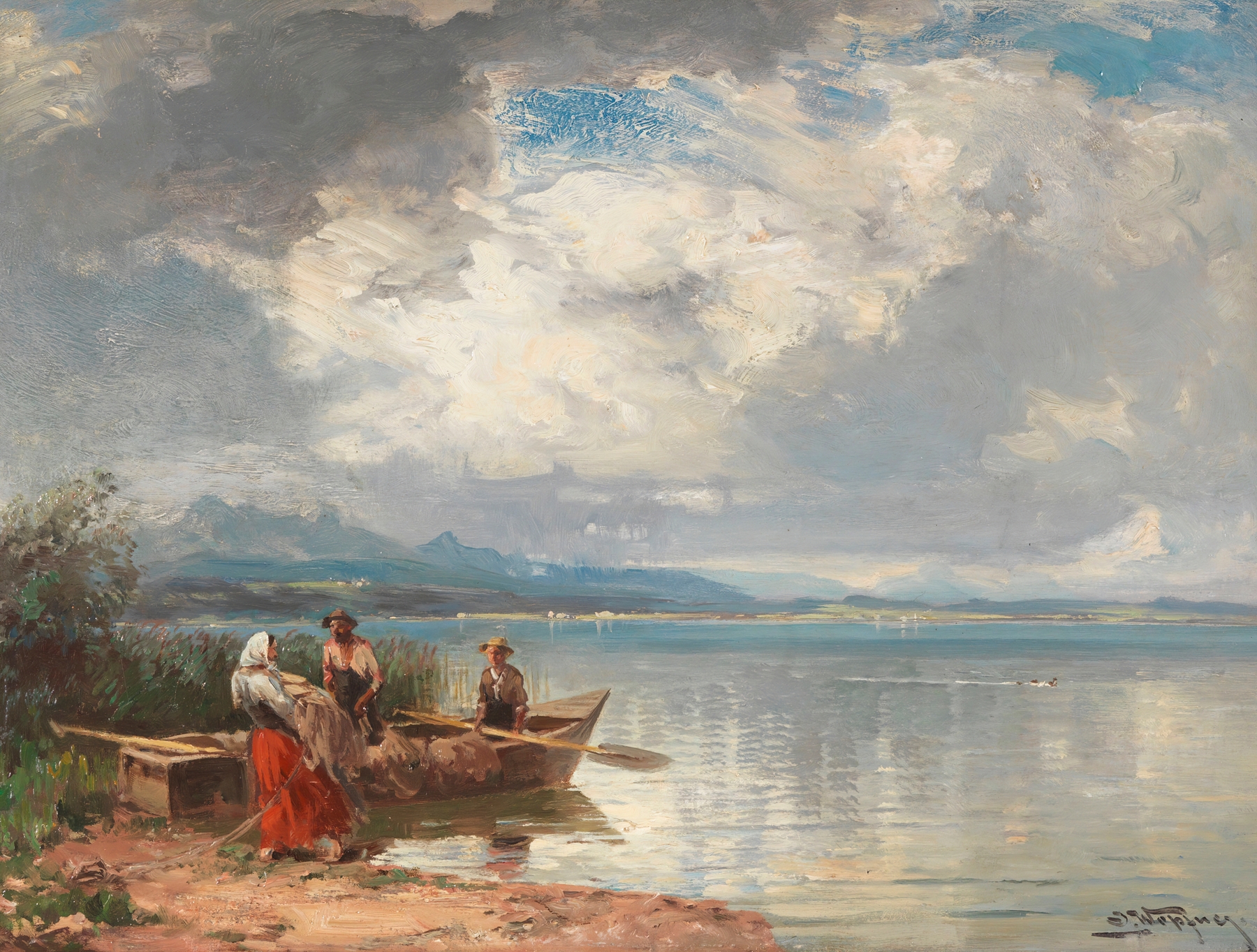
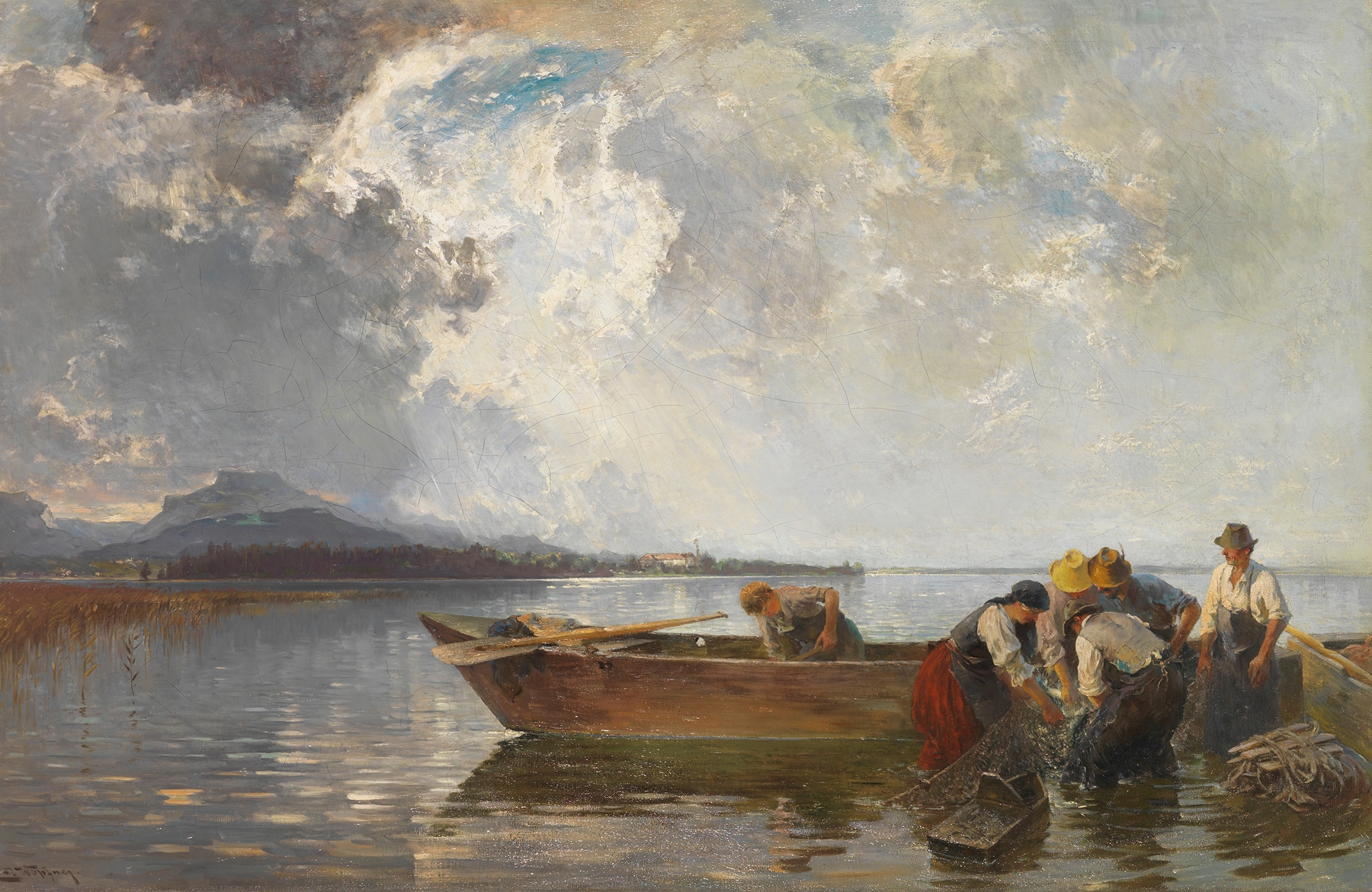
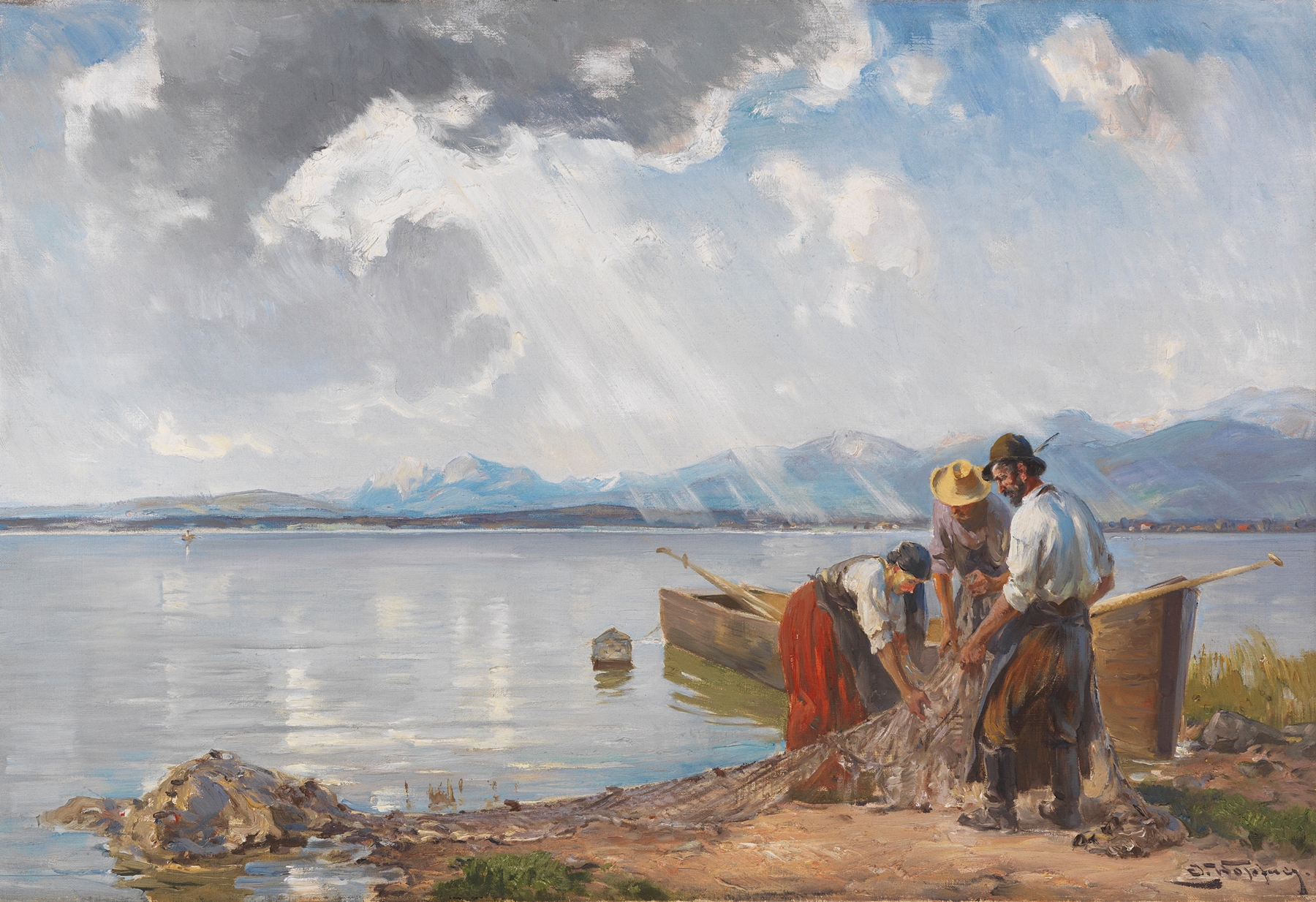
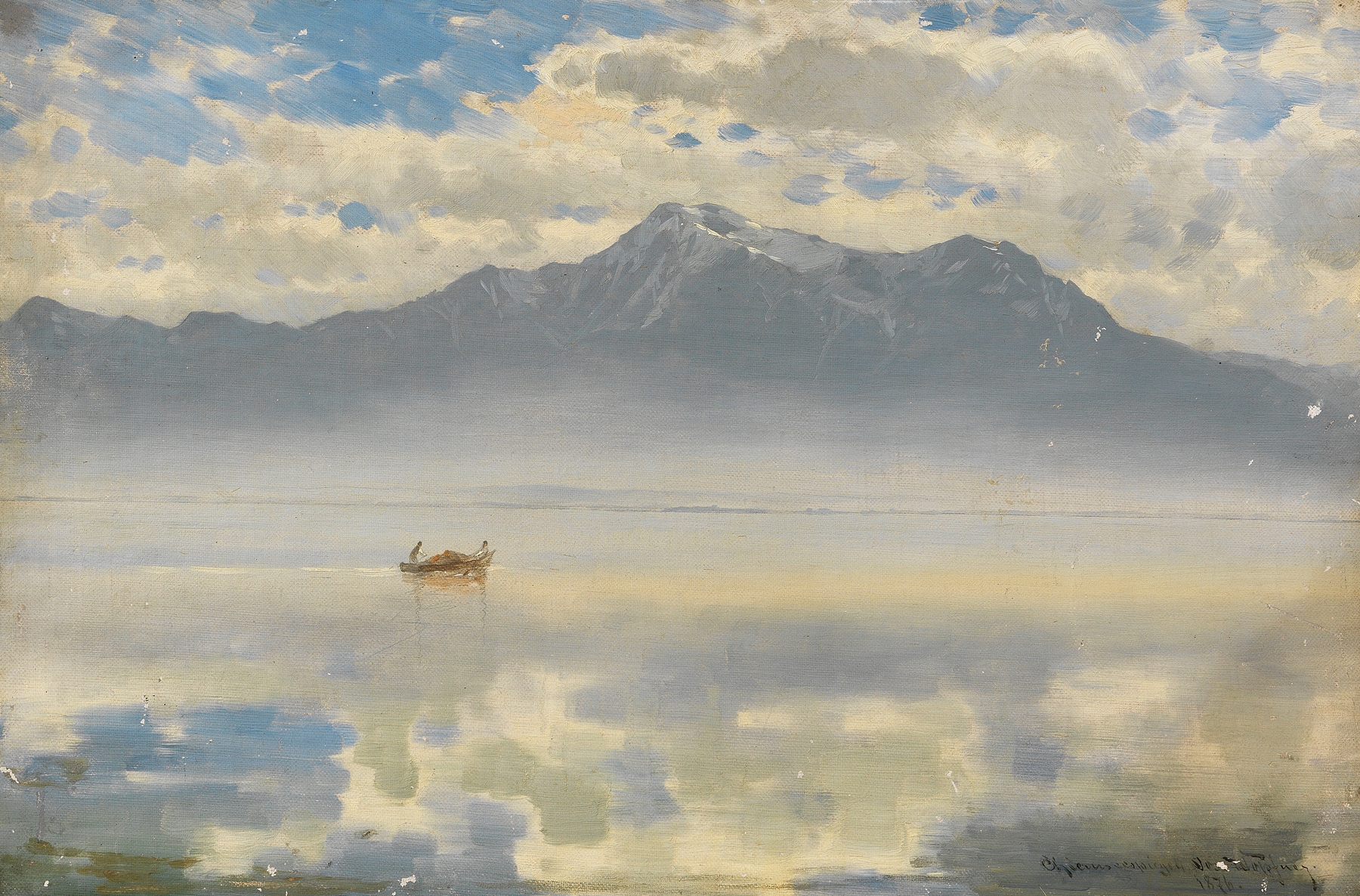
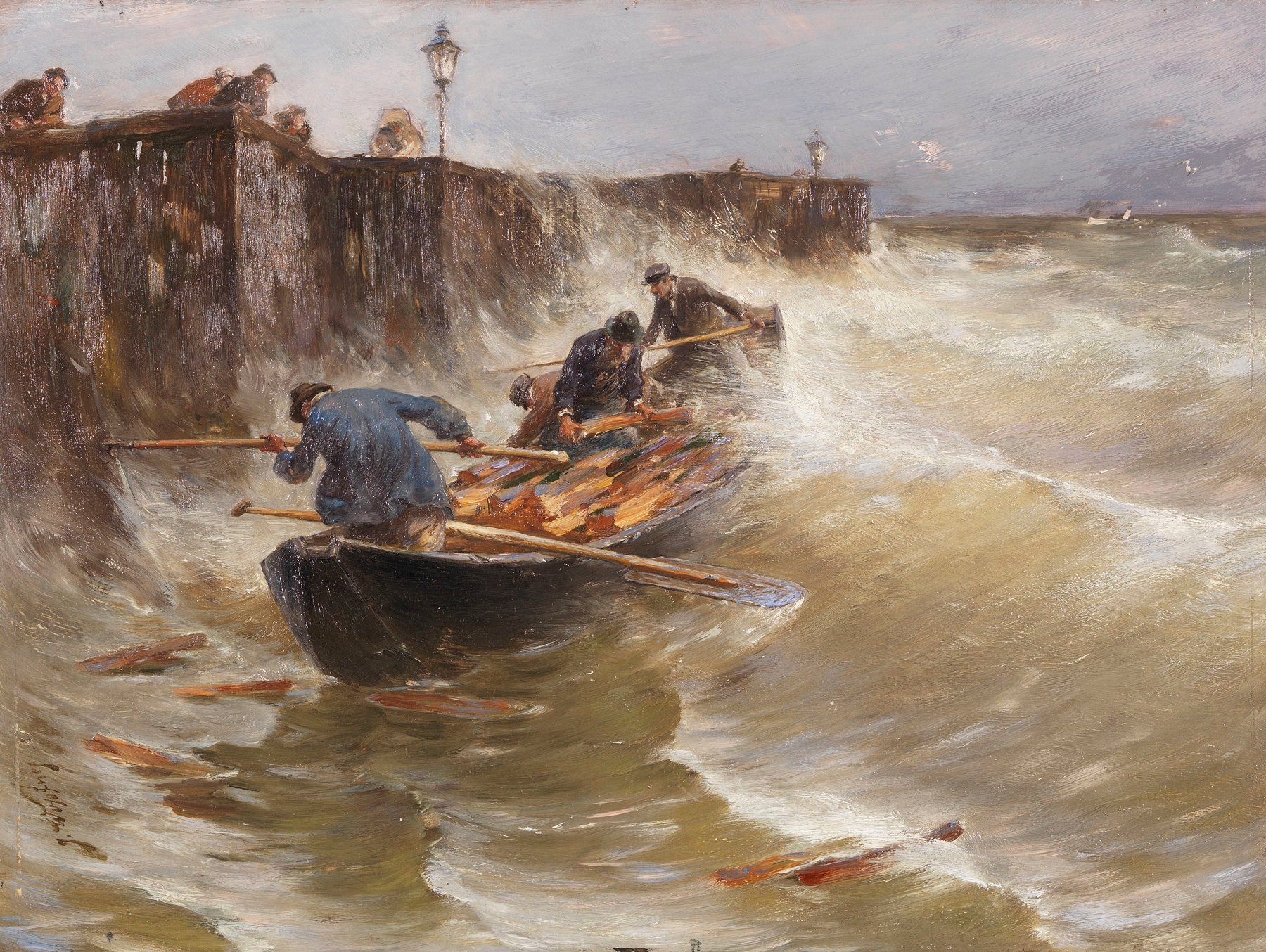
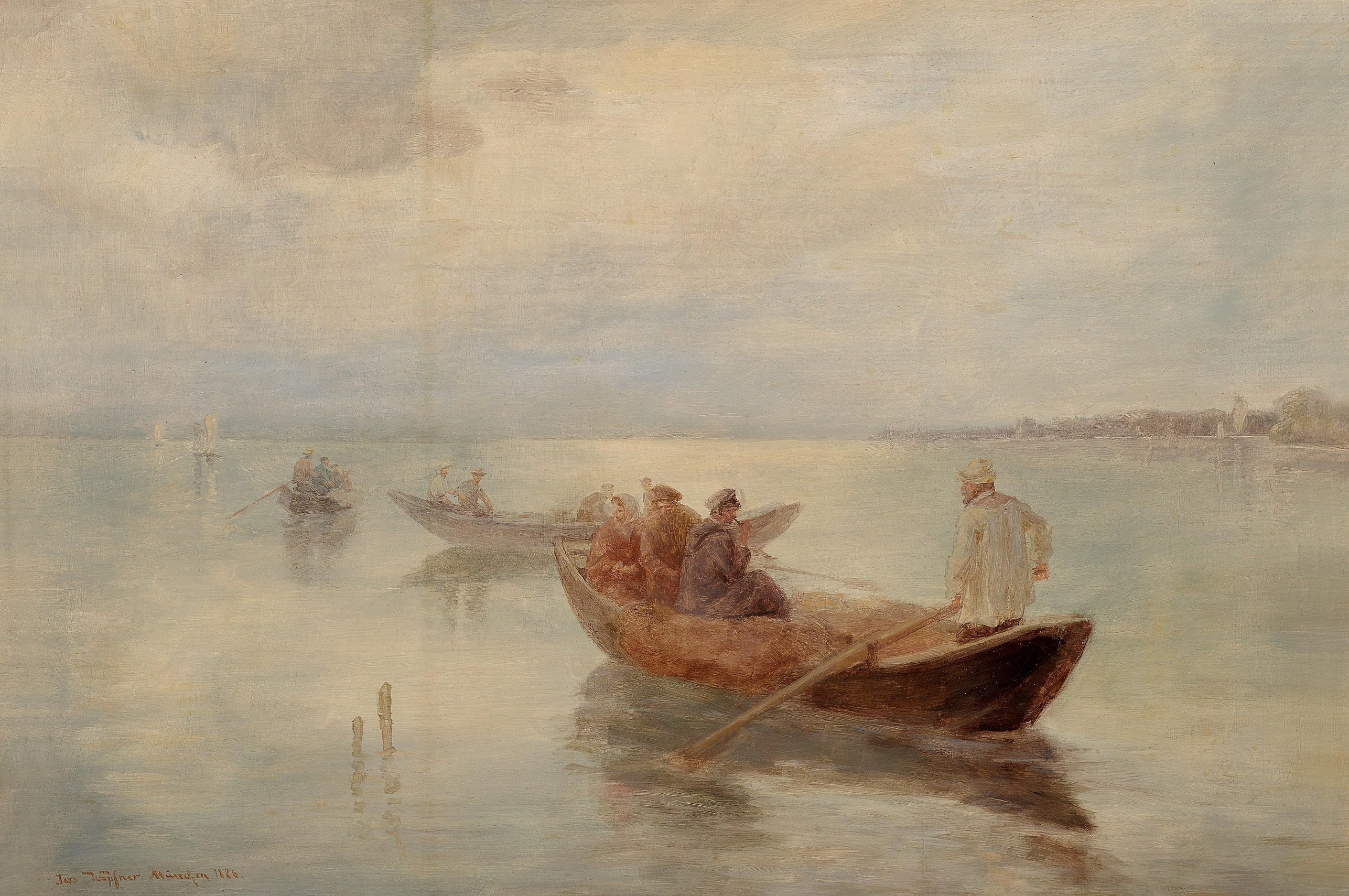
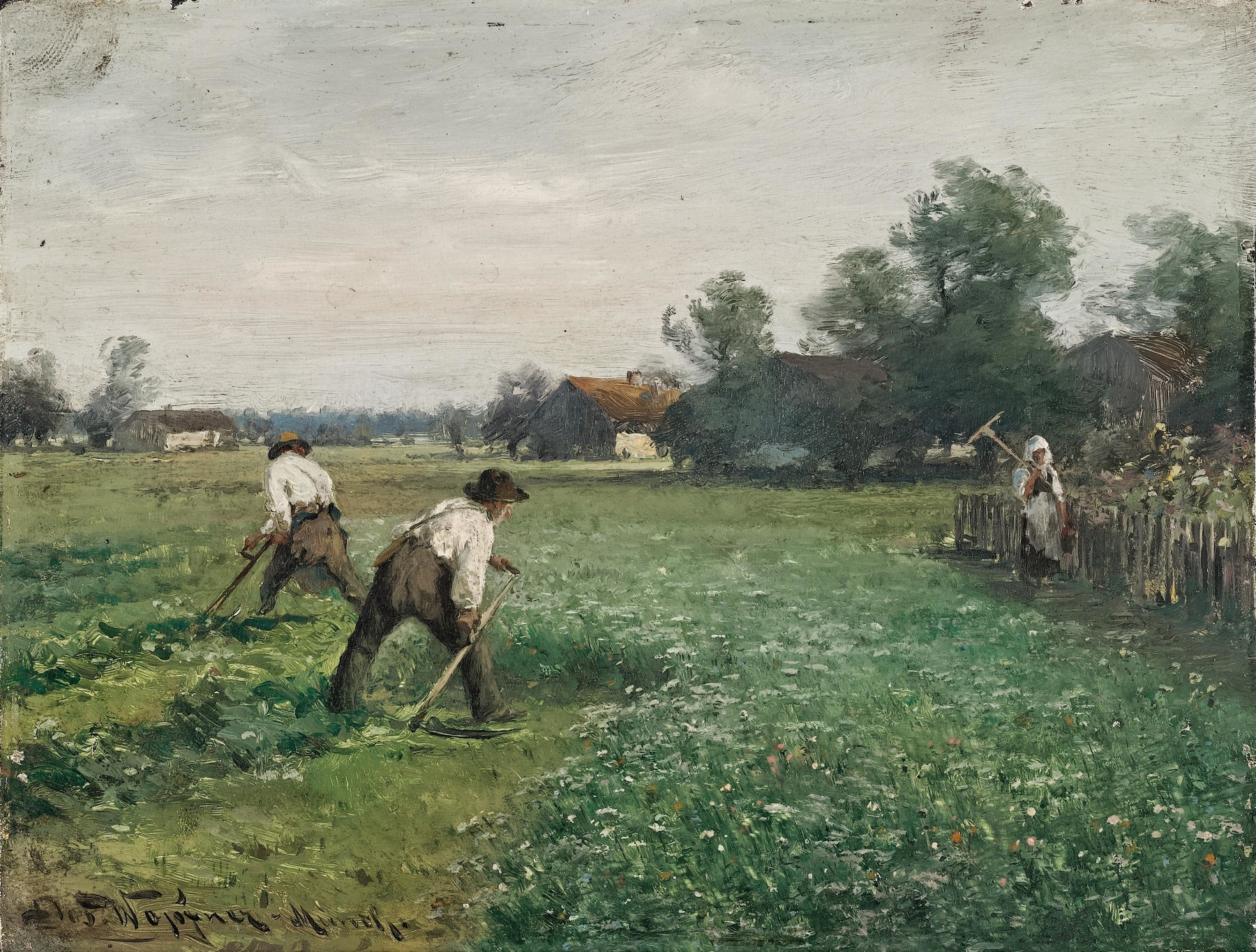
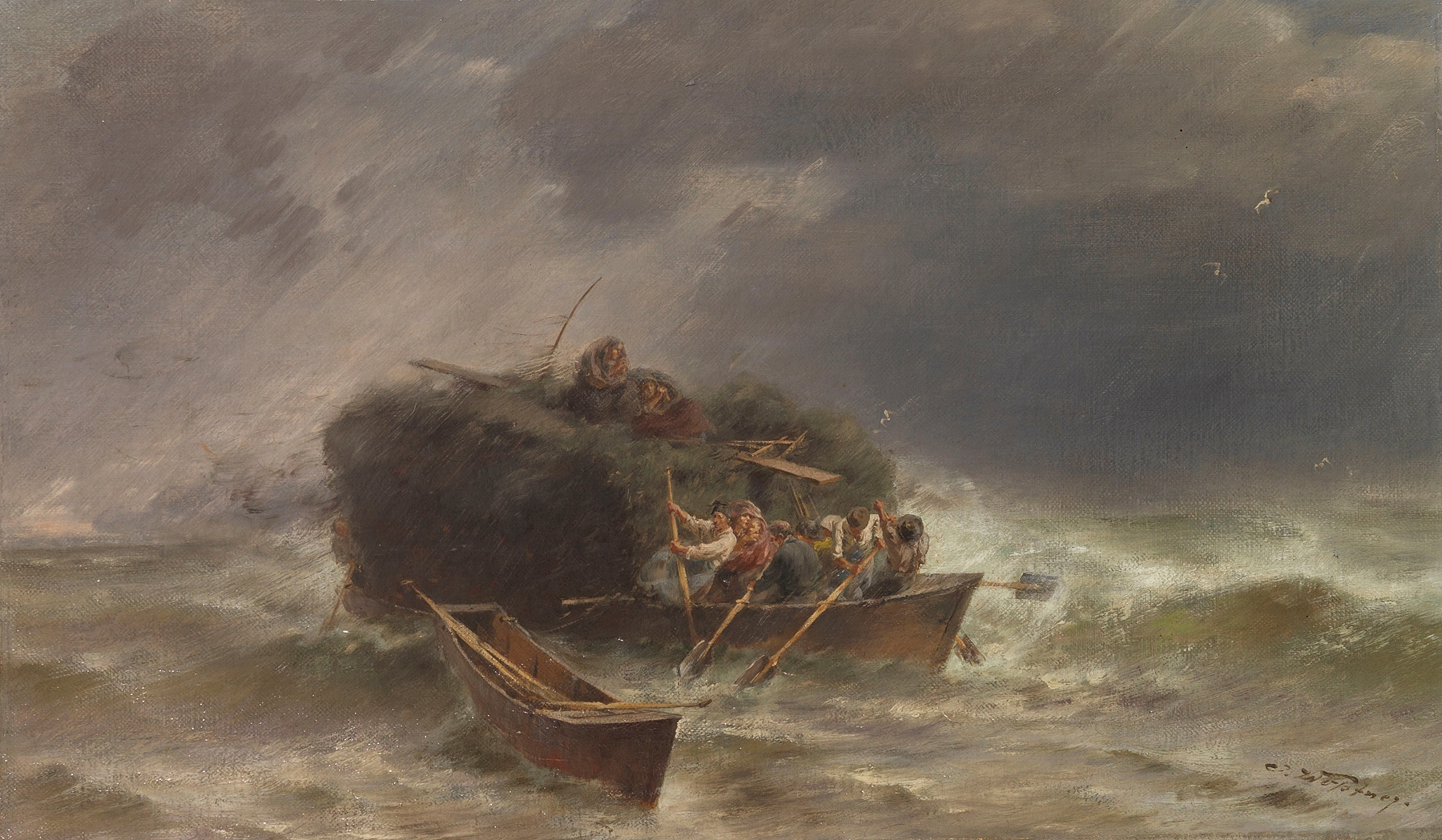
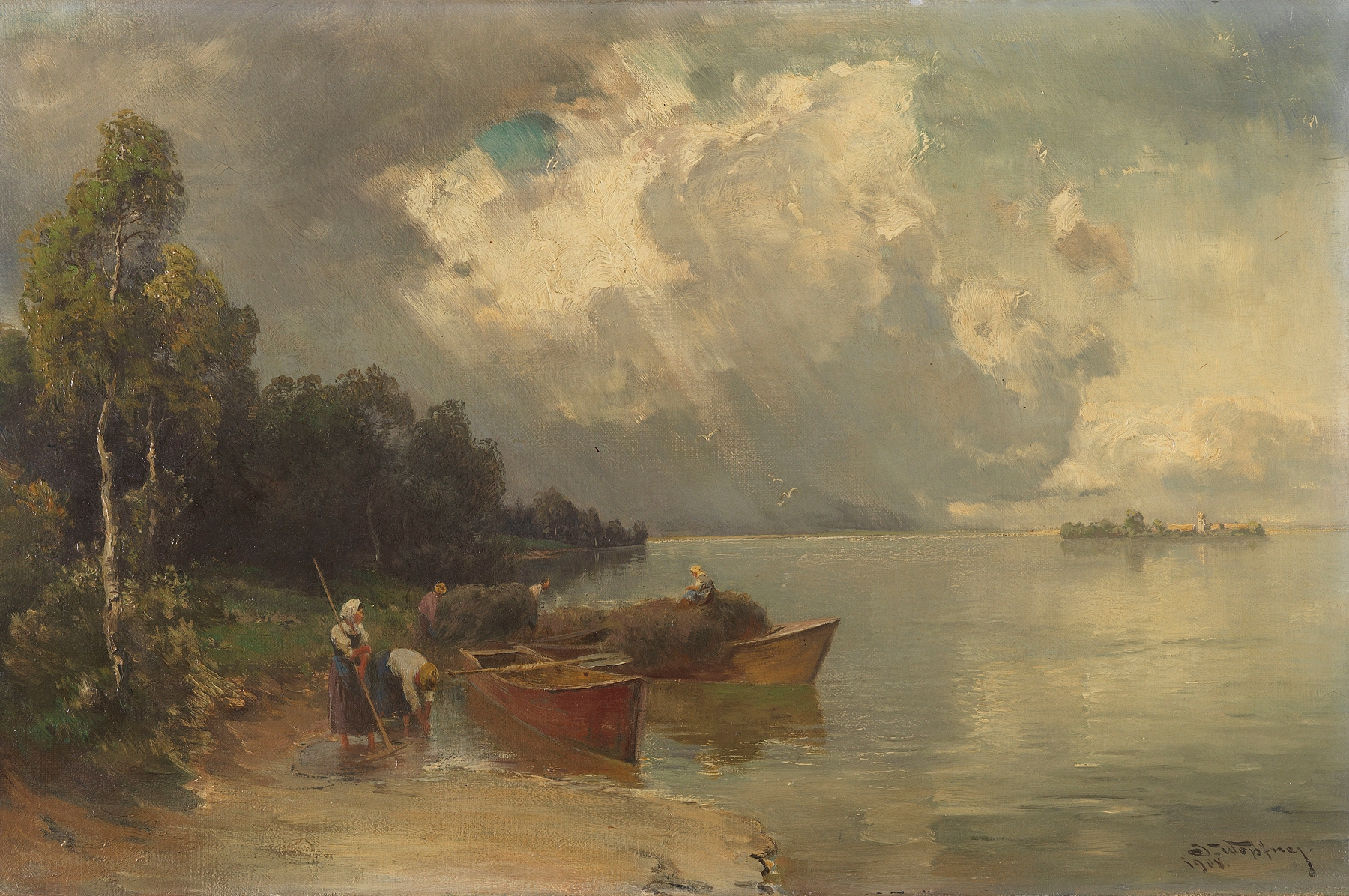
Is this a mirror — or a memory? The haunting solitude of existence resonates through the canvas, invoking a deep reflection within the viewer, a call to examine the spaces we inhabit, both physical and emotional. Look to the center, where the figures of workers bend to their task, their muted clothes blending into the golden fields of grain. The artist’s brush captures the gentle sway of the harvest in soft, earthy tones, while the distant hills hold a quiet promise under a pale sky.
Notice how the warm sunlight bathes the scene, creating subtle contrasts between the vibrant yellow of the harvest and the somber hue of the workers’ attire, suggesting both the beauty and burden of labor. Beneath the surface, the painting unfurls layers of emotional tension: the loneliness of manual labor, the isolation in communal effort, and the ephemeral nature of life itself. The juxtaposition of the bountiful field and the solitary figures hints at an unfulfilled yearning, a poignant reminder that even in abundance, one can feel disconnected.
Wopfner masterfully employs light and shadow to evoke not just a moment of harvest but the lingering echoes of solitude inherent in the human experience. Created during an unspecified time, Ernte am Chiemsee was likely influenced by the artist's own encounters with rural life and the pervasive themes of solitude that marked his work. As a lesser-known figure in the early 20th-century German art scene, Wopfner navigated a world transitioning from tradition to modernity, capturing the fleeting moments that define both our connections and our separations.