Evening Mood — History & Analysis
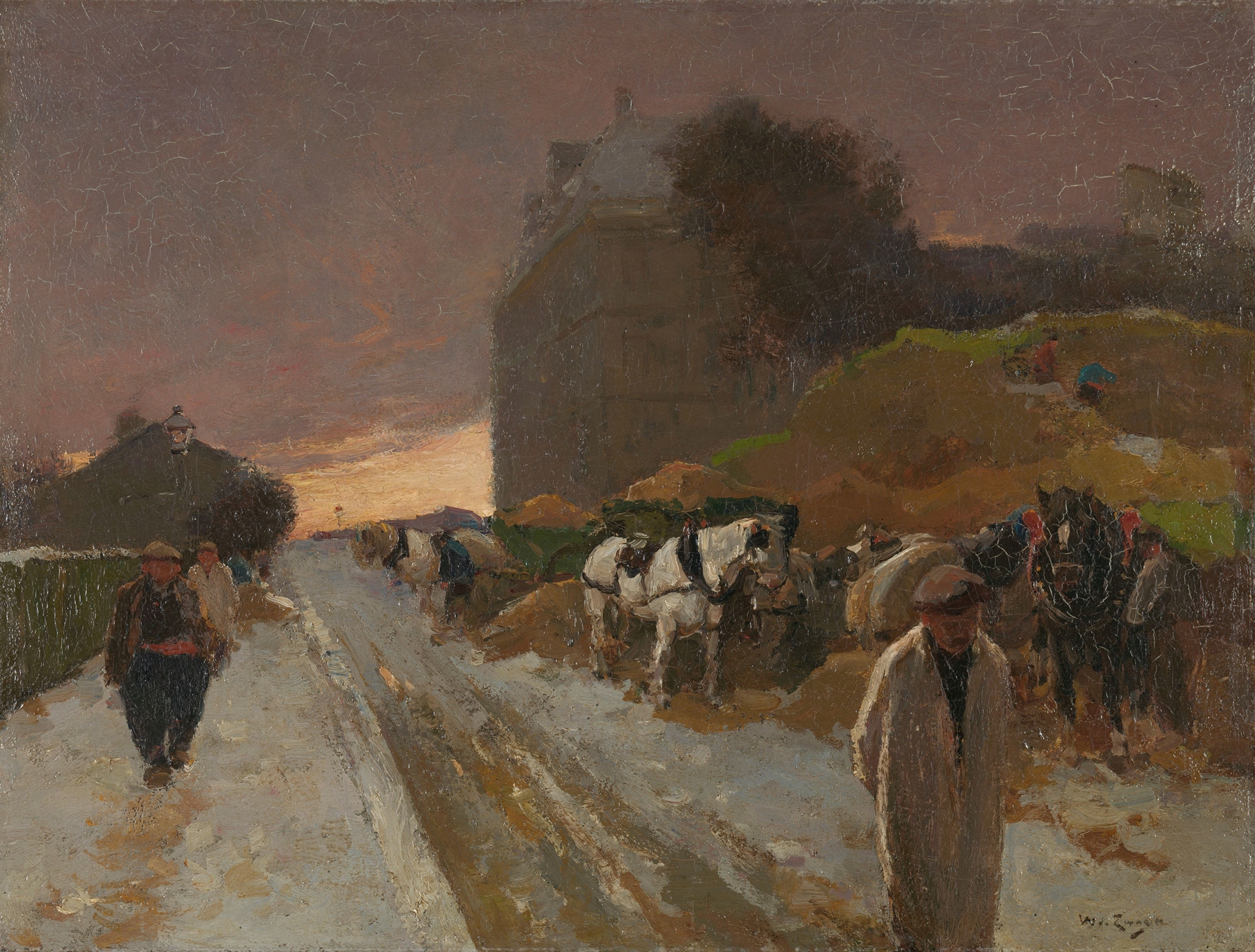
What if beauty was never meant to be finished? In the stillness of twilight, a world unfolds where colors blend seamlessly, inviting viewers to ponder the nature of existence beyond the visible spectrum. Look to the left at the softly blended hues of blue and orange that embrace the horizon, suggesting the last whispers of daylight. The smooth brushstrokes create a gentle gradient, leading your eyes toward the serene water reflecting the sky’s palette.
Notice how the trees, silhouetted against this luminous backdrop, stand both sentinel and participant, their forms swirling in shadows that hint at the mystery beneath the surface. Each element is rendered with a delicate touch, giving the scene a sense of ephemeral beauty that speaks to the transient experiences of life. Delve deeper, and you’ll find a poignant contrast between the vibrant sky and the darkened earth, symbolizing the eternal push and pull between light and shadow. The tranquility of the setting evokes a sense of longing, suggesting that moments of peace are fleeting yet profoundly significant.
The painting embodies a transcendence that blurs the lines between the mundane and the sublime, encouraging contemplative introspection about what lies beyond our immediate perception. In his still, introspective moments while creating this piece, de Zwart was navigating the depths of his artistic vision during an era marked by the rise of Dutch Impressionism in the late 19th century. The choice to focus on atmospheric effects and emotional resonance reflects not just his personal evolution but also a broader shift in the art world, where the transient effects of light and nature began to take precedence over traditional forms and realism.