Fishing Sloop, Concarneau — History & Analysis
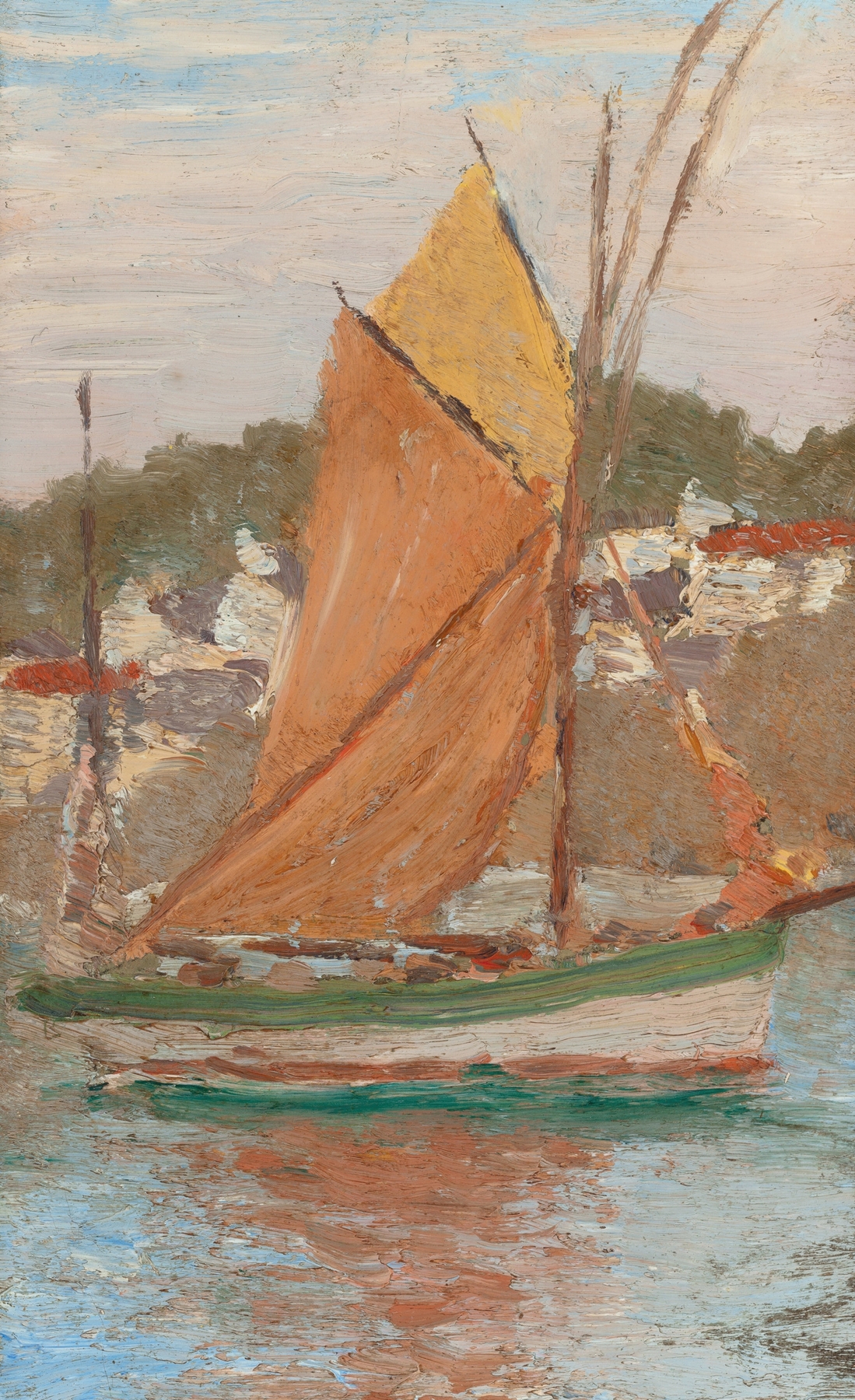
When did color learn to lie? Beneath the layers of vibrant hues, truth often hides, waiting to be unveiled. Look to the center of the canvas, where the fishing sloop glides through the waves, its sails catching the light. The interplay of blues and greens creates a rhythmic pulse, echoing the sea's own heartbeat. Notice how the brushstrokes vary in thickness, some soft and flowing, others sharp and decisive, weaving a tapestry that captures movement and stillness simultaneously.
The vibrant palette, punctuated by touches of white and ochre, invites the eye to dance across the surface, revealing the energy of a moment suspended in time. Delve deeper into the painting’s contrasts: the solidity of the boat juxtaposed against the ephemeral nature of the water. The reflection in the sea suggests a momentary glimpse of reality, while the surrounding colors evoke feelings of nostalgia and longing. Each ripple of paint seems to tell a story, one that questions the relationship between perception and truth.
Here, the viewer senses both the beauty and the fragility of existence, as if the painting itself is a meditation on life’s transient moments. Edward Emerson Simmons created this work during a period of artistic exploration, likely in the late 19th to early 20th century, when Impressionism was reshaping the art landscape. Living in a time filled with technological change and shifting artistic paradigms, he was influenced by the interplay of light and color, seeking to capture the essence of his subjects in a fresh, innovative manner. This piece reflects his personal journey and the broader movement towards modernity in art.