Winter Twilight on the Charles River — History & Analysis
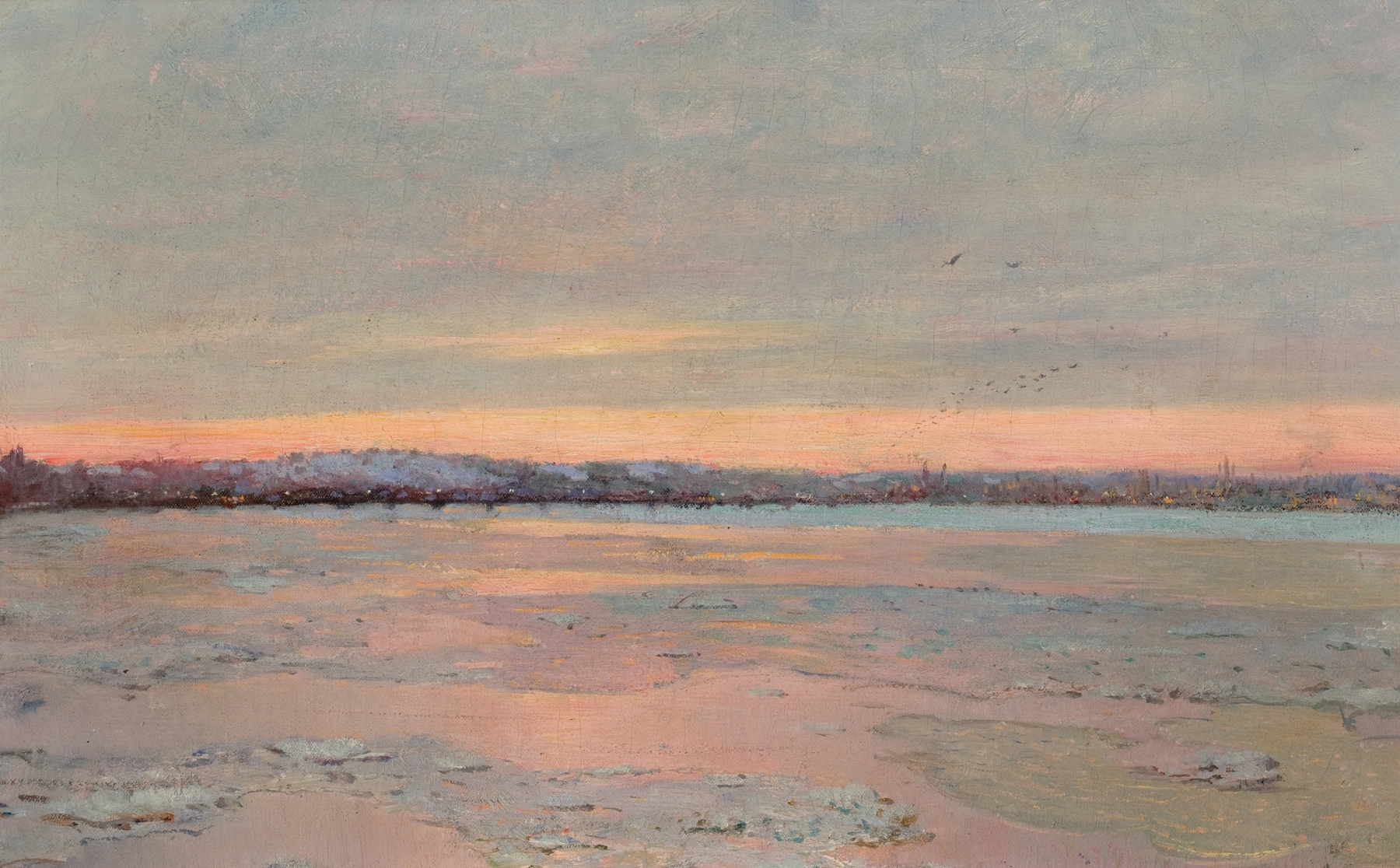
“Between color and silence, truth hides.” In the stillness of a winter twilight, the world hushes, cloaked in the fragile beauty of fading light. This moment, suspended between day and night, invites contemplation of the ephemeral nature of existence. Focus first on the soft gradient of blues and purples that blanket the sky, where the last hints of daylight flicker like distant memories. The river reflects this color palette, its surface a delicate mirror that shimmers with the encroaching darkness. Notice the bare trees lining the banks, their skeletal branches reaching skyward, suggesting both resilience and vulnerability against the chill of evening. Beneath the serene aesthetic lies a poignant tension—a reminder of mortality in the starkness of the season. The contrast between the vibrant hues of twilight and the harshness of winter illustrates the delicate balance of life and death. This scene, while beautiful, evokes an underlying melancholy, capturing the fleeting nature of moments and the inevitability of change. Simmons painted this work during a period when American Impressionism was evolving, likely in the late 19th to early 20th century. Living in a time marked by introspection and the search for deeper artistic truths, he aimed to express the complex interplay between nature and human emotion. This artwork, reflecting his thoughts on mortality and the passage of time, embodies a transitional moment, both in the world outside and within the artist himself.