From the Inlet of Oslo — History & Analysis
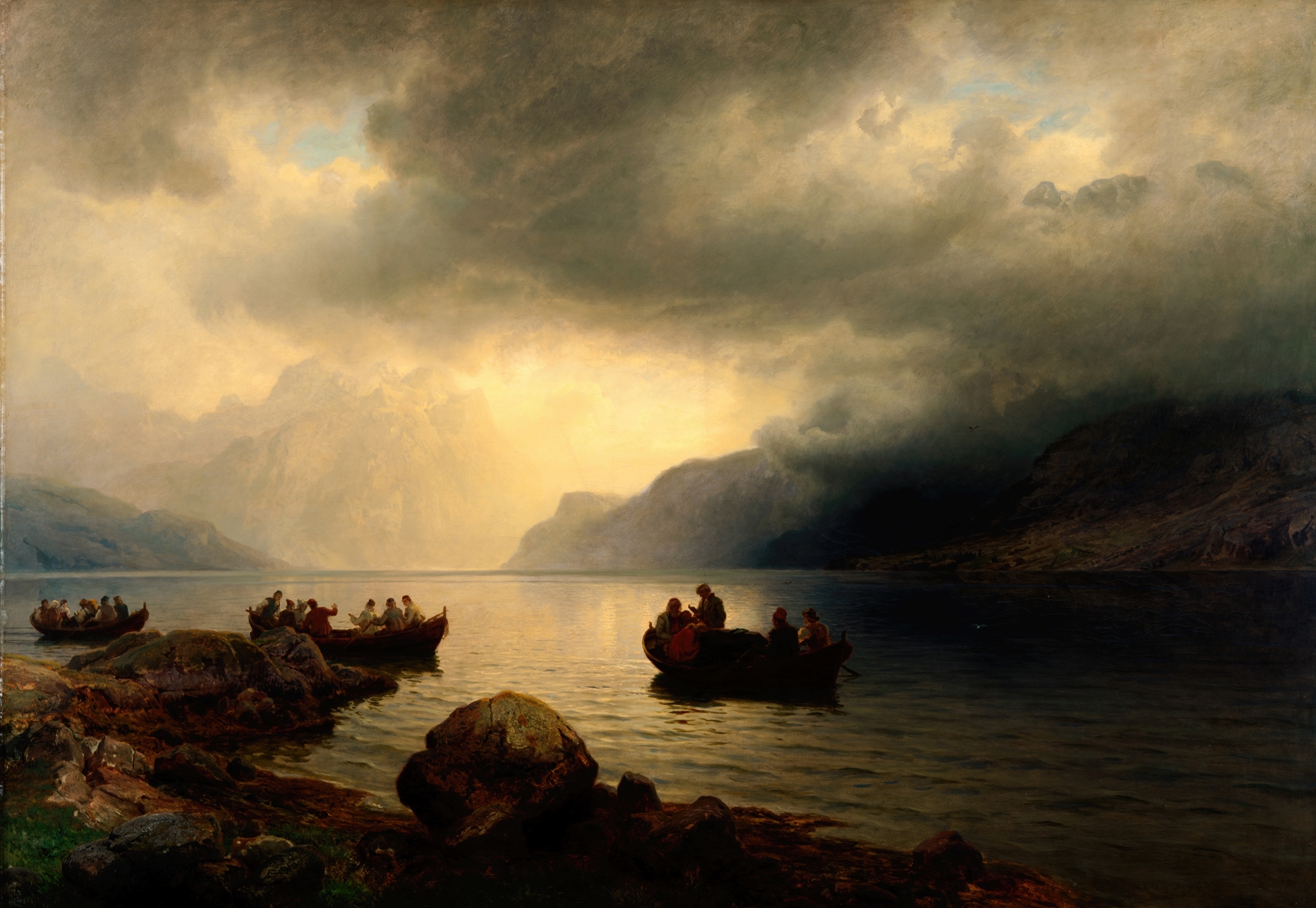
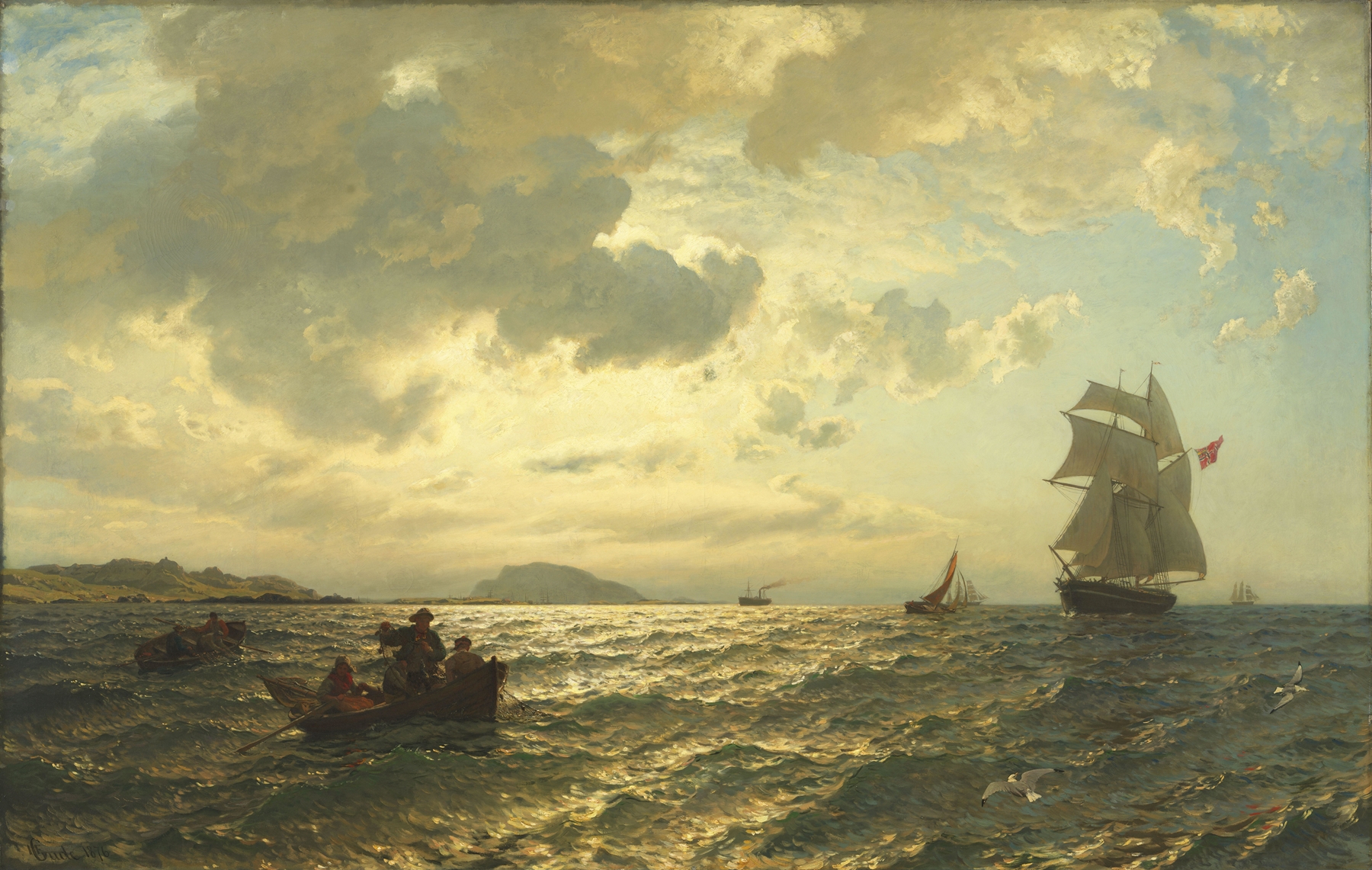
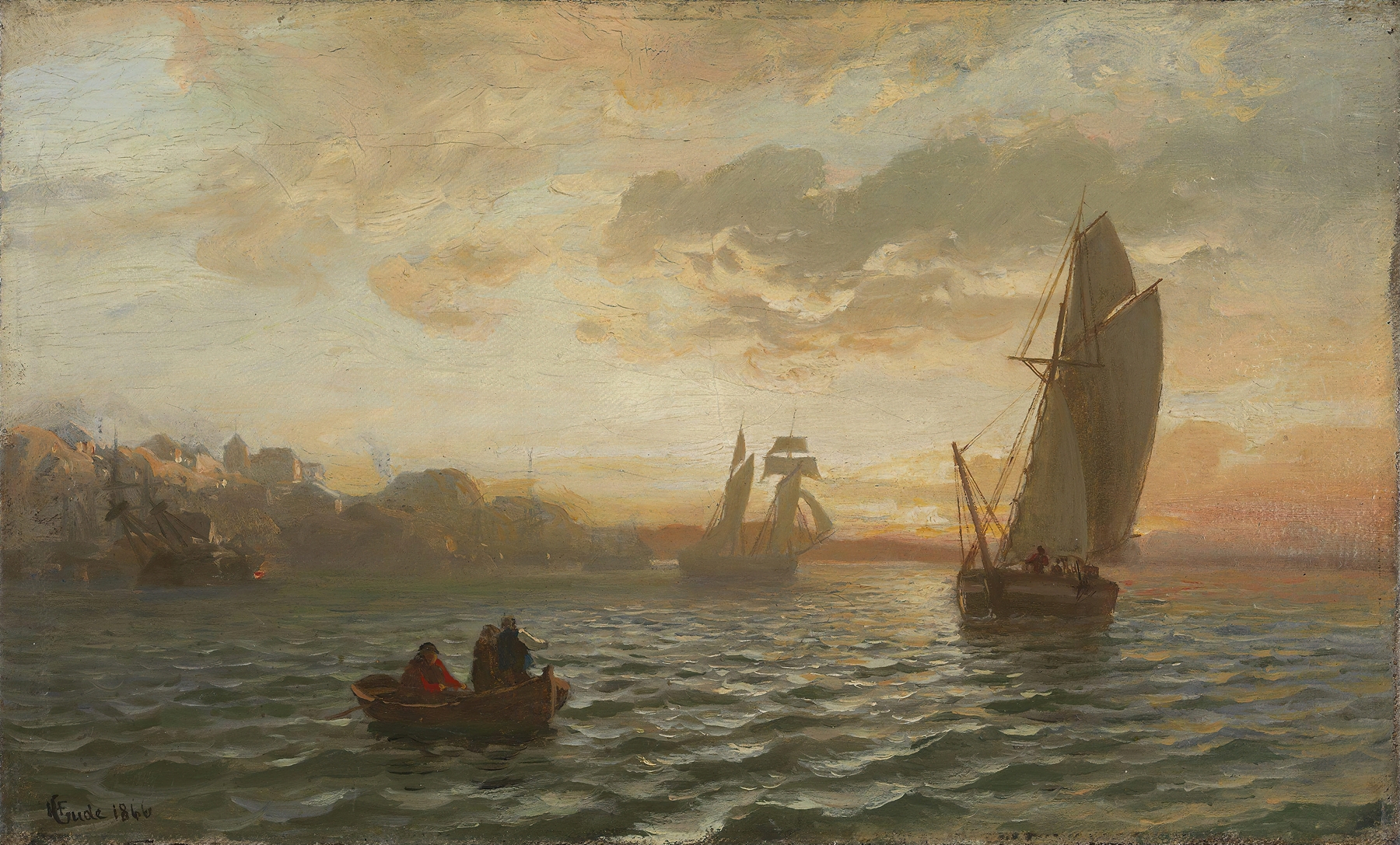
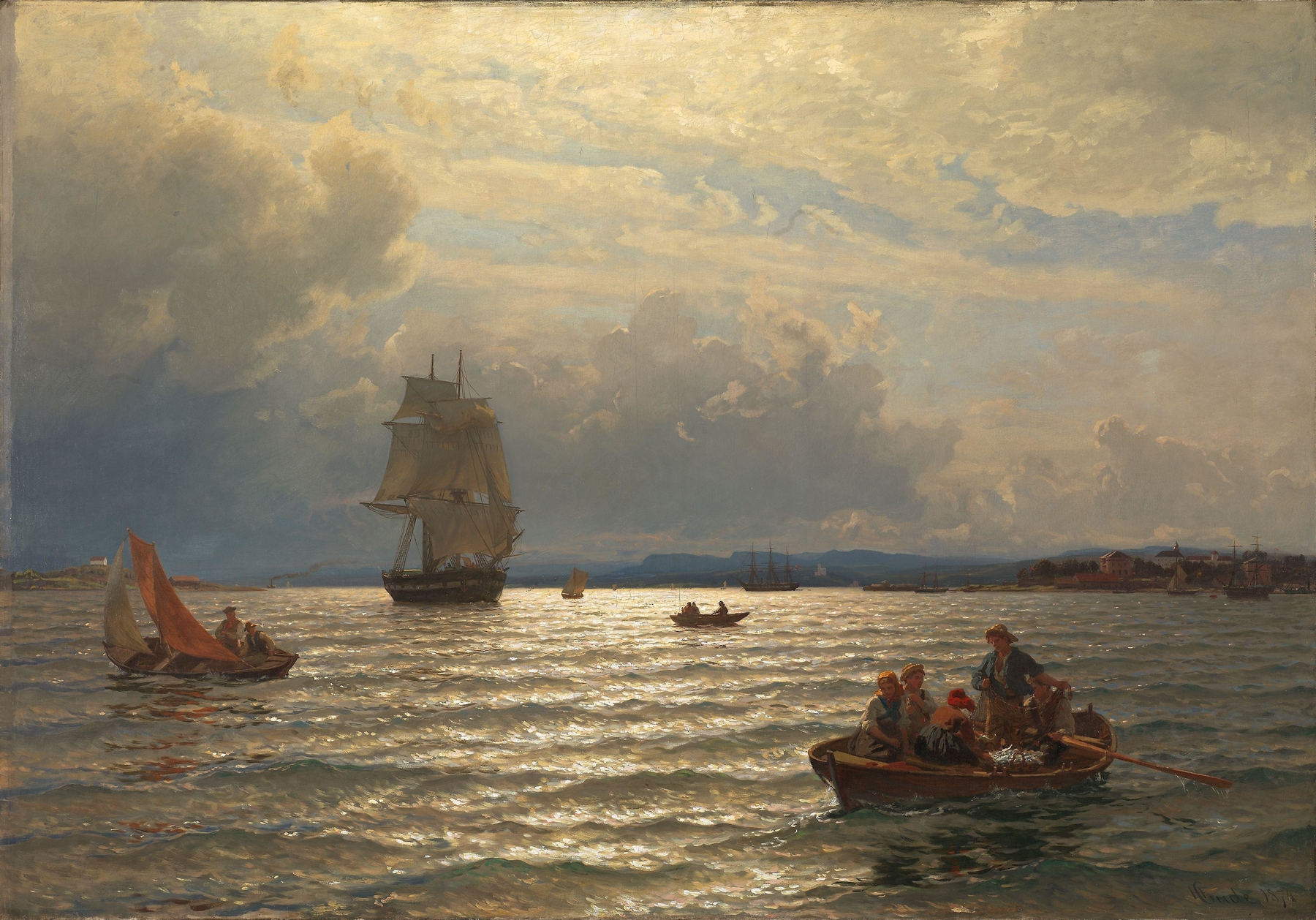
Where does light end, and longing begin? In the serene embrace of a Norwegian fjord, one can feel the pulse of transformation in the landscape, a reminder of nature's delicate balance between stillness and change. Look to the left at the rugged cliffs that rise majestically, their craggy surfaces catching the soft, golden light of the setting sun. The foreground is adorned with tranquil waters reflecting the vibrant hues of twilight, drawing your gaze toward the horizon where the sky melts into an ethereal blend of oranges and blues.
Notice how the gentle ripples on the water mirror the brushstrokes, inviting you to explore the interplay between the solidity of earth and the fluidity of water, all while enveloped in a peaceful atmosphere that belies the deeper currents of emotion beneath. In this artwork, the contrasts are profound—the steadfast mountains juxtaposed against the calm waters evoke a sense of permanence against the passage of time. The fading light hints at the fleeting nature of moments, alluding to a world in transition. Each stroke whispers the stories of those who have come and gone, their longings resonating within the stillness of the scene, urging us to reflect on our own journeys of transformation.
Hans Gude painted this piece in 1874, a period when he was deeply influenced by Romantic ideals and the burgeoning realism of his contemporaries. Living in Germany while frequently traveling through Scandinavia, he sought to capture the haunting beauty of the Norwegian landscape, reflecting both his admiration for nature and his desire to express the emotional depth it elicited. In From the Inlet of Oslo, he successfully melds these influences into a harmonious vision, revealing the transformative power of the natural world.