From the western Coast of Norway — History & Analysis
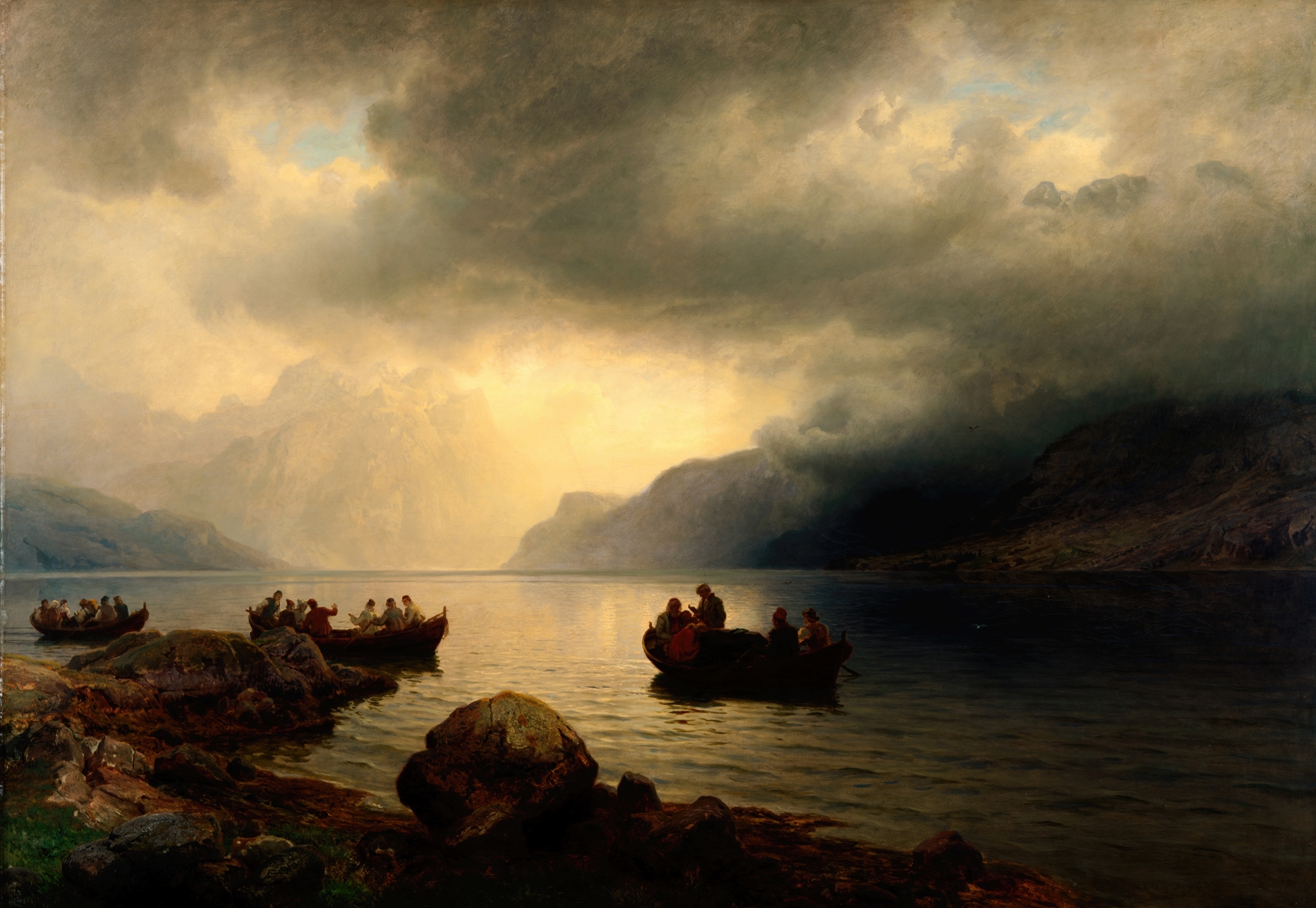
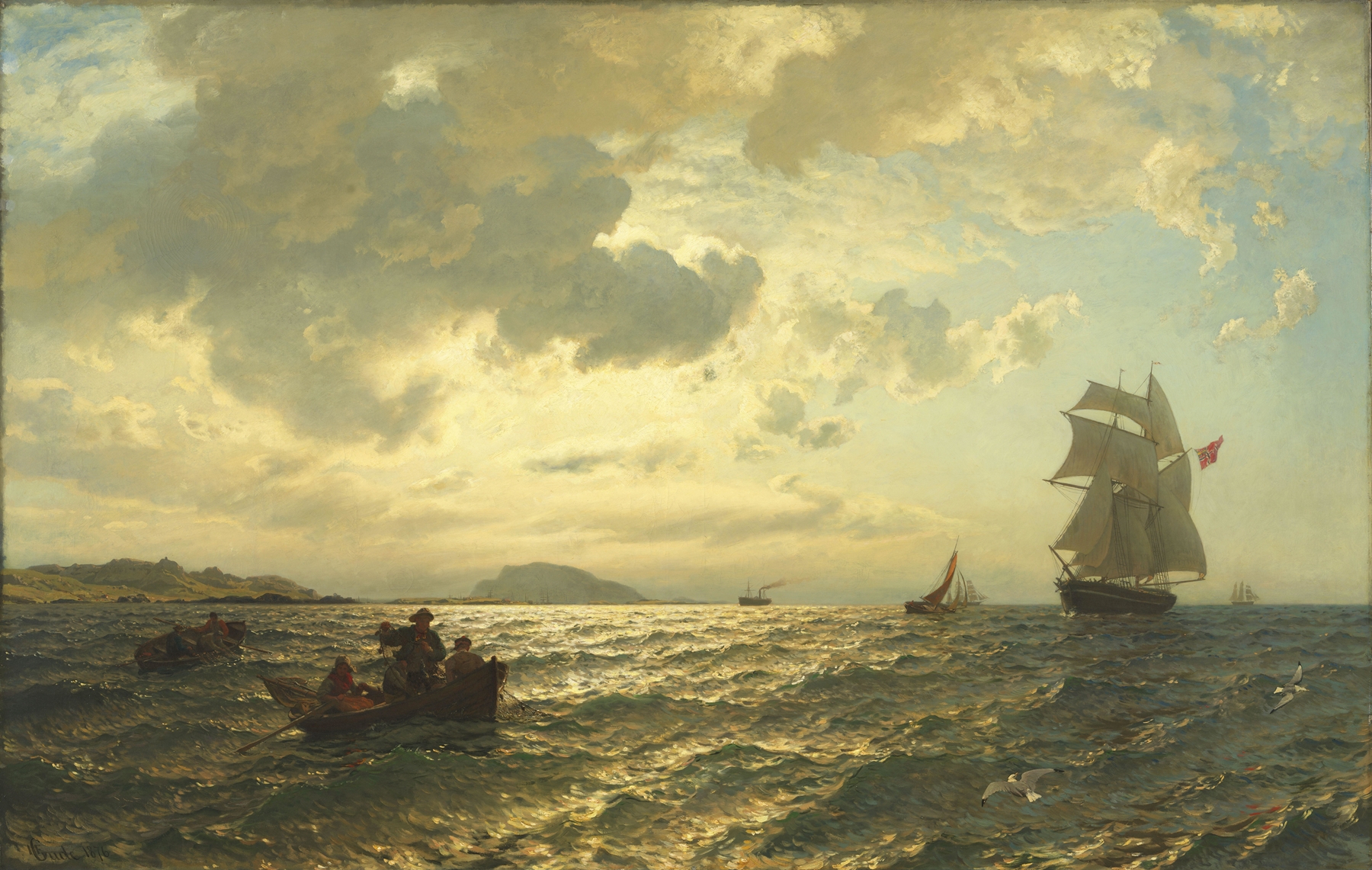
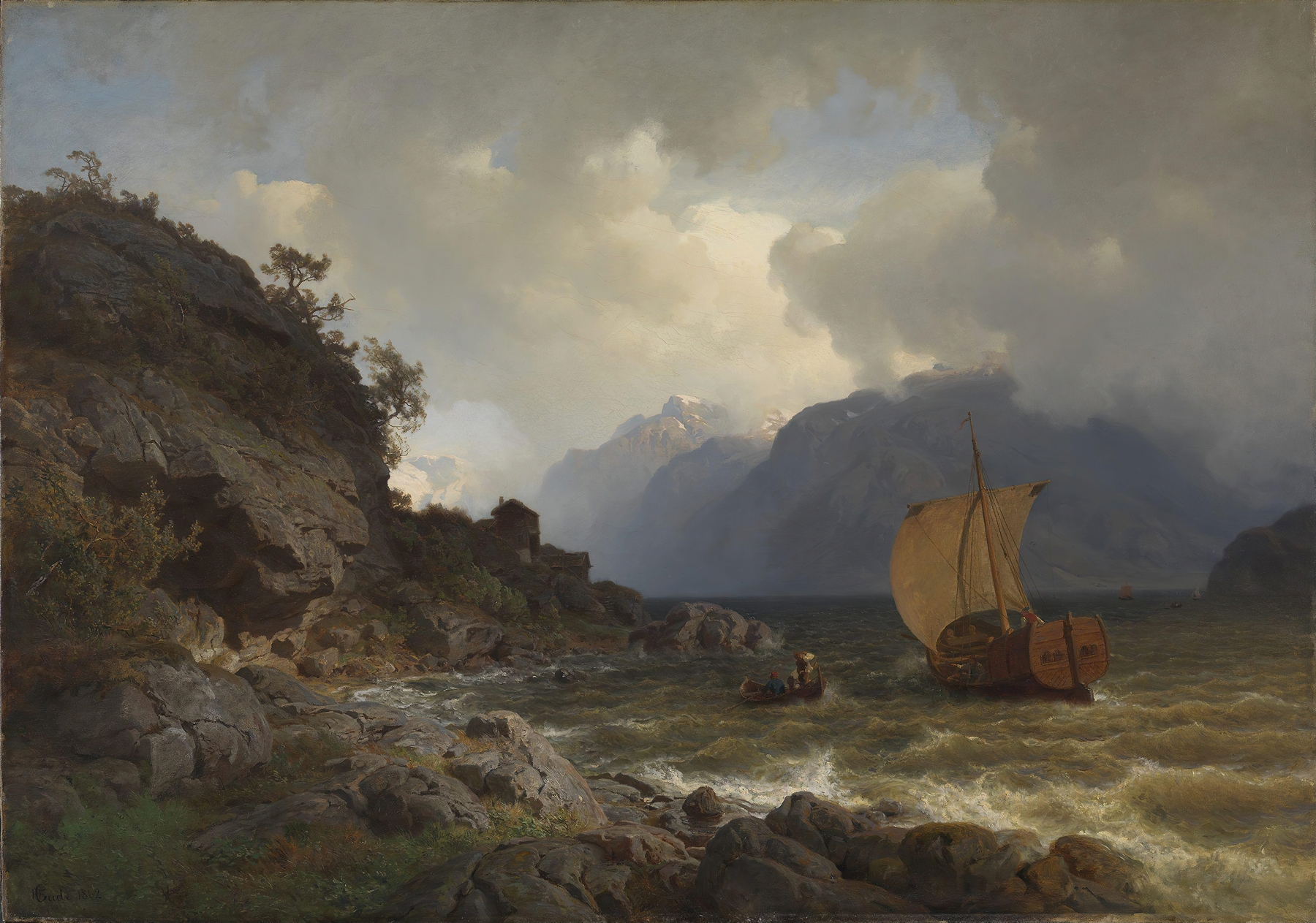
Could a single brushstroke hold eternity? Each stroke in From the Western Coast of Norway speaks of a legacy woven into the fabric of nature, capturing a moment that feels both ephemeral and eternal. Look to the right at the rugged cliffs rising majestically from the ocean, their jagged edges softened by the gentle caress of fading light. The interplay of cerulean blues and muted greens invites the eye to wander across the canvas, while the silver shimmer of water reflects the last vestiges of warmth from the setting sun.
Notice how the clouds, painted in hues ranging from warm amber to deep violet, arch overhead, framing the scene with a sense of grandeur and depth. In this serene landscape, contrasts abound—the calmness of the water juxtaposed against the formidable cliffs, the tranquility of nature set against the fleeting moment of twilight. Each detail, from the delicate brushwork in the foliage to the vibrant hues of the sky, resonates with the duality of fragility and strength. It beckons viewers to contemplate not just the scene depicted, but also their own place within the vastness of time and nature.
Created in 1862, Gude painted this work during a period marked by the burgeoning Romantic movement, which sought to capture the sublime beauty of the natural world. Living in Germany at the time, he drew inspiration from Norway’s dramatic landscapes, reflecting a growing fascination with nature in art. This painting stands as a testament to his mastery and an enduring legacy of the awe that landscapes evoke.