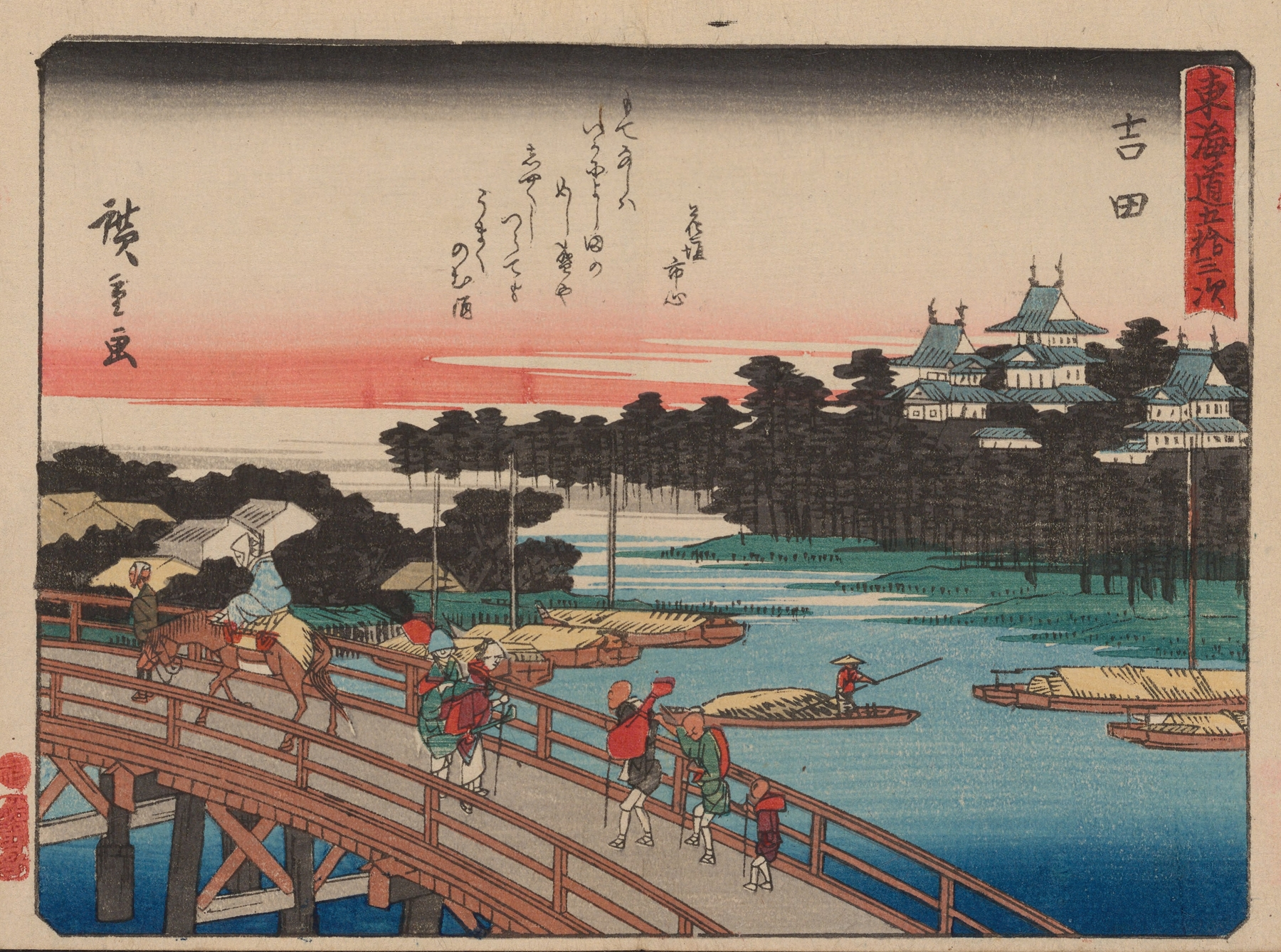
![Fujisawa; Yugyôji [temple name], 1833–1834, by Utagawa Hiroshige, woodblock print, public domain](https://froigstrpvutwqtqikzt.supabase.co/storage/v1/object/public/art-images/artworks/1a894a25bc4776888426ed6a9195534d564d39e0a04e1695ec1f833b9bf66507.jpg)

Can paint confess what words never could? In the delicate strokes of this serene landscape, a tranquil dialogue unfolds between nature and spirit, inviting reflections on peace and pilgrimage. Look to the foreground at the gentle curve of the path leading toward the temple, where figures glide effortlessly, their presence harmonizing with the verdant surroundings. Notice how the soft blues and greens meld together, creating an atmosphere that breathes tranquility, while the temple’s intricate roof peeks through the verdant boughs, bathed in the warm embrace of soft sunlight. The composition draws the eye irresistibly onward, creating a sense of journey, not merely through space but through time. Hidden within this seemingly simple depiction lies a profound contrast between the bustling life of the city and the sacred calm of the temple. The figures, appearing almost as whispers against the backdrop of towering trees, embody a collective yearning for spiritual solace. Each brushstroke conveys a reverence for nature, suggesting that the journey to enlightenment is as vital as the destination itself. The tranquility depicted here offers a moment for contemplation, revealing that serenity is often found in the spaces we traverse, both physically and spiritually. Utagawa Hiroshige painted this scene during the early 1830s, a period marked by the rise of the ukiyo-e genre in Japan. Living in Edo, he was immersed in a vibrant art scene that celebrated landscapes and the fleeting beauty of nature. At this time, Hiroshige sought to capture the ephemeral essence of the world around him, melding traditional themes with personal introspection, which would later solidify his legacy as one of Japan’s most beloved artists.