Gare Saint Lazare te Parijs — History & Analysis
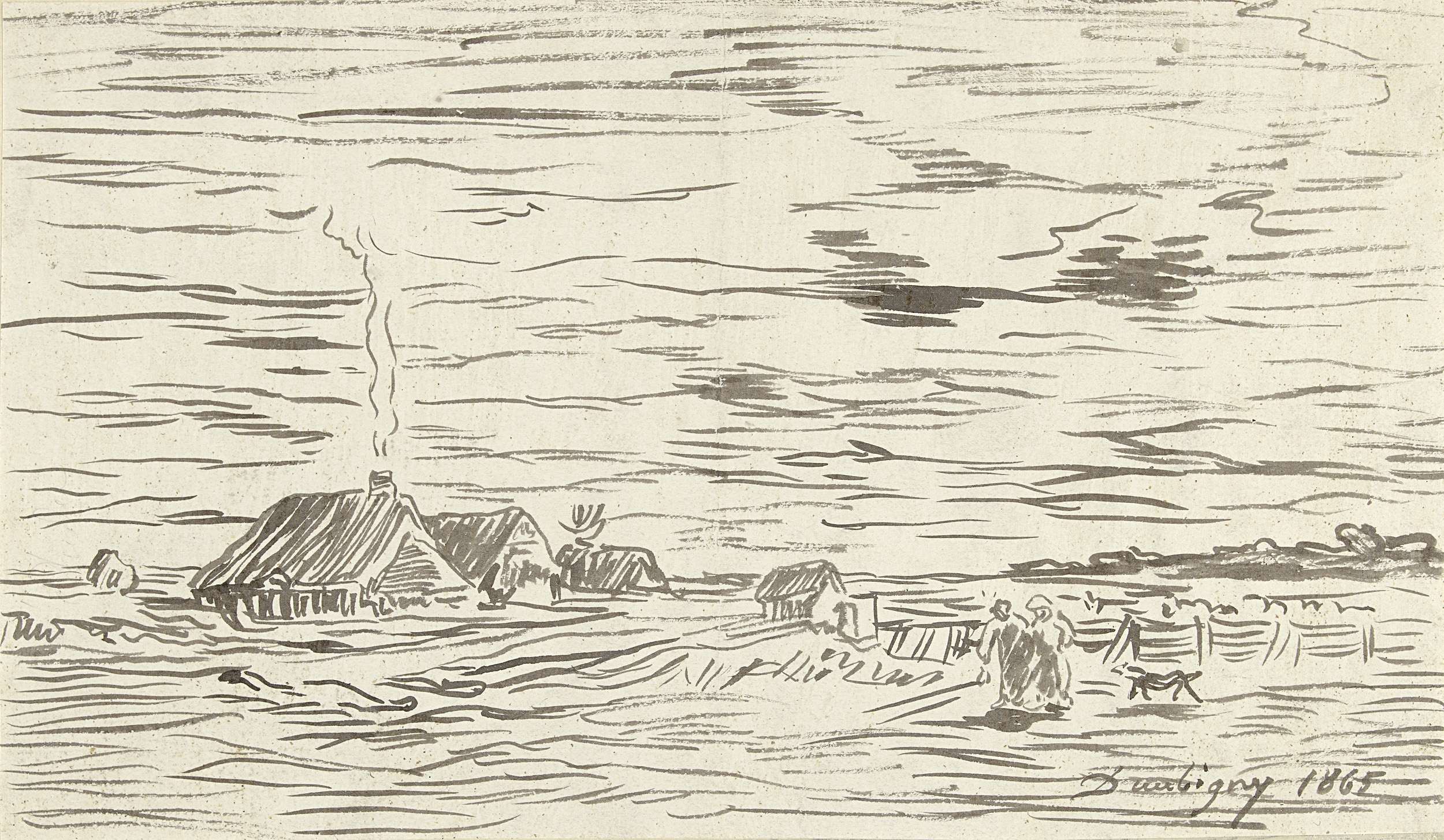
Could a single brushstroke hold eternity? In the dynamic rush of life, each stroke captures fleeting moments, preserving movement within the confines of a canvas. Look closely at the tumultuous skies, where swirling clouds seem to dance above the Gare Saint Lazare. The artist's palette bursts with harmonious hues of blue, gray, and hints of warm ochre, drawing the eye toward the brilliant luminosity of the station's façade.
Notice how the brushwork invokes both fervor and tranquility, creating a rhythm that mirrors the bustling life around the station. The blurred figures and steam rising from the trains hint at the frenetic energy of travel, as if the scene itself breathes with anticipation. Embedded within this lively tableau are themes of transience and connection. Each fleeting figure represents the myriad lives intersecting at this urban crossroads, evoking a sense of shared experience amidst individual journeys.
The interplay of light and shadow not only highlights the structures but also symbolizes the passage of time, emphasizing that while moments may evaporate, they are eternally captured in the essence of paint. Charles-François Daubigny painted this work during a period of artistic evolution, from 1827 to 1878, primarily in France. This era witnessed the burgeoning of Impressionism, with artists beginning to focus on capturing modern life and its ephemerality. Daubigny, an early pioneer of this movement, sought to reflect the vibrancy of contemporary Paris, establishing a bridge between traditional techniques and the fresh visions of the avant-garde.