Goatherd Opposite the Falls of Tivoli — History & Analysis
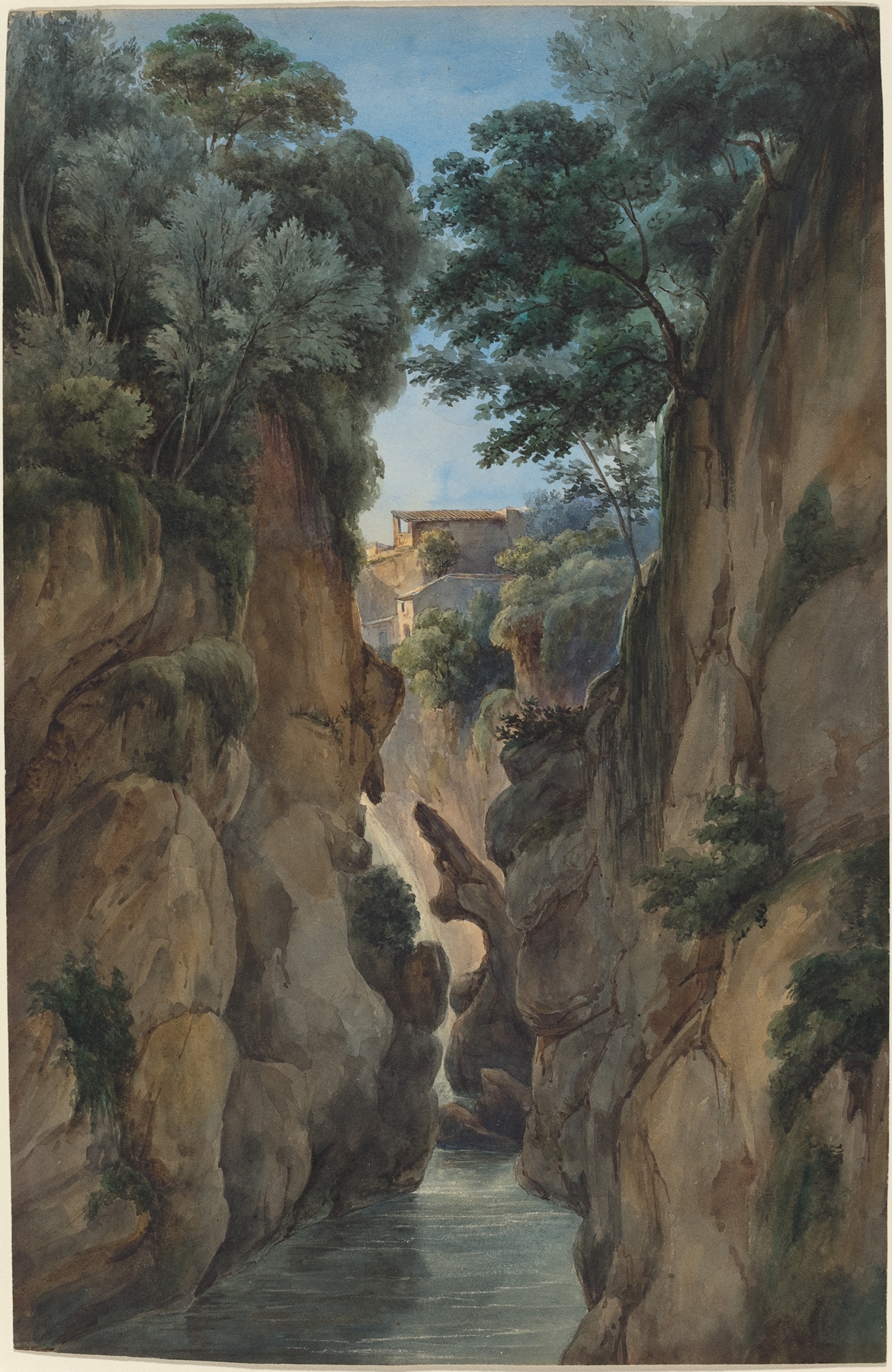
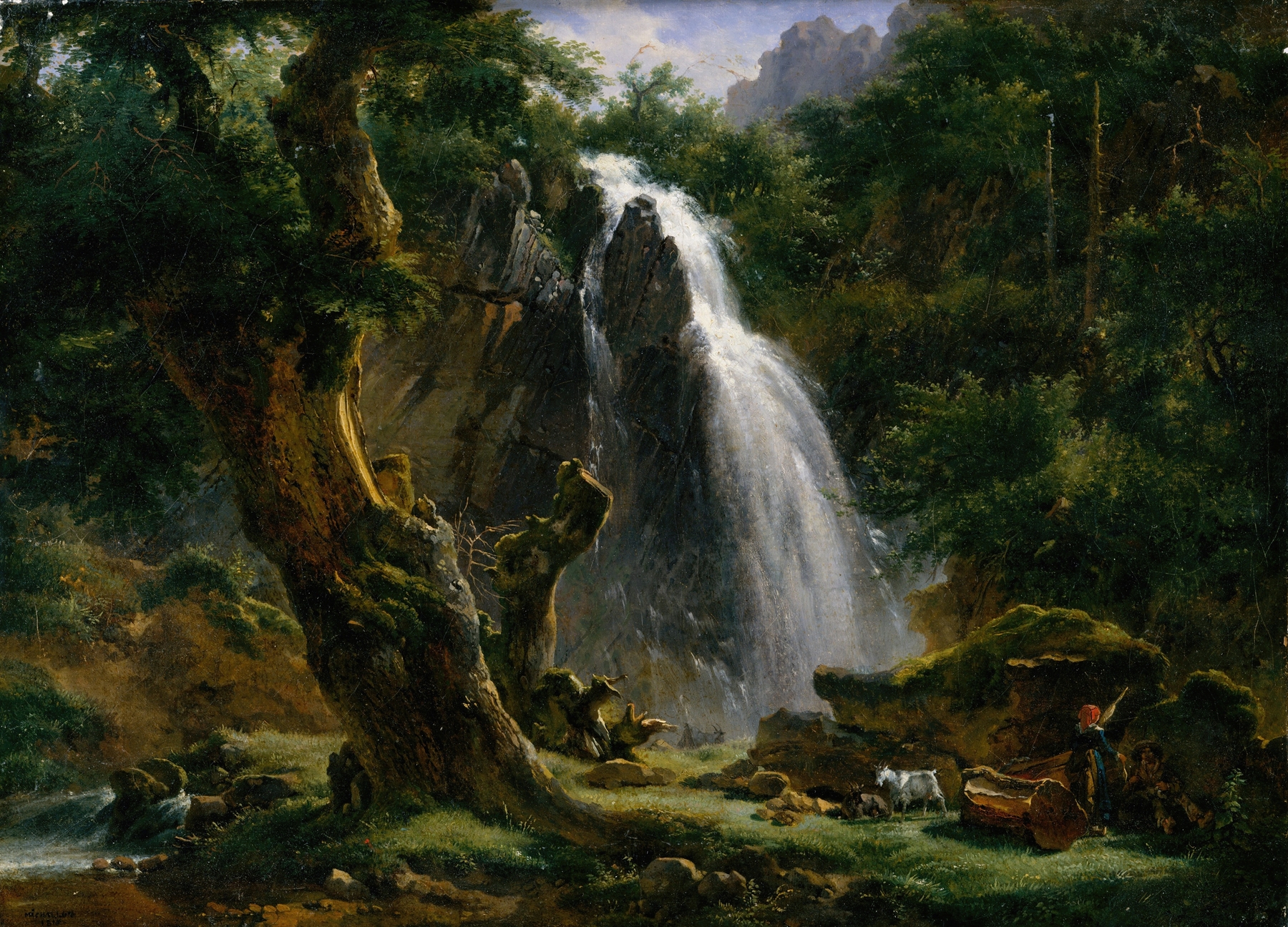
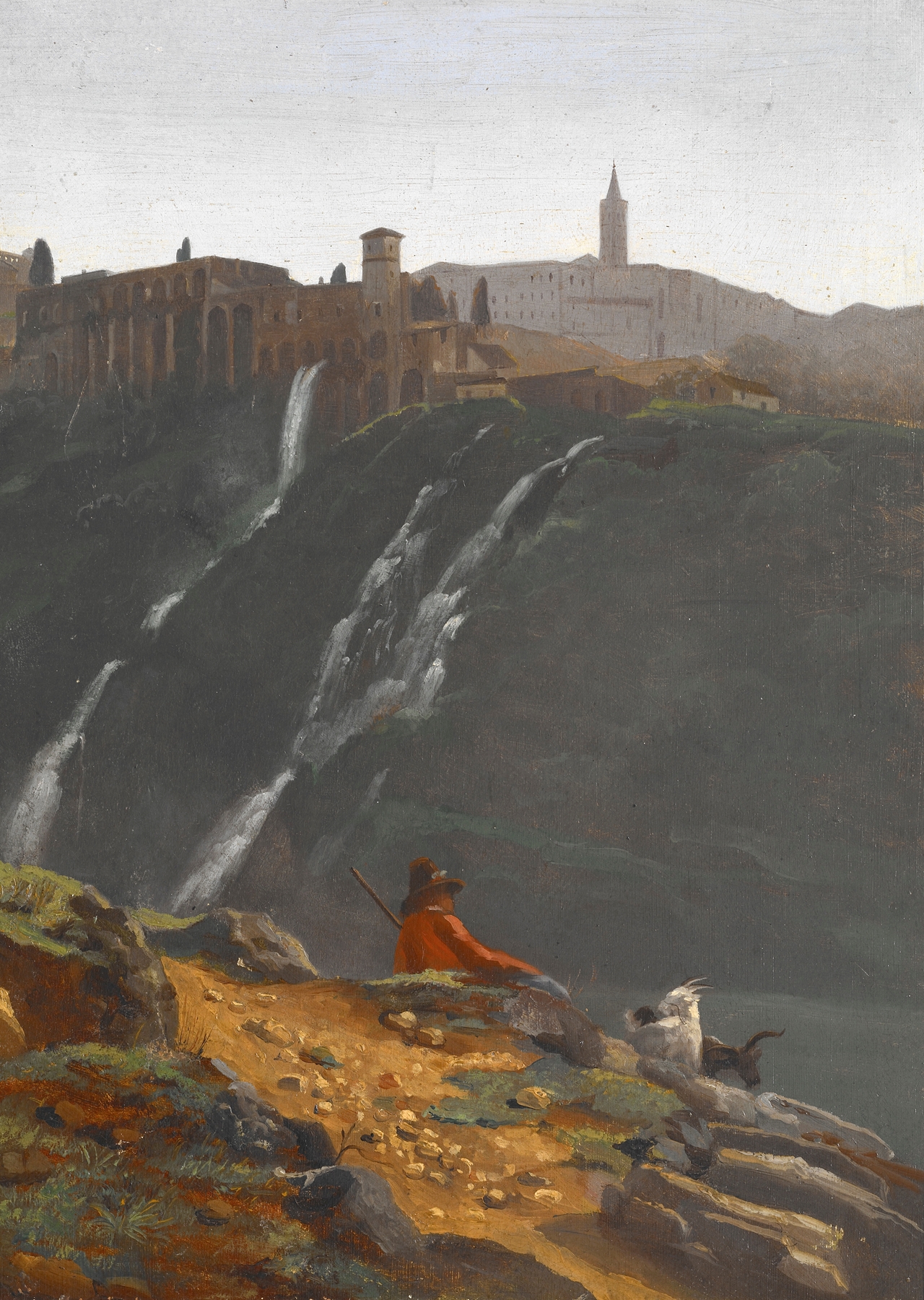
Could beauty survive in a century of chaos? In Goatherd Opposite the Falls of Tivoli, the tension between nature's splendor and the human experience is explored, depicting a serene moment amidst an expansive backdrop. Look to the center where a solitary goatherd stands, framed by cascading water and lush greenery. The play of light dances across the falls, creating a vibrant contrast with the muted tones of the earth. Notice how the artist's brush strokes render the textures of the rocks and the soft movements of the vegetation, inviting the viewer into this harmonious scene.
The soft blues and greens invoke a sense of tranquility, while the slightly darker areas hint at the shadows of uncertainty lurking nearby. Delve deeper, and you’ll uncover the emotional undercurrents of solitude and resilience. The goatherd’s posture—relaxed yet contemplative—suggests a connection to the land, juxtaposing the overwhelming power of the waterfall with the fragility of human existence. The void surrounding him amplifies his isolation, as if he stands between the magnificence of nature and the chaos of the world beyond this idyllic view.
Each element weaves a story of enduring beauty that defies the tumult of its time. This piece emerged during Michallon’s formative years in the early 19th century, a period marked by a shift in landscape painting that favored romanticism. Living in Paris, he was immersed in a growing appreciation for nature, reflecting a yearning for the sublime amidst the industrial changes sweeping Europe. This artwork encapsulates the artist's quest for harmony within the chaos of his age, presenting a vision of solace through the power of nature.