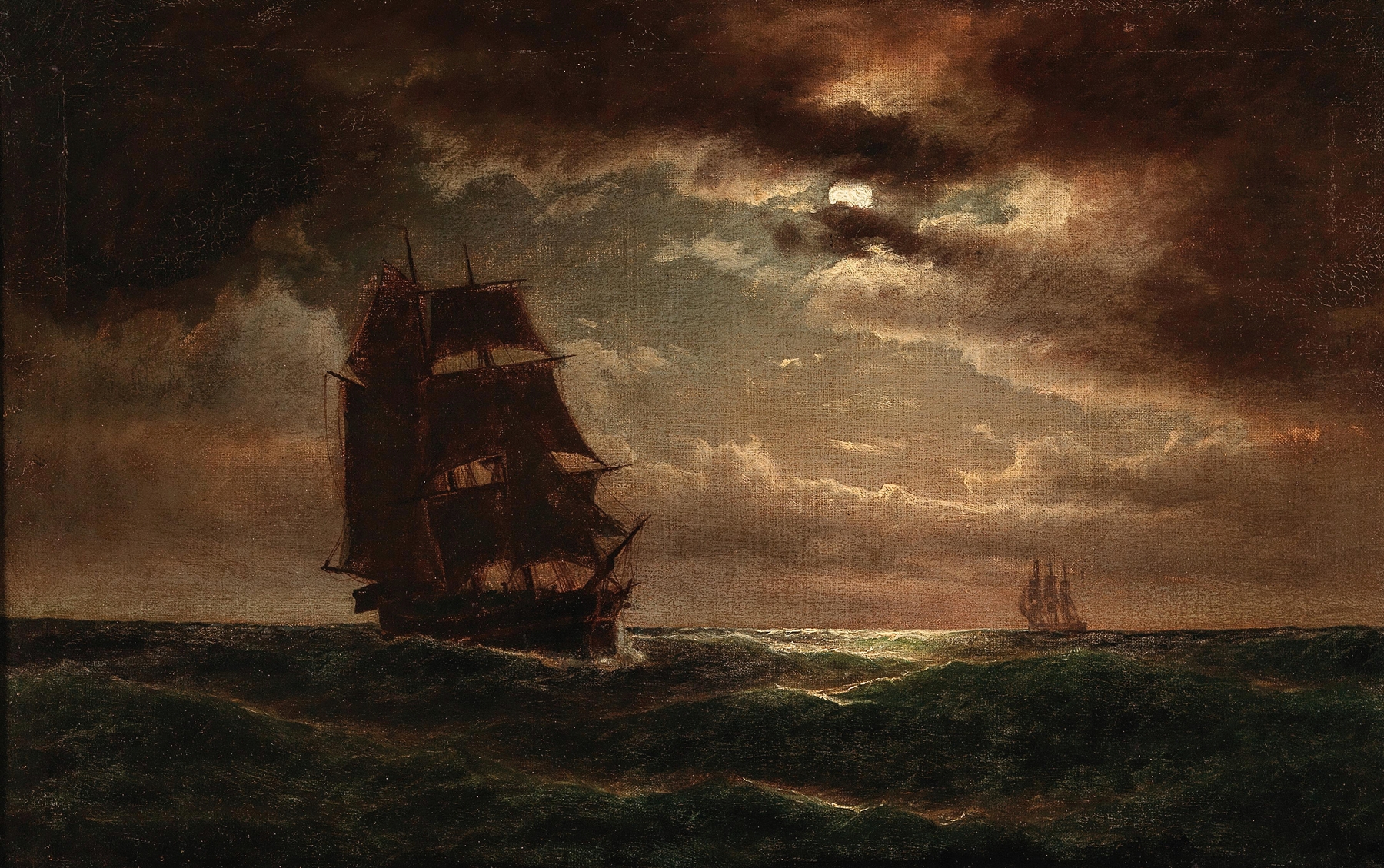
Großer Segler auf hoher See — History & Analysis
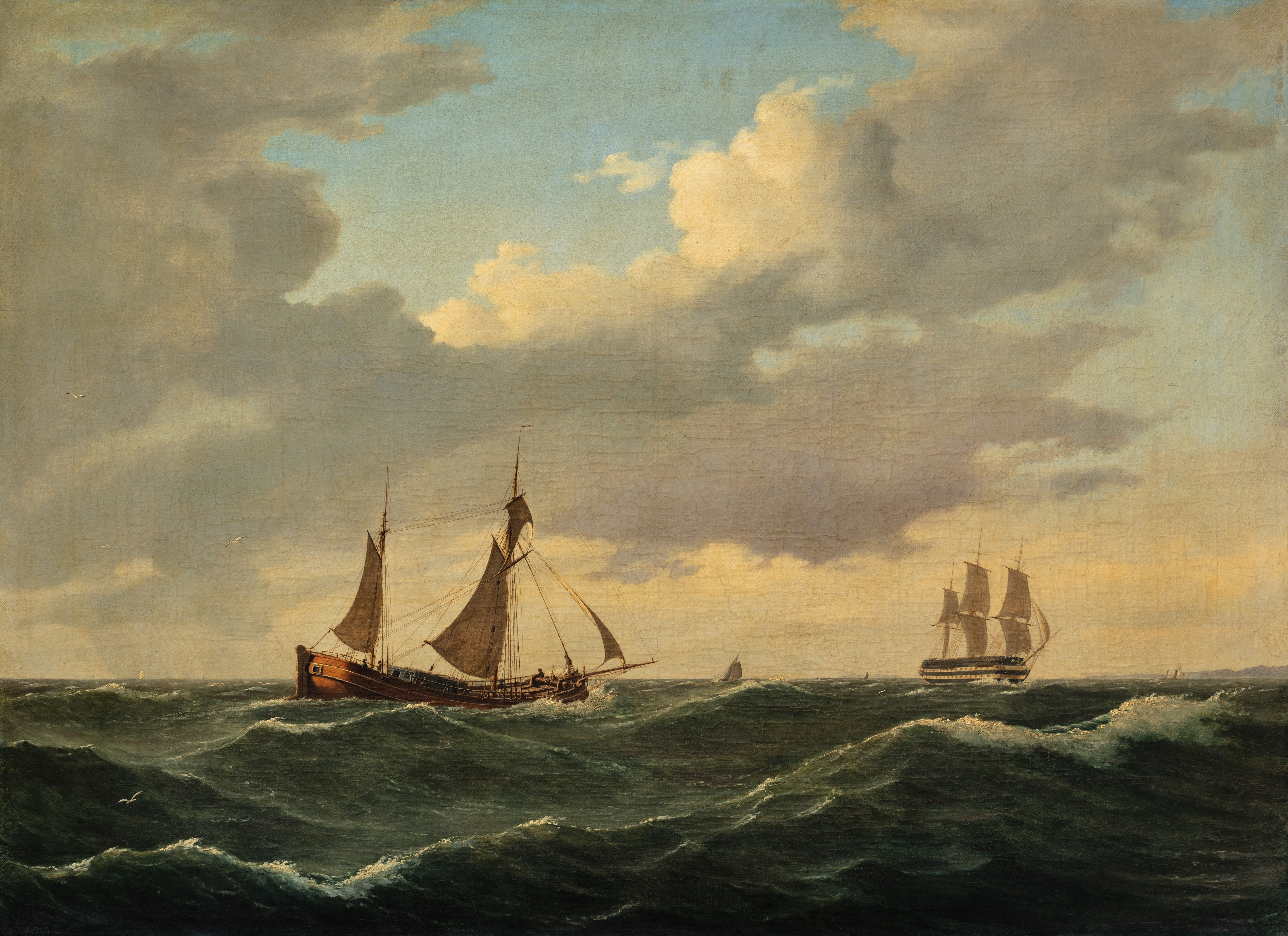
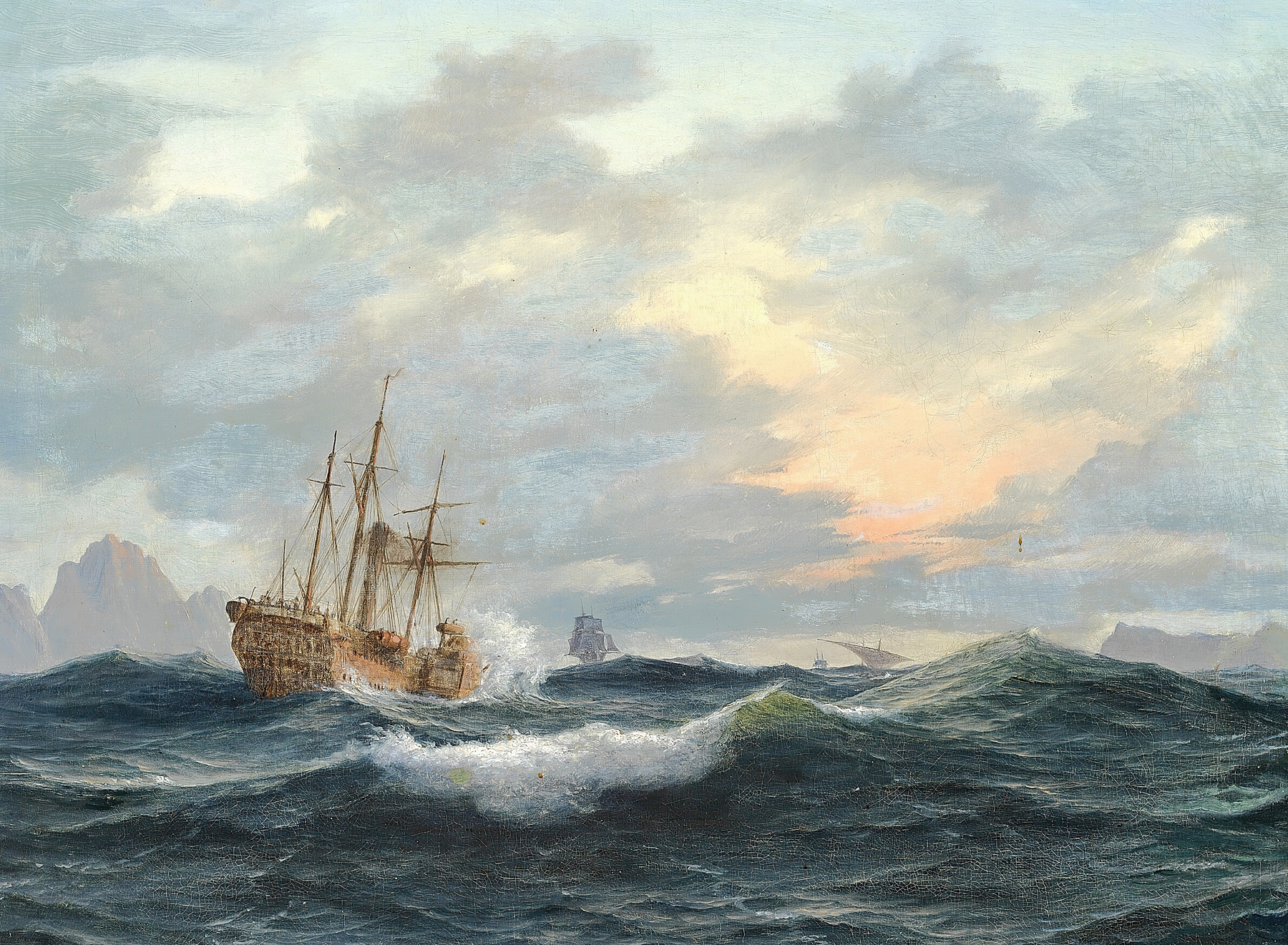
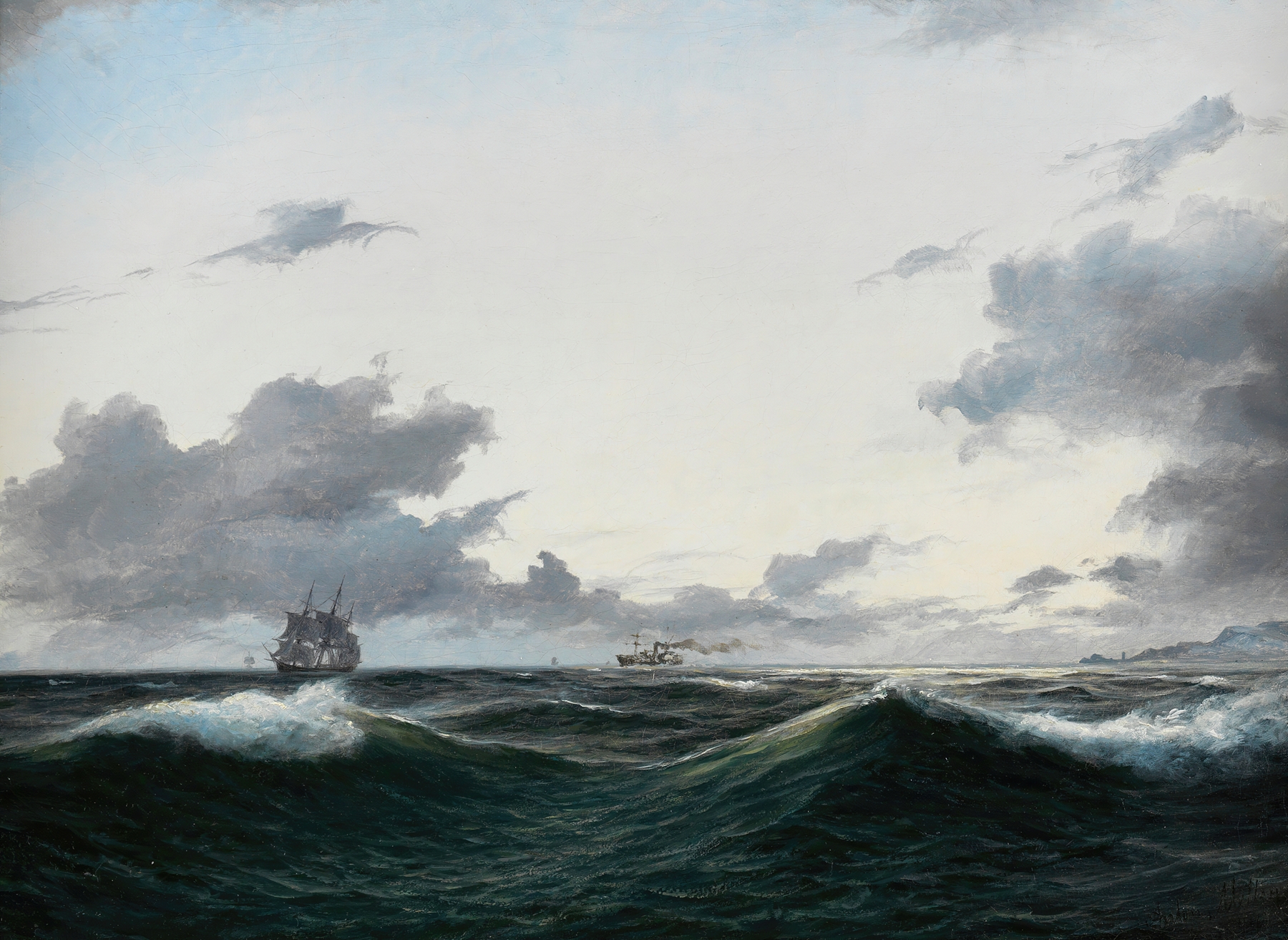
“To paint is to remember what time wants us to forget.” In a world awash with fleeting moments, art stands as a testament to enduring truths, capturing the essence of both the sublime and the mundane. Look to the horizon where deep blues and greens blend seamlessly, guiding your gaze to a majestic ship, its sails billowing proudly against the vast expanse of the ocean. The careful strokes of the brush breathe life into the waves, which dance wildly beneath the vessel. Notice the sharp contrast between the stormy sky overhead and the radiant light illuminating the ship, symbolizing both peril and hope.
The composition invites you to explore the relationship between man and nature, evoking a sense of daring adventure amidst the uncertainties of the sea. As you delve deeper into the canvas, the viewer may feel the tension between the ship's sturdy form and the chaos of the storm around it. The juxtaposition of light against dark hints at the inner struggles of those aboard, perhaps reflecting humanity's quest for freedom amid nature’s relentless power. The powerful imagery of the ship standing tall becomes a metaphor for resilience, encapsulating the truth of existence: that beauty often emerges from turmoil.
Anton Melbye painted Großer Segler auf hoher See in 1850 while living in Denmark, a period marked by his deep engagement with marine landscapes. At this time, the Romantic movement was flourishing, emphasizing emotions and the sublime beauty of nature. Melbye's focus on the interplay of light and shadow represented a shift in how artists approached seascapes, showcasing not only technical skill but also a profound understanding of the human experience within the natural world.