Dampfsegler und Dreimaster auf bewegter See — History & Analysis
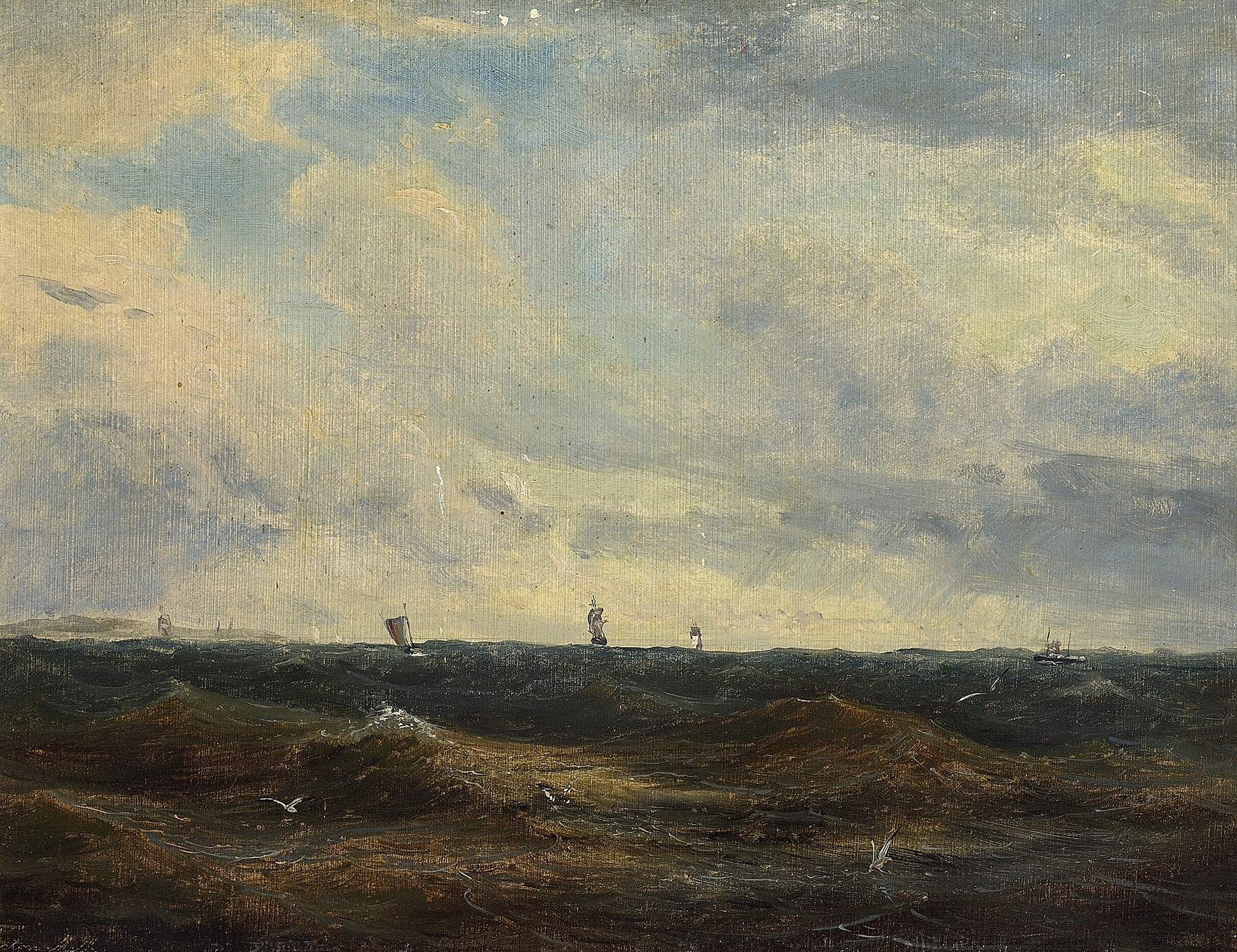
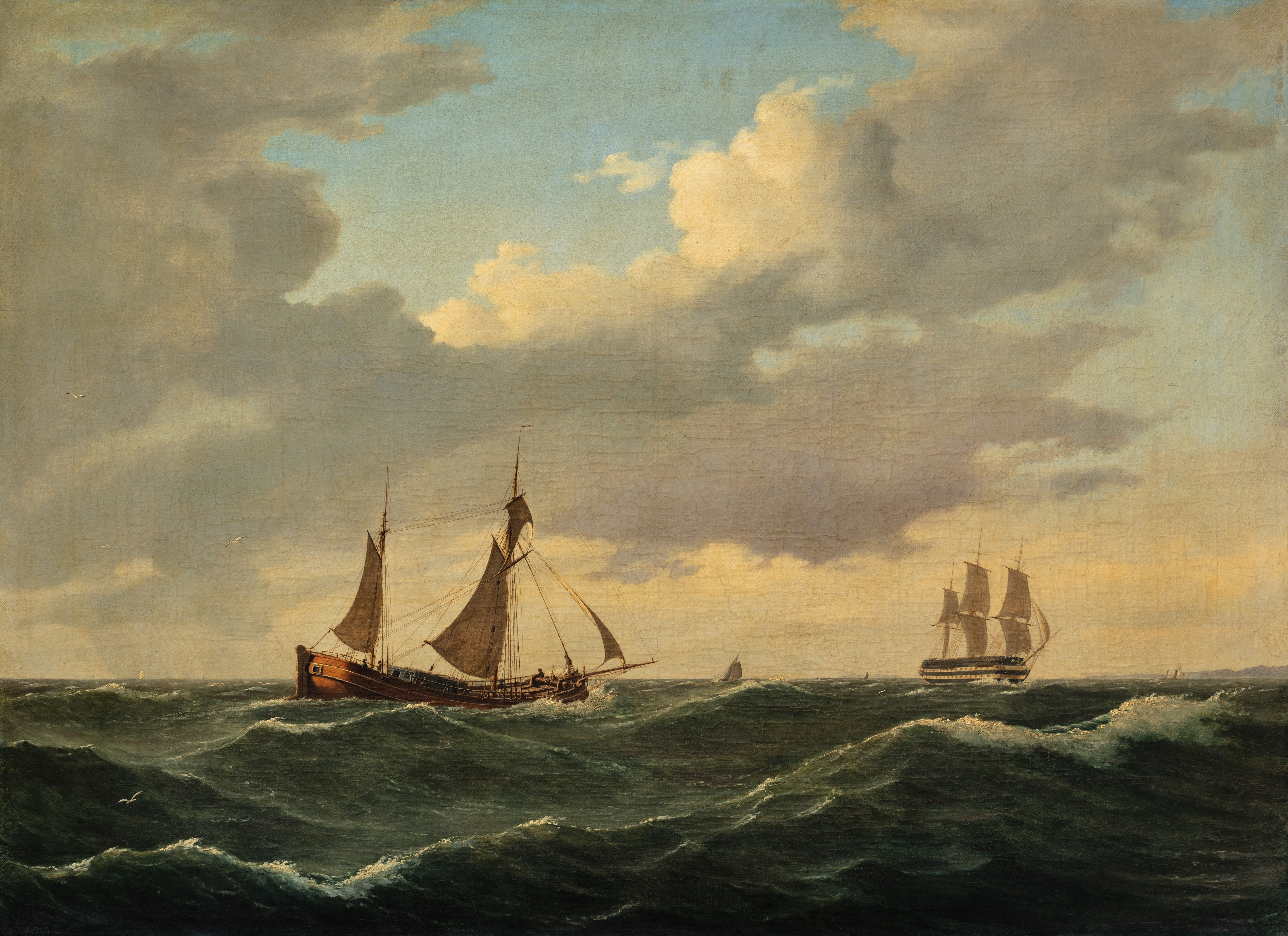
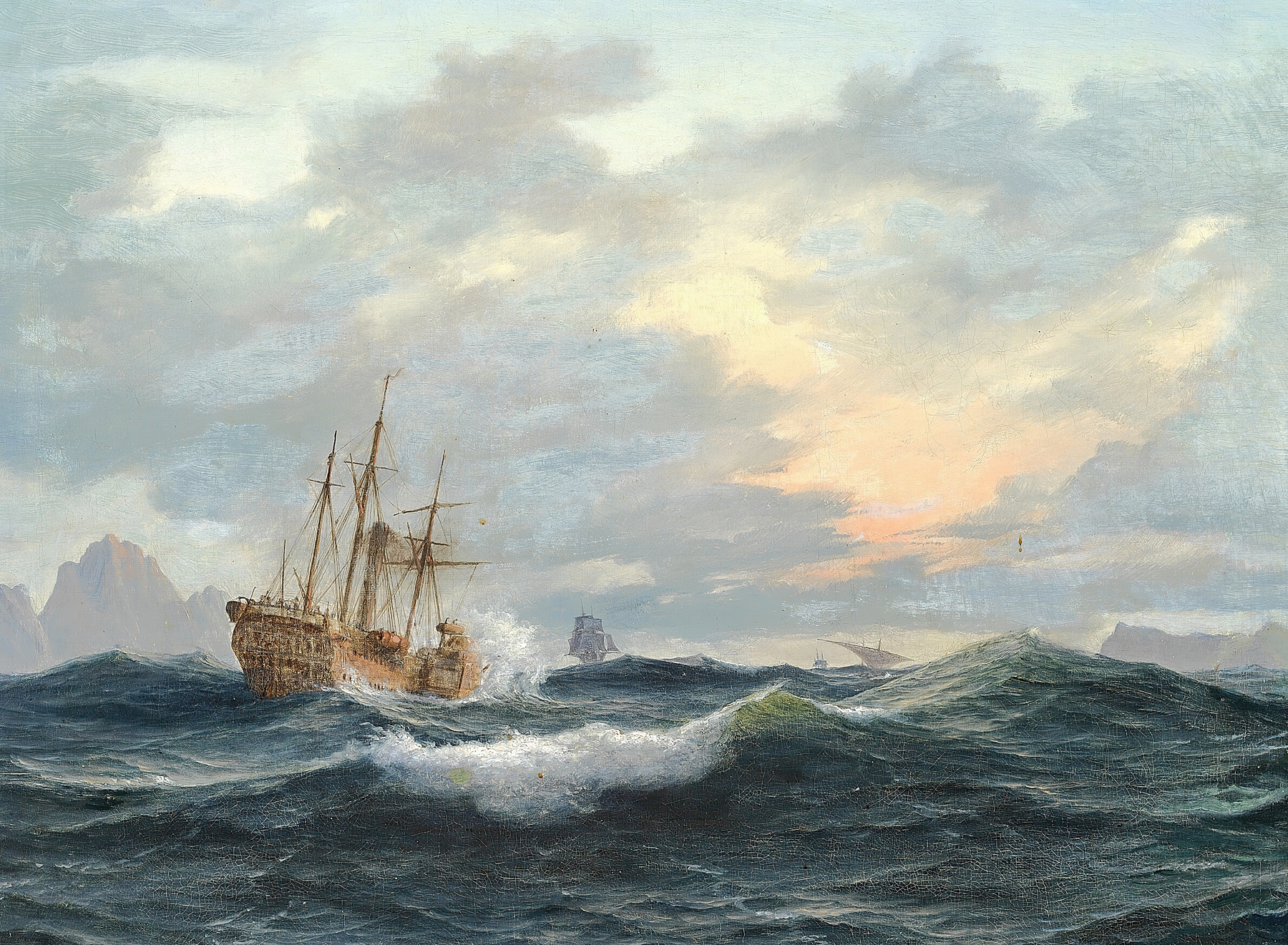
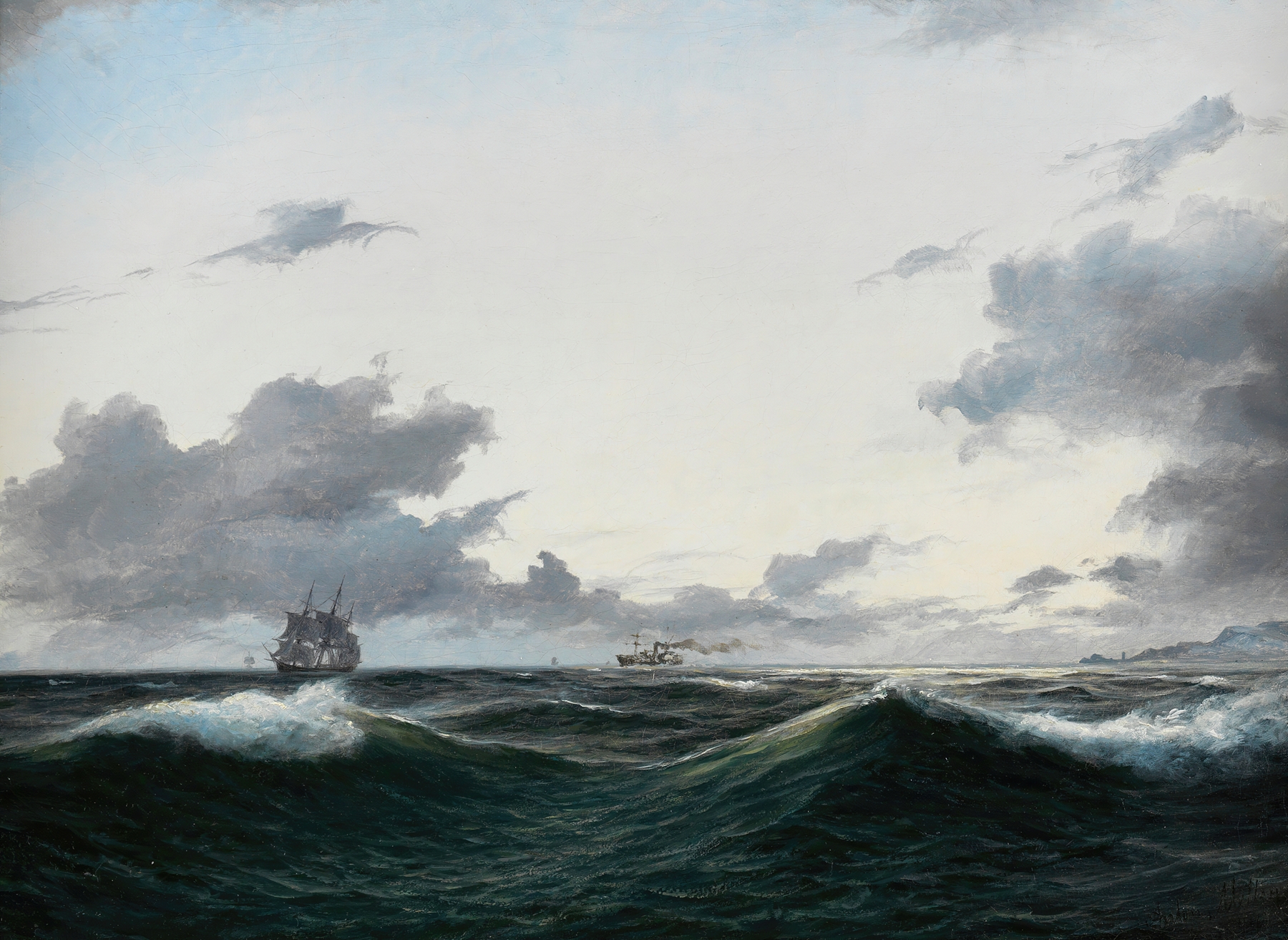
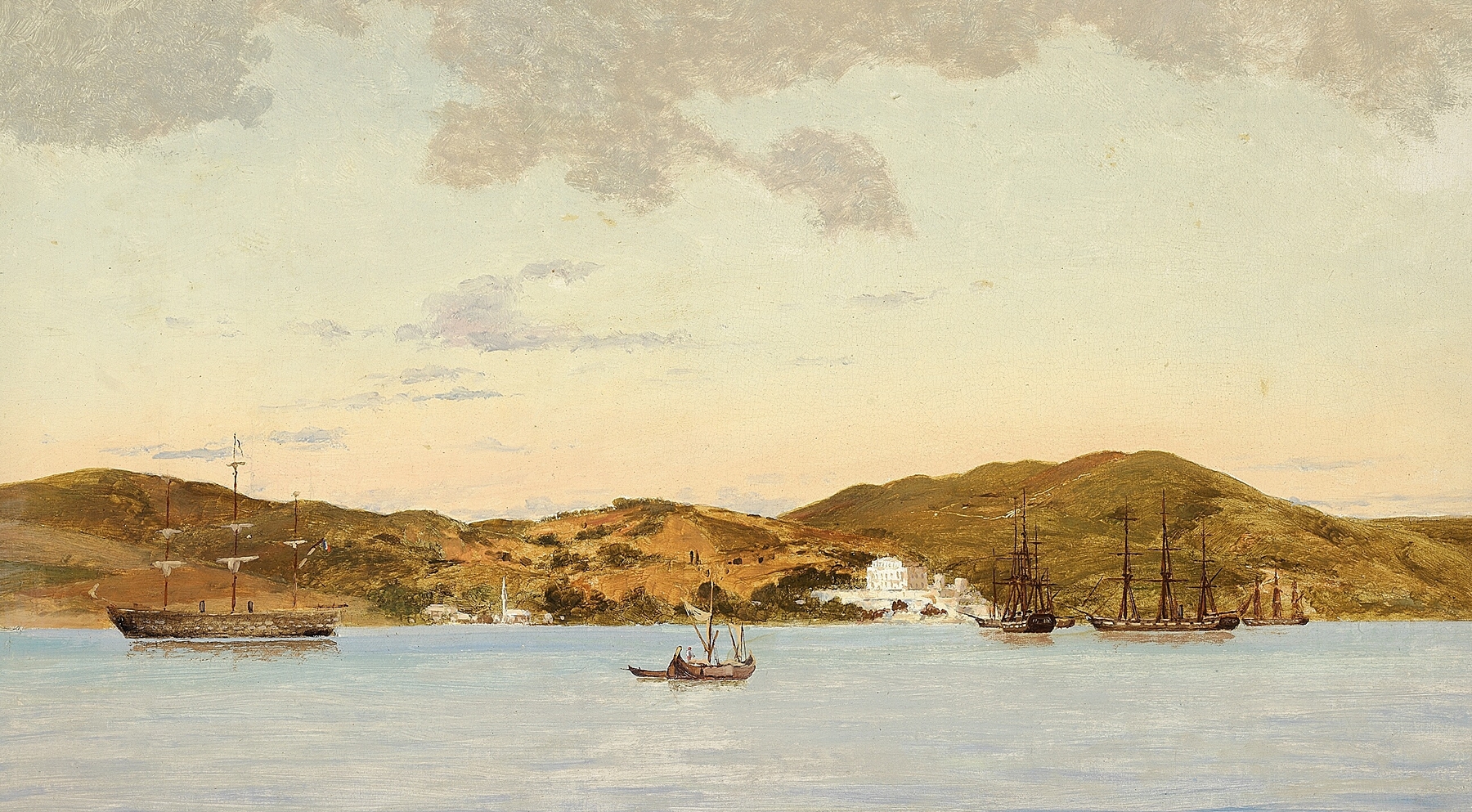
Did the painter know this moment would outlive them? The fleeting nature of time dances upon the waves in Dampfsegler und Dreimaster auf bewegter See, capturing a world where nostalgia and progress collide in the embrace of the sea. Look to the center of the canvas, where a steamship emerges triumphantly, its plume of smoke swirling upwards and mingling with the wispy clouds above. Notice how the contrast of the bright whites and deep blues evokes both clarity and chaos.
The delicate brush strokes, mingled with vibrant hues, reveal the artist’s mastery in portraying the movement of the sea, the rippling water reflecting the dance of light. To the left, a majestic three-masted ship sails with pride, its sails taut against the wind, embodying a sense of adventure and tradition amidst the currents of change. The juxtaposition of the old and the new creates an emotional tension, as the steamship represents innovation and the promise of the future, while the sailing vessel stands as a monument to the past. The tumultuous sea acts as a metaphor for life’s ever-shifting nature—its waves a constant reminder of both struggle and beauty.
The longing embedded within the scene resonates deeply, hinting at the artist’s own reflection on the transience of life and the relentless passage of time. In 1847, Anton Melbye painted this piece amidst a rapidly changing world where steam power was heralding a new era in maritime travel. Living in Denmark, surrounded by a vibrant artistic community, he embraced the Romantic style that emphasized emotion and the sublime. This work not only reflects his skillful technique but also captures a moment in history when the sea was both a frontier and a symbol of human aspiration.