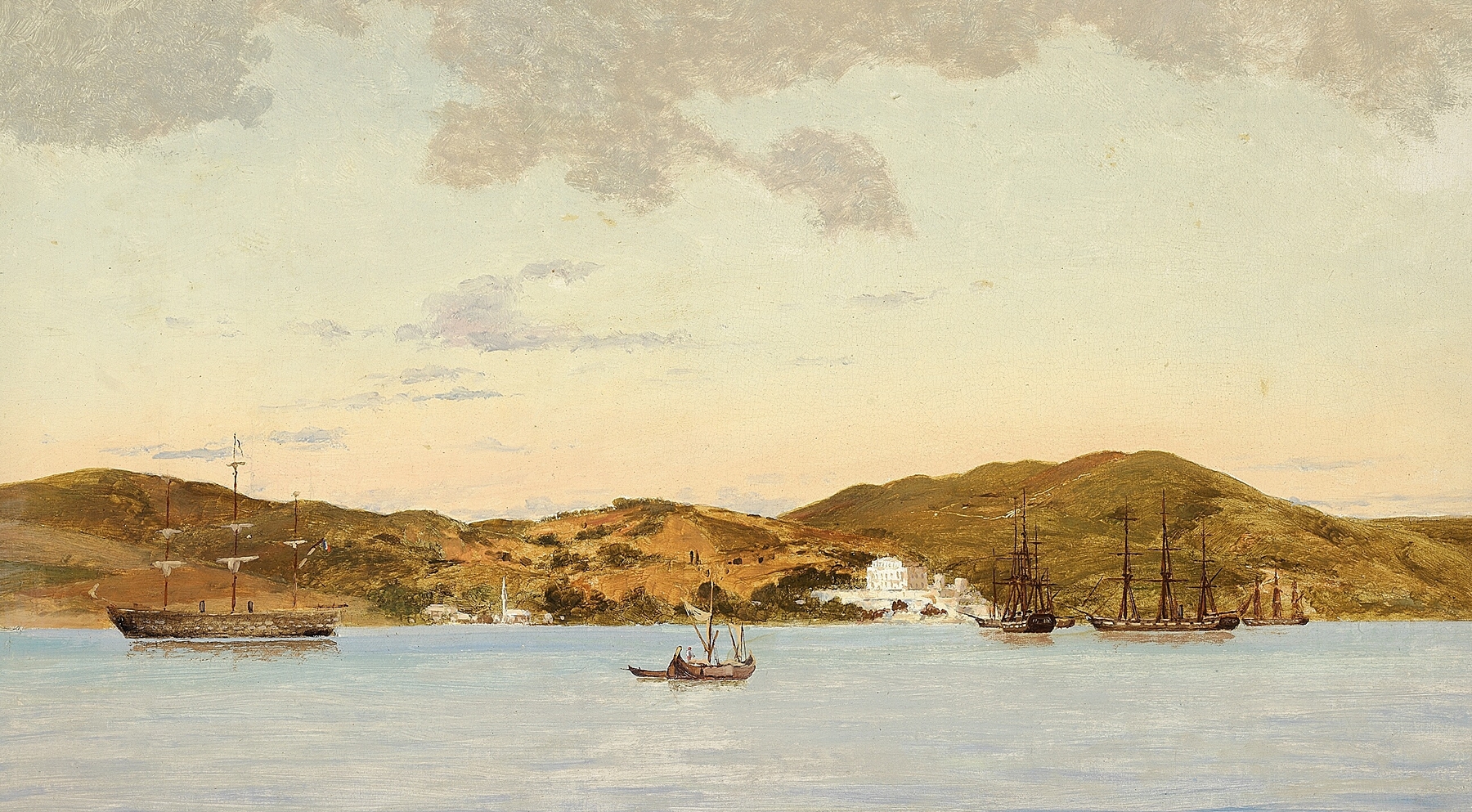
En hjuldamper og andre skibe på havet — History & Analysis
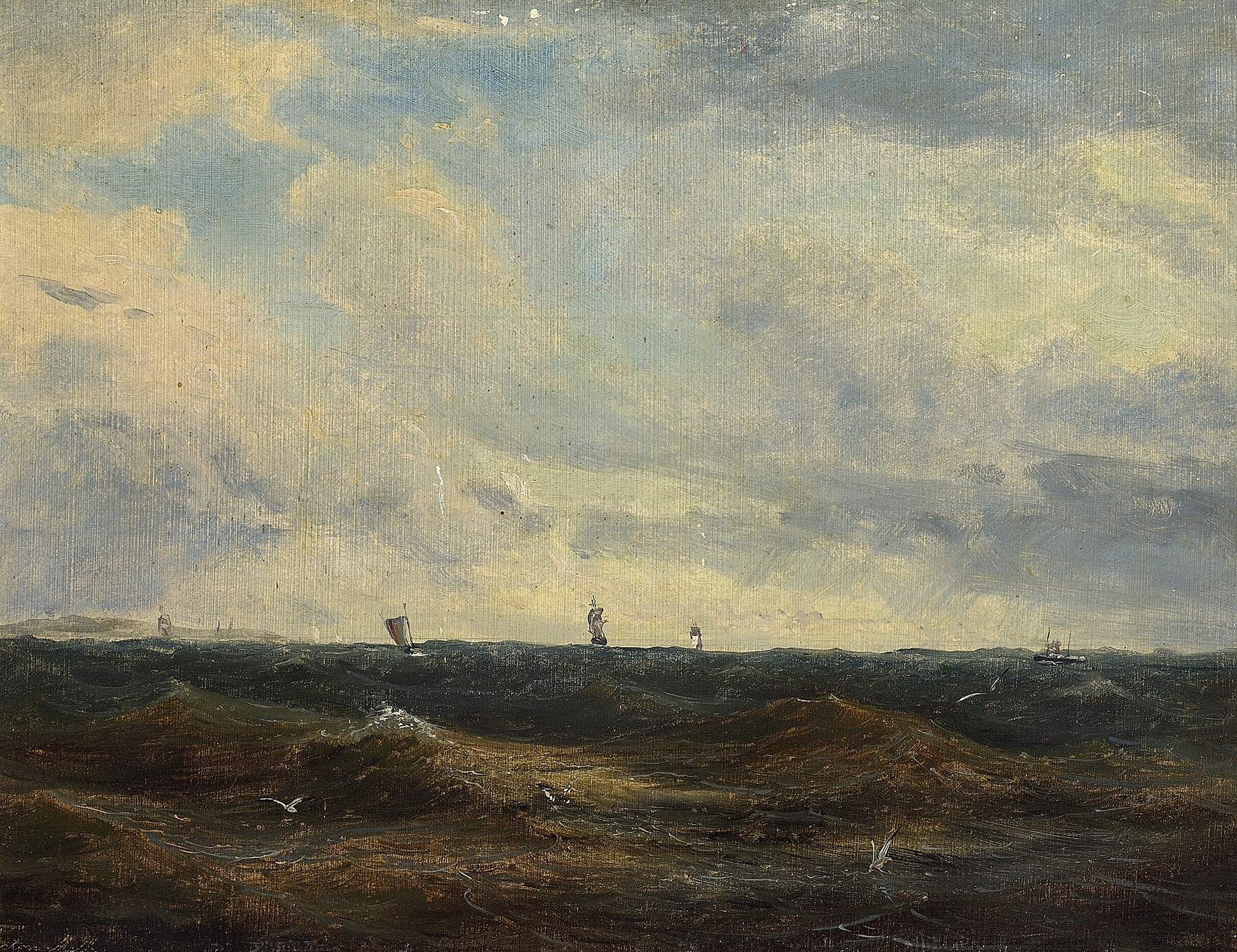
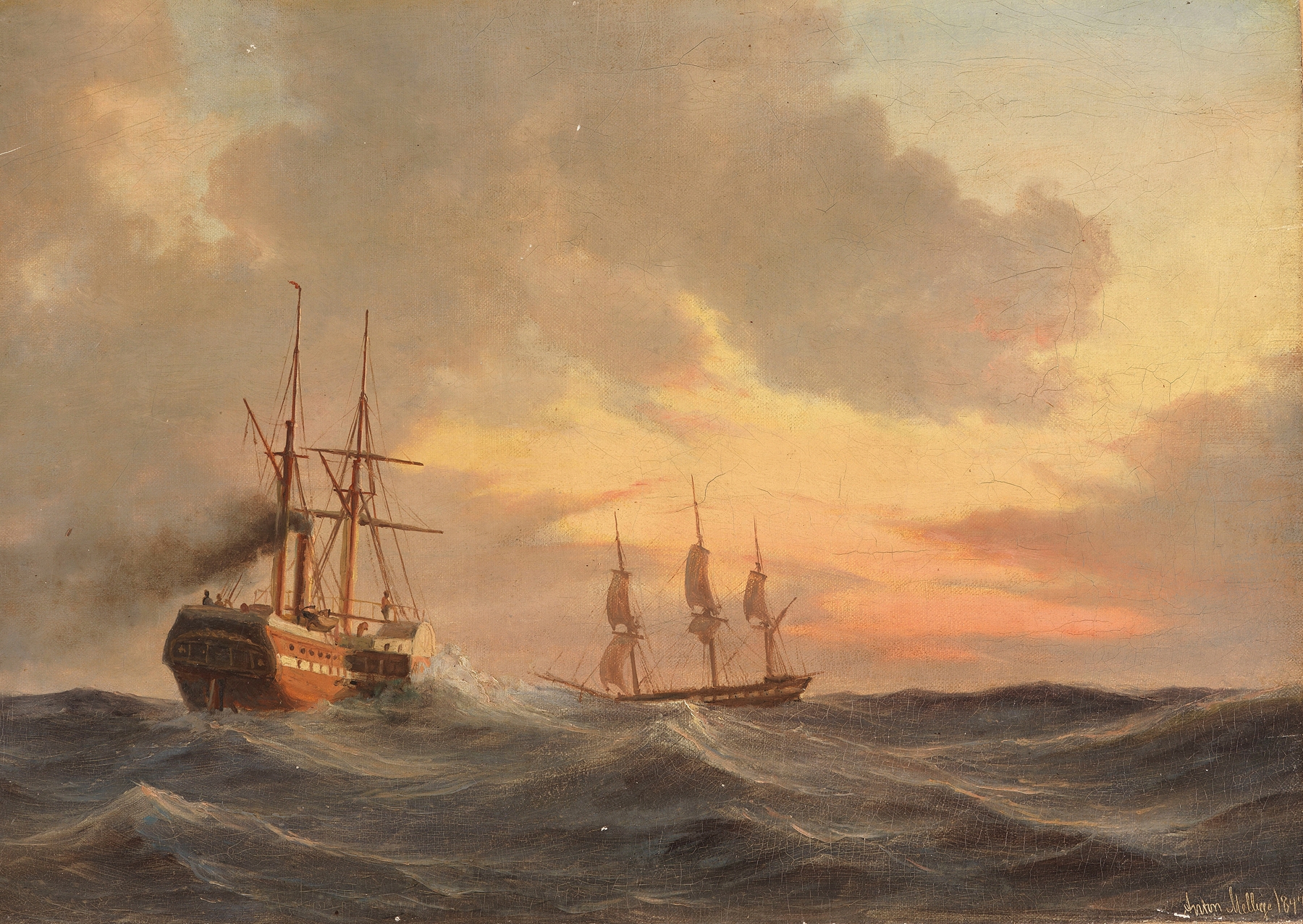
Who listens when art speaks of silence? In the tranquil expanse of the sea, where vessels float like whispers against a vast canvas, the serene beauty unfolds. Look to the foreground, where a majestic paddle steamer dominates the scene, its robust form contrasting beautifully against the delicate waves. Notice how the soft hue of the water reflects the gentle pastel sky, blending seamlessly with the tints of the far-off vessels.
The subtle brushwork captures the dance of light on the surface, inviting the viewer to linger on the details, from the billowing smoke of the steamer to the intricate sails of smaller ships in the distance. There’s an intriguing tension between the thriving maritime activity and the profound stillness of the sea. The paddle steamer, a symbol of industry and progress, signifies the transformative era of technological revolution, while the other ships represent the enduring traditions of seafaring life. This juxtaposition echoes a moment of transition—a quiet yet powerful reminder of how change ripples through society, even as the water remains undisturbed.
Painted in 1845, this piece reflects Anton Melbye's keen eye for maritime themes during a time when Europe was undergoing significant social and technological upheaval. Residing in Denmark, Melbye captured the essence of his time, where the advance of steam power was reshaping navigation and commerce. The painting stands as a testament to both the beauty of nature and the relentless march of progress, inviting viewers to ponder the quiet revolutions within their own lives.