Hjuldamperen Christian D. VIII — History & Analysis
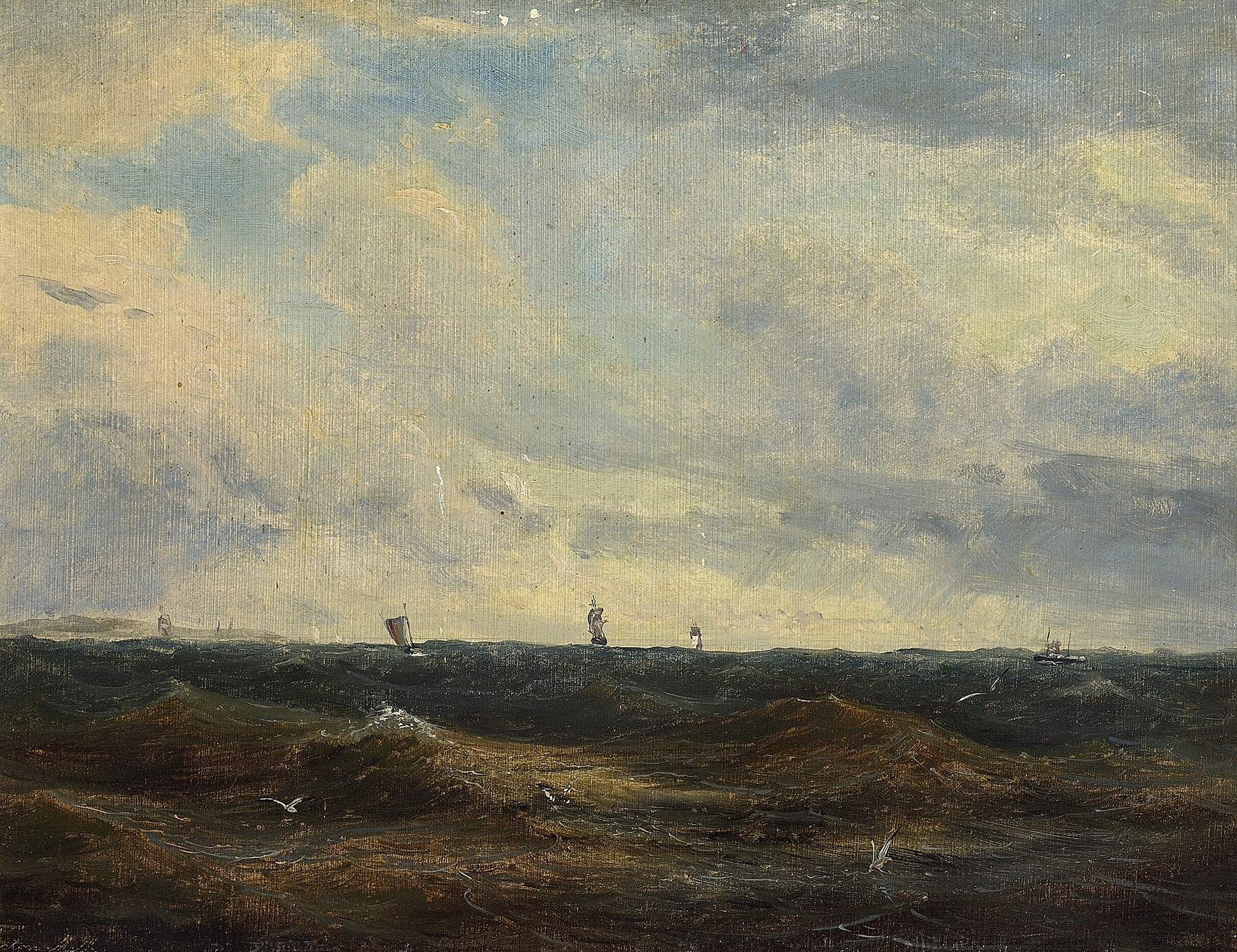
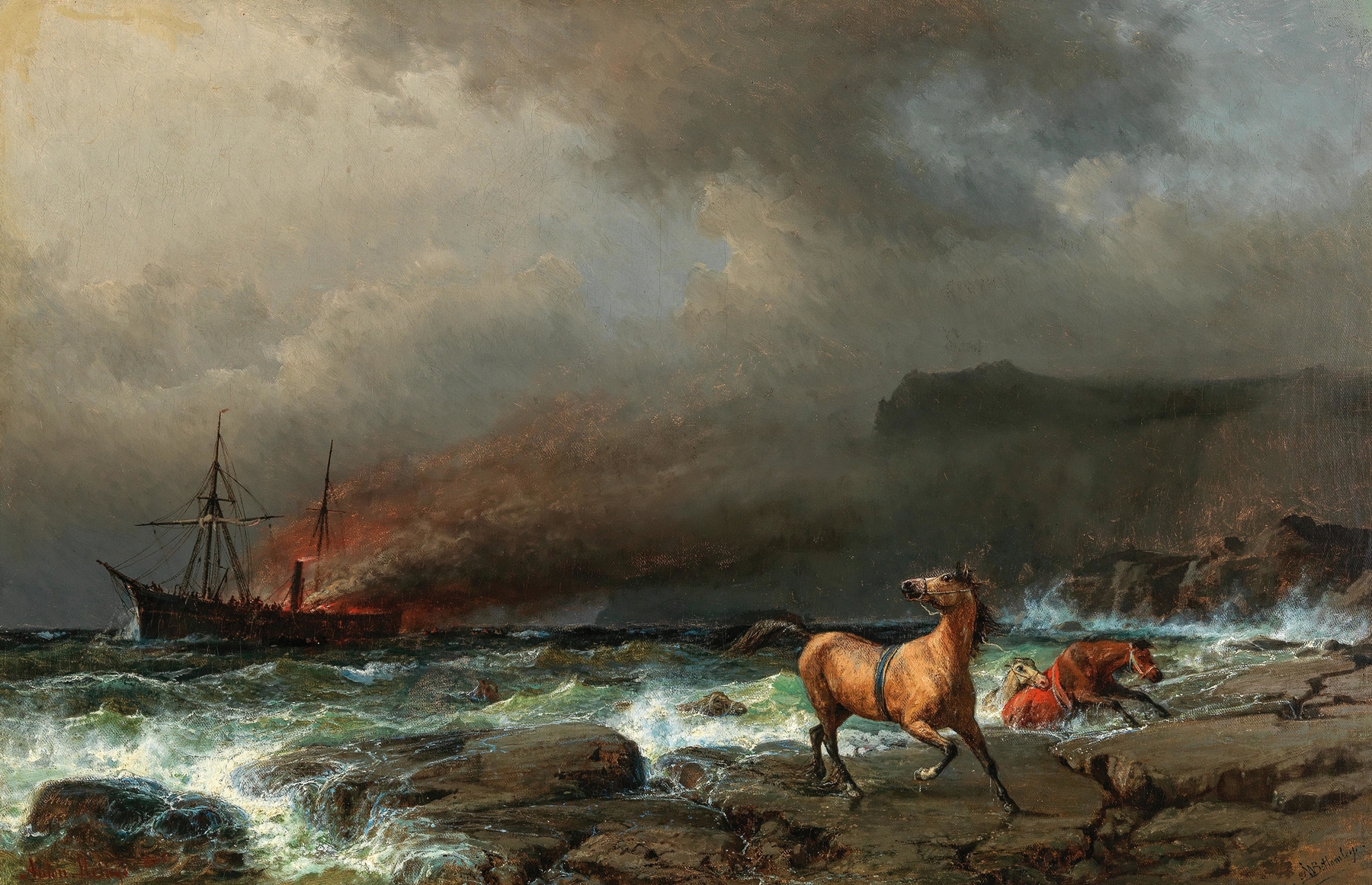
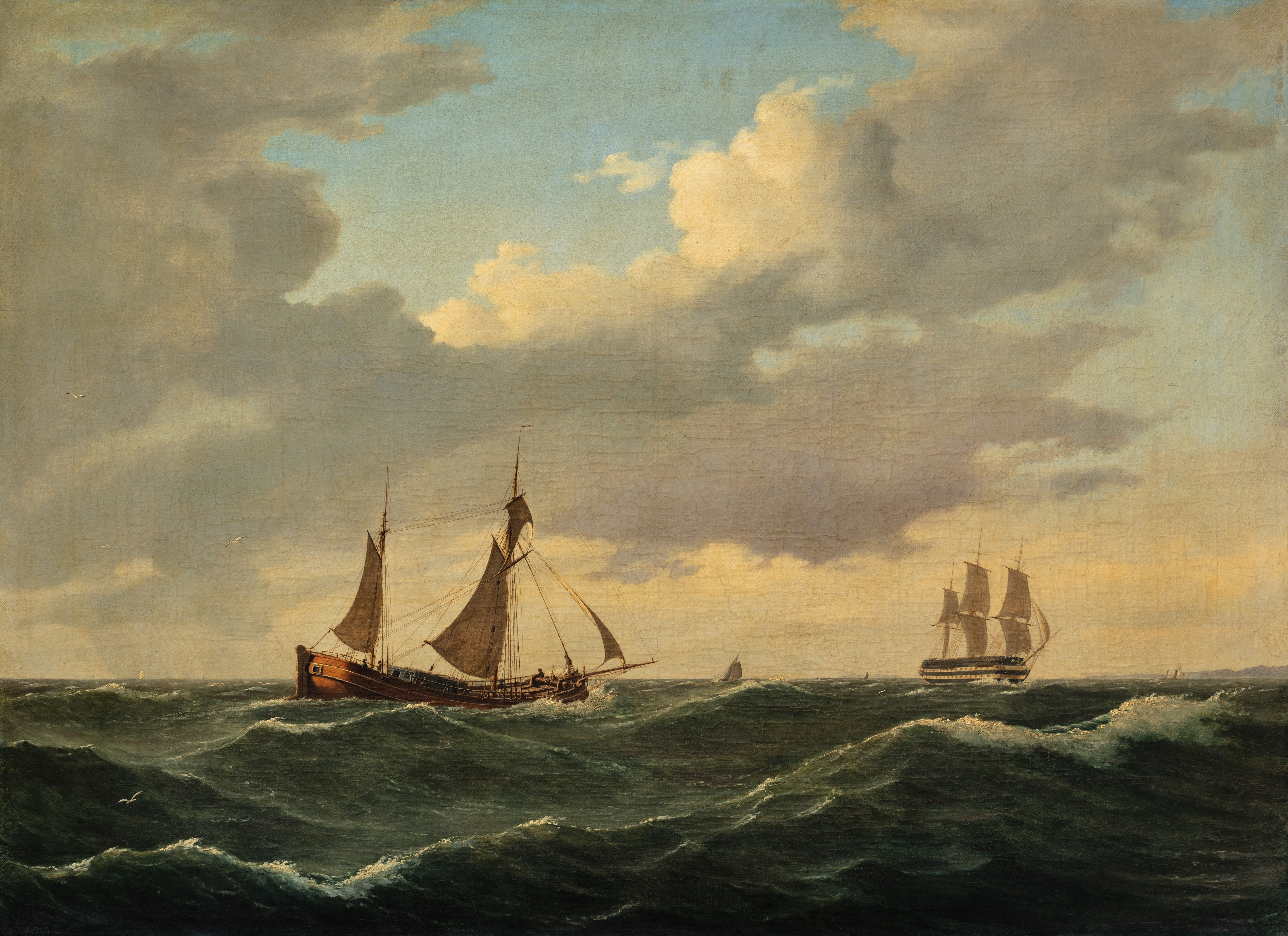
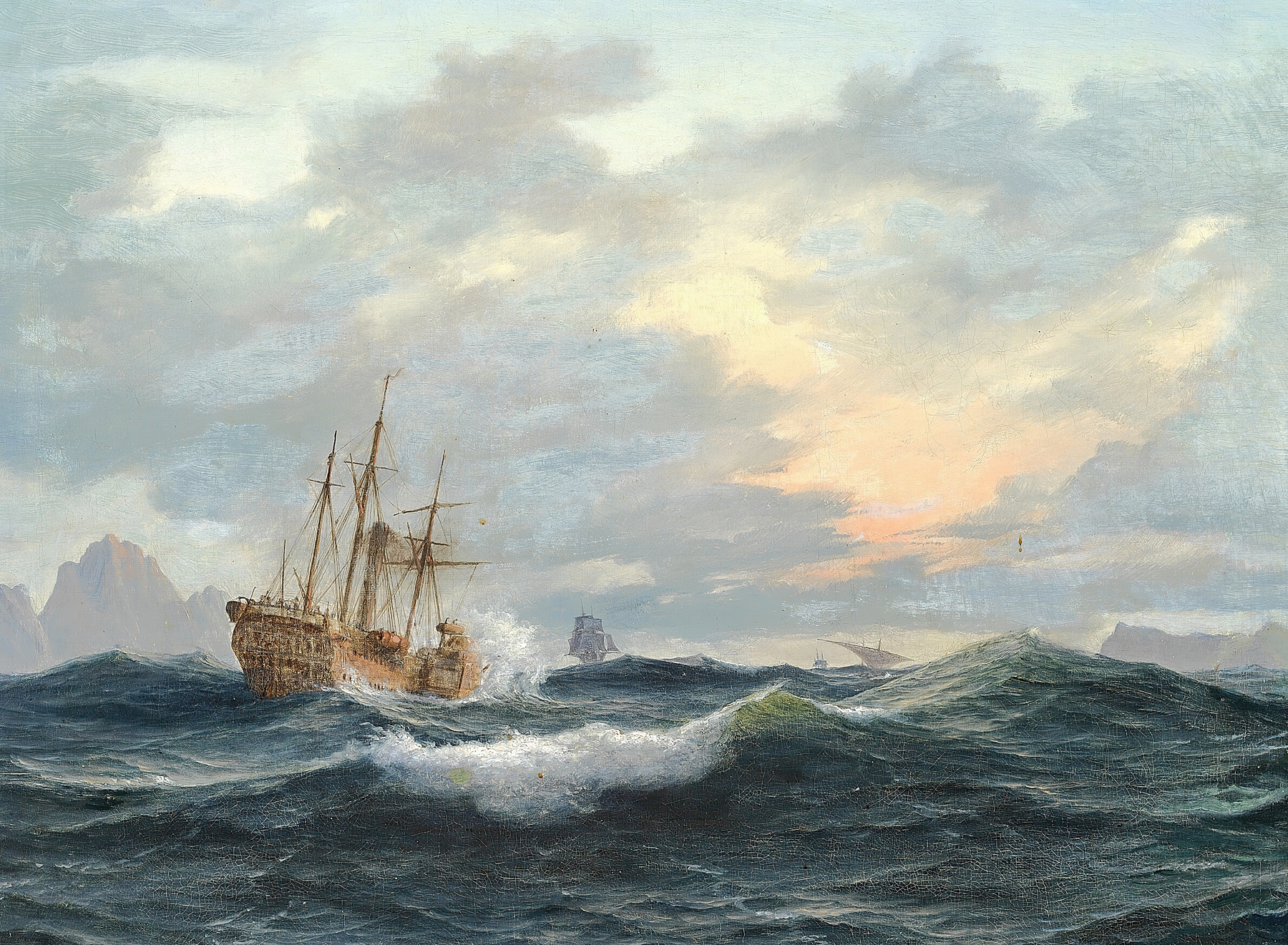
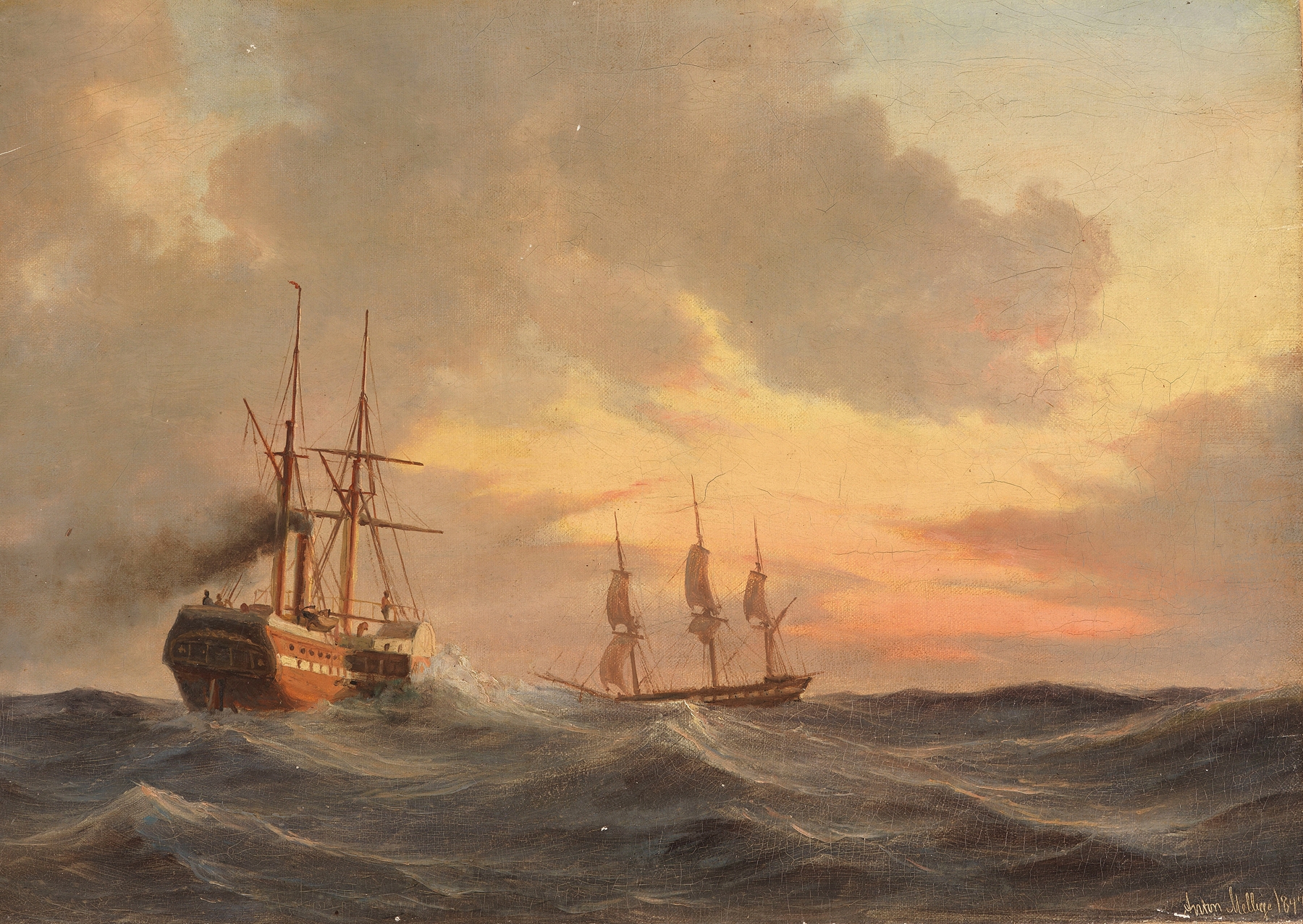
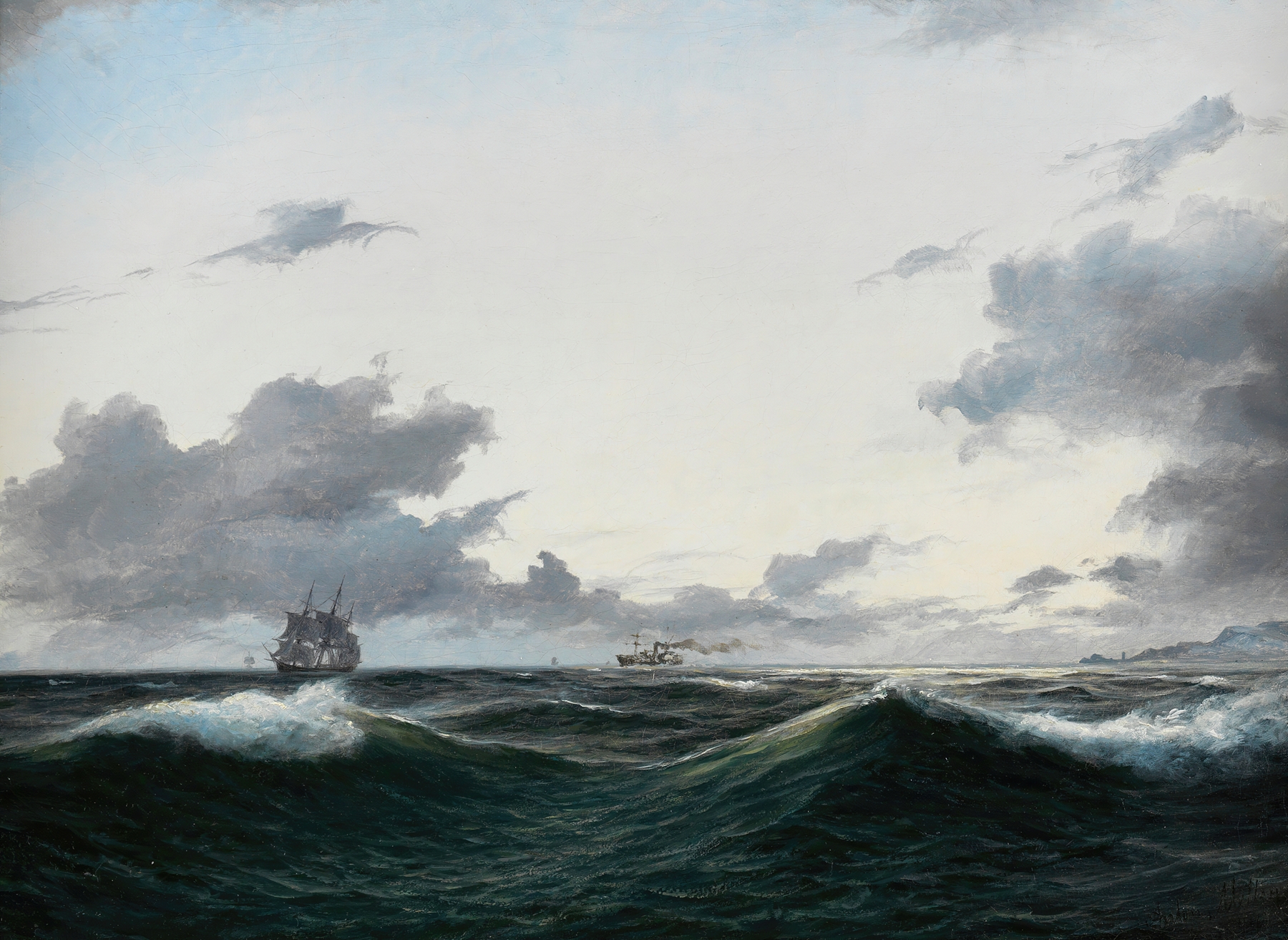
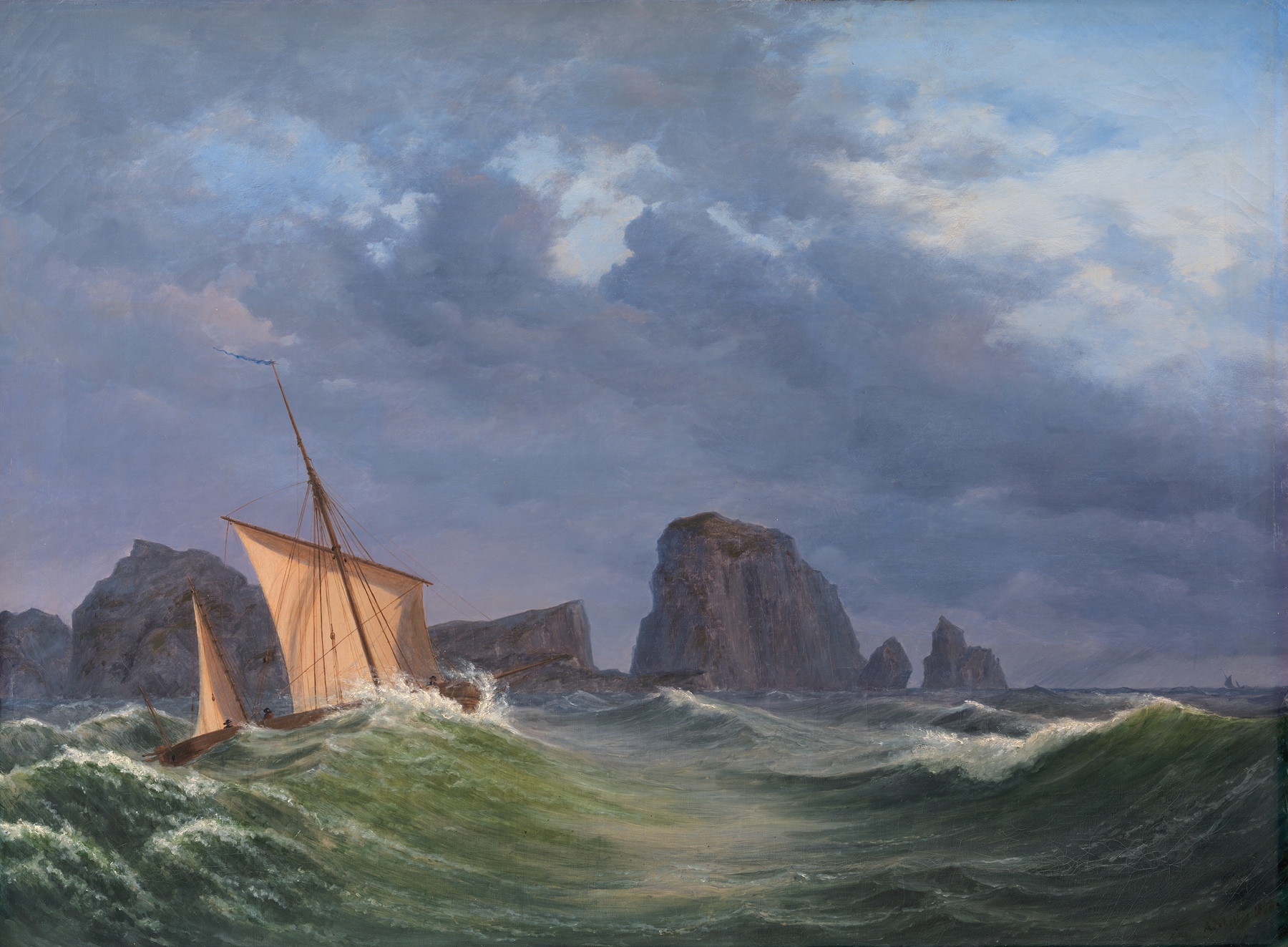
Can paint confess what words never could? In Hjuldamperen Christian D. VIII, silence envelops a moment poised between the bustle of the sea and the serenity of artistry. Look to the left at the hulking steamship, its towering smokestack billowing wisps of smoke that intertwine with the soft clouds above. The rich hues of deep blue and green contrast with the subtle warmth of the sunlit horizon, pulling the eye towards the gentle waves that seem to ripple with whispered tales.
Each brushstroke captures the boat's sturdy presence, while delicate details invite you to linger—notice the glimmer of sunlight dancing on the water's surface, reflecting the vessel's sturdy character and the transient beauty of the moment. Beneath the surface of this tranquil tableau lies a deeper tension. The ship, a symbol of progress and industry, seems to float in a world untouched by its machinery, evoking themes of change and the passage of time. This juxtaposition between the man-made and the natural evokes a sense of nostalgia, hinting at a lost era as the ship silently navigates the waters of history.
The artwork prompts contemplation on the relationship between humanity and technology, leaving the viewer to ponder what silence may reveal. In 1845, Anton Melbye crafted this piece during a period bustling with advancements in maritime travel. Working in Denmark, he was influenced by the Romantic movement that celebrated nature's beauty whilst exploring the intersection of man and machine. The painting captures not just a vessel, but a pivotal moment in history, inviting us to reflect on the transformative power of the age in which he lived.