Høstdag. Bjelland, Mandal — History & Analysis
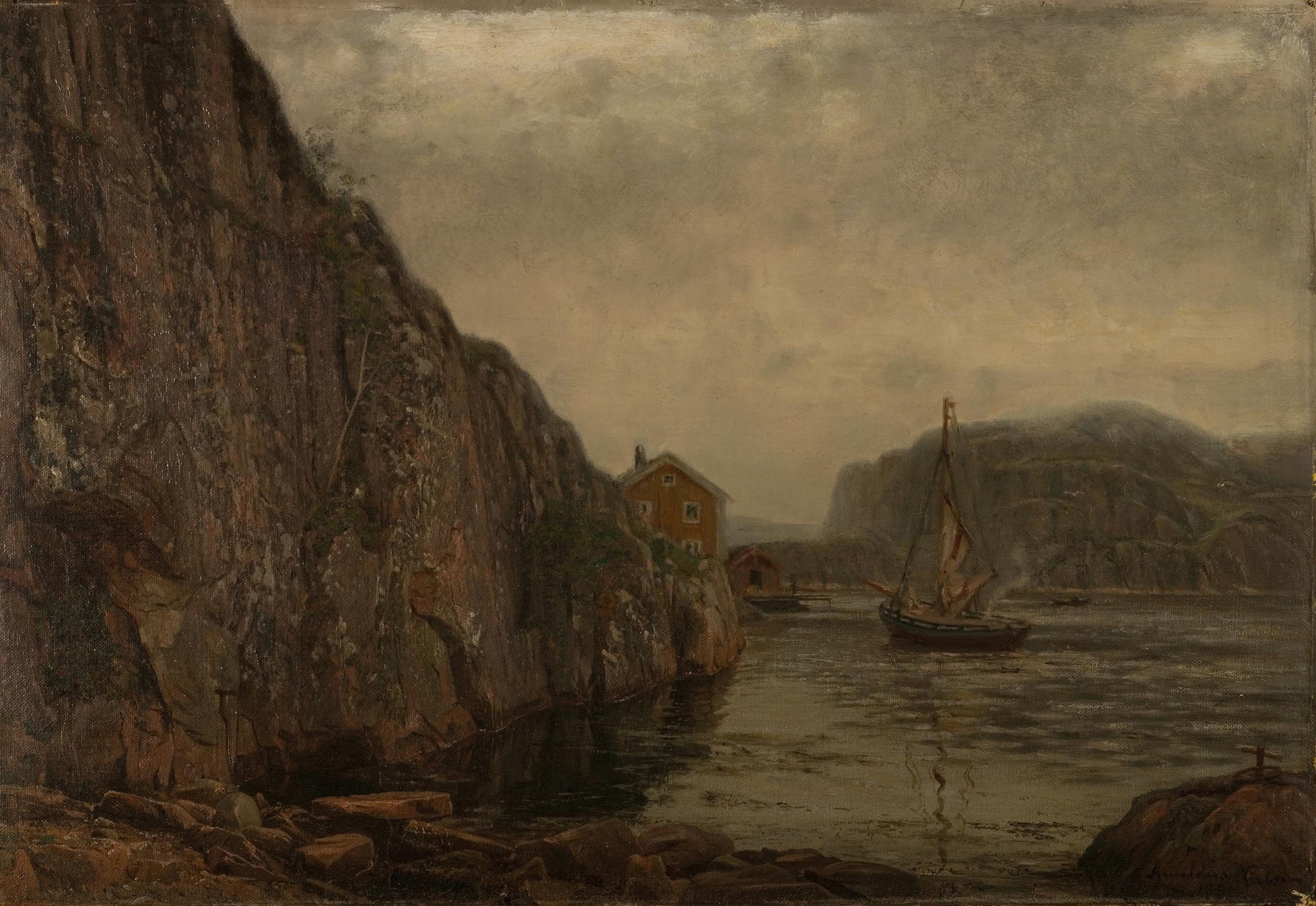
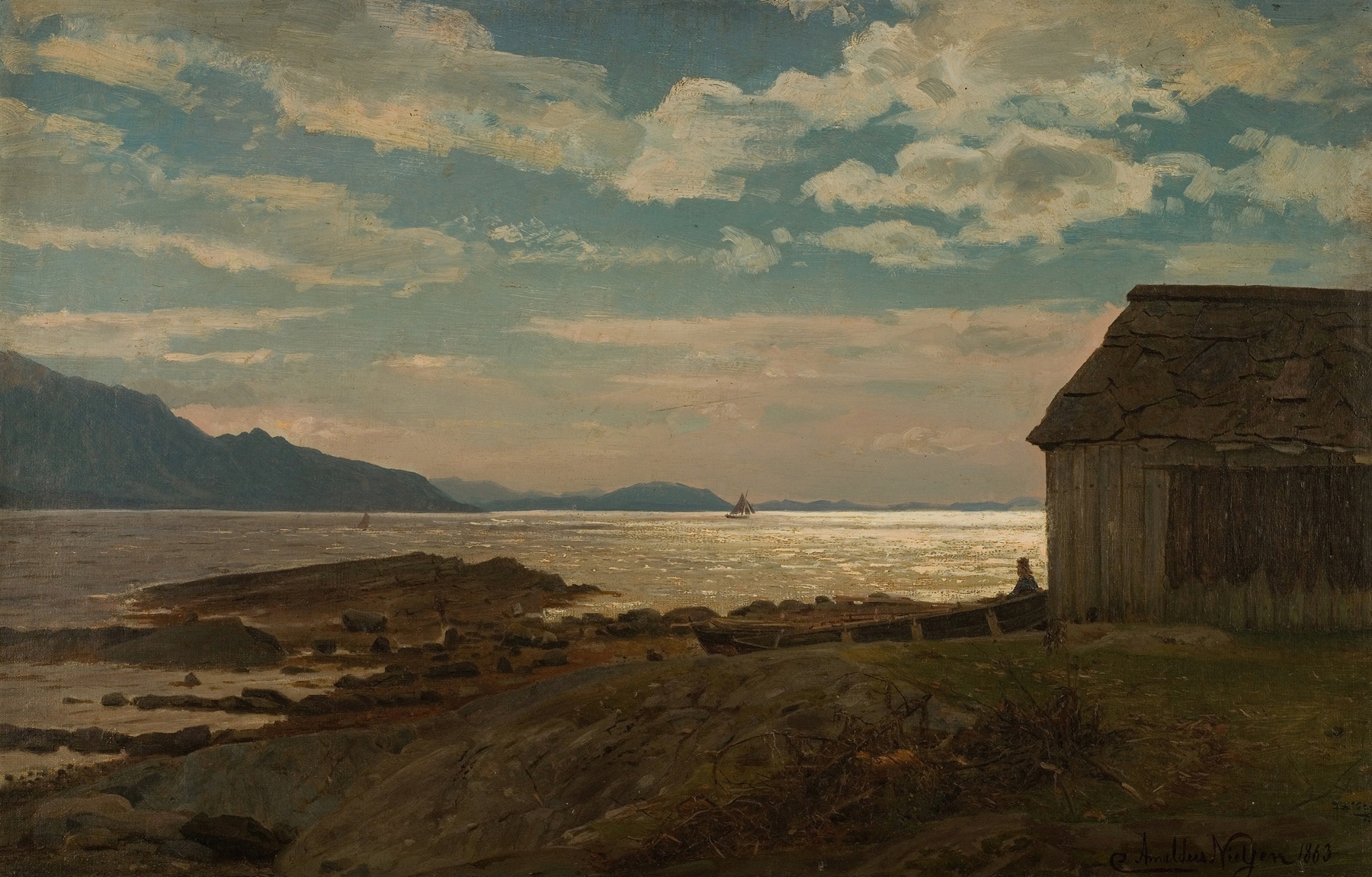
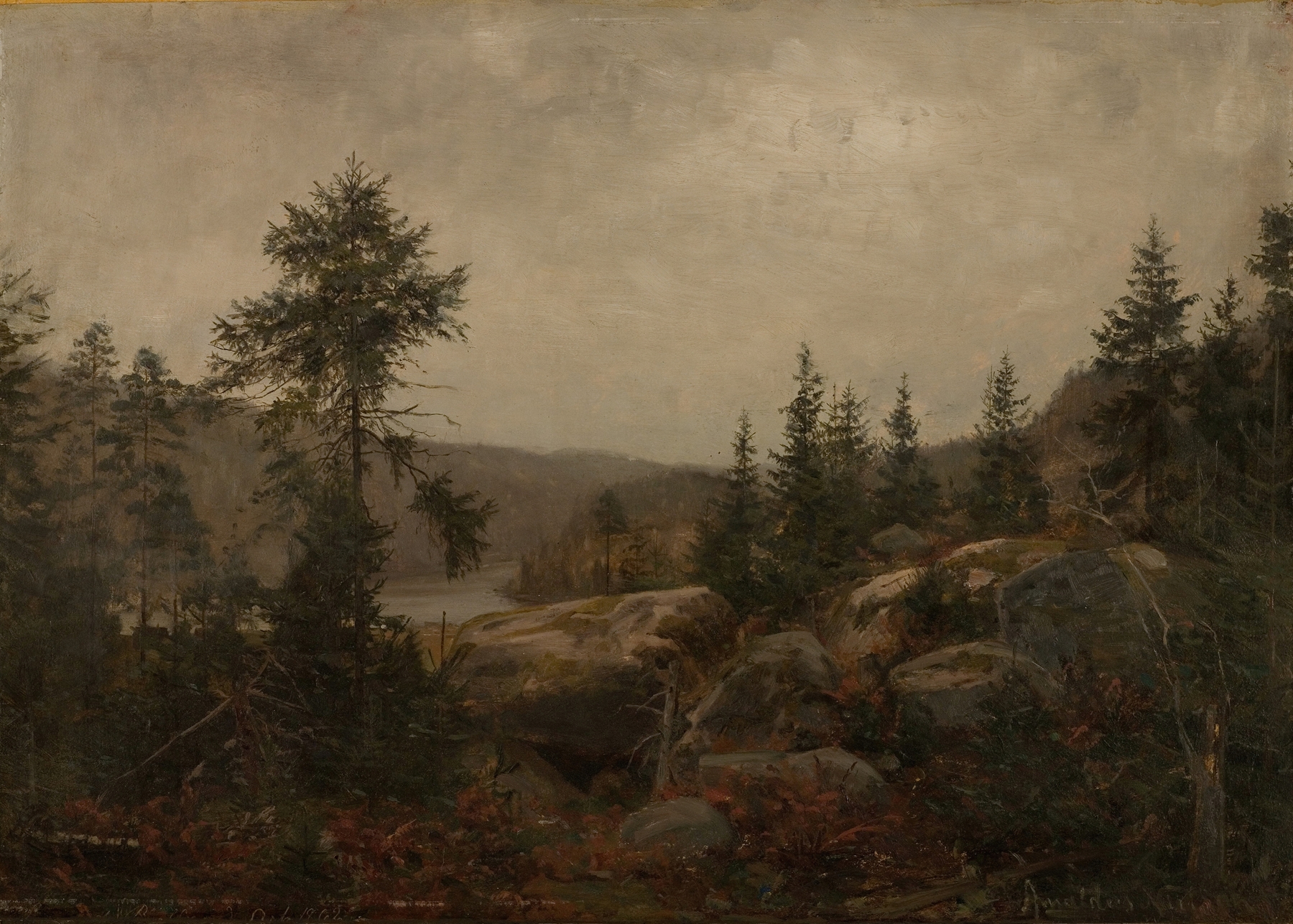
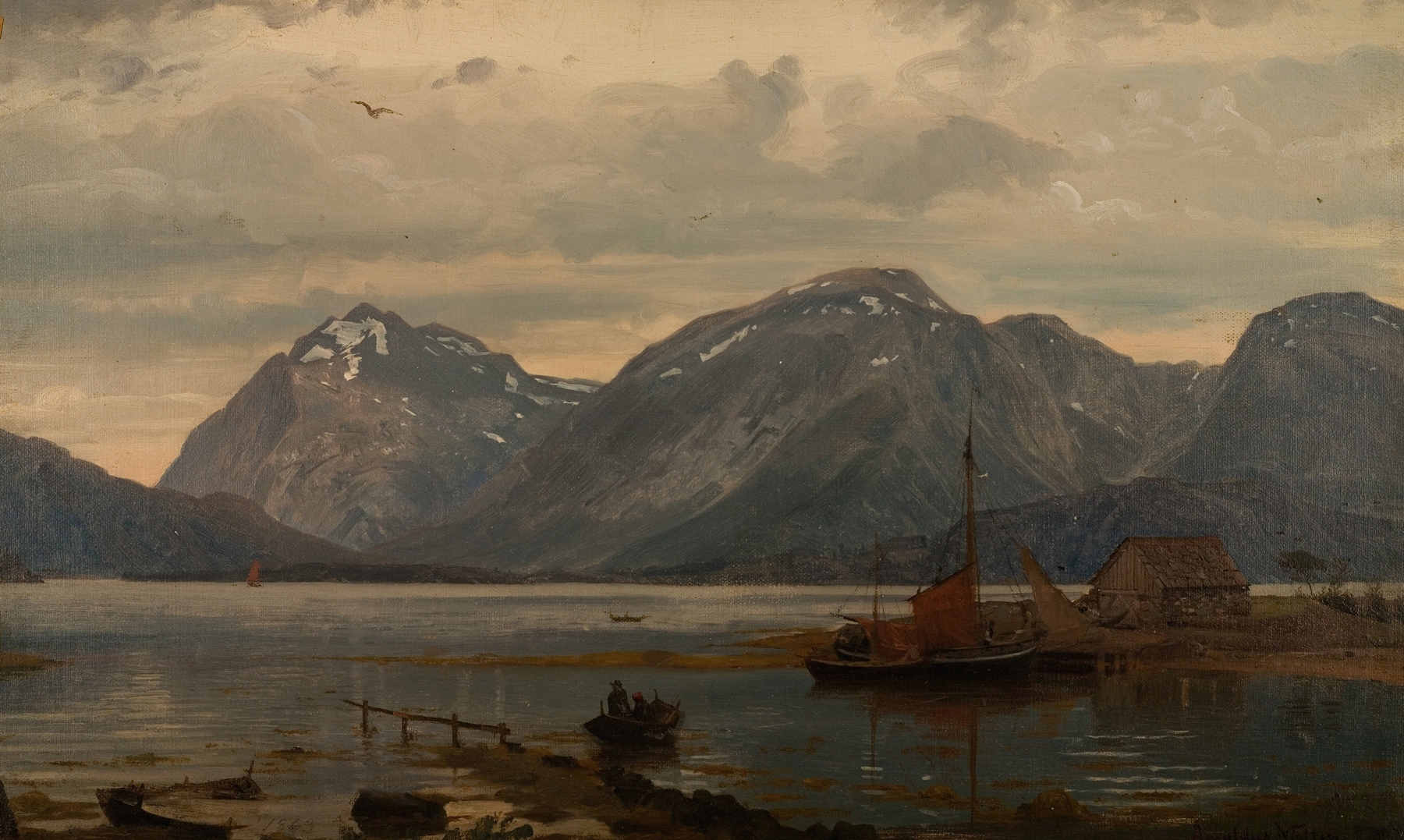
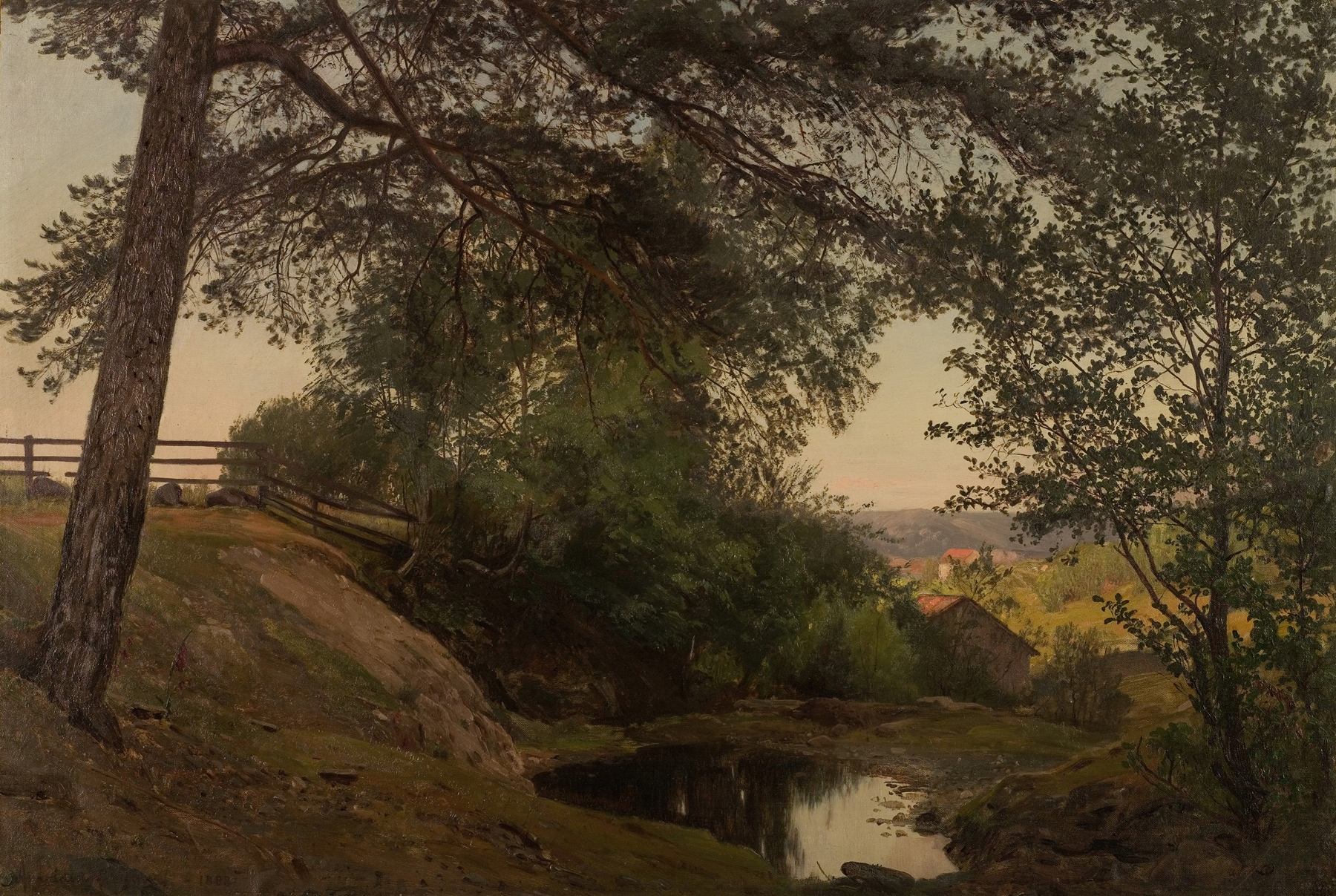
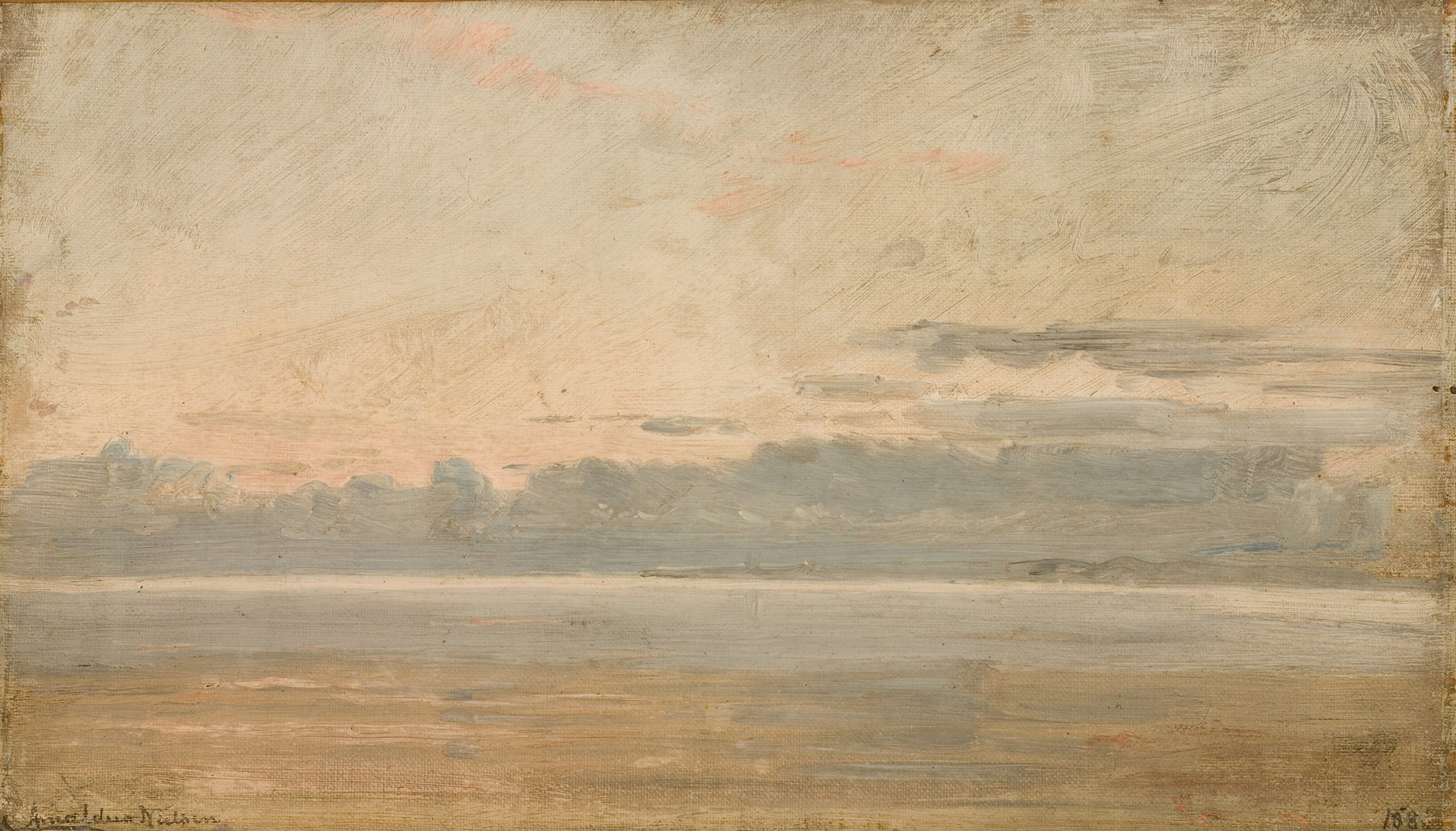
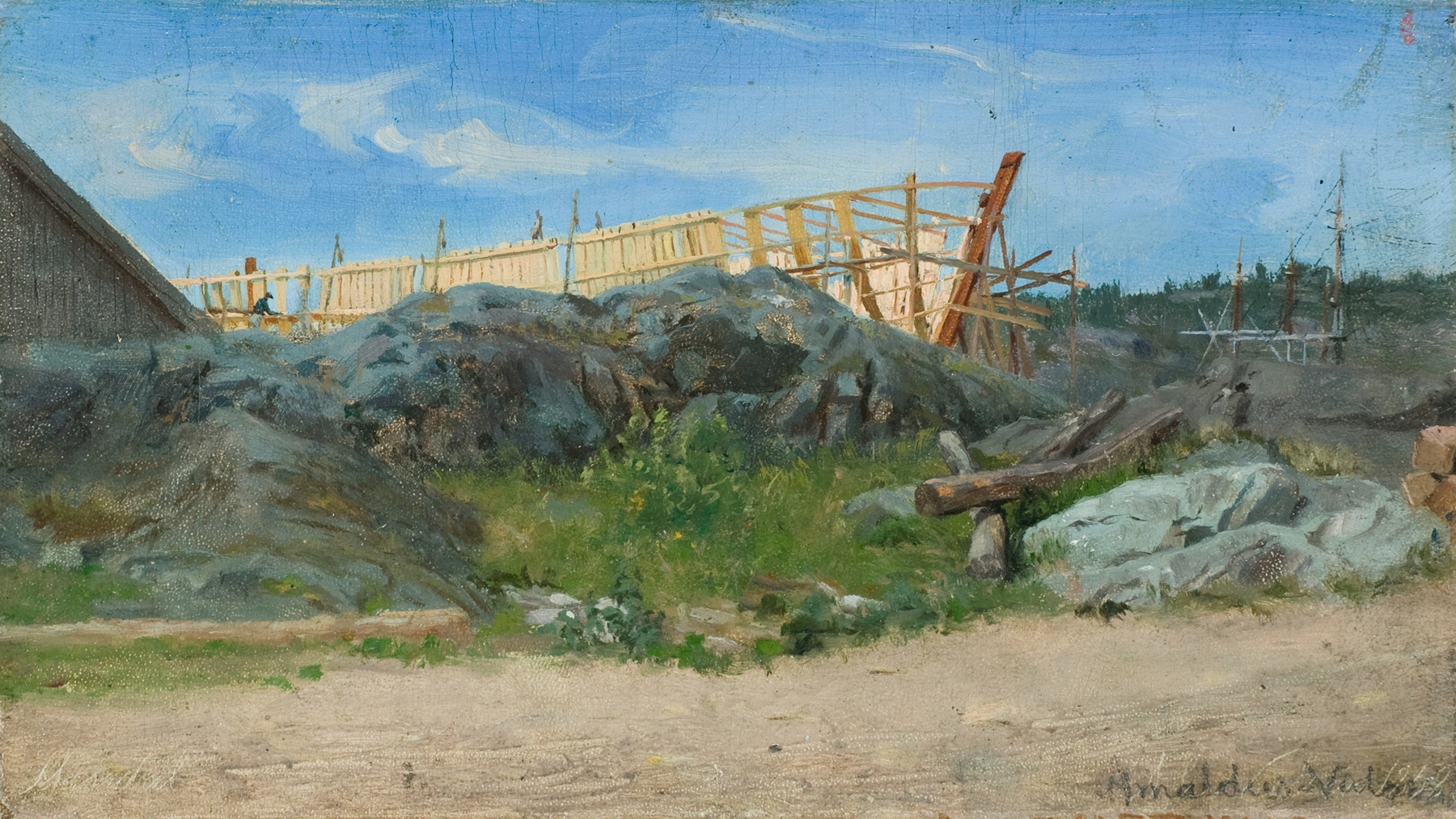
What if beauty was never meant to be finished? In the delicate balance between nature’s bounty and the encroaching chill of autumn, Amaldus Nielsen invites us to ponder this unsettling question through his evocative work. Høstdag. Bjelland, Mandal encapsulates a moment suspended in time, where the landscape whispers of both abundance and decay, a dance of chaos and serenity. Look to the left, where the vibrant orange and gold leaves cling desperately to their branches, each stroke of paint a testament to nature's defiant spirit.
Then shift your gaze to the gentle ripples on the water's surface, reflecting the sky’s moody blues and grays, creating a striking contrast that echoes the impending change of the season. The soft light, diffused and warm, envelops the scene, while the meticulous brushwork brings an intricate texture to the foliage, inviting an almost tactile experience of the landscape's beauty. Beneath this idyllic surface lies an undercurrent of tension, as the vivid colors clash with the somber tones of the horizon. This duality reflects the madness of the ephemeral beauty that is autumn; it is a reminder of the fleeting moments we desperately try to capture.
The juxtaposition of the lush foreground and the ominous clouds foreshadows the inevitable transition into winter, hinting at the fragility of life and the chaos that often accompanies beauty. In 1862, Nielsen painted this work in Norway, a period marked by a growing appreciation for natural landscapes among Scandinavian artists. As the Romantic movement flourished, he sought to connect the viewer with the raw emotion of the earth around them. Amidst personal struggles and societal changes, his brush became a channel for both the beauty and madness present in nature, a reflection of his own artistic journey.