Hunting near Hartenfels Castle — History & Analysis
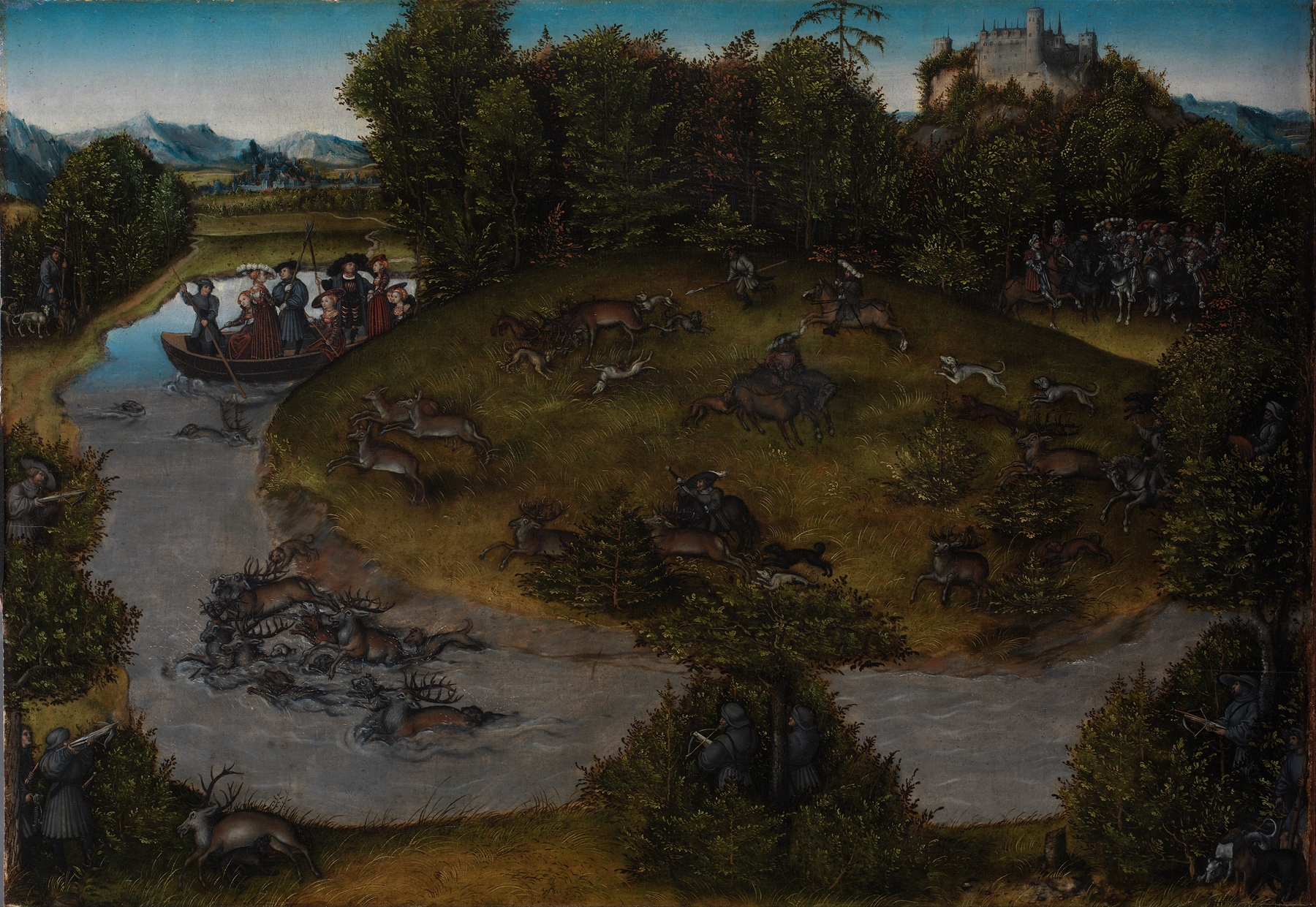
“Sometimes beauty is just pain, disguised in gold.” In Hunting near Hartenfels Castle, the allure of the hunt conceals deeper undercurrents of sorrow and loss, reminding us that splendor can often mask grief. Look to the left at the subtle play of colors as the lush greens of the forest meet the soft, muted tones of the sky. Notice the figures in the foreground, poised and alert, their bodies taut with anticipation. The artist's delicate brushwork captures the shimmer of sunlight filtering through the leaves, creating a warm glow that contrasts with the cool, shadowed depths of the woods.
This juxtaposition invites the viewer to linger in the moment, suspended between exhilaration and an unspoken tension. Beneath the surface of this seemingly idyllic scene lies a poignant exploration of human emotion. The hunters, with their focused expressions, embody the duality of desire and the inevitable consequences of their pursuit. The distant castle looms, a reminder of authority and, perhaps, the weight of legacy.
Each element—from the hunting dogs to the distant figures—hints at the fragility of this joyful endeavor, echoing the sorrow that can accompany triumph, revealing that every hunt carries with it the possibility of loss. Lucas Cranach the Elder painted this work in 1540 while in Wittenberg, a time when he was deeply entrenched in the Reformation's cultural shifts. The landscape reflects both the beauty of nature and the darker themes that resonate within the tumult of his era. As he navigated his own successes and challenges, he infused his work with a rich complexity that speaks to the human experience, capturing both the thrill of the hunt and the shadows that linger just out of sight.